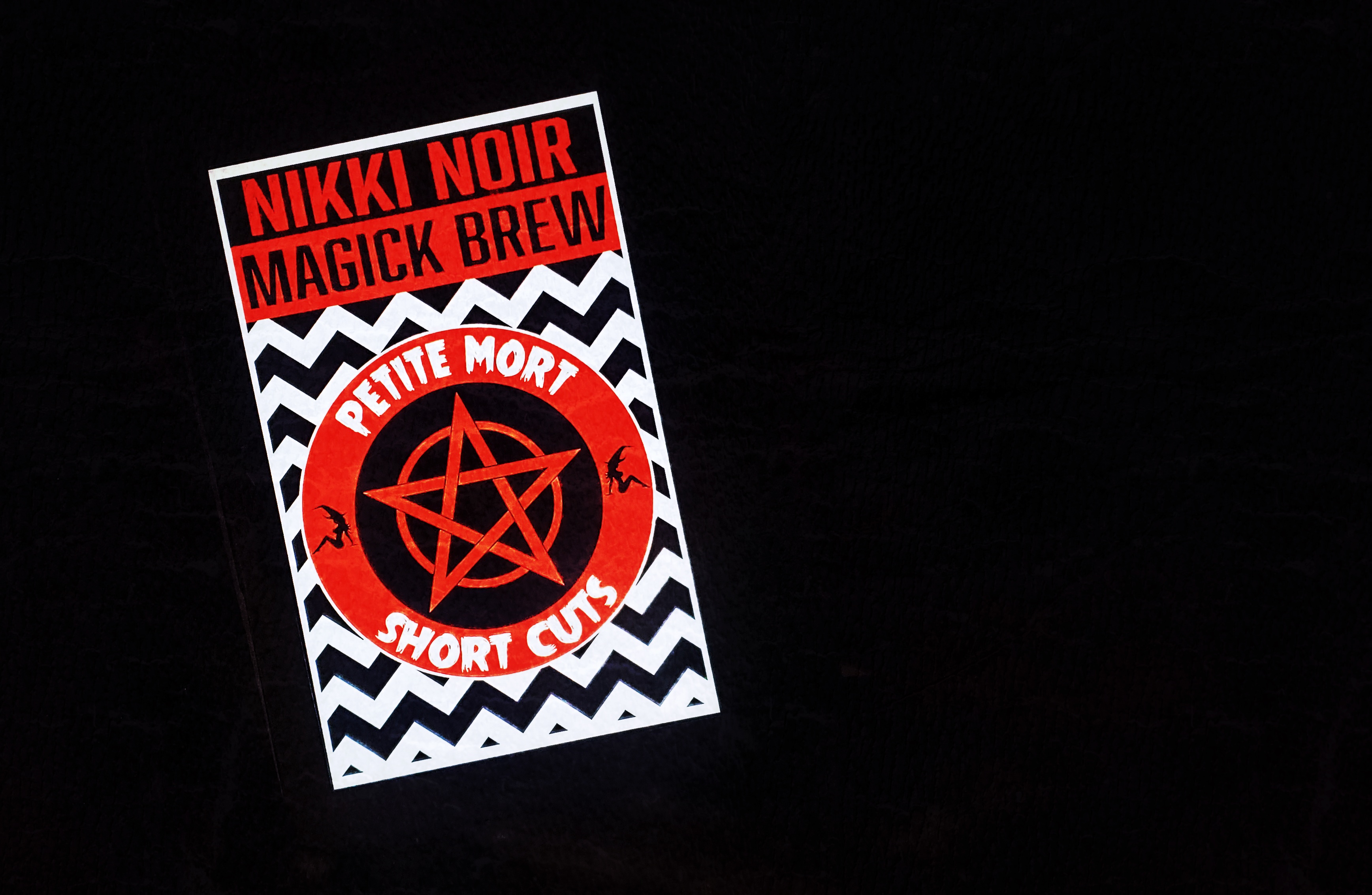
I went into Magick Brew with high expectations. I’d previously read–and reviewed–the Black Planet collection compiling the first four novellas/novelettes in that series. She set the bar high with that one. Magick Brew did not let me down. A morality tale reminding the reader to be careful what they wish for, this short story tells the tale of an incel who determines magic might be the only way he’ll get the girl he wants. Repeatedly striking out in his attempts to research a love spell, he almost gives up. Thankfully, for the readers, he does not. It would be a much shorter and far less interesting story if that happened. Settle in, drink your watermelon margarita, and wait for the party to get going. You’re sure to enjoy the meal.
You can obtain your own copy of Magick Brew at http://www.godless.com or by downloading the Godless app for your Android or Apple devices. The link to this story is below:
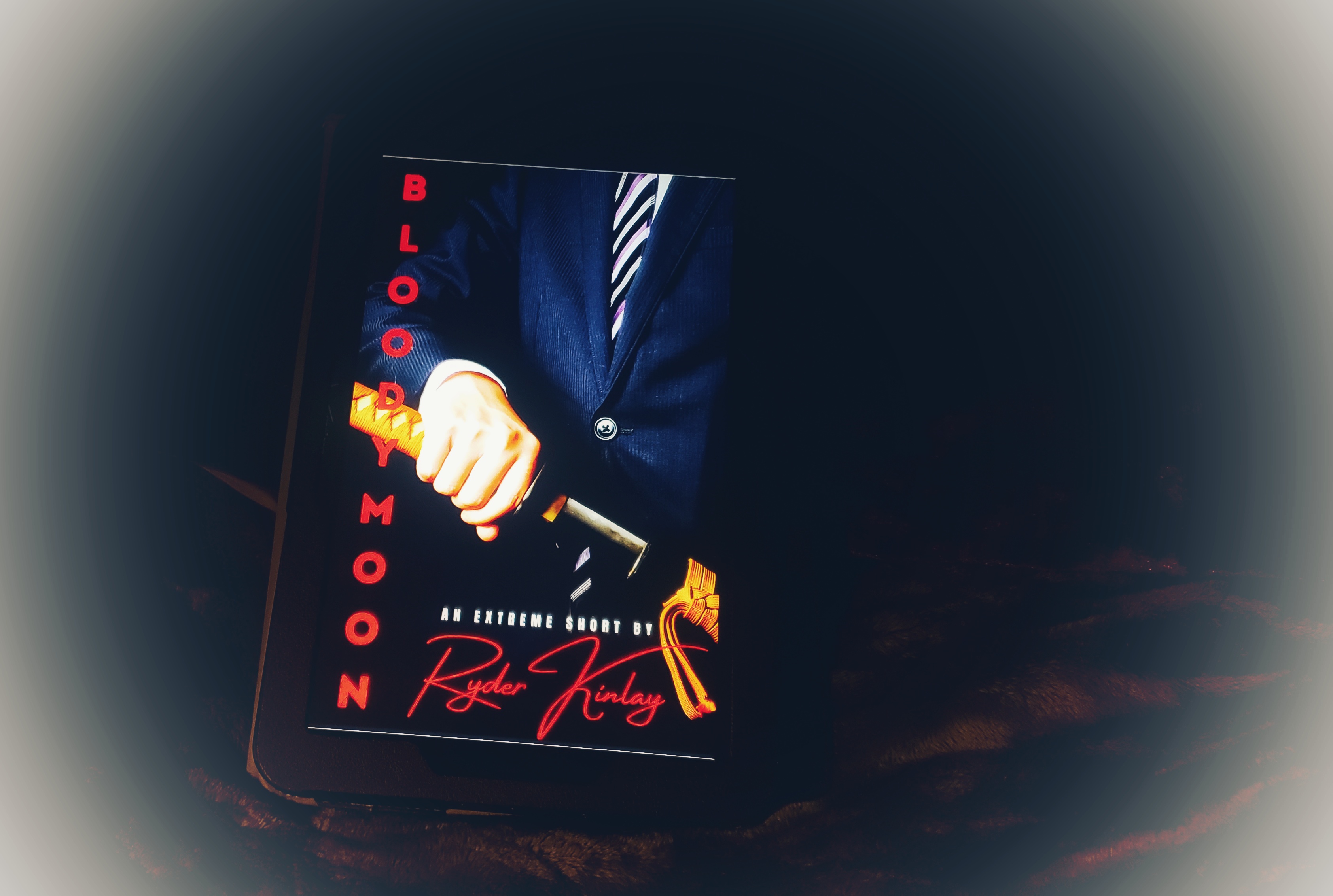
The rich really are different. Never honeymoon in Thailand. Those are the biggest takeaways from Kinlay’s Bloodymoon. We meet the celebrating couple just as a plum is to be propelled from the vagina of a woman on stage into the new bride’s mouth. How can you go wrong with a story that starts like that? From there, Kylie–increasingly intoxicated–allows her husband, David, to drag her along in his wake as he seeks even greater and more taboo forms of enjoyment. Unfortunately for Kylie, she might have married into the wrong family. Bloodymoon is a story that starts out feeling like The Hangover only to transition into Hostel, and it’s quite an adventure getting from origin to destination.
You can obtain this short story for yourself by going to http://www.godless.com or by downloading the Godless app for Apple and Android Devices. The link for the story is below:
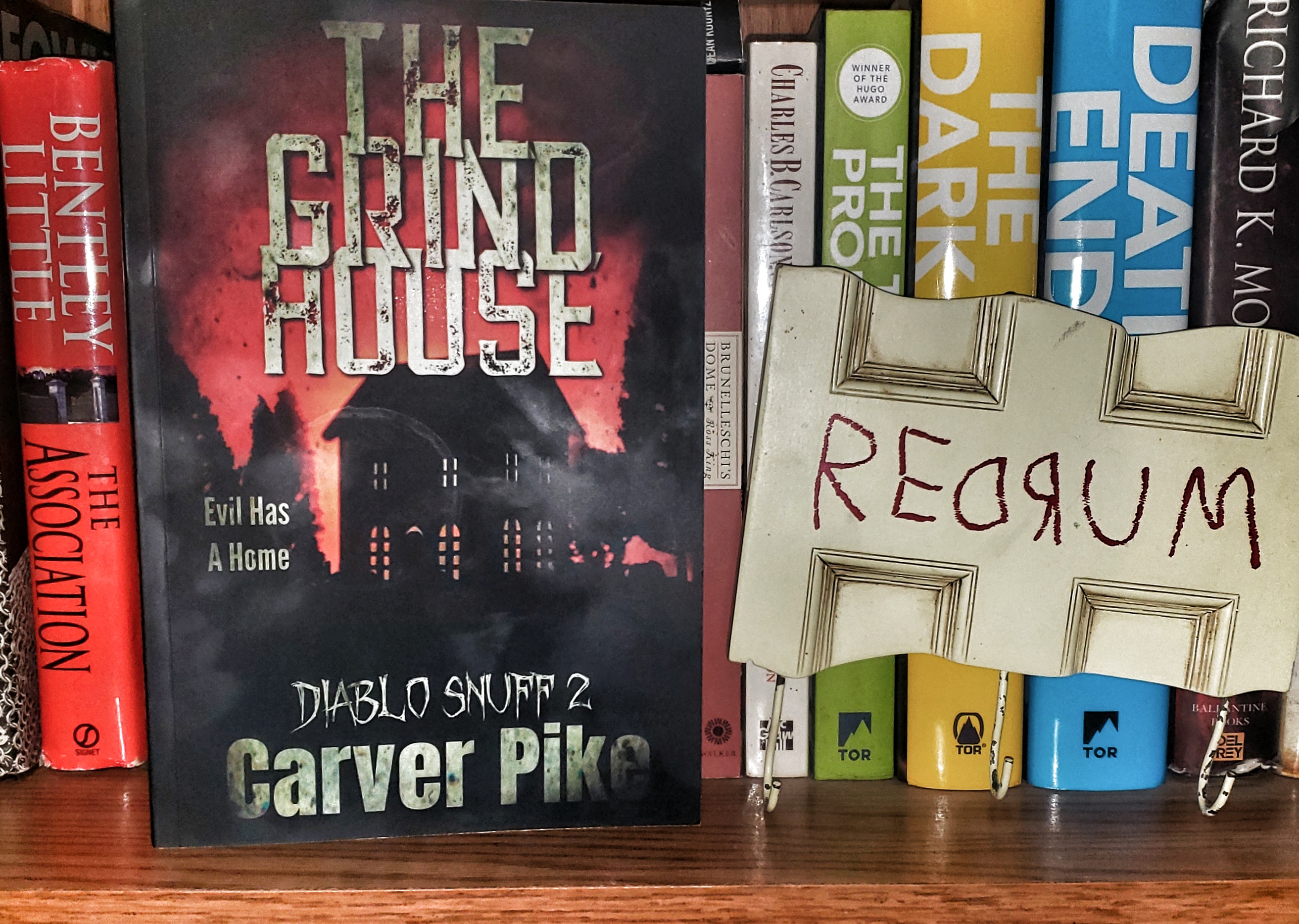
The Grind House continues the descent into madness that is Pike’s Diablo Snuff series of books. If you’ve read A Foreign Evil and Passion & Pain, you’ll have some idea what to expect while still finding yourself surprised around every twist and turn captured by the author’s impressive imagination. While the previous two installments focused heavily on monstrous cruelty and torture inflicted by agents of the malevolent organization known as Diablo Snuff, this book leans heavily on things that can’t be perceived as anything other than the supernatural. The visions of demonic entities–post-climax–in A Foreign Evil could easily be dismissed as little more than the feverish hallucinations of a man who went through hell. It’s far more challenging to similarly write off shared visions of inhuman horrors and other aspects of the tale unfolding within The Grind House. Of course, we all knew these things were real–in the context of the story–but it hits home much harder in this book than the previous immersions into the world of Diablo Snuff. Fans of the previous two stories in the Diablo Snuff series will be happy to encounter some familiar characters at different points in this novel. I know I certainly was. In this book, as in the previous two, Pike’s history as a writer of dark romance and erotica comes to the forefront in a big way, weaving together heavily eroticized encounters with sheer, unrelenting lunacy. It takes a certain undefined skill to seamlessly blend graphic, sensual intimacy with a bewildering, undercurrent of horror, but it’s a skill Pike has in spades. It’s The Shining on MDMA. If Shirley Jackson had channeled Marquis de Sade when writing The Haunting, we might be coming close to what you’ll find within these pages. This isn’t necessarily to suggest The Grind House is a haunted house tale, but in a sense, it most certainly is. If a place can absorb the evil of those within its walls–or beneath its foundations, The Grand Georgina most certainly has. Tobias (T.K. Tantrum) is in for far more than he or his assistant anticipated when he was signed up to attend the writers retreat at The Grand Georgina. He hoped to write the masterpiece that had eluded him so far in his modestly successful career, but he finds himself drawn into real-life peril that rivals anything he could have written. As the abominations of both past and present are revealed, the insidious trap Tobias finds himself within may be something from which even madness provides no escape. As prurience gives way to panic, it may already be too late for any to escape the clutches of Diablo Snuff.
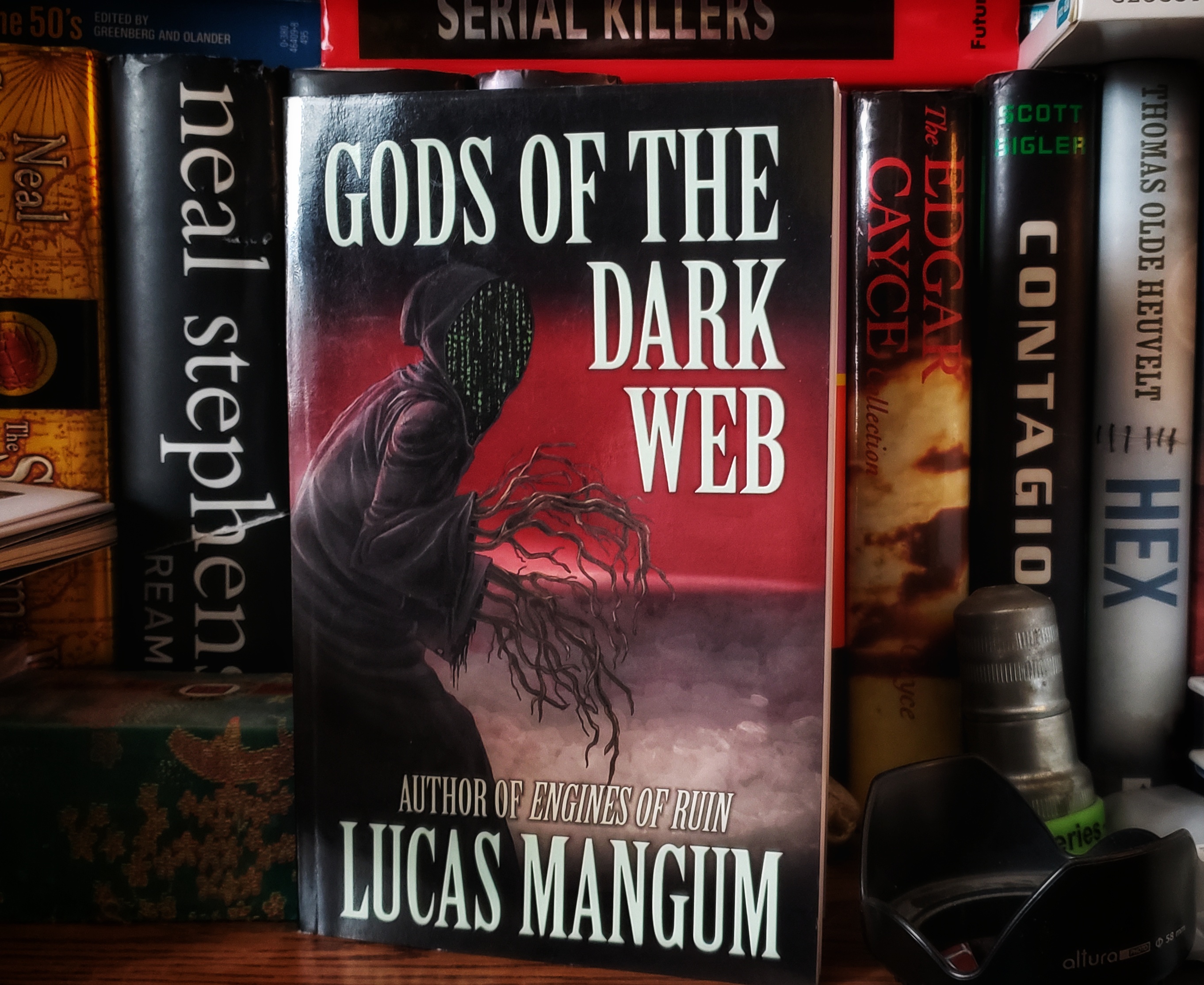
This one is a fast-paced and frenetic descent into horrors that lurk just below the surface of our reality, much as the dark web lurks just below the surface of the conventional, everyday internet of Google, Facebook, Twitter, and such. There are some fascinating parallels to be discovered in this story because of that mirroring aspect. Most of the novella focuses on true-crime novelist Niles Highsmith and his search for a missing younger brother, Leon. Through Leon’s friends, Niles soon learns that his brother had recently been searching the dark web in hopes of obtaining a firearm for protection–only to be diverted along the way–witnessing perversions and unsettling horrors instead, just before he disappeared. With no other avenues of inquiry available to him, Niles dives into the dark web as well, unaware of the attention he’s drawing to himself. Fans of the author will be pleased to find references to other works within the story as Niles explores the dark web for himself. The story, while captivating, takes a backseat to the intense, graphic visuals that Mangum conjures in his writing. If one were to toss the paintings of Zdzislaw Beksinski, Salvador Dali, and H.R. Giger into a blender, they might come up with something approximating what Mangum describes in parts of this narrative.
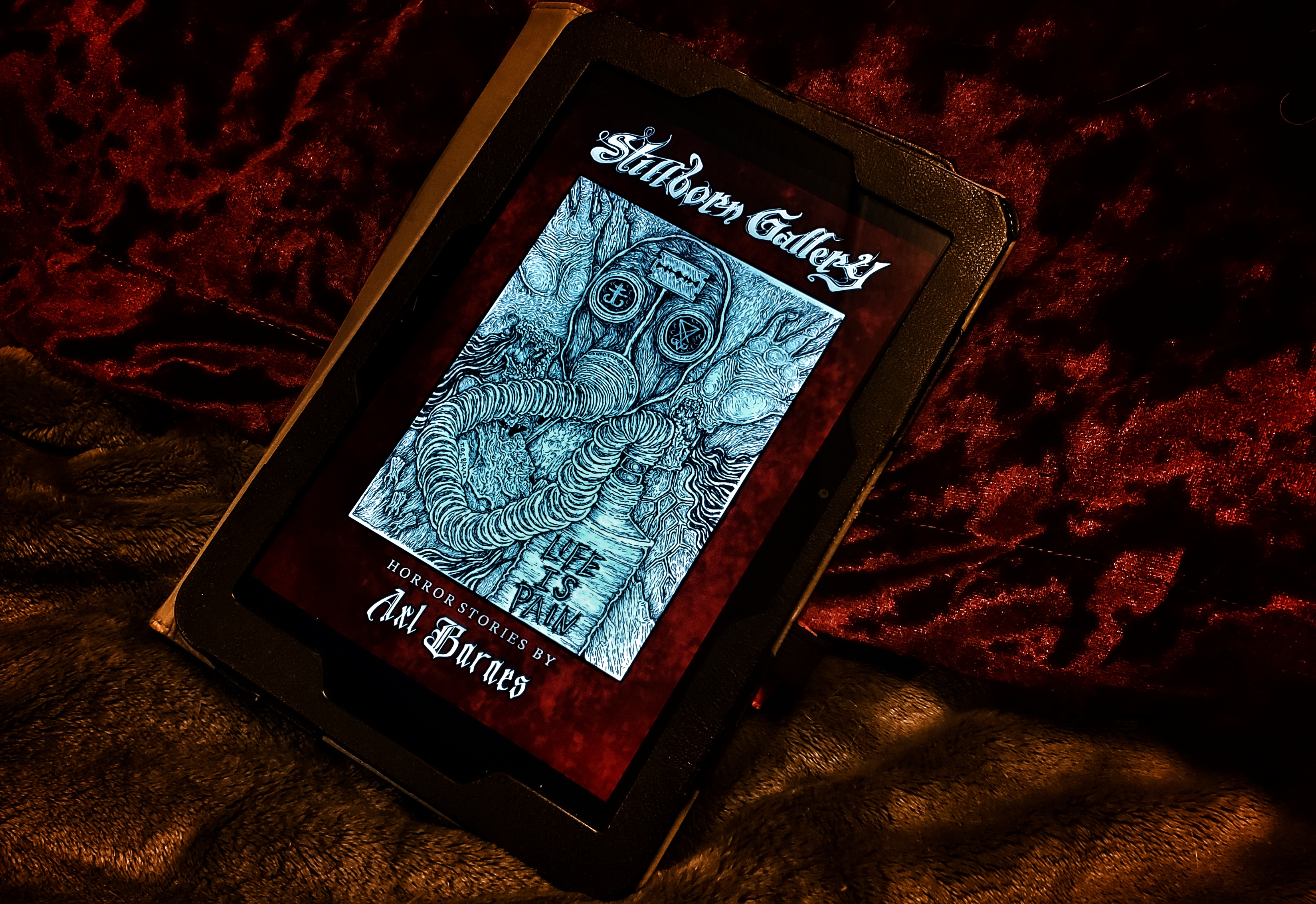
The nine stories collected in Barnes’s Stillborn Gallery make for an almost uniformly bleak, nihilistic deep dive into the horrors of banality, the depths of depression, heavy metal, and suicide. If you’re familiar with Axl Barnes, you shouldn’t be altogether surprised by any of that. Barnes utilizes almost poetic prose at times, almost exclusively when applied to the most awful of things. He has a knack for painting vivid and breathtaking pictures of things the reader might not want to see, and it makes for a fantastic experience. There’s a great deal to look forward to, for the discerning reader, from the almost Kafka-esque “Numbskull” to the morbidly romantic “Sunday Exit” in these pages. For me, “A Perfect Day” sort of sums up the whole experience. We get to witness a day that is going smoothly for our protagonist, a man who has a vacation on the near horizon that he’ll be sharing with a clearly devoted lover. Suddenly he begins fixating on an experience from his childhood, wherein a doctor had to lance an infected wound. This fixation does nothing to spoil his mood–the way I’m about to spoil this single story–but he proceeds to kill himself in a graphic, single-minded act…perhaps because it’s best to leave on a high note. The illustrations provided by Thomas Stetson are captivating, bringing to life a certain grimy, filthy element that flows naturally with the stories provided by Barnes.
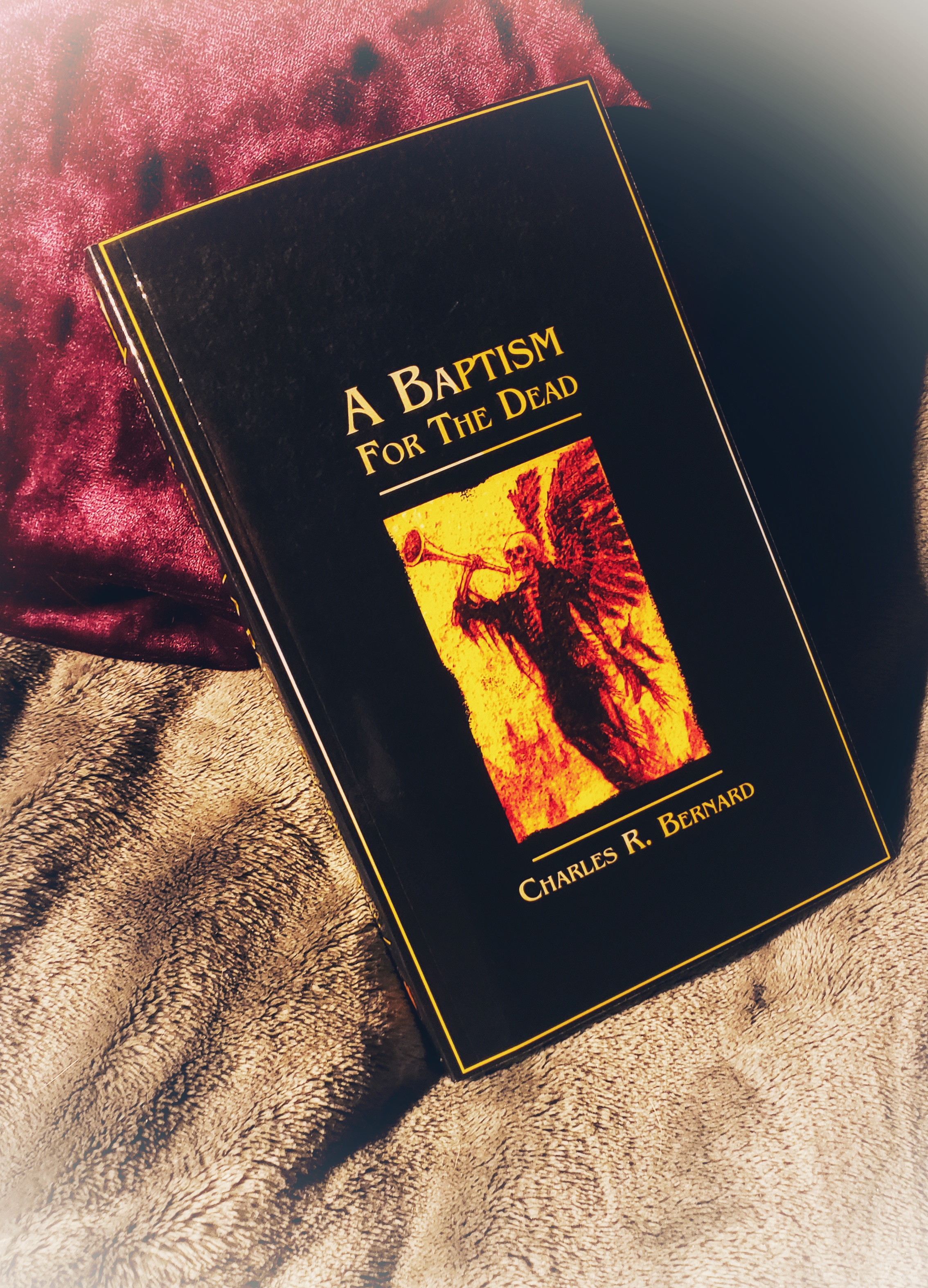
Charles R. Bernard has crafted an immersive piece of historical fiction with A Baptism for the Dead. Spanning the decades between the 1840s and the 1870s, we experience snapshots of the expansive fields of unsettled Nebraska on the approach to the South Pass through the Continental Divide in what would become Wyoming, raging blizzards in Northern Michigan, and the early years of Salt Lake City…and those snapshots feel three dimensional. Throughout the story, we occasionally follow Left Hand, an indigenous woman who has the unfortunate path in life of hunting monsters. The introduction to her character is a fascinating glimpse of a forest haunted by ghosts and a cavern of sickness and monstrous residents. The bulk of the story begins as we witness Leonidas Pyburn and his two sons–following the fateful path previously taken by the Donner-Reed Party–headed West to embrace the call of Manifest Destiny in the form of the emerging gold rush in California. Encountering a frantic, haunted sexton along the way, their own journey takes a turn not altogether better than that experienced by the previously mentioned Donner Party. The survivors of that grisly, horrific encounter go drastically separate directions, both in life and in a cartographic sense. While Leonidas continues West to seek fortune and power, his son determines that his fate awaits him to the North, with the Mormons who passed through the region previously. As secrets and magic bring the father and son together again, two decades later, we learn that there are more than carrion-eating ghouls to be afraid of in this vision of the American West. Bernard succeeds in blending occultism, conventional spirituality, social commentary, history, and family drama into a captivating novel that contains more than enough gore and Western aesthetic to appeal to fans of the Splatter Westerns being published by Death’s Head Press.
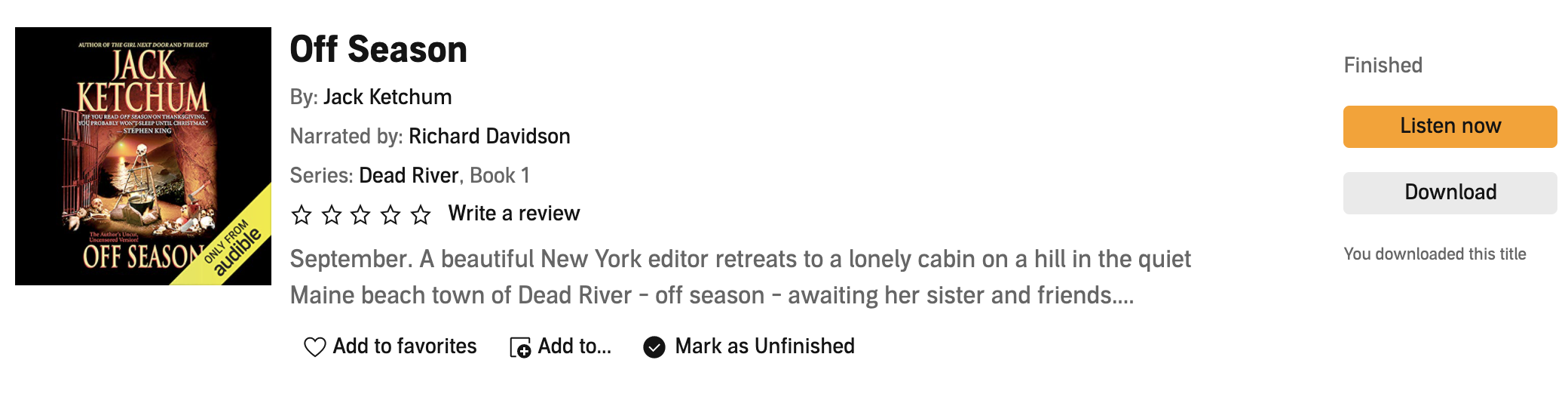
I was a teenager when I first read Jack Ketchum’s Off Season in an already used paperback edition I’d found in a second-hand store or at a flea market. At the time, the book seemed truly graphic and bleak in a way most horror novels didn’t approach. Of course, most of my reading up to that point had been Stephen King, Peter Straub, Robert R. McCammon, Dean Koontz, Clive Barker, Anne Rice, and other more commercially accessible authors. Of those authors, Barker and McCammon were the two who most closely approached what I was reading from Ketchum. If I enjoyed the bleak and hopeless tone of that edition of the book, I was sure to be in for a treat with the less censored edition released this century. A good deal of the change to this story only arises in the final stretch of the story, but those relatively minor changes in terms of text produce massive changes in the outcome of the narrative. Listening to this audiobook edition of the novel, I understand why Ketchum was dissatisfied with the edits his publisher demanded. This was a story that pulled no punches and held nothing back, laying bare the callous inhumanity of the world we live in and the indifference of the universe itself. A tragic hero becomes altogether more tragic in this edition of Off Season, and the story benefits from that transformation. Those who read the original edition of this book may have wondered just how much worse a vacation to Northern Maine could have gone in the fall of 1981. Ketchum answers that question in this restored iteration of the tale. As the vacationers in the cabin are beset by the wild, raving tribe of barely human cannibals, you might notice some scenes that carry a bit more potency and illustrative violence…but the core of the story remains the same until you reach the end. Richard Davidson’s narration is great, though there are times when it seems as if the Maine accents are a bit more of a caricature. It makes for an enjoyable listen just the same.
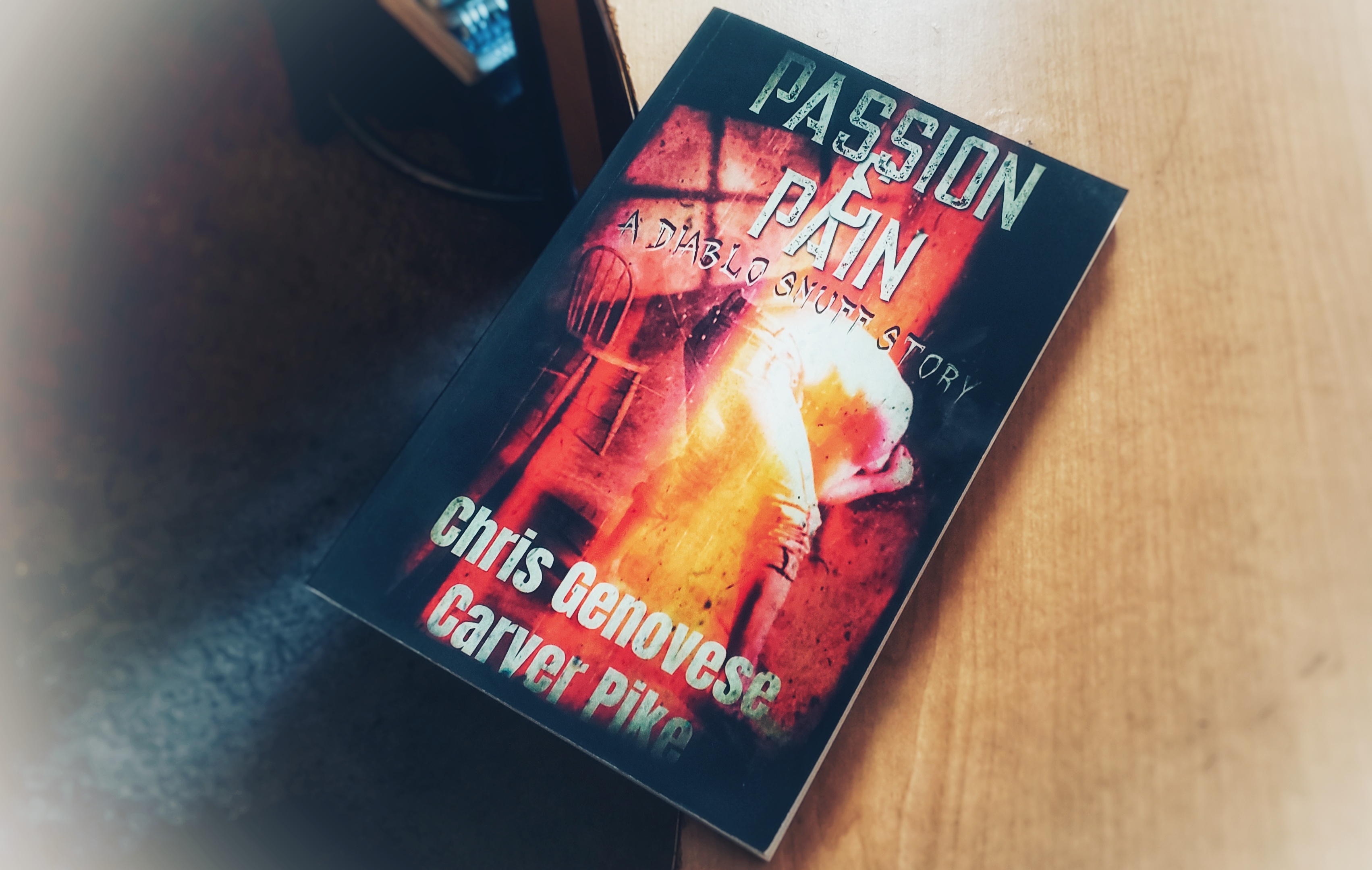
This book, a collection of two connected stories, makes for a fascinating literary experiment. I should first get it out of the way that Chris Genovese and Carver Pike are pen names for the same fantastic author, though I am vastly more familiar with his work as Carver Pike–being a fan of horror and not so much a fan of smutty, erotic, romance tales. The man behind those noms de plume is a terrific and skilled storyteller, so it’s no surprise that he’d be just as capable regardless of the umbrella beneath which he happens to be writing. The Strings On Me by Chris Genovese introduces us to the character of Nick “Lucky” Luciano, a frat boy and a womanizer with a heart of gold. He’s not such a womanizer, all things considered…but it’s sort of the role he plays in his life within the fraternity. A chance encounter brings Natalia to his attention and he is instantly captivated by this beautiful, mysterious, foreign woman. Unfortunately, she doesn’t seem quite so enamored of him, but Lucky isn’t one to give up too easily. At the end of this first erotic romance tale, things seem to be going well. Cutting His Strings is where Carver Pike takes up the baton and races the story of Lucky and Natalia through the finish line…and boy does he bring it to a finish. The romance takes on a darker quality as the story continues, with the erotica still heavily present. Natalia’s attitude and behavior seem to change like a switch has been flipped and Lucky is left dazed and dizzied by the seemingly unprovoked transformation. We discover that Natalia is roommates with an ex-girlfriend of Lucky’s and that the impetus to end that previous relationship was entirely brought about by Natalia’s secret machinations. She’d been no stranger to Lucky when they met, and he barely had a chance to avoid becoming her prey. More importantly, we discover that Natalia is involved with the sinister secret society, Diablo Snuff. You’ll be familiar with Diablo Snuff if you’ve read my previous review of A Foreign Evil, or if you’ve read the other three Carver Pike books that connect with the Diablo Snuff series. Once Lucky is snared by Diablo Snuff, the odds don’t look great for him. Will he be lucky enough that his ex-girlfriend will be able to put the puzzle pieces together in time to save him? Does she still love him enough to invest that sort of attention and concern toward the peculiar nature of his relationship with her roommate? You’ll have to read the book to find out for yourself.
If you enjoyed the Japanese horror flick, Audition, you’re likely to enjoy this book.
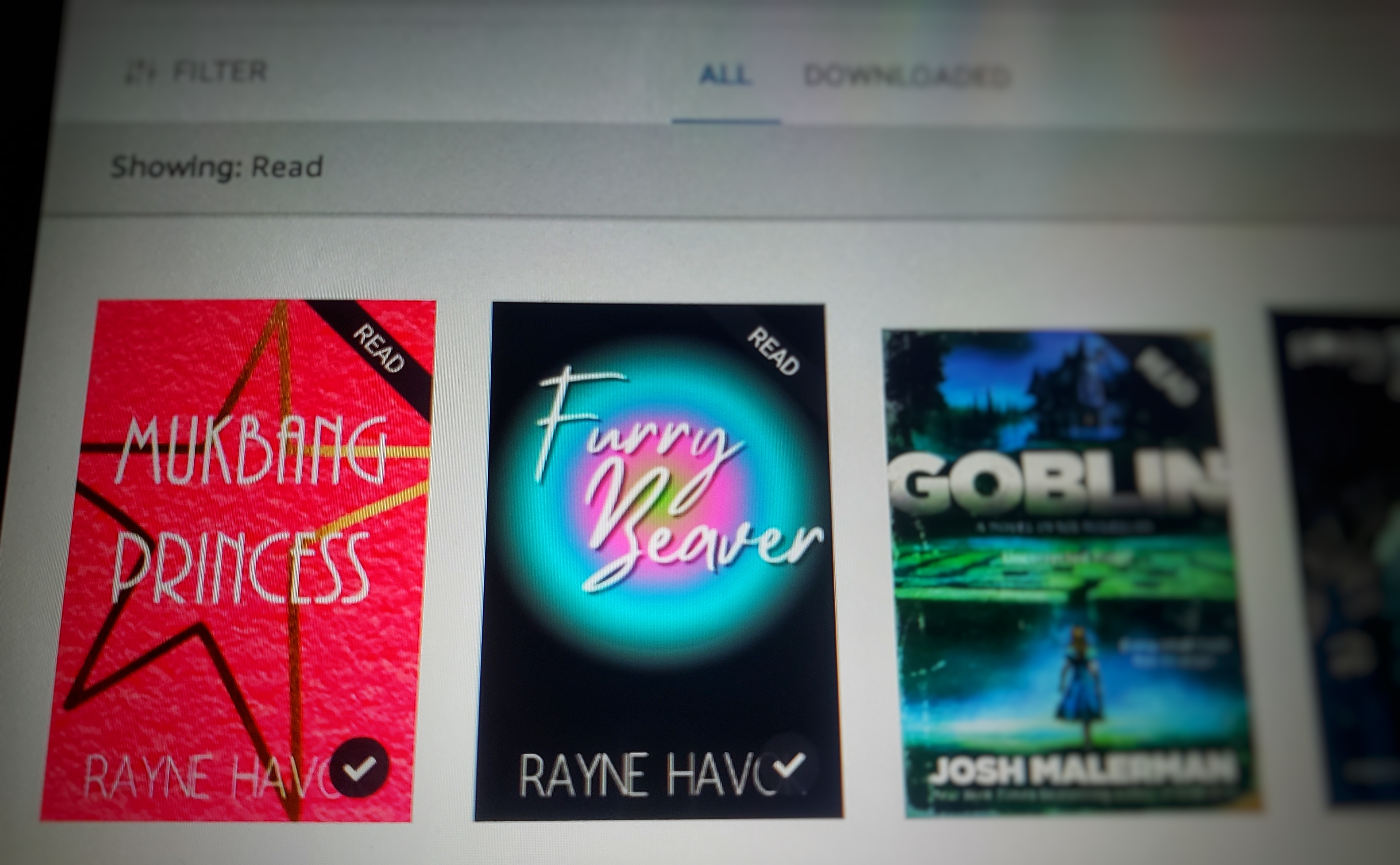
I typically dedicate a single blog post to a single story, but most of those stories are novella-length or longer…with the occasional novelette slipping through. These two stories from Rayne Havok are definitely in the short story range. It seemed appropriate, under the circumstances, to review them both in one post.
I’ll start with Mukbang Princess: This is a story about two teenage girls looking for a quick way to make money online. Neither of the characters is innocent or chaste, but neither of them is particularly looking forward to making their money from amateur pornography. The world of mukbang initially has a sort of strange appeal, if only they can find the right thing to eat. Stumbling across what might be their ultimate meal ticket ultimately crosses the line for both of them, and the thought of working a regular job suddenly doesn’t seem so awful. This story is hilarious. It’s essentially what would result from certain conversations with friends, getting darker and more perverse…but coherently written out and captured. There’s as much perverse humor to the tale as there is sheer, awful grotesquerie…and it’s amazing.
Furry Beaver is up next: This one is just filled to the brim with furry sex and slaughter. I doubt most people attend a furry house party with any concern for their own safety…in this case, that is a fatal mistake. Once the party gets going, there’s hardly a line of this story not dedicated to graphic sexual encounters and equally graphic violence. Havok wastes no time diving into the sweaty, fetid, sexually charged bloodbath…and she doesn’t come back up for air until it’s all over. Much like the titular beaver, whisking the blood from oily fur like it was water.
I recommend checking them both out at your earliest convenience. Links to the stories on http://www.godless.com are below.
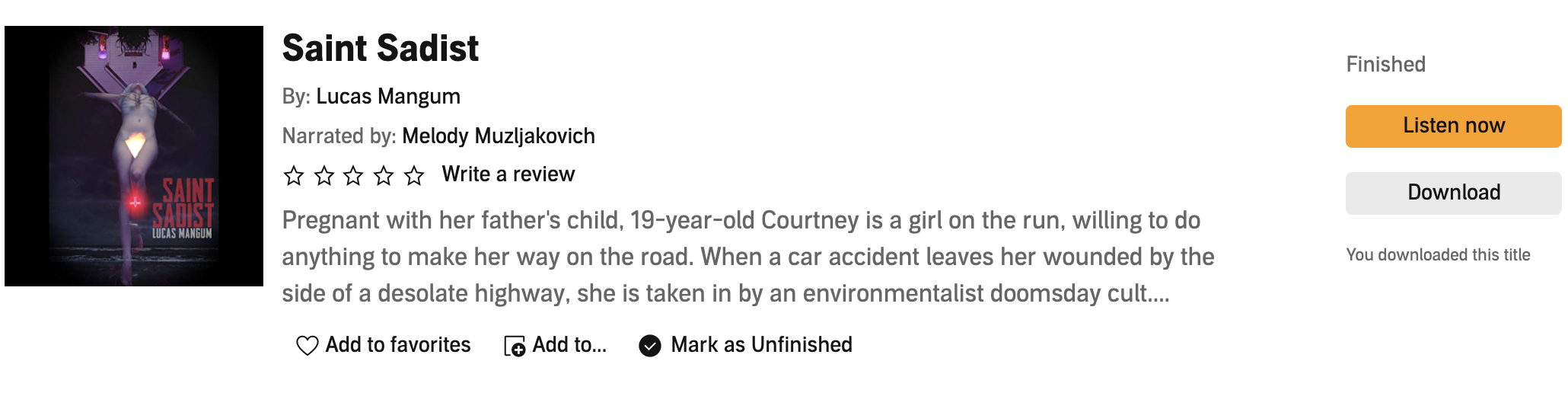
Filth and purity. These words will mean something to you as you follow along with Courtney’s awful narrative. They’re appropriate words to have in mind as you read Mangum’s Saint Sadist. In a strange sense, there’s an overarching theme of filth and purity, the duality of those two things, and the way they reflect one another throughout the whole story. Courtney’s father was a violent and abusive man, until she discovered she could use her burgeoning sexuality as a shield to protect herself from those bouts of cruelty and violence. Becoming a victim of a wholly different sort of abuse, teenage Courtney believes she’s taken control of the situation, both protecting herself and preying upon her father’s weakness. Then she gets pregnant. Reading this, you might think this is the end…but it’s only the beginning. Courtney escapes from her home, hoping to provide a better life for her incestuous offspring by living the life of a harlot. Few authors would look at what they’d created thus far and decide they haven’t gone far enough. Lucas Mangum is one of those few. The story grows increasingly vile and violent. The voice in Courtney’s head and the visions she experiences force us to wonder how much is real and how much is the result of severe psychological damage and depravity visited upon a young girl. This is an unpleasant, raw, and disgusting masterpiece. Melody Muzljakovich breathes life into both Courtney’s Texas drawl and the hissing whispers and chanting of her inner voice with equal skill. Other characters are similarly well-narrated.
 Domus Necrophagous