Pets During Wartime by Weston Ochse

Pets During Wartime by Weston Ochse provides a tantalizing glimpse of a distant future where everything is simultaneously familiar and startling bizarre. While it tells a self-contained tale, it feels like an introduction to a larger story just waiting to be told. I sort of hope that’s the case, because I would love to experience more of this future America (and colonized solar system), where biological and technological evolution has created a plethora of both wonders and horrors, a version of our future of which Ochse paints a vague portrait.

As a lifelong dog lover, it’s strange to imagine a society where pets are not only outlawed, but considered deadly because of their water consumption. But this is precisely the version of Arizona we witness within this short tale. It’s a common sense, calculated bit of propaganda based on water rationing…but it’s no less depressing for the necessity of it all.

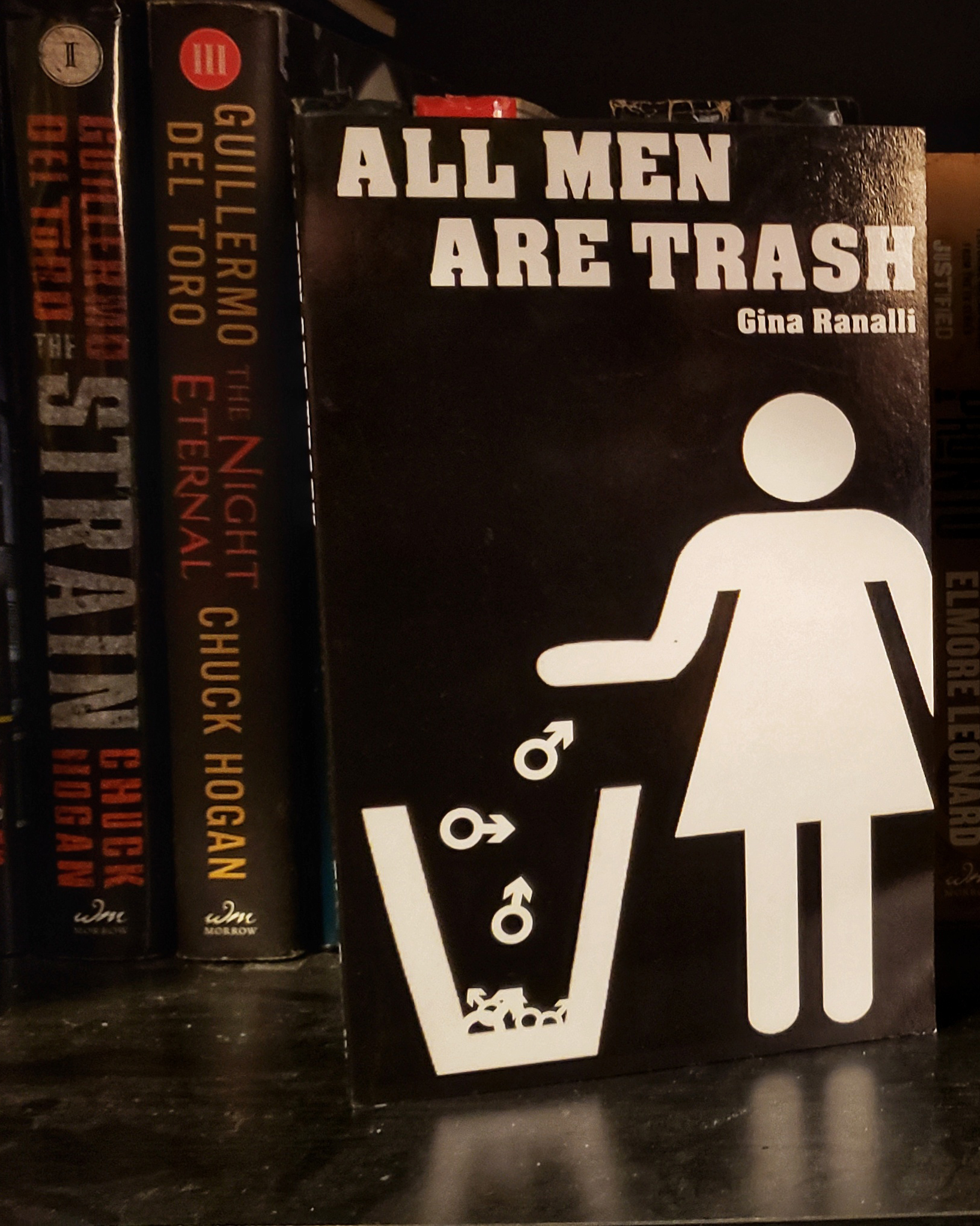
All Men Are Trash by Gina Ranalli

Gina Ranalli has managed to write something cathartic with AMAT (I’m going to avoid using the proper title since I already got banned from Facebook for seven days by sharing a photo of the cover). This book is something necessary in response to cultures of incels and MRAs, as well as the sheer volume of toxic, sexist reactionary trolls attacking any attempt at inclusion or acknowledgment of intersectionality. In another (more superficial) sense, it’s also a bit of fantasy violence geared toward women in the same way literally decades of fiction has provided men with a plethora of fantasy violence. It works on all fronts with equal efficacy.

Reading this book, I was reminded of two other works of fiction. There was a television series, Masters of Horror, quite a few years back, and one of the self-contained stories was entitled “The Screwfly Solution.” The other fictional work it reminded me of was David Moody’s series of books that started with the novel, Hater. Both of those works were built around the concept of sudden, unexpected violent impulses arising within the population and a stark division between “us” and “them” becoming the way of the new world. All Men Are Trash takes a similar concept and infuses it with strong feminist sensibilities and a whole lot of satisfying violence.

This is perhaps not a good book for anyone prone to say things like, “Not all men,” or maybe it’s precisely the sort of thing they should read…to gain a little bit of perspective.

I’m Not Dying With You Tonight by Kimberly Jones & Gilly Segal

I’m Not Dying With You Tonight is not a book I think I normally would have picked up, but I’m glad I did. I’m not the biggest fan of “young adult” literature in most instances, but this is so much more than just a young adult novel. This is something that I could see being considered a classic someday, decades down the road. Like so many of the classics, this book intimately and expertly peels away superficial elements and displays integral bits of human nature.

It’s initially offputting, reading a book entirely written in first-person with alternating chapters from the two protagonists’ perspectives, but they’re so well-crafted and uniquely voiced that it quickly ceases to be an issue. It’s a little bit experimental, in that sense, but I’ve never been one to shy away from experimental literature. In that sense, it’s reminiscent (in the loosest way) of the novel-length poem Only Revolutions by Mark Z. Danielewski, just not focused on two lovers and not spanning the whole of history.

Campbell and Lena attend the same high school but exist in different worlds until a riot at a football game forces them together as unlikely partners attempting to find safety and security. The two girls begin developing a bond, despite their differences and cultural ignorance with respect to one another’s lives and experiences, showcasing not that we’re all the same (because that’s a naive perspective) but that we can find common ground and understanding even when we aren’t the same. Just when they think the worst is over, when they believe they’re in the home stretch, everything around them seemingly collapses into chaos and violence.

It’s almost prescient, how timely this book ultimately ended up being, with the events of 2020 and the turmoil surrounding race relations…but that’s how it is with the best books, they help to shine a light at just the right time in the right place, quite the opposite of the circumstances that brought Campbell and Lena together.

Mount Fitz Roy by Scott Sigler

An amazing book, written by Scott Sigler, and expertly narrated by Ray Porter. I’m actually sort of glad the book was initially made available only through audiobook format (and is still only available as an audiobook, as near as I can tell). The quality of the narration only helps to enhance what is a thrilling, claustrophobic adventure.
Scott Sigler’s Earthcore was an amazing combination of adventure, science fiction, and horror…the sort of thing that Sigler excels at providing his readers with. Mount Fitz Roy is an expectation-shattering follow-up to that novel, with nods to most of Mr. Sigler’s existing catalog of material tossed into the mix.
This book has a little bit of everything. We have a race to locate and unearth a massive treasure buried beneath an Argentinian mountain, we have multiple parties seeking revenge against an alien species that’s remained hidden for millennia deep within the Earth, and (of course) we have aliens and lots of violence. We also have a fair bit of drama and loss embedded into the narrative in a way that makes the high stakes of everything hit home with quite the impact.
Fans of Earthcore might be a little surprised with the direction this story ends up going, but I can’t imagine anyone being disappointed.

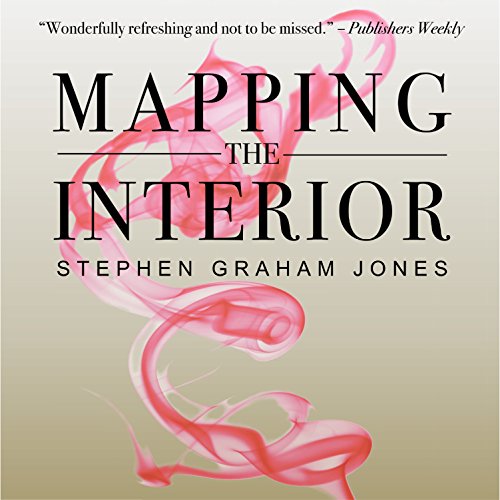
Mapping the Interior by Stephen Graham Jones

Mapping the Interior by Stephen Graham Jones is a haunting tale of childhood, family, and loss. Told from the perspective of an adult looking back on a tale that began when he was 12 years old, it feels authentic and captures the way a child might have interpreted things.
Jones weaves a fascinating tale of a young indigenous boy who discovers the ghost of his father lurking in their home. What begins as a story with a potentially uplifting tone gradually and insidiously becomes increasingly sinister and tense.
I particularly enjoyed the fact that there’s something akin to a combination of the mythologies associated with tulpas and golems involved in the manifestation of the ghost. I’m not familiar enough with indigenous folklore that I can pinpoint any particular element that corresponds to this story.
Listening to the audiobook for this story was particularly captivating because the narrator did an excellent job of capturing a cadence and accent that approximated the tone and speech patterns I’m familiar with from indigenous people I’ve known. That touch made the narrative feel more like someone was simply telling me a story from their own life.

https://www.barnesandnoble.com/w/mapping-the-interior-stephen-graham-jones/1125140263?ean=9780765395108

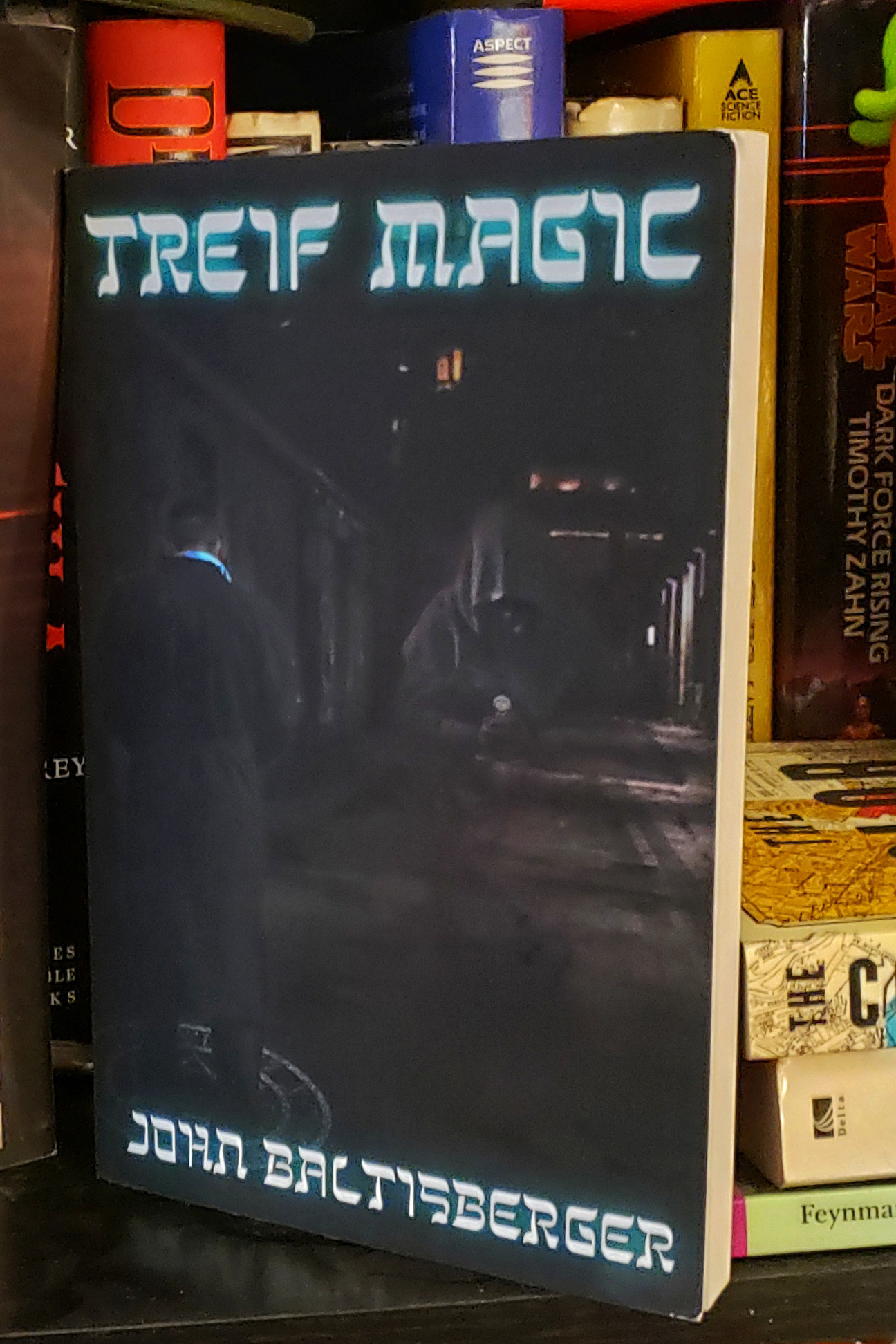
Treif Magic by John Baltisberger

John Baltisberger’s Treif Magic is at once a captivating urban fantasy/horror tale and simultaneously an introduction to Jewish culture and mythology/spirituality for those who are viewing the story from outside of that society. I’ve always argued that the best fiction still manages to teach us something while we’re immersed within it and the best lessons are framed in a narrative structure to better convey and reinforce the information to be learned. This book succeeds in proving that point quite well.
As a story, Treif Magic introduces us to the world of Ze’ev Kaplan, a man who could have been a rabbi if life had turned out differently. Instead, encounters with inhuman forces of both evil and good have marked him and led him down a path that’s molded him into something that’s equal parts private detective, magician, and exorcist.
In my opinion, it’ll be a damn shame if Ze’ev doesn’t become as iconic within the urban fantasy genre as Jim Butcher’s Harry Dresden because there are definitely strong parallels between the two characters while Baltisberger manages to avoid a lot of the “Mary Sue” narrative cheats that Butcher employs in his Dresden Files, ultimately making Ze’ev the more human and relatable of the two characters. In that sense, the character is more in line with Anton Gorodetsky from Lukyanenko’s Night Watch (and its sequels), Carl Kolchak from the classic television series, Kolchak: The Night Stalker, or Harry D’Amour from Clive Barker’s literary universe (and the film adaptation of The Last Illusion, Lord of Illusions).
Filled with supernatural creatures, powerful necromancers, magic, action, and mystery, there’s so much to love about this book.
Without offering up any spoilers, I suspect many readers will come away wanting more and with a burning question begging for an answer: Who is this “she” that the necromancer mentions near the end?
Do yourself a favor and pick this one up. May as well pick up a copy for a friend or family member too, since it’s always fun to have people you can discuss your books with.

Musings On Education

STEM is important, vitally important.

We absolutely need basic comprehension of math and science literacy to be more widespread here in America (and throughout the rest of the world, of course). We’ve seen precisely how dangerous ignorance of those topics can be.

Just as important, we really need accurate, unbiased, objective lessons in history and sociology to be treated as being of paramount importance for our children. The study of history and of social structures is no less imperative than the study of STEM subjects.

Additionally, it would be great if we could incorporate some low level critical thinking and logic education as early as elementary school as well. Mindfulness and self-awareness could be useful too.

Sure, these things wouldn’t lead to a perfect society…such a thing can’t likely exist…but it would make for a better society, more well-equipped to tackle the obstacles that come with both day-to-day life and more challenging times.

Writing Update

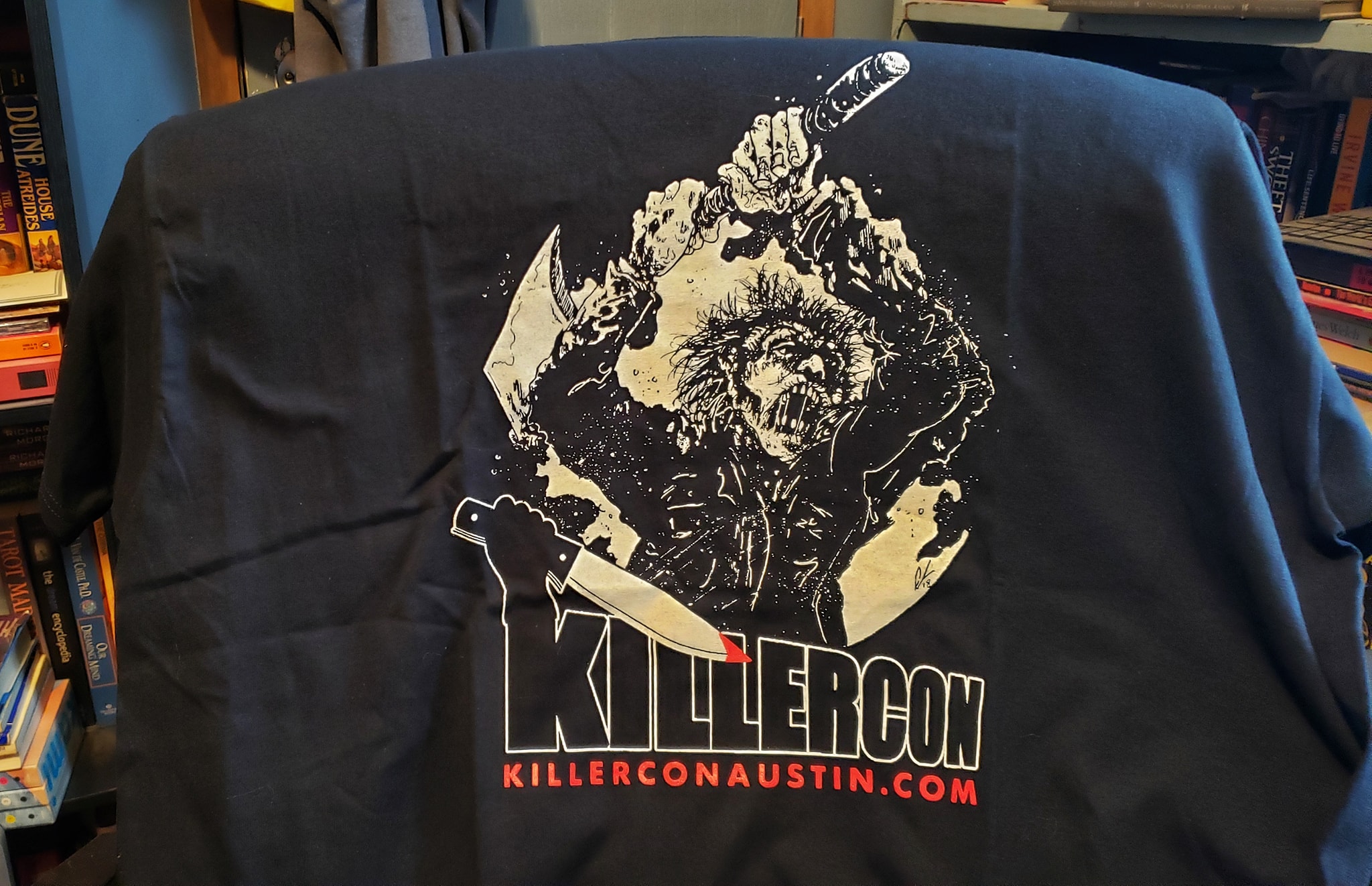
Attending virtual KillerCon Austin last August was a massive turning point in my life…in ways that are only now becoming clear to me.

Chatting with Carver Pike (and discussing his experiences with respect to self-publishing) was what led me to pull the trigger on putting my novel, Innocence Ends, out there, after designing the cover art and all that jazz.

Watching a panel with Lisa Lee Tone was what led me to perusing her numerous book reviews and deciding that it might be worthwhile to send her a copy for review purposes.

Interacting with John Baltisberger during and after the con (and seeing how hard he worked to keep everything running during the virtual con) led me to explore a good deal of the Madness Heart Press catalog…in addition to inspiring a great deal of respect for the man and how much he was willing to put into the things he cared about.

Each of these things sort of fed into one another and produced a sort of cascade effect that is making me happier and more content with my life. I owe each of those three people a massive debt of gratitude…a debt that keeps on growing.

I would not be where I am right now, with a novella to be published by MHP and more work hopefully soon to follow, were it not for the fantastic KillerCon experience.It’s just funny how something done mostly for fun can change one’s life…in my case, definitely for the better.

Financial Burdens Existing Only for the Poor

The recent hilarity and turmoil associated with certain hedge funds encountering a mob of amateurs online have certainly done a great deal to showcase the illusory nature and absurdity of our financial reality here in America. That is, assuming it wasn’t already obvious, from the massive disconnect on display with the stock market rising while millions of Americans are still jobless, homeless, or facing poverty.This seems like a good time to discuss the costs and financial burdens that exist only for people below certain levels of income.

Crimes for which the only penalty is a financial one:

For an individual making $70,000 a year, a fine of $100 amounts to only 0.14% of their income. Assuming a $15 minimum wage (which isn’t a reality yet), that same $100 fine amounts to 0.32% of the individual’s $31,200 annual pay (nevermind the fact that federal minimum wage has been $7.25 since 2009, which is an income of only $15,080 per year). That translates into more than twice the proportional loss for the individual at this hypothetical minimum wage. If the higher-income earner in this thought experiment was making an income of $500k annually, we’d be looking at only a loss of 0.02% of their overall income with the payment of a $100 fine. For someone at the hypothetical minimum wage of $15 an hour, that percentage of their income would be only $62.40 (it would only be $30.16 for someone at the actual minimum wage of $7.25)…but in reality, no matter how much or how little the individual earns, the fine is still going to be the same $100.

Overdraft Fees:

A single overdraft fee can range from anywhere between $15 and $50, with the average being $35. These are costs that are ultimately only levied against those below certain income levels, yet these fees earn financial institutes an average of more than $30 billion a year (it’s worth noting that the Trump administration wanted to potentially make it easier for banks to penalize customers with overdraft fees only a couple of years ago).

Someone might suggest simply not having a bank account, but that’s hardly a viable option for most people these days. Increasingly, employers push for direct deposits in place of paper checks (even those direct payment cards provided by certain employers are backed by financial institutions), and payment of monthly bills is becoming more inconvenient (if not outright impossible) with cash. God forbid these same people want to save money by utilizing automatic payments for many of their bills because that isn’t an option without a debit or credit card. They had better keep a close eye on their finances because a single $60 payment for their gas or water bill can suddenly run them $95 or higher if they don’t quite have the money in their account yet. Naturally, this sort of thing can cause a cascade effect.

Late Fees:

Late payment fees for bills are something we’re unlikely to see if we’re above a certain income level as well, especially if we can comfortably utilize automatic deductions for the bills in question. Paying your monthly electric bill ten days late doesn’t cost the electric company anything, but it will cost you…either a percentage or a flat-rate late fee. Paying your rent three days late (in South Dakota) probably doesn’t cost your landlord or property management company anything, though it can come with late fees or trigger the beginning of the eviction process.

Deferred Maintenance:

Whether it’s your home, your car, or even your own body, sometimes one simply can’t afford to get something checked out promptly. A minor tooth pain that would cost less than $100 to address when only a cavity will cost upwards of $500 when it requires a root canal. A small vibration in your car may be a minor repair of only $300, but if one can’t afford that, it could end up being something that costs thousands (or takes the vehicle out of commission entirely). A crack in the living room window could be too expensive to address, but when it shatters during a blizzard and allows freezing temperatures and snow to accumulate inside of the home, the costs could be insurmountable.These are additional financial burdens that typically aren’t experienced by those above certain income levels (assuming they aren’t living ridiculously beyond their means).

More things could be tossed into this list of ways our financial system is rigged at the expense of those who have little, to the benefit of those who have plenty, such as student loan payments (whether we’re talking about college/university or trade school) and debts sent to collections…but I’d never finish typing this up. It’s worth thinking about ways these issues can be addressed and the inequity can be resolved. With the sheer absurdity of our financial institutions on display, there’s no time like the present to think about ways to fix what is clearly a broken system.

This post was originally written for my Facebook page. I hadn’t done anything with my blog for quite some time, so I figured I’d copy it over here as well.