The Substrate Of My Beliefs

I like to think that most of my decisions in politics and life are informed by defensible positions and beliefs.

I believe that LGBTQ people are, first and foremost, well…people. I believe that the love between two people is fundamentally no different, regardless of the sexual organs and gender expression. I’m not always great with using the right words, but I also grew up when referring to friends as “gay” as a term of endearment was commonplace. I still try to get things right, most of the time.
I believe that there is literally mountains of scientific and sociological data supporting the argument that gender is a sociological construct that varies dramatically from culture to culture and that the biological/chromosomal nature of “sex” is nowhere near the binary thing a lot of people cling to out of stubborn resistance to waking up and embracing new knowledge that transforms our earlier assumptions. I like the use of binary in those terms, though…because 1 and 0 could be seen as phallic and vaginal, respectively.
I believe that Black People and other minority groups are arrested, incarcerated, and killed at an improportionate rate because of a series of systems that are geared for inequity and inequality. In other words, I do believe that systemic racism is a very real, life threatening issue in America.
I believe that women are no less capable and valuable within our society, and that there are numerous hurdles and double-standards in place that make things more challenging for women than for men in almost every arena that matters.
I disagree with regime-changing conflicts that aren’t specifically and intentionally for the purpose of mitigating actual human suffering and torture.
I believe that we already spend altogether too much on military and defense, and that we could easily scale things back and do a better job of repairing failing infrastructure at home.
I believe that, aside from the indigenous people, every single person here in America is here because of immigration over less than a thousand years…and that we don’t get to simply say, “no more immigrants,” because they aren’t the right color of skin or believers in the right form of superstition. Most of our ancestors came here with little to nothing, but the dream of a different life. There have always been a small number of bad people who slip through, but the majority of immigrants all along have simply been people who want better for themselves and their loved ones.

I have plenty of other beliefs that are more debatable and more a matter of my personal outlook on things…but the ones I laid out here are the core of what I base my judgments upon.

As to my less concrete beliefs and influencing perspectives:

My views on climate change (I do believe we have had a negative impact that we can–and should–work to remedy) are open to disagreement. I’m no fucking climate scientist, but I’m inclined to trust those who are.

My pro-choice perspective is one based on the fact that it is not up to me to impose my own morality onto others or to have them impose their morality onto me. Additionally, the thought experiment is a solid one. If a fertility clinic were about to explode and I could either save a five-year-old child or a tank containing hundreds of viable, frozen, embryos…I would choose the child 10 times out of 10…unless they were particularly annoying. That, to me, showcases a very real distinction between which is a child and which is not.

I believe healthcare is a right and that no one should go bankrupt or have their lives destroyed because of the skyrocketing costs of healthcare in America.

That list could go on and on…but I would change those assumptions if I were supplied with logically consistent, rational, and well-informed arguments to the contrary.
The ones in the main post…those aren’t going to be changing.
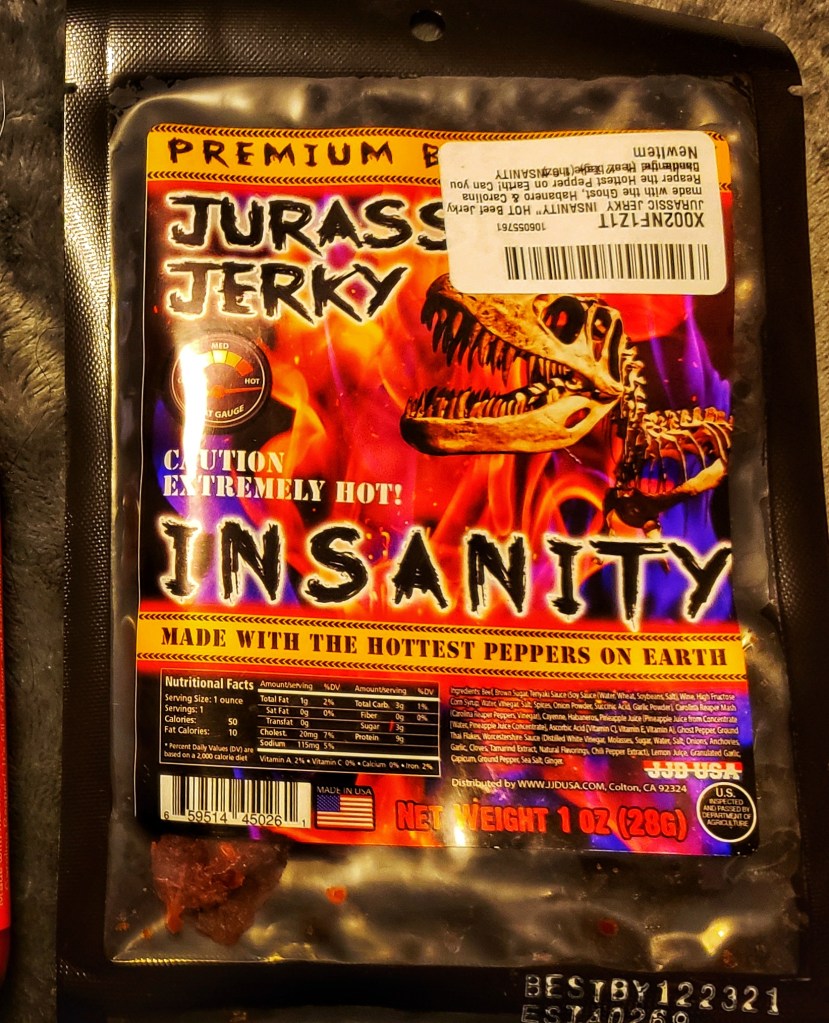

Jurassic Jerky: Insanity

It is with a heavy heart that I tell you my Jurassic Jerky is no more.
It was a delicious Valentine’s Day present while it lasted…and it lasted longer than I’d have expected, what with how positively delicious it was. The primary reason it lasted a couple of days is that it is not only delicious…but also ungodly hot, with a heat that sticks with you, burning the inside of your mouth for easily ten to fifteen minutes after you’ve finished what you were eating. That makes sense when you read that this particular jerky is seasoned with ghost pepper, habanero, and Carolina reaper.
That last bit is exacerbated by the fact that, like all jerky, it tends to get stuck between your teeth. This provides a sort of timed-release quality.
The bag pictured on the company website definitely indicates a greater quantity of jerky inside the packaging (there were two moderately large strips in my pouch)…but it is tasty enough that I would consider buying more for myself. I also want to try some of the other flavors.

My 16-year-old daughter liked it too.

https://www.jurassicjerkyllc.com/

Bloodsaints: Rawspense for a Cause

A good number of months ago, a fellow author and friend of mine discussed with me the possibility of getting a handful of horror authors together for the purpose of assembling an anthology with the express purpose of raising money for COVID-19 relief.

We’ve all suffered during this pandemic in various ways, large and small…some far more than others. We wanted to do something that might help in some small way.

After a couple more months, this friend of mine settled on UNICEF as the charity we’d donate the proceeds to, as the most likely to provide a real, tangible benefit.

A couple of months later, he began working with Becky Narron of Terror Tract Publishing LLC for cover design and the actual publication of the anthology.

And here we are today, with the release hitting the Kindle store only a little over half a year after the first conversations began taking place.

Pick up a copy. Enjoy the stories. Find comfort in knowing that your purchase helps to support a worthy cause.

Is That Guy a Murderer? The Answer Is He Might Be.

Once upon a time, I used to do a great deal of shopping at our local Best Buy…back in the days before I realized just how much money I was wasting buying things there instead of doing so online. There was a sales representative there who frequently struck up conversations with me and we seemed to have fairly similar areas of interest. Admittedly, being not the most social person, I did find this individual a little bit annoying…but he seemed to just be sort of lonely or socially awkward (like I have room to talk), so I didn’t go out of my way to avoid him and the ensuing conversations when I saw that he was working.
In addition to those encounters at Best Buy, I began running into him while standing in line for Midnight releases of video games from GameStop. Yes, I was one of those people for quite some time. We chatted when we saw each other there was well, which wasn’t infrequent since we both appear to have wanted a lot of the same video games on release night. Again, refer back to my comment about he and I having similar tastes.
A couple of years later, after not running into him at all, a girl I was dating at the time invited me to join her at a friend’s house. This friend happened to be dating the individual in question. Naturally, we recognized one another and chatted a bit more. I wasn’t comfortable there, and I chalked that up to my normal discomfort in other people’s homes. It turned out, as I discovered later, this guy was abusive toward his girlfriend and the household was indeed filled with a good deal of tension. They broke up a short while later and I didn’t see him again. I was not unhappy about that.
Another couple of years pass.
The next time I see this man is in a photo of him attached to a news story about how a friend of his had hired him and another mutual friend of theirs to murder his girlfriend. They picked her up in their car ostensibly to give her a ride somewhere, and after they were away from civilization, the guy I’d chatted with so many times stabbed his friend’s girlfriend and killed her while the other man held her down. He and the other fellow drove her body out into the Black Hills and buried her before returning to their lives for the following year or so until the story broke.
There’s a whole lot more to that story, including the fact that the boyfriend who’d hired the killer(s) then convinced a couple more friends to dig her up and bury her body somewhere more remote, thus making it impossible for the killer(s) to lead authorities to the body if they were so inclined (after he didn’t pay them).
I’m not going to delve into it any further than this, it’s been reported in great detail in various South Dakota newspapers and on television news programs. I just thought it was interesting to know that you or I could, at any point, during any interaction, be talking to a person capable of cold-blooded murder.

The idea to write this blog post came from the fact that a friend of mine who works in local television had recently written a story for the station, providing updates on the court case in question.

Night Stalker: The Hunt for a Serial Killer

With the title being what it is, I should have expected more of a focus on the investigations that led to the ultimate arrest and conviction of Richard Ramirez. They say it right there in the title, “The Hunt for a Serial Killer.” It was still disappointing to see what the documentary turned out to be.

Ramirez is one of the more fascinating characters from the annals of American serial killers, so it stood to reason they might have spent a bit more time focusing on who Ramirez was and what he did. Instead, I ended up sitting through three hours of police hero worship. Strangely, I would have preferred if it had been three hours of that bizarre hero worship that some people devote to serial killers…it would have been far more interesting, at the very least…also a touch more disturbing.

Some elements of the investigation were interesting enough, but certainly not sufficiently captivating to keep me from wanting to stop wasting my time at various points. The crime scene photos were largely things I’d been familiar with from various books and other documentaries over the years, as were many of the first-hand accounts from surviving victims and those who were close to the victims who were not so lucky. There wasn’t much by way of new material being covered with respect to Ramirez himself or the things he did.

There was one point in this circle jerk of police aggrandizement when a detective admits to punching a known acquaintance of Ramirez in the face, being mocked for the weakness of the blow, and when the officer threatens to punch the individual again he cowers and gives up what he knows. I don’t believe that account from the officer. I suspect what really happened is far more sinister and far less in accordance with proper behavior of police officers. My assumption is that the detective withdrew his sidearm and threatened to shoot Ramirez’s acquaintance after learning that he–as Robert De Niro in Raging Bull might have put it–throws a punch like he takes it up the ass and that his machismo and badge simply weren’t enough to get his way. That is, of course, just my impression of the segment in question. I could be wrong, but the story told by the detective simply wasn’t internally consistent and didn’t ring true at all.

The one thing I can say about Night Stalker: The Hunt for a Serial Killer is that it does reaffirm my contempt for Dianne Feinstein. How she handled things as Mayor of San Francisco was short-sighted and counterproductive. Her actions may have directly led to Ramirez avoiding capture long enough to ruin more lives. How she continued being voted for after that boggles my mind.

I can’t say that I’d ever be able to recommend this documentary to anyone. It’s tedious, sometimes mind-numbingly boring, and nowhere near as shocking or graphic as I was led to believe. It’s heavy handed in its overwhelmingly favorable depiction of law enforcement and largely neglects to tread any new ground.

https://www.netflix.com/title/81025701

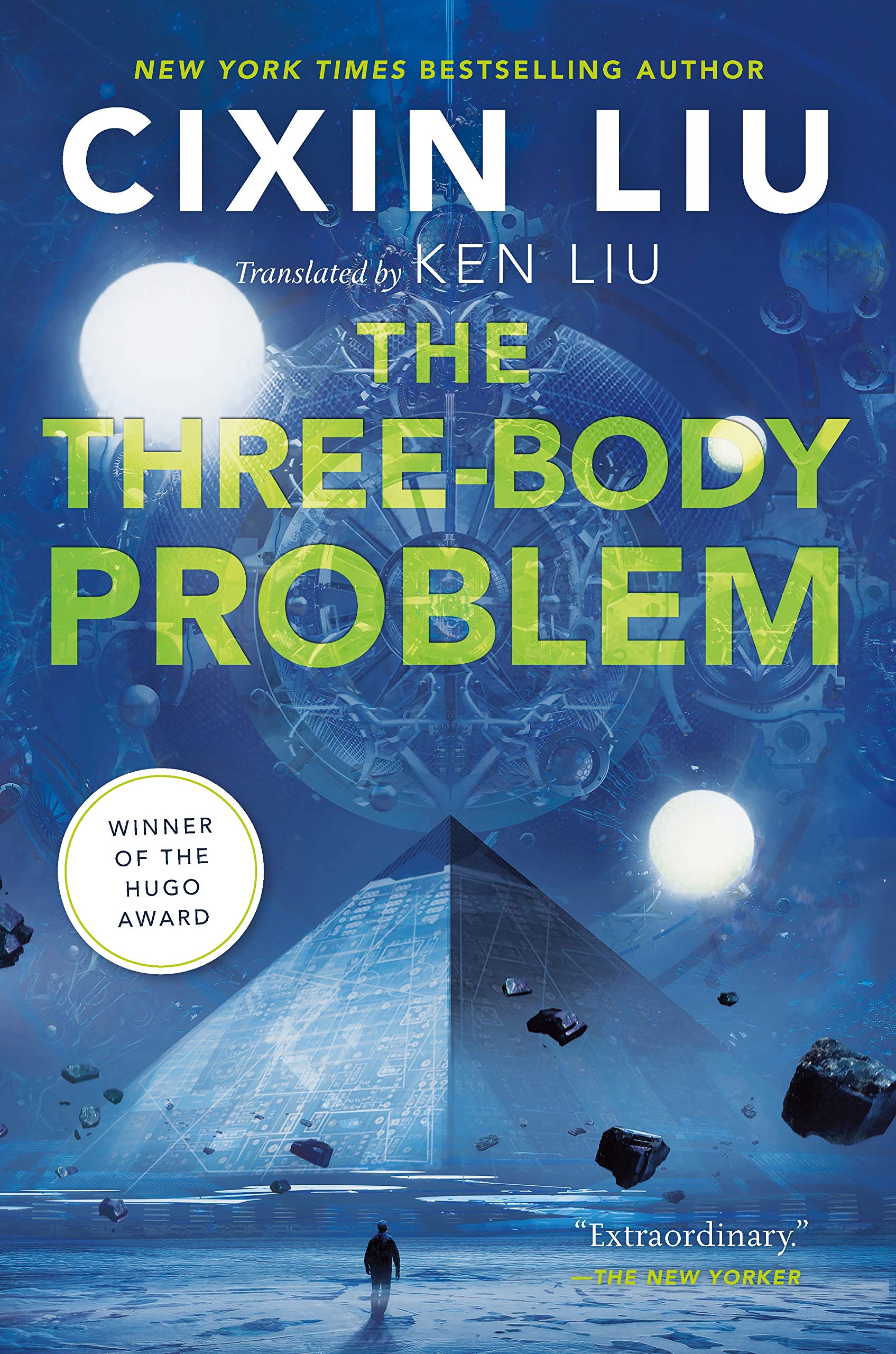
The Three-Body Problem by Liu Cixin

I’m copying over some reviews of titles I’d written up in 2018 and earlier, just in case these titles are new for other people.

Liu Cixin is an author I wish I could be more familiar with. The Three-Body Problem was a positively stunning piece of hard science fiction with a profound hint of the fantastic still built on extrapolation.
I don’t know what is lost in the translation from Chinese into English, but I find it difficult to believe that it could have been more well-written if it had been written originally in English. I suspect that this is equal parts the quality of the original material and the caliber of the translator. From what I have read it appears that the second volume in the trilogy has a different translator while the final volume is translated by the same man who expertly converted The Three-Body Problem into English. Sadly, though the second volume is available now, I have to wait until later this year before the third book is released in English.
This novel begins during the nightmare of The Cultural Revolution spearheaded by Chairman Mao and a good deal of the narrative focuses on the anti-intellectual and anti-progress philosophy that was imposed upon the whole culture during that time period beginning in the 1960s and continuing for a couple of decades after that. It is interesting, to say the least, to have a perspective on that period provided by someone who grew up through it as the author had.
From there it grows into a frankly captivating and disturbing first contact narrative that unfolds in a rather unexpected way. I can’t say much without giving altogether too much away, but I can’t recommend this book enough for anyone who enjoys science fiction or simply enjoys science and wants a fictional template through which certain concepts can be expressed and better visualized.
I look forward to the second novel and wish that I could look forward to reading the third book much sooner than it is going to be available to those of us who can’t read a Chinese dialect.

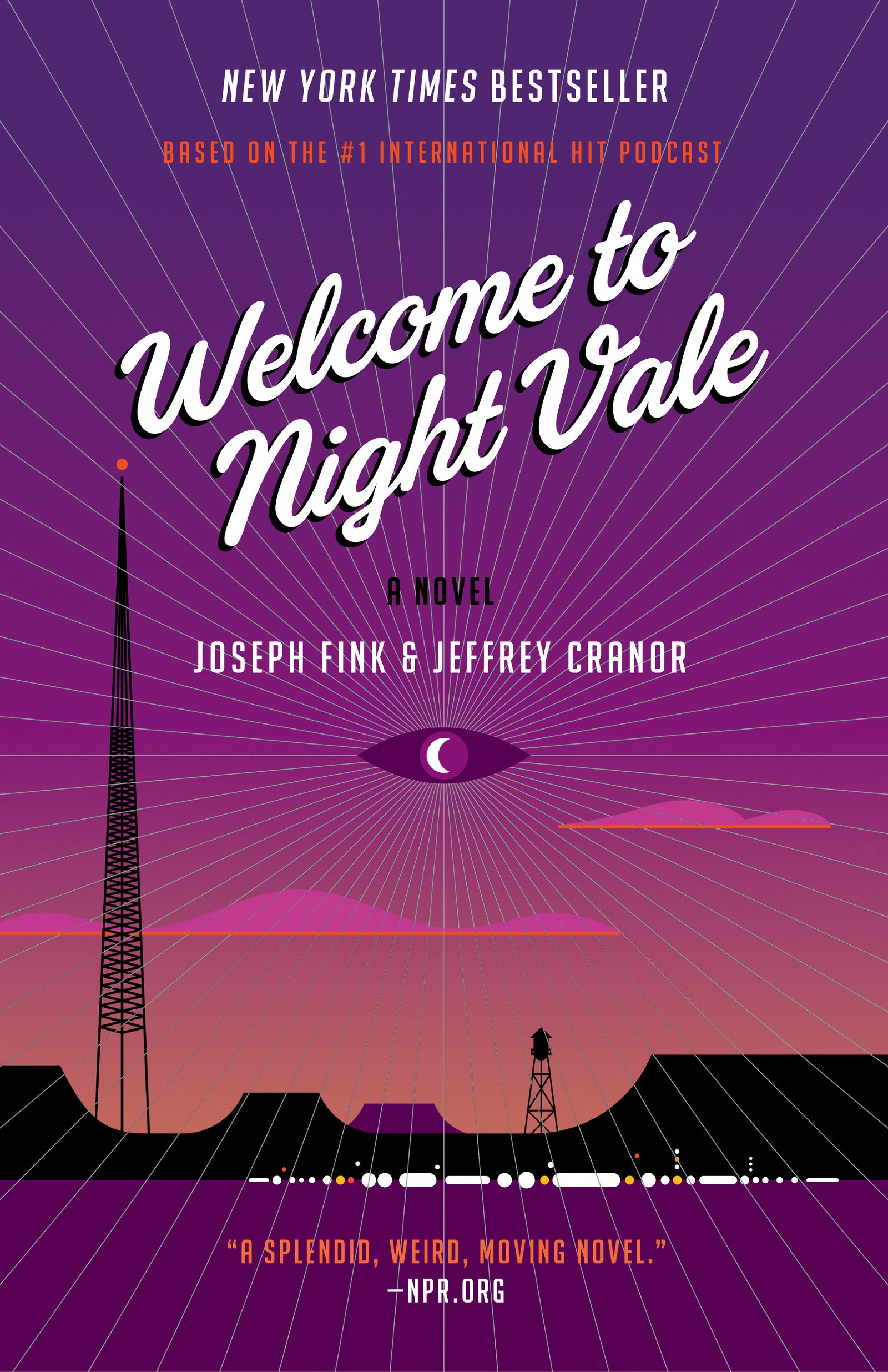
Welcome To Night Vale by Joseph Fink & Jeffrey Cranor

I’m copying over some reviews of titles I’d written up in 2018 and earlier, just in case these titles are new for other people.

Welcome To Night Vale by Joseph Fink and Jeffrey Cranor is definitely an interesting read, especially if your tastes lean toward the absurd and surreal.
It ranks up there with Douglas Adams (think Dirk Gently rather than Hitchhiker’s Guide) and David Wong, but with a bit less cohesion and rationality behind the narrative and the setting. That sounds like a bad thing, but it really isn’t…it’s refreshing to read something so ridiculous that still manages to be captivating and entertaining, because that is something a great many authors just can’t pull off.
Throughout this novel, none of the absurdity and randomness ends up feeling like it’s there just to be there or simply to categorize the story as being bizarre or strange. Somehow the authors manage to make it all feel like it furthers the plot, and there is one of those…a plot.
Reading this book makes me want to listen to more of the podcast that started it all, maybe from the beginning through the present (which would likely take up more time than I really want to invest). It’s a statement about the quality of the book that I would actually want to spend more time visiting the fictional, semi-lucid nightmare town that is Night Vale and hopefully they will opt to write another novel or two so that I don’t have to immerse myself in the podcast.
As long as I don’t have to visit the library to read them, I’ll be ok.

14 by Peter Clines

I’m copying over some reviews of titles I’d written up in 2018 and earlier, just in case these titles are new for other people.

Peter Clines wrote a masterpiece with 14. The comparisons to LOST are absolutely spot-on, in that the novel successfully contains a great deal of the same surrealism, mystery, and even a few of the themes from the first couple seasons of that television show and places them inside an old LA apartment building instead of on an unnamed island.
Combine that element of LOST-like intrigue and mystery with some House of Leaves and toss in a healthy dose of H.P. Lovecraft and you’ll start to approach the setting for 14. You hear people describe movies and television shows by stating that this or that (in reference to a location or vessel) is actually a character in its own right, and this book successfully makes the apartment building a pivotal character without imbuing it with thought or anything silly like that…and then Clines stuffs the building full of interesting human characters who display an almost contrived level of diversity without ever coming across as contrived.
References to LOST and Fringe in the dialogue make it clear that the characters realize just how unusual their situation is, and that self-awareness makes them more compelling as far as I’m concerned. The whole story is fascinating, in large part because of how relatable the characters are, most of them at least. The only downside I can think of is that I predicted the ending less than halfway into the story, but maybe that just means I was approaching the book from a similar perspective to the author.
This book undoubtedly falls into the top 5 stand-alone novels I’ve read in as many years. It might even still make my top 10 if I include novels that are part of a series.

The Dark Forest by Liu Cixin

I’m copying over some reviews of titles I’d written up in 2018 and earlier, just in case these titles are new for other people.

Liu Cixin crafted a thoroughly fantastic and stunning follow-up to The Three-Body Problem with The Dark Forest. The tension from the final chapters of the first novel carried over well into the sequel. The Dark Forest excels in portraying a worldwide reaction to the certain knowledge that an advanced alien species had successfully cut us off from advanced scientific inquiry (by making it impossible for us to study anything at the quantum level) in order to keep us weak in preparation for the massive fleet that they had sent our way to take over our planet and escape the inevitable destruction of their own.
Just like the first novel, the development of fully realized characters is superb, and the exploration of our evolving and devolving society during the couple of centuries after doomsday begins looming on the horizon is spectacular.
The most striking element of The Dark Forest is in the application of the title itself as an ominous response to the Fermi Paradox. The concept that we aren’t seeing evidence of alien civilizations because they are applying game theory to any other potential life in the universe is an interesting one. To announce one’s existence to anyone else in the dark forest of our universe presents the very real risk that anyone receiving the announcement might be aggressive or induce aggressive response from one who isn’t simply because they might assume that you might be. It’s a sincerely horrifying prospect that there could be numerous civilizations out there who are just acting prudently in not broadcasting their presence and that there are other civilizations who might validate that concern by being a threat to any other life they might encounter. It’s really fascinating to think of it that way. I certainly didn’t think of that when I was writing my paper on the Fermi Paradox when I was in college, and I wish I had.
The only problem I can think of with this book is that there seems to be a minor shift in tone and style from the first novel, but that could easily be due to there being a different translator involved with this volume. It’ll be interesting to read the third book to see if that’s the case, since it is translated by the same man as the first one.
I honestly don’t know where the third book might take me, because this one seemed to be such a perfect place to end the story…but I can hardly wait until the English translation is released later this year.

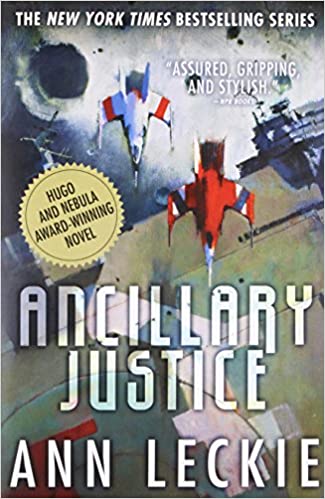
Ancillary Justice by Ann Leckie

I’m copying over some reviews of titles I’d written up in 2018 and earlier, just in case these titles are new for other people.

I had to make it more than halfway through the next book in my pile of books to-be-read before I felt like really analyzing Ancillary Justice by Ann Leckie. It was a lot to process in a reasonably small novel.
The story follows a protagonist that is the final remaining aspect of a massive ship-based militaristic AI, confined to a human shell. While the ship was still “alive” and operational, these human shells with minds replaced by the AI were known as ancillaries, essentially tools of the ship to use in place of soldiers and other functionaries. The author handles the character with a consistency that is admirable as the story jumps back and forth in time to build up the back story while unveiling the main narrative as it progresses toward an intense climax.
At heart it’s a story about revenge and an exploration of consciousness (human and AI alike)…but there is much more to it than just those two superficial elements. Redemption, colonialism, human nature, and war are all placed under the lens while the non-human protagonist pursues her/its objective. We, as readers, get introduced to a massive (gender-neutral, in which everyone is referred to by feminine pronouns) empire spanning numerous star systems, led by a tyrannical individual who has cloned herself into numerous ancillaries as well, to become a distributed consciousness spread across the galaxy…but within whom there is a fracture, and the leader is working against herself in subtle and not so subtle ways to undermine the opposing side. Just typing that was confusing, and it says a great deal about the quality of the author that it isn’t disorienting within the book.
I have to read the rest of the series to know for sure, but based on this first novel of the trilogy, Leckie has certainly cemented herself as being one of the most original and talented minds recently working within the science fiction genre.