Why the Neurodiversity Movement Matters

I was a reasonably young child when I was diagnosed with ADHD. I wasn’t one of those cases where the diagnosis was just being tossed around and applied to kids behaving as kids always have…in my case (as with many others back in the 1980s), it was a legitimate diagnosis. I was prescribed Ritalin at that time, and it did seem to do the trick–when I was in school. By the time I’d been home for a little while, I was twice as difficult to deal with as I’d been before the diagnosis and prescription. Before that, I’d been a handful–no surprise to anyone who knows me as even an acquaintance, even as an adult–after that, I was a holy fucking terror.
It didn’t take long before my mother stopped me taking the Ritalin, because it was ultimately a bit of an issue. If it had been a few years later, they probably could have found some sort of scheduled dosage that might not have produced the same negative side-effects. Whatever the case may be, life goes on.
Years later I was further diagnosed with passive-aggressive personality disorder, not to be mistaken with someone behaving in a passive-aggressive manner. They are two distinctly different things, though there are some commonalities in the manifestation of passive-aggressive personality disorder and an individual being a passive-aggressive asshole–but there’s no sense in going into that here. As with other personality disorders, there is no drug treatment associated with the passive-aggressive disorder–it’s a wiring issue rather than a chemical one.
Passive-aggressive personality disorder frequently goes hand-in-hand with anxiety disorders, major depressive disorder (MDD), suicidal ideation, and substance abuse. You might have guessed it if you figured there’s a reason I mention all of those things in particular.
You win the prize!
There is no prize.
Get used to disappointment.
In addition to these things I’ve already mentioned, there have been strong signs of PTSD related to assorted experiences from my childhood (both as a young child and in my teen years). With all of those factors combined, I like to think I’ve turned out to be a reasonably functional adult and a productive member of society. I definitely have my issues here and there, and I can certainly still be quite difficult to deal with in even small doses (depending on the day)…but, all-in-all I’m keeping it together rather well if I do say so myself–and I do, so don’t argue with me.
I wish there had been something like the neurodiversity movement when I was younger, or that it had been more well-established and well-known at that time. I spent most of my life feeling like there were things wrong with me as if I were broken or damaged in some way–and perhaps I was to some extent. I still frequently refer to myself as being precisely that. I laugh and joke about how I’m broken or damaged, dysfunctional and maladjusted…but there’s that kernel deep inside that curls up into a little fetal shape whenever I do it.
It’s ok, though, I’m a bit of a masochist.
The neurodiversity movement is focused on treating these (mostly high functioning) people as being nothing more than a natural (and sometimes valuable) thread of the overall tapestry of human diversity. It’s refreshing and more than a little bit liberating to be treated as if I fall into a spectrum of what can simply be called a person with a normal human brain–as preconditioned as I might be to consider it anything but normal.
There are a lot of us out here.
Some of us are more high functioning than and some less so, but there’s no cause to pretend that we’re somehow less than other people, regardless of where we fall on that spectrum. It takes some degree of patience to deal with some of us, myself included. Personally, I recognize how challenging I can be on a normal basis and I make concessions for that. I’m not exclusive in doing so. Most of us who fall into the neurodivergent categorization are well aware of these things and we’ve learned to cope (as best we can) and to provide a bit of leeway for others in our lives. This isn’t true for everyone, of course, as there are extreme cases, but a large number of us are just like everyone else, just with a little bit more psychological/emotional/mental baggage in tow.

For some additional reading on the Neurodiversity Movement, I’m including the following link:
https://www.understood.org/en/friends-feelings/empowering-your-child/building-on-strengths/neurodiversity-what-you-need-to-know

My Work

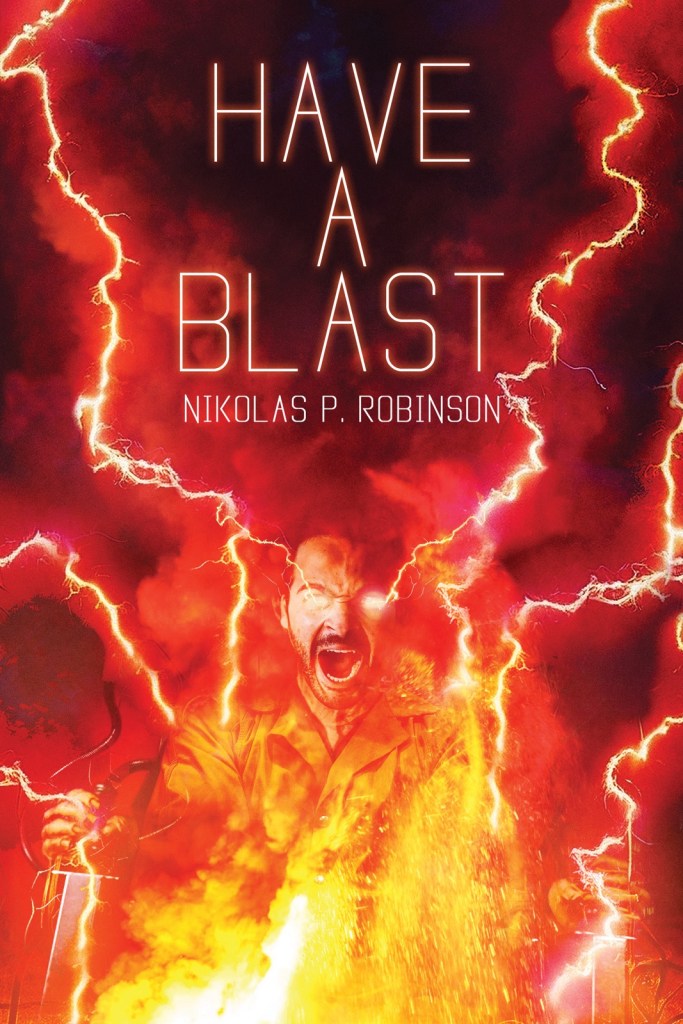
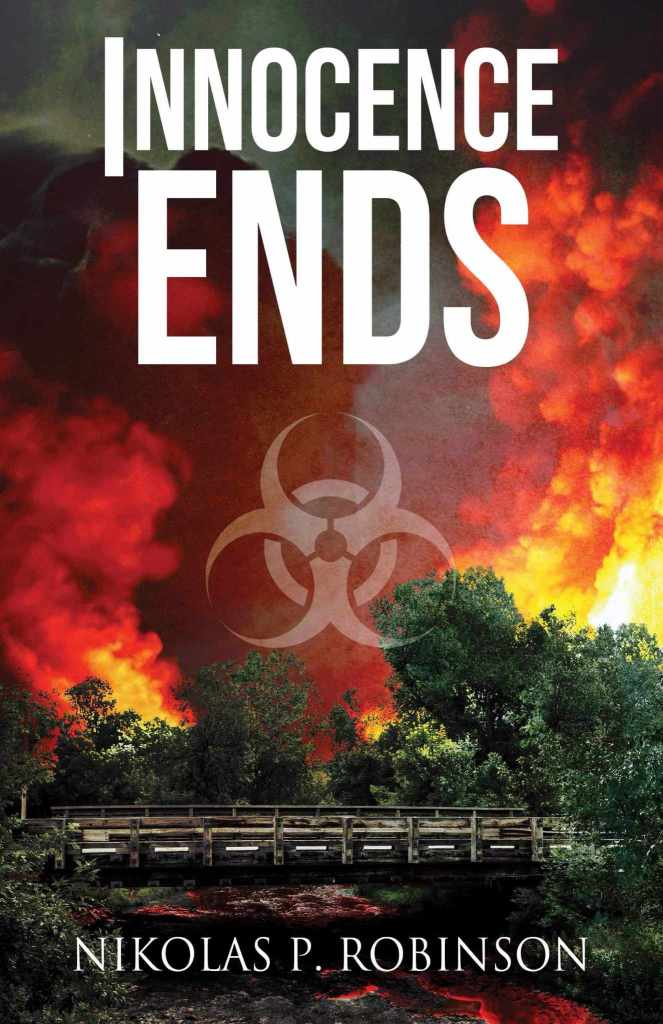
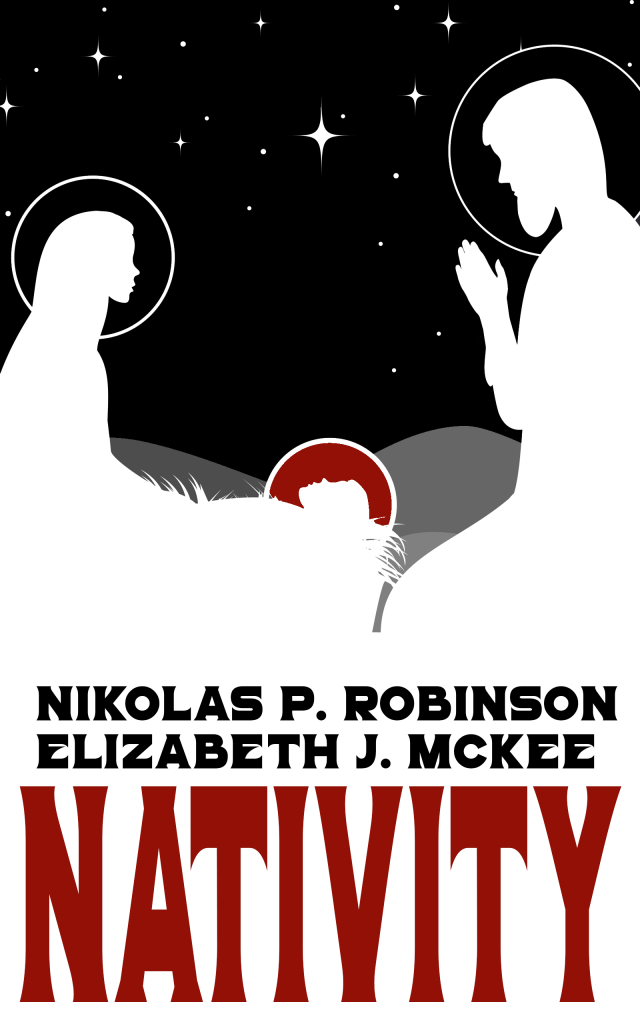
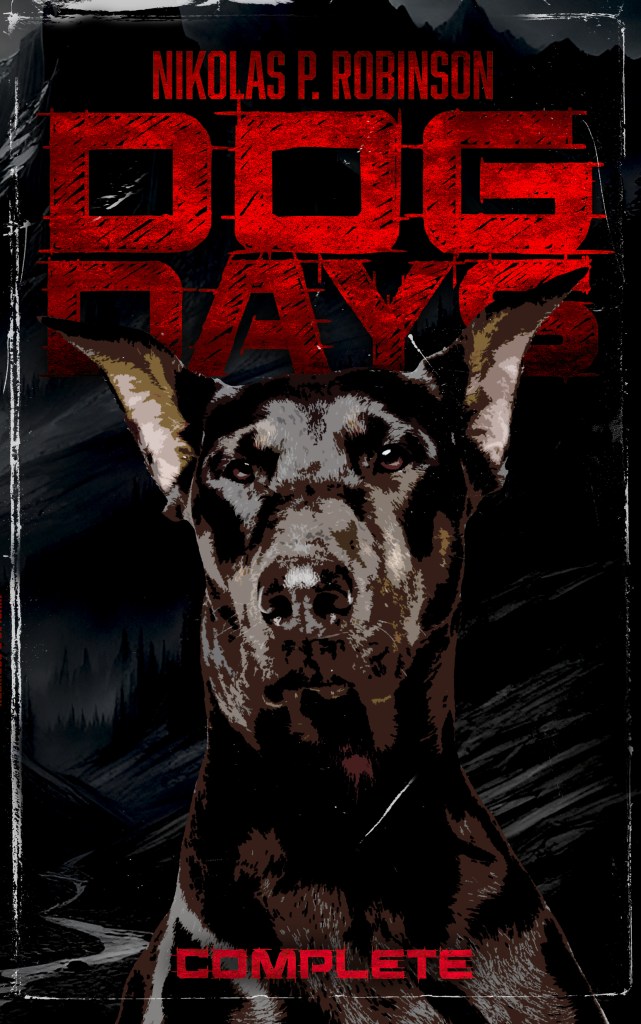
This is where you can locate an increasing assortment of details for my presently available material as well as links to where you can check them out for yourself.

Don’t be a stranger!

If you’re interested in purchasing signed/personalized copies of any of my books, please feel free to reach me at author.nikolas.robinson@gmail.com or find me on your social media platform of choice. You’re also welcome to contact me if you’re interested in collaborations, podcast and convention appearances, or interviews.

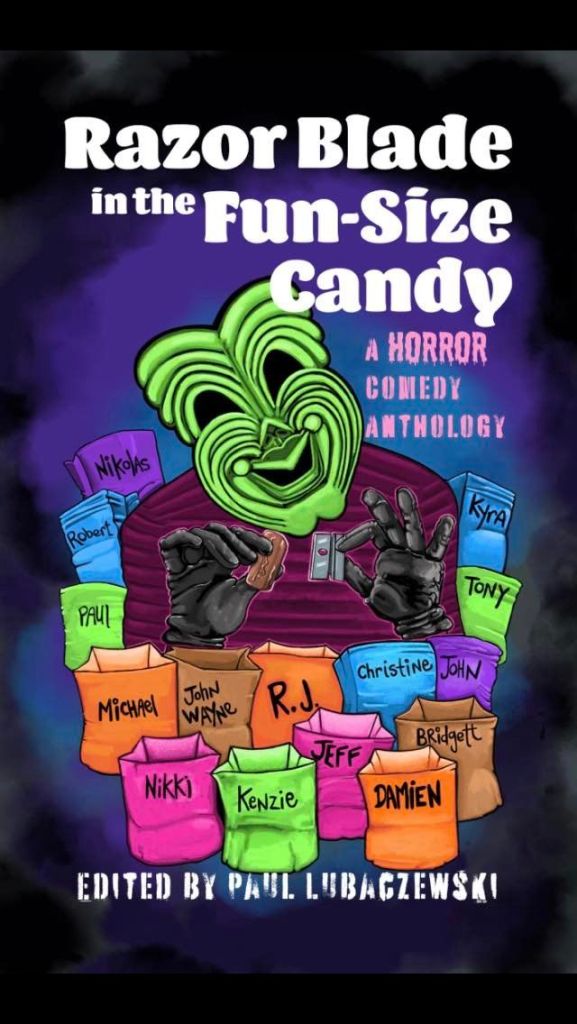
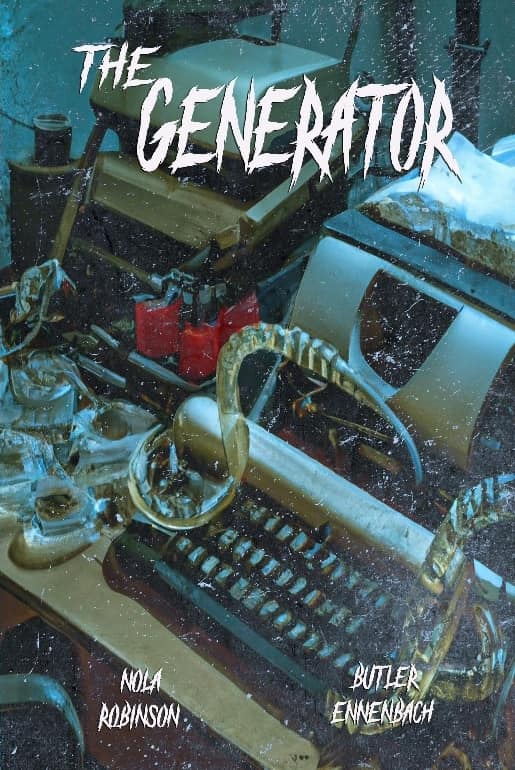
ANTHOLOGY INCLUSIONS

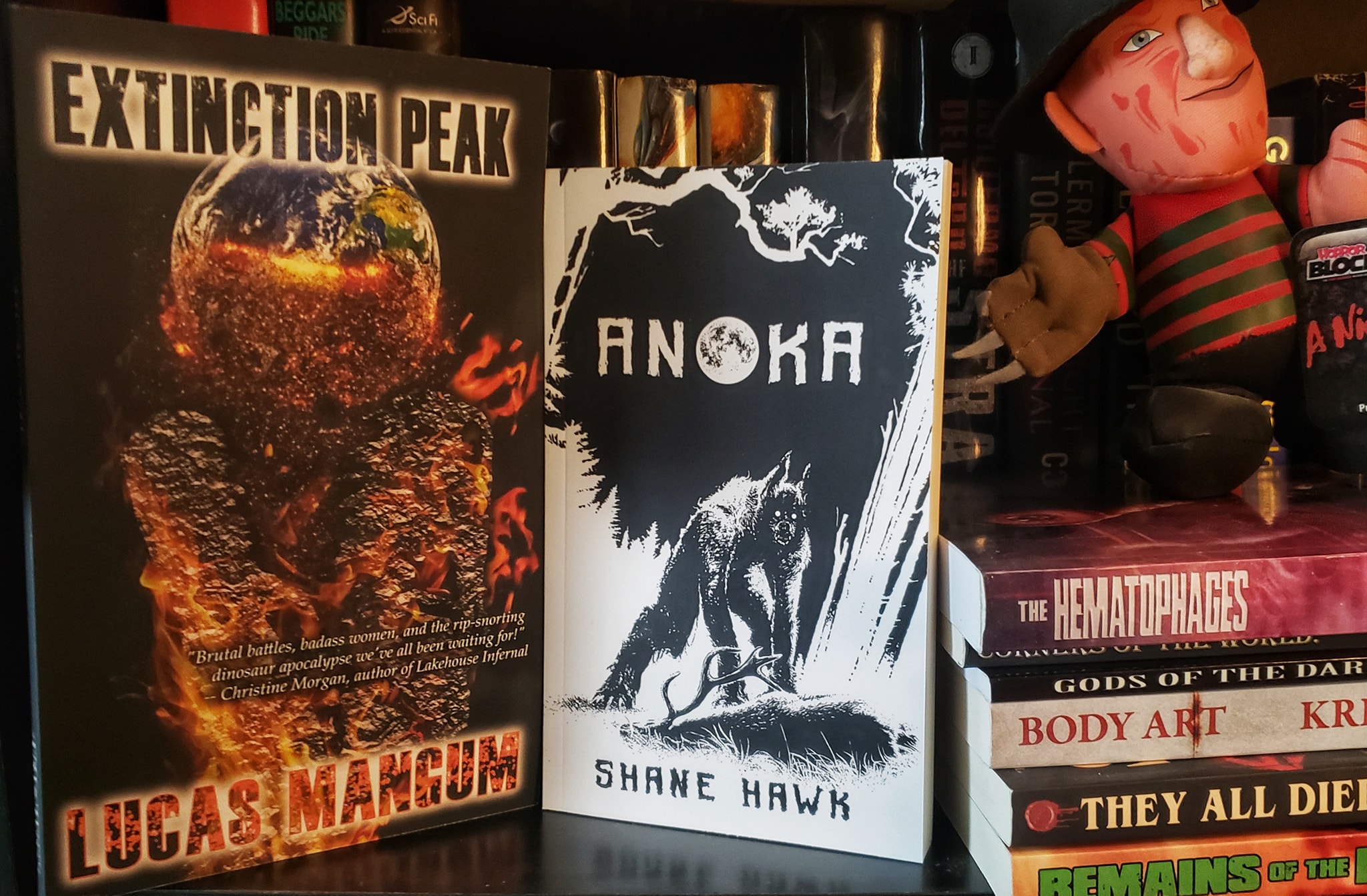
Anoka by Shane Hawk

Shane Hawk’s Anoka is a short but potent collection of short stories that range in length from flash fiction like “Soilborne” and “Orange” to longer pieces like “Wounded.” Touching on a range of topics from the alcoholism endemic within reservation communities–as those familiar with indigenous culture will already be aware of–to the epidemic of missing girls and women from tribal communities…and mingling those real-life concerns with supernatural and sometimes downright surreal narrative elements.
This fictionalized version of Anoka, MN would make for a truly horrifying place to live, the implication being that horror lurks not far beneath the surface of everything there.
“Wounded” and “Imitate” are perhaps my two favorite stories in this collection, and there are some similarities between the two. The stories in question focus on protagonists who are trying to make amends for the choices they’ve made earlier in their lives only to have terrifying circumstances arise. There’s a sort of morality play involved, reminding you–as the reader– that no amount of trying to make your life better will necessarily relieve you from the guilt of your past or the influences of your earlier decisions and mistakes. It’s a harsh reality, but it is reality just the same.
I’m looking forward to seeing more from Shane Hawk down the line.

Dreams, and the Places They Take Us

Have all of you dreamt of specific locations, or a singular location, so many times that you occasionally recall that place in your waking life as somewhere you momentarily believe you can return to? As if it’s somewhere you’ve actually been before?

You only finally stop thinking that way once you’ve reminded yourself that the location exists only in your dreams, though you feel like you’ve been there so many times before.

There are two locations like this for me, both of them situated in outdoor environments that bear a strong resemblance to regions of the Black Hills…or at least they feel like they’re situated somewhere in the hills.

One is a large cave system on private land that I’m able to enter by maneuvering my way along a cliff-side that others apparently don’t know about. It doesn’t keep me from trespassing, but it keeps me from being caught while doing so, as it provides me with an otherwise unknown entrance via a large grotto coming off the cliff wall. Descending from this hidden grotto is a sort of primitive staircase, something that could have been carved into the stone by an earlier culture. I’ve never followed the stairs down any further than the fissure that leads me into the cave system, but the stairs descend much deeper into darkness. The interior of the cavern is so familiar to me as to feel like I’ve been there dozens of times. In my dreams, I’ve taken other people there to experience the place in addition to making numerous trips on my own. The smells and taste of the air are so vividly recalled, as is the way sound reverberates from the walls. The chill of the water in a slow-moving underground stream that pools in a certain location where I’ve always had to strip down to traverse is as real to me as any memory.

Another location is similarly to be found along a cliff wall, this one rising up from an otherwise normal hiking trail that leads off into a narrow, mountain valley. By scrabbling along what would only be liberally described as a path up the early part of the cliffside, one can reach a small tunnel that pushes through to a sheltered cliffside on the opposite edge of what is actually a thin dagger of rock rather than a solid stretch of mountain like what is to be found in either direction to the side. From this sheltered cliff, one can see a whole different valley spreading out, far below. I’ve spent countless hours sitting there, enjoying the view, or so my memory tricks me into believing.

What’s particularly funny to me is that I rarely recall my dreams at all. And yet, when I find myself thinking of either of these two locations, sudden recollections of numerous visits come to mind from dreams I don’t even remember having.

That’s all, just a little bit of absent musing for the day.

What sort of locations do your dreams paint so vividly that you recall them in waking life as real places?

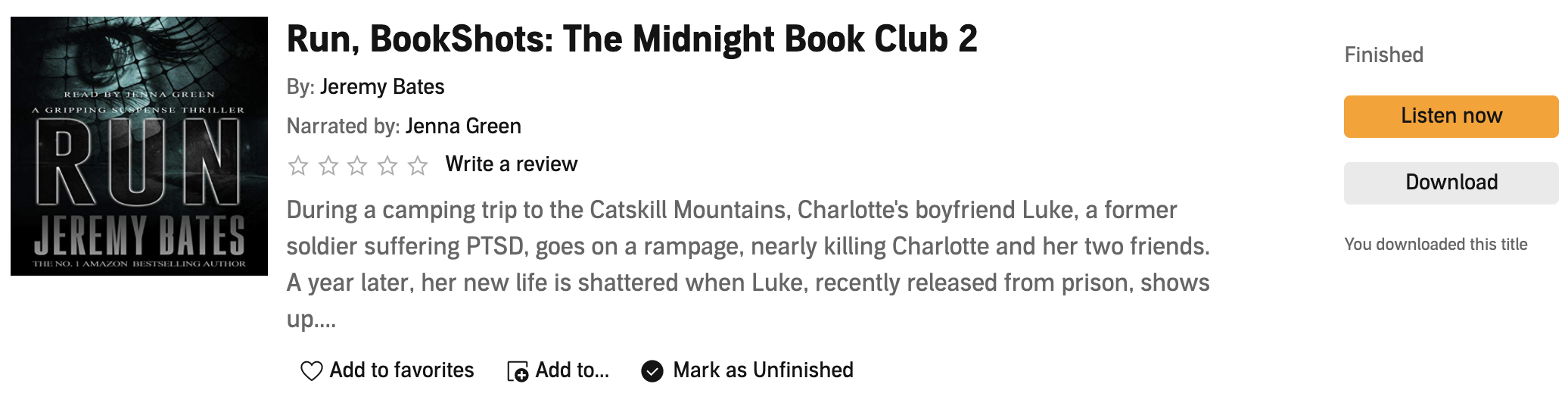
Run by Jeremy Bates

Jeremy Bates’s Run is a fast-paced, intense story with an underlying message of how we as a society have dropped the ball concerning mental health for our former military personnel.
Our protagonist, Charlotte, is a prime example of Murphy’s Law being in full effect. Her parents were murdered when she was a child and then her high school sweetheart returns from a series of traumatic deployments overseas (one of which terminating in multiple lives lost by those beside him) with psychosis that pushes at the very edge of worst-case scenario PTSD. During a camping trip that was intended to help Luke find his balance, he lashes out and severely assaults two of Charlotte’s friends before attempting to harm her as well.
We flash forward from there to a year later with Charlotte attempting to move on with her life, dating a new guy, and focusing on finishing school…and then Luke reappears after being released from prison.
Everything takes on a staccato quality from there, as Luke becomes increasingly paranoid and violent, his instability culminating in an act of violence befitting only those we consider terrorists.
It’s a short read/listen and it’s well worth taking the time to do so.
The audiobook is narrated by Jenna Green, someone I consider a friend, an individual I’ve known for a great many years–since we worked together once upon a time at a local television affiliate. The quality of her narration is superb, and I’m not saying that because I’m biased. I feel entirely confident that I have recommended her to other writers who are looking for a woman to narrate their audiobooks in the future.

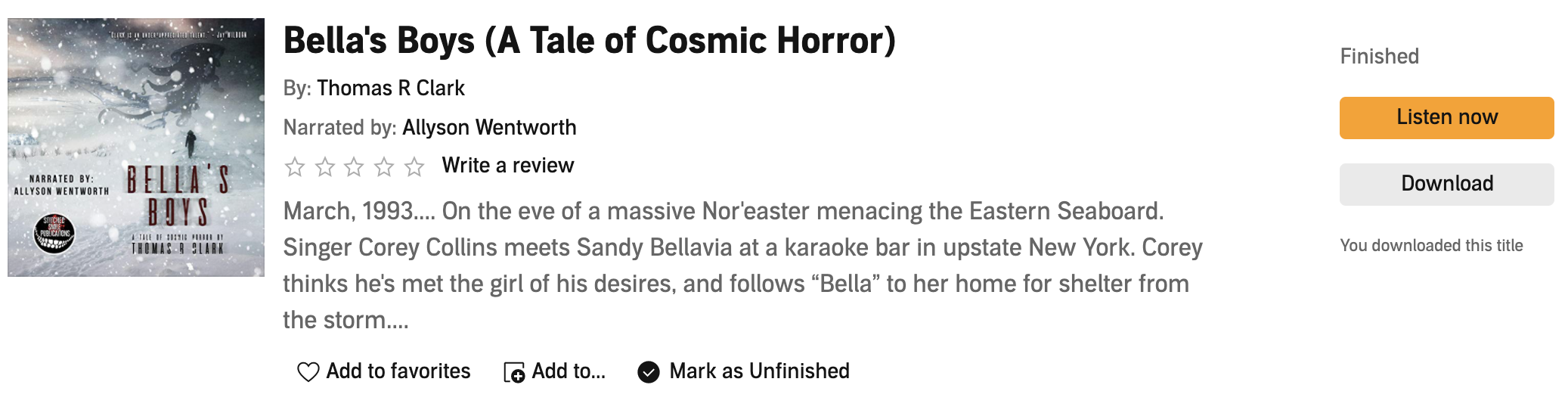
Bella’s Boys by Thomas R. Clark

Thomas R. Clark has crafted an interesting tale with Bella’s Boys. It’s a little bit American Psycho, a larger bit of cosmic horror, and a lot of splatterpunk erotica.
The reason I mention the novel from Bret Easton Ellis isn’t only because of the fixation on music and the almost overwhelming attention to detail associated with said music throughout the novella–but that does have something to do with it–it’s because this novella captures something of the 1990s dive bar, metalhead scene in the same way American Psycho satirized the white-collar, predatory capitalist world of the 1980s. At the same time, Bella’s Boys certainly depicts graphic acts of sex and violence (often simultaneously) with the same unrelenting and unfiltered lack of concern so many readers enjoyed from Ellis’s novel.
The afterward, providing a glimpse into the author’s life and the real-life snowstorm that inspired the blizzard taking place within the novella, was a nice touch. It’s fun and entertaining to see just how much of the story was pulled from a piece of Clark’s own life. I would certainly hope none of the people trapped in the house they were trapped in during the real blizzard ended up being converted into conscious bits of fecal matter…but maybe the truth is stranger than fiction?
The short story, Prey for Change, attached to the end is a tantalizing glimpse of a world that melds Viking society, werewolf mythology, and something reminiscent of the army of the dead from Game of Thrones. I would read more of that story, for sure.
Since I listened to the audiobook edition of Bella’s Boys, a comment on the narration is in order. It’s almost unfortunate that the sole weakness with this edition of the book is the quality of Allyson Wentworth’s narration. This isn’t to say the narrator does a bad job of it, but there was a certain flatness to elements that seemed like they merited a bit more passion or at least spirited delivery. From what I can see, she has only narrated a couple of books thus far, and it could be due to this being the beginning of her career as an audiobook narrator. Please don’t let my personal opinion on the narration dissuade you from checking out the book in whatever format most appeals to you. I sincerely doubt even my favorite audiobook narrators were at the apex of their craft when they started.