This review was originally written in July of 2016.
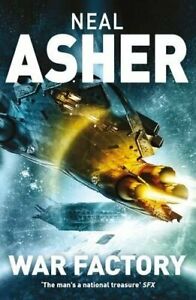
War Factory by Neal Asher took what he started in Dark Intelligence and amplified essentially every captivating element. This series within the Polity universe (the fictional future in which most of his novels take place) is actually becoming my favorite of his work, and I never expected anything to outshine the fantastic and far reaching story that started in Gridlinked. Numerous, at first seemingly loosely related, narratives weave together in a puzzle being fabricated and assembled by Penny Royal–a rogue AI with nearly godlike abilities and the associated detachment from conceptions of right and wrong–and when those stories come together it is in as intense a climax as anything else Asher has written, but on a more intimate scale than a lot of the previous novels. It’s interesting how the relatively small scale events of this series can potentially have far more widespread and profound consequences than the massive events of many of his other novels, but it is definitely intriguing to watch it play out on the pages. Asher happens to be one of those authors who simply becomes better as he continues writing, and I personally hope he never stops. The future that he envisions in these novels that take place within or ancillary to the Polity universe is a future I would be happy to witness for myself. Thankfully, the quality of the author’s writing is such that I am able to experience it in a more visceral way than I would with anyone else at the helm, I suspect.
This review was originally written in July of 2016.
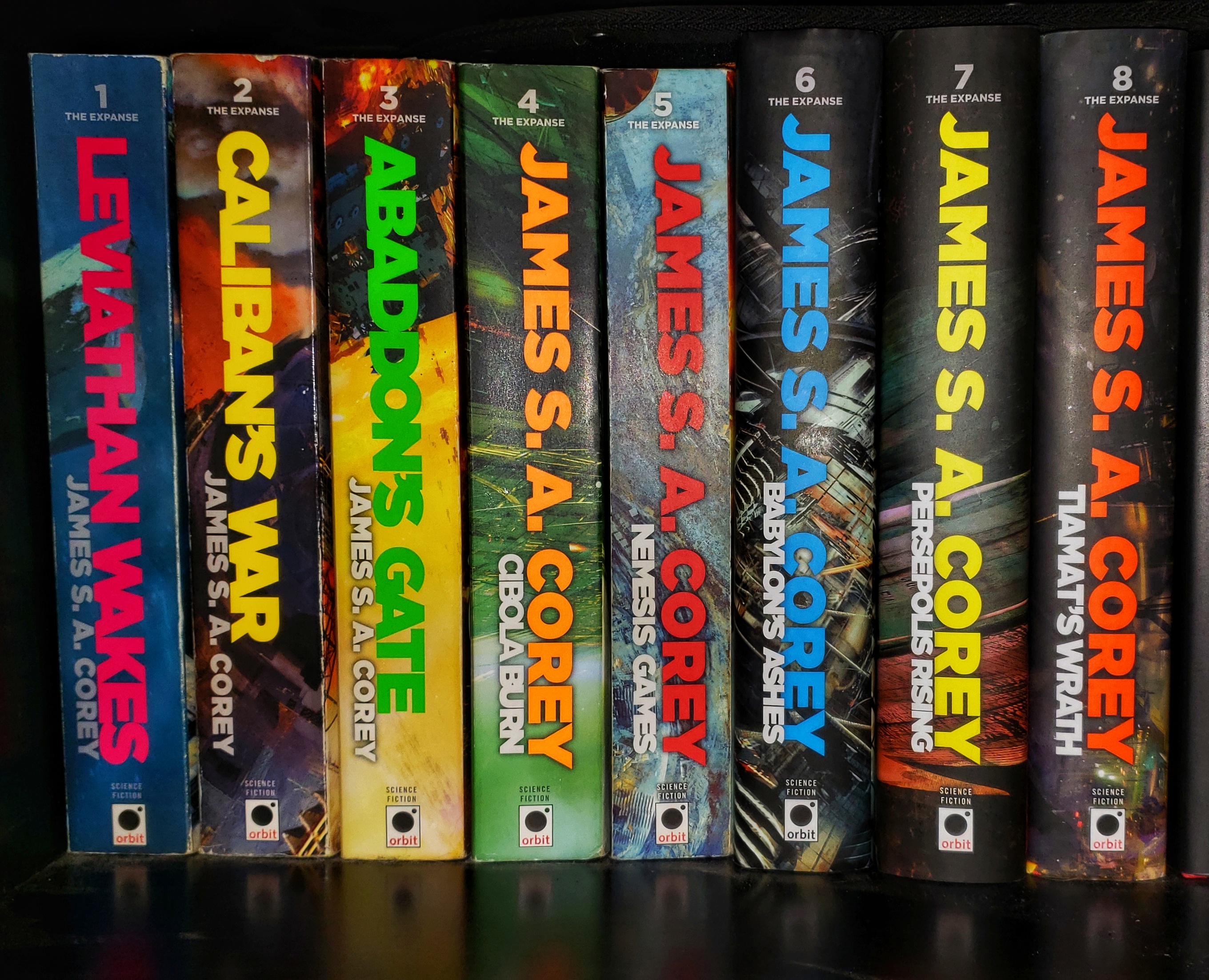
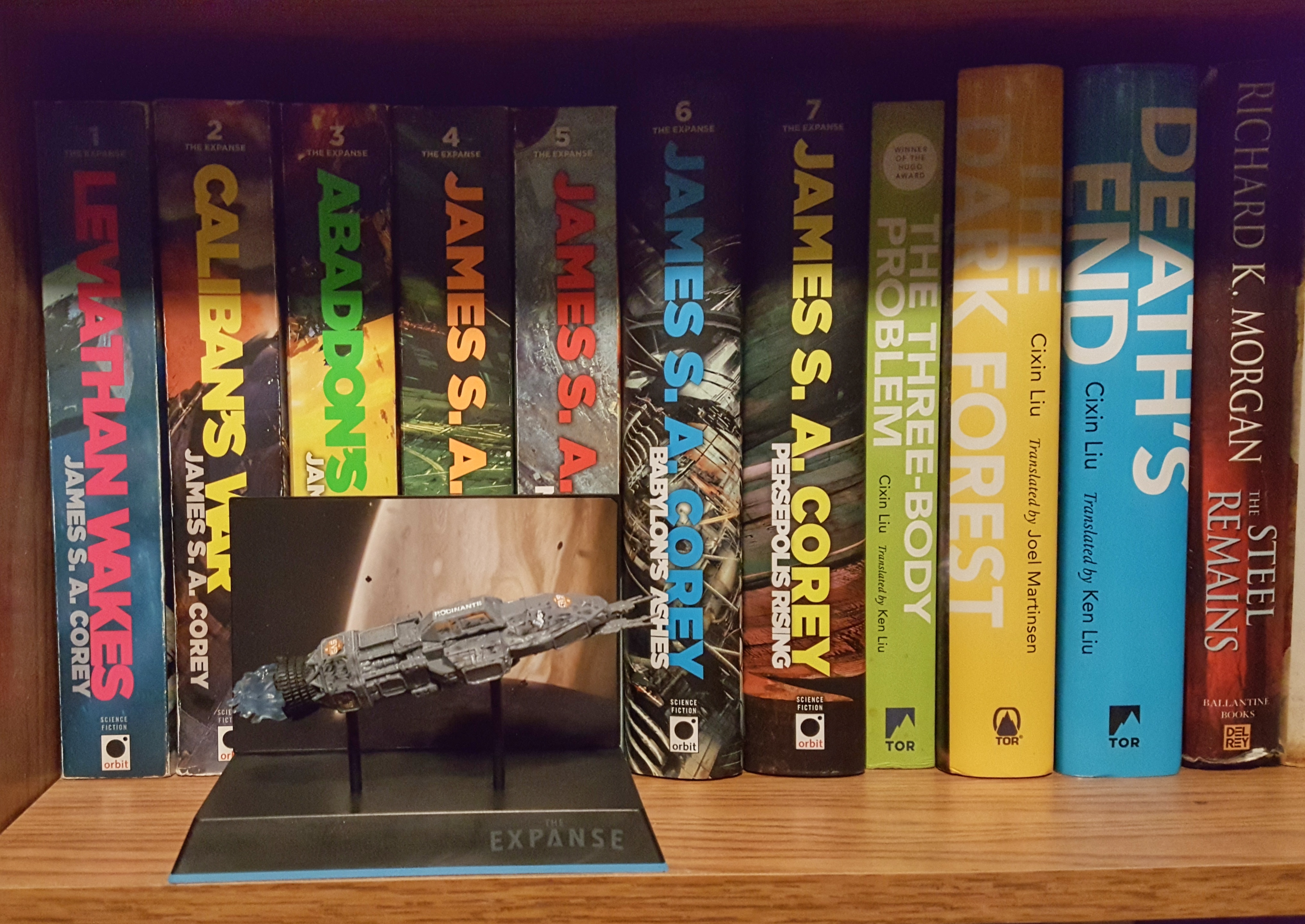
Halfway through another book it dawns on me that I neglected to write up a brief review for Cibola Burn by fictional author James S.A. Corey…and that was silly of me. With the fourth installment of The Expanse series, the previous novel’s full blown space opera narrative leads us to a story that takes place almost exclusively on an unfamiliar planet an unknown distance from Earth. Human nature takes its natural course when early settlers from the devastated Europa base established a colony on the new planet prior to a joint corporate/scientific exploration colony arrives under charter from Earth government. Terrorist acts from the settlers and attempts to establish authoritarian control by the newly arrived corporate interests produce a tense and untenable relationship that prompts the governments of Earth and the outer planets to send James Holden and the crew of the Rocinante through the gate and to this planet to serve as a mediator. The whole thing goes about as well as anyone familiar with the previous three books would expect. The shame about this book is that, much like the scientific personnel who arrived, I didn’t get nearly enough opportunity to explore the planet. It’s a planet which has been geoengineered by the godlike aliens who had created the protomolecule that led to the gate from our solar system into the realm where hundreds of other gates lead to systems with hundreds of other planets. Containing presumably it’s own biodiversity combined with organic machines developed by the disappeared aliens, it would have been a fascinating planet to have experienced in greater depth. That is my only dissatisfaction with the book, and realistically the authors couldn’t have actually written the sort of detail I would have liked without including an actual xenobiology textbook along with the story…and I suspect most people would have been far less inclined to read it if that were the case.
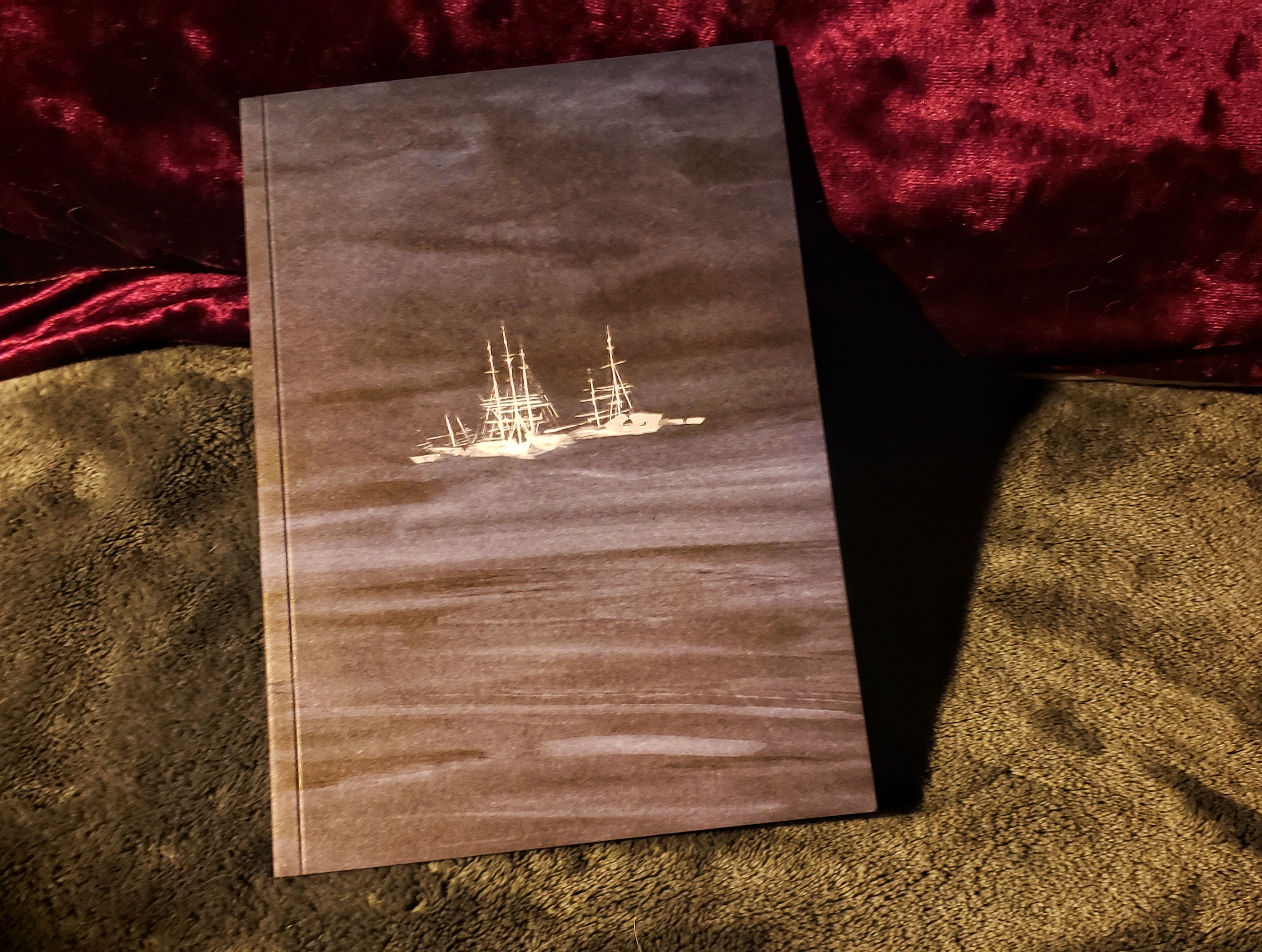
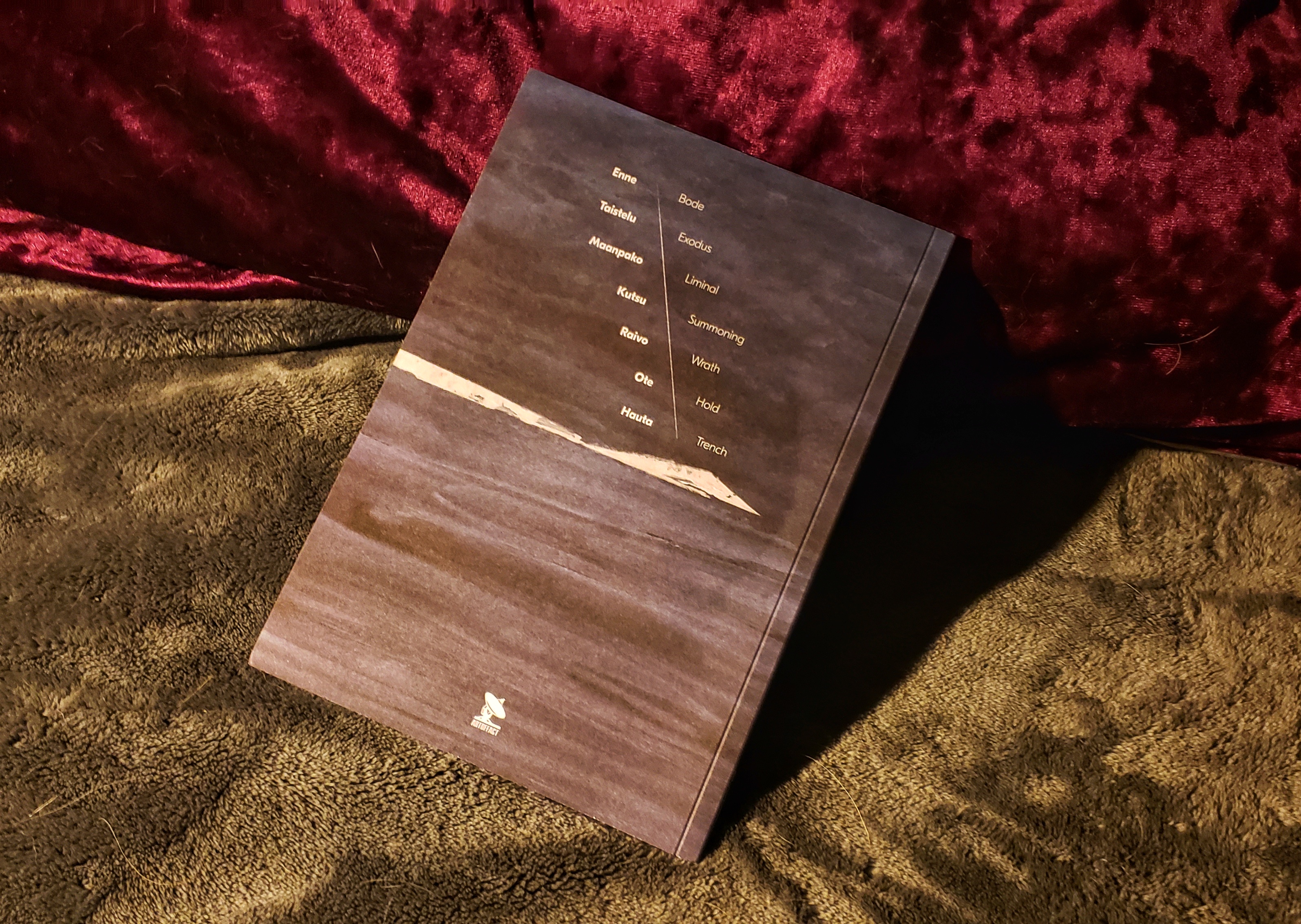
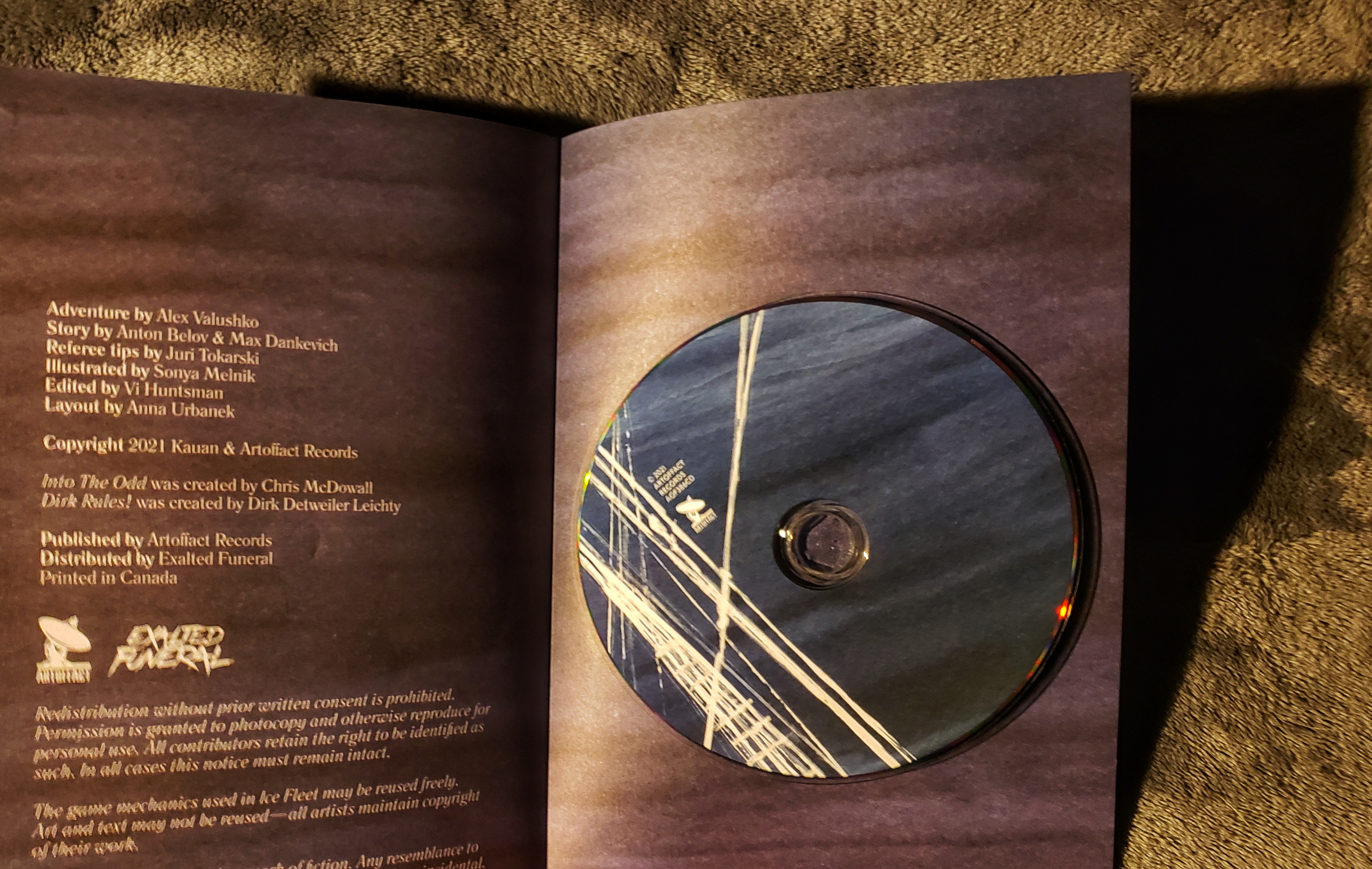
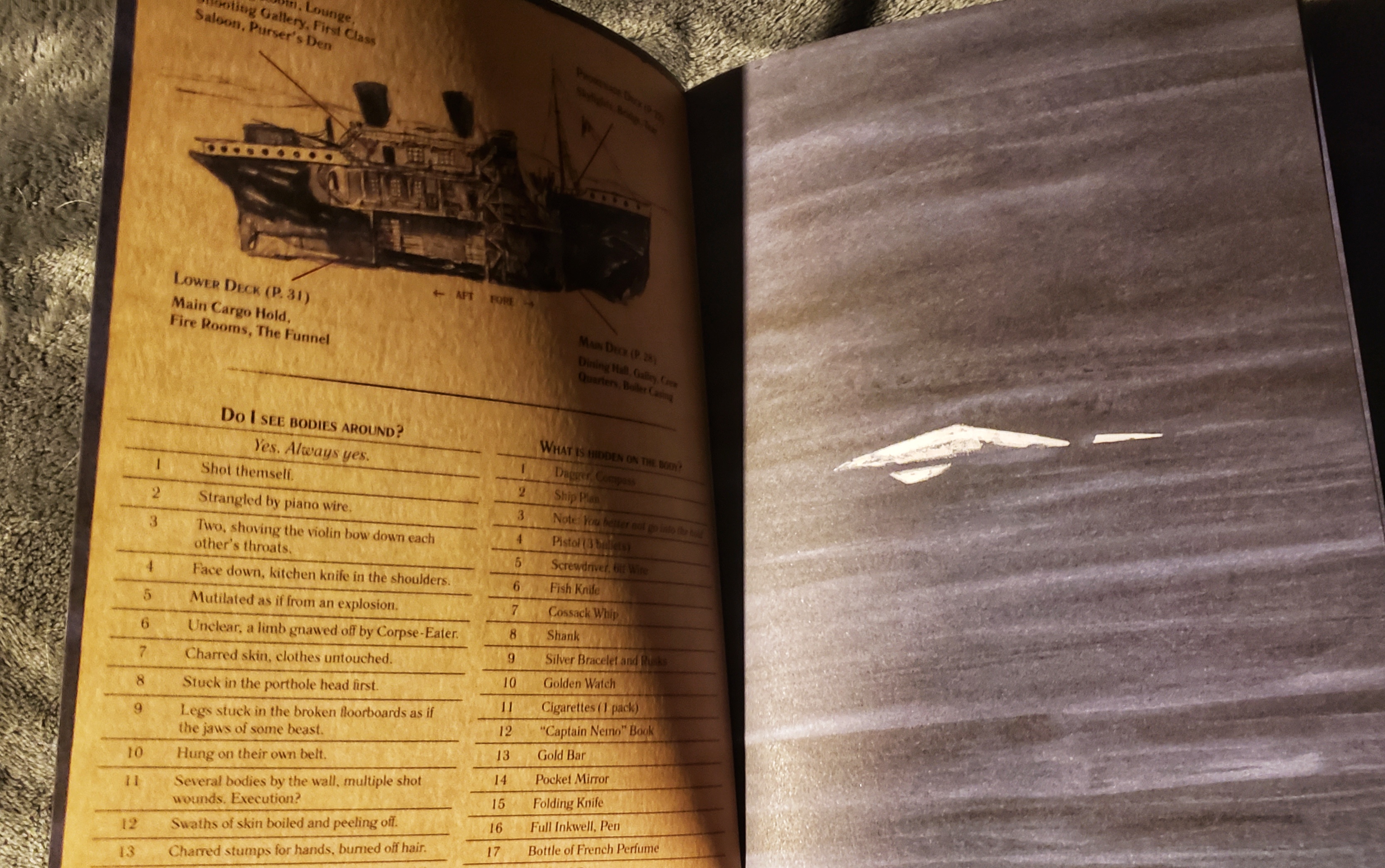
Kauan’s Ice Fleet is a somber, moody album filled to the brim with post-rock sensibilities and a pronounced focus on the atmosphere and texture of the sonic environment the artists are producing. On its own merits, the album is fantastic. Those who know me are aware of the fact that my personal musical preference tends to lean the direction of industrial (including most–if not all–of the numerous subgenres and related musical styles). That genre is followed by punk, metal, and indie-rock/pop or alternative. But, for writing and meditation, post-rock and post-rock adjacent material is my absolute favorite. When I’m in a particular frame of mind or when I want to slide into that space, there’s nothing better. This album is going into the respective playlists where I’ve accumulated days’ worth of similar material to listen to on shuffle. Primarily instrumental, Ice Fleet builds from soft, melodic tracks to a more harsh, higher tempo crescendo as the concept album (feeling more like one long, seamless track rather than a series of individual songs) reaches its pinnacle before smoothing back out and softening again. Not satisfied to simply tell a story in the way most concept albums do, Kauan went above and beyond, crafting a tabletop RPG module built on the Into The Odd framework that immerses the listeners into the world of Ice Fleet. The players will have the pleasure of discovering a long-lost steamship frozen in the ice. While they explore the vessel, it isn’t simply man-eating polar bears and peculiar rats that threaten them, but cosmic horrors manipulating both time and space. This is more than just a CD, it’s an experience designed to last the listener many hours of chilly terror and pleasure.
This review was originally written in June of 2016.
Surprisingly, this second installment in the Red Rising series is substantially better than the first.
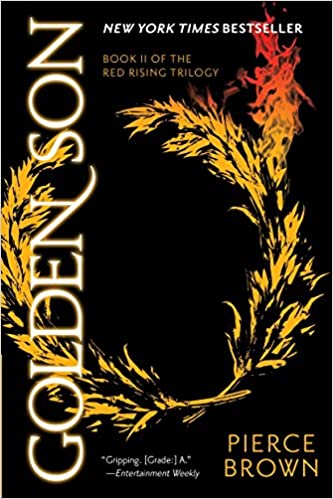
Golden Son by Pierce Brown takes the two qualities I most enjoyed, the intensity and depth of character, from Red Rising and amplifies them both to unexpected levels. I don’t know what I was expecting from the second book of the trilogy, but I certainly wasn’t anticipating the page-turning blend of action, drama, and utter despair that filled those pages…and I certainly didn’t expect the theme of betrayal to so seamlessly weave its way through the narrative from beginning to heartbreaking end. What I do know is that I certainly need to pick up the third volume of the trilogy and discover where it goes from here.
The reviews for these two books were originally written in April of 2016.
Caliban’s War by James S.A. Corey (really Daniel Abraham and Ty Franck) picks up not altogether too long after the final, captivating events of Leviathan Wakes and it smoothly carries on with the story of the relatively near-future narrative that is The Expanse. The absence of Miller from the story is made up for in large part by a Holden who has become more like the detective than he would have thought possible judging by how harshly he had criticised Miller’s methodology and personality during the first novel. This internally conflicted characteristic makes Holden a more interesting and substantial protagonist than he was in the first book though it does produce some difficulties on board the Rocinante. Fans of the television show would be gratified to see Chrisjen Avasarala finally making her appearance in the literary version of The Expanse. Though she is more vulgar in the book than in SyFy’s adaptation, the core of the character is there…a ruthless and often cold political force to be reckoned with who manages to compartmentalize her personal and professional lives with impressive skill. The new characters added into the narrative are well-developed and easily as interesting as those from the first novel, which is something I hope they can keep up through the additional books in this series (including the ones as yet unwritten). It says something about the intense and dangerous nature of the events unfolding in this book that an alien biological machine terraforming Venus according to entirely unknown programming takes a backseat in the minds of the characters and that same dismissal carries over to the reader…at least until the end, when it can no longer be ignored. I am very much looking forward to reading the next installment after the way this one ends and I am even more so looking forward to seeing how the television adaptation will tackle things as the events of this book make it onto the screen during either the latter portion of season two or the beginning of season three depending on how they put everything together.
Abaddon’s Gate takes The Expanse series through the first tentative steps toward becoming a full-fledged, interstellar space opera. From this point on in the series, humanity will no longer be confined to the solar system we’re all too familiar with and the surrounding void between our local system and other stars. This is, surprisingly, the first time religion really gets brought into the books…and there is quite a bit of it, as well there should be. This is a series of novels that is largely predicated on first contact, and that would damn well shake up religious thought all over the world. Not only are we dealing with first contact, but first contact with an unknown species that was around billions of years before we came down from the trees and who have the ability to manipulate matter and energy in ways we have only ever imagined possible. We stumbled upon something truly alien to us, waiting out at the edges of our solar system and disastrously attempted to weaponize it because, of course we would…we’re notoriously short-sighted and impulsive when it comes to thinking up ways to kill one another in real life and the odds of that changing over the hundreds of years separating us from the fictional future of The Expanse are pretty slim…and if none of this had an impact on us as far as theology is concerned, these books would require far too much suspension of disbelief. By the time Abaddon’s Gate starts off, there is a giant ring structure (assembled on Venus by an alien intelligence before lifting from that planet’s surface) between the orbits of Uranus and Neptune, looming there and just waiting for us to cross the threshold…and it stands to reason that Holden would be one of the first to cross over into somewhere truly awe inspiring in what it represents. Along with the novelty of having a religious perspective tossed into the mix we get a whole new cast of characters to populate the narrative since Holden and the crew of the Rocinante are the only major ones carried over from the previous novels into this one…and none of them feel like throwaway bit parts, which is something the authors have excelled at so far through the series. This third volume of the series answers a number of questions that have been collecting since the first novel, but it certainly adds just as many new ones that will hopefully be just as exciting to answer in reading what follows.
This review was originally written in May of 2015.
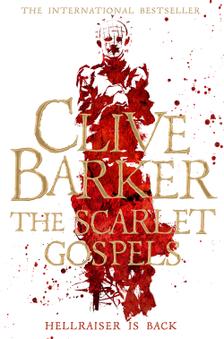
The Scarlet Gospels by Clive Barker was over far too quickly. I wish that this book had been longer, that there had been more to it, and it was already packed full. This was one of those books that I probably couldn’t have gotten enough of, no matter how long he’d ended up making it. I felt a sincere sense of disappointment when I finished the final page, not because the ending was disappointing in any way (which it was not) but simply because I knew that my time in the world Barker had created was over, and I didn’t want it to be. I’ve shared some of my thoughts on this book already with a lot of people, along the journey, so some of this will be familiar to anyone who’s seen those thoughts expressed. This was a perfect blend of the adventurous scope of The Great and Secret Show and Everville and the up close and personal horror of The Hellbound Heart, though it leaned a little bit more to the adventure end of the spectrum (but when that adventure takes place in Hell, it’s all horror). I didn’t even need to make it 100 pages into the book before its hooks were buried deep. Harry D’Amour stumbling upon a Lament Configuration, knowing it for precisely what it was, and still feeling compelled to caress it was one of the best sequences in literature I’ve read in a long time. Barker’s depiction of Hell is one of the most original I’ve ever encountered…a strange sort of mixture between Dante’s Inferno, Milton’s Paradise Lost, and the portrayal from the Hellblazer comics (more familiar to a lot of people as the source material for both the movie and television series Constantine). I’m not going to spoil anything, because you really need to read this for yourself…but this is a very transformative story for all those involved. No one comes out of the events of this novel unchanged, neither human nor demonic, and not even the fabric of Hell itself is safe. Perhaps it’s wrong that I couldn’t help but picture Scott Bakula as D’Amour and that I couldn’t read Pinhead’s dialogue without hearing Doug Bradley’s voice and that certain cadence that he imparts in his portrayal of the character…but if that’s wrong, I don’t want to be right. Now I just want to see this book adapted into a movie.
This review was originally written in April of 2016.
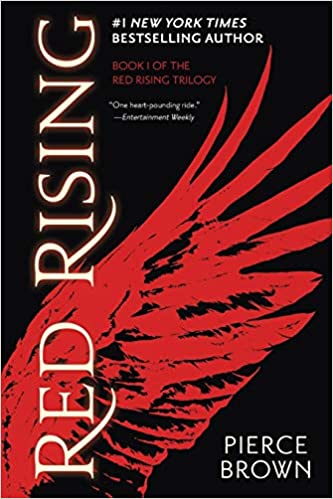
Pierce Brown’s Red Rising was a surprisingly good book, not necessarily because of the quality of the writing (which was good, just nothing outstanding) but because the story was compelling and original enough to feel like fresh ground. It’s a fairly distant future science fiction novel, taking place on Mars, but with a solar system that has been thoroughly populated by the time the novel begins. The human population of Red Rising has been divided into very distinct castes, defined by biological and neurological differences that are both technological and evolutionary in nature…and that is at the root of the story. Our protagonist is a “red” who works in deep tunnels below Mars, drilling and harvesting materials in exceedingly hazardous conditions for the noble purpose of terraforming the planet above. It’s only after his wife is hanged and he goes proudly to his own death that he finds nothing generations of his people had believed was true. The surface of Mars had been long terraformed and civilized as had essentially every planet or moon in our solar system. He undergoes painful and extensive alterations of all sorts in order to pass for one of the ruling class for the purpose of exacting vengeance and righting the wrong that had been done to his people from within that upper class. I’ve seen a number of people comparing this trilogy to The Hunger Games, which was one of the reasons I hadn’t bothered to read it until now. I didn’t care to read what I suspected to be a low-rent clone of a wildly successful series. Upon reading this book, I suspect any of those people comparing it to The Hunger Games haven’t read many other books, since the only similarities have to do with a corrupt and decadent ruling culture and a good deal of violence. There is more resemblance to Lord of the Flies and Ender’s Game than anything else, with a healthy dose of Roman (and a bit of Greek) mythology to set the stage. I enjoyed this book enough that I plan to read the next two, and I think it’s got a fantastic degree of character development that makes it feel more three-dimensional than a lot of young adult fiction.
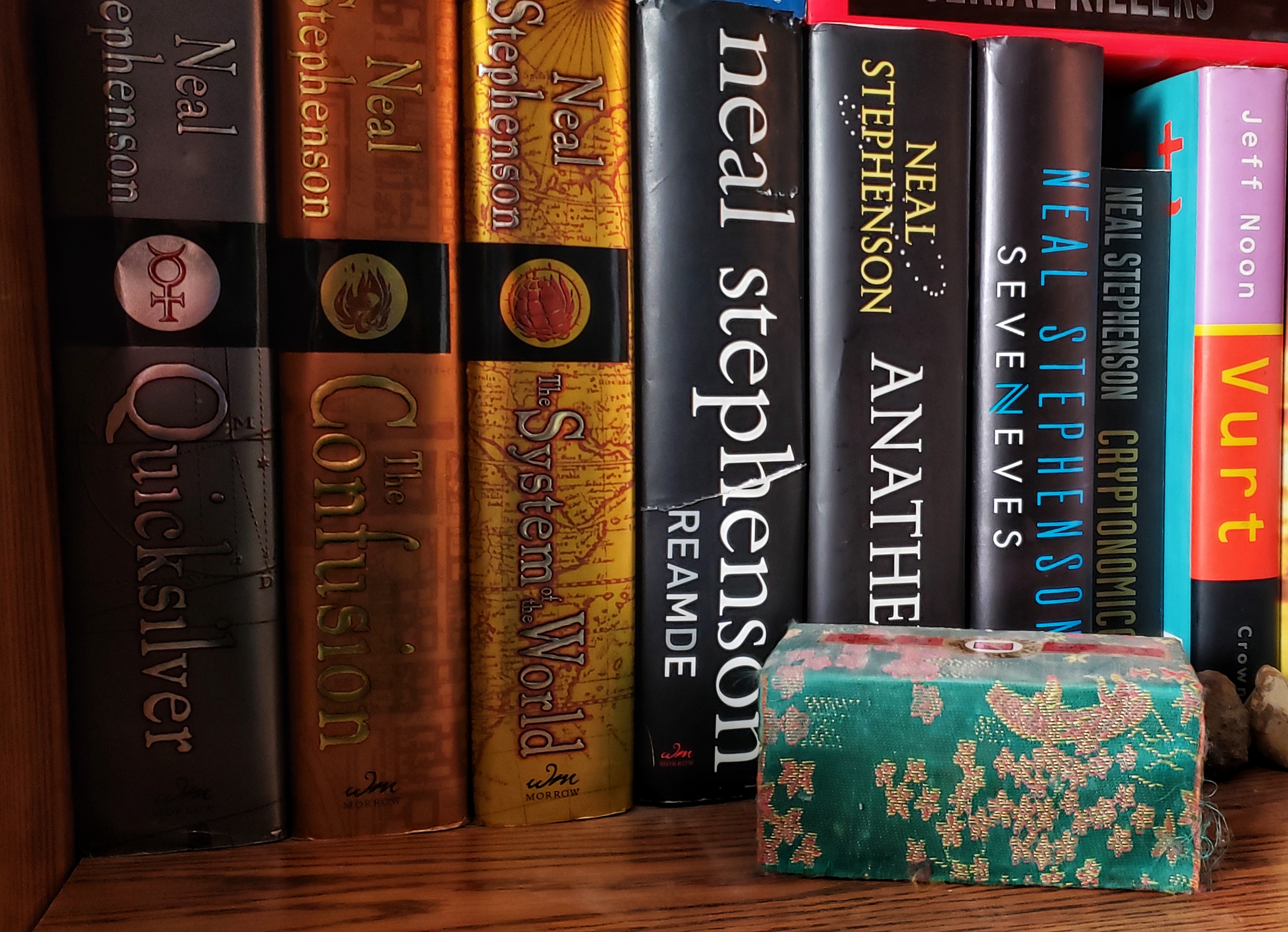
I felt like I might need a little bit of time to digest Seveneves by Neal Stephenson before giving it a proper review. I loved Anathem and Reamde, but I think that Seveneves is my favorite of his novels aside from The Baroque Cycle trilogy and Snowcrash. The first two sections of the novel, which constituted approximately 3/4 of the narrative, were some of the most depressing and devastating segments of literature I’ve read. Beginning with the destruction of our moon, detailing the desperate worldwide push to establish an orbital colony wherein a very small percentage of the human species could weather the thousands of years during which Earth itself would be uninhabitable, and painting a painfully accurate portrait of just how badly we would mess everything up to the point where that small percentage was whittled down to only a handful of women (the “eves” referred to in the title)…the first two sections of the book tease the reader with hope and glimpses of ingenuity and adaptability that we all know human beings are capable of, only to taint that with our propensity for paranoia, infighting, and self-aggrandizement. The novel jumps forward 5,000 years between the second and third sections and that final quarter of the book is jaw dropping in so many ways. I won’t give anything away, but though there is still ample evidence of a lot of those less desirable human traits that led to the attrition earlier in the book, what we experience as readers is something magnificent, something that would be awe inspiring to see us achieve. I don’t know if Stephenson had intended it, but I saw the big twist coming from well before the jump forward in time…the surprise awaiting the characters we follow during the final part of the book wasn’t any surprise at all to me, beyond the finer details at least. I hope that Stephenson expands on this world he’s created in Seveneves; I would love to see where things go from the conclusion of this book, because there is really so much more to be explored. Having finished the novel, I want even more to see this adapted into a movie or (better yet) a miniseries on one of the cable networks that could provide the budget necessary to do the story justice…and I still want to see Neil deGrasse Tyson and Elon Musk play the characters that were so obviously modeled after them.
This review was originally posted in the summer of 2015.
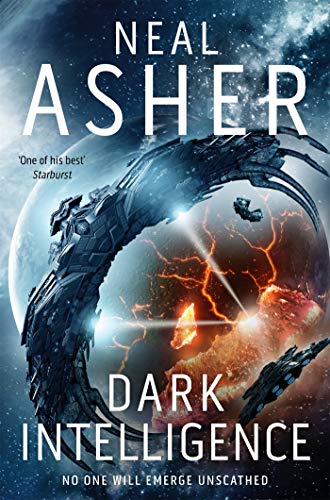
Having finished Dark Intelligence: Transformation Book One by Neal Asher I am in the unfortunate position of having to patiently wait for the next book to come out. I recall that feeling well, from the times (not altogether so long ago) when I was impatiently waiting for each of the Ian Cormac novels to be released. There are exceedingly few authors, maybe a dozen I can think of, who never disappoint me…and Asher is absolutely near the top of that list. He’s right there with Jonathan Maberry, Alastair Reynolds, Peter Watts, Richard K. Morgan, and Neal Stephenson as far as the authors I would list as being the best currently writing material that in any way would be associated with the science fiction genre…though both Maberry and Stephenson tend to cross over a number of genres in the process. Dark Intelligence, like many of Asher’s novels, weaves together a convoluted plot with a frenetic pace that few could contain in words with the skill that Asher pulls off. The characters, even relatively minor ones, end up feeling like fully realized individuals…more impressive in the cases of those who are suffering from pretty severe identity crises, and there are a few of those included in this narrative. I was happy to see both Amistad and Penny Royal back again, having found their previous presences in Asher’s novels to be fascinating. I was also pleased to get more of an introduction to the Atheter; after reading The Technician and some short fiction, I was very interested in delving further into what was going to happen on the planet Masada. I suspected that I was going to end up loving this book before I had placed it on preorder, but it exceeded my expectations.
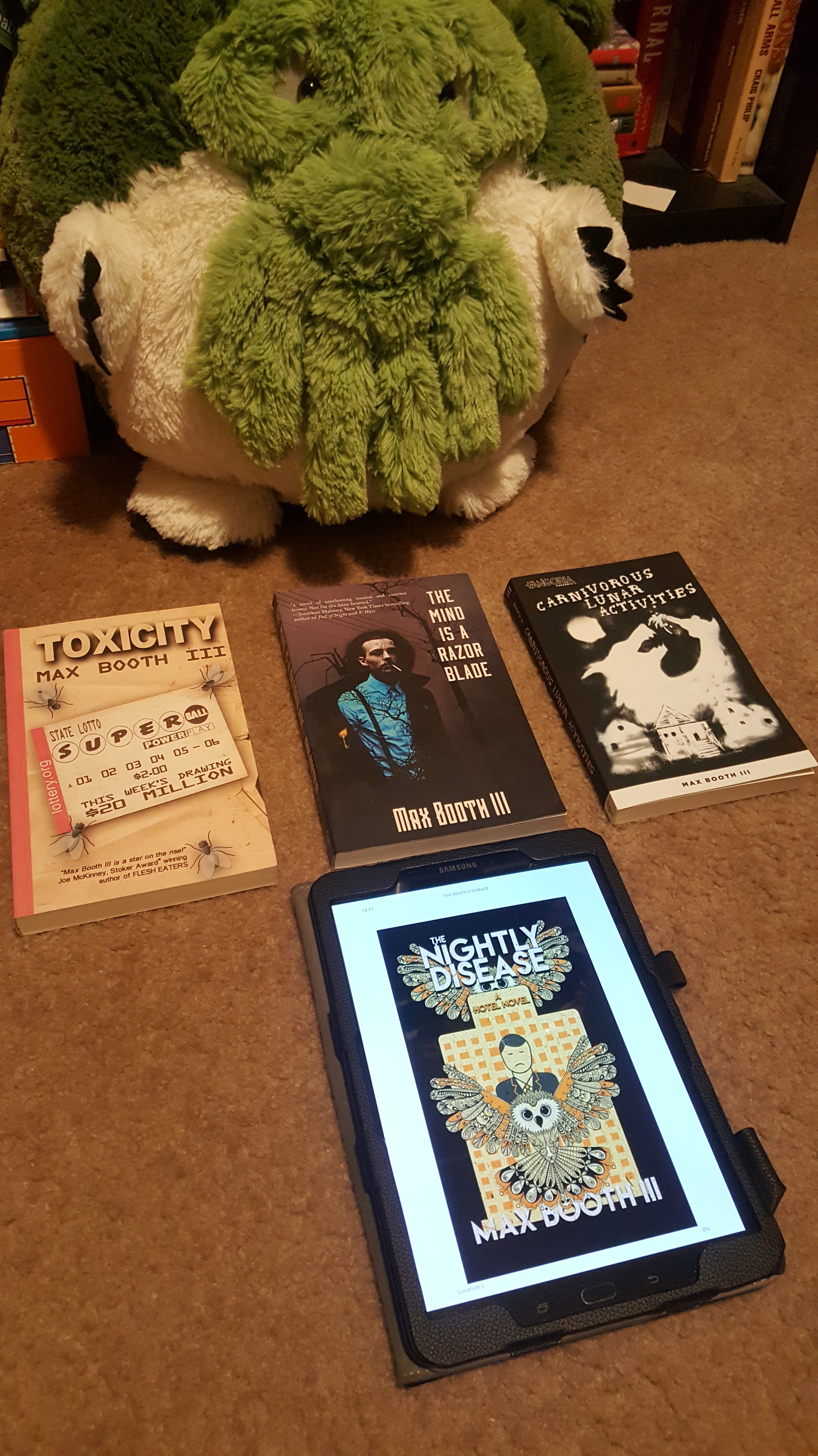
This review was originally written in the summer of 2015.As you can probably tell from the picture above–as well as other, more recent reviews–I’m a bit of a fan of this particular author.
I went into The Mind Is a Razor Blade by Max Booth III without any expectations and no knowledge of the plot beyond what the back cover provided. It starts off sporadic and disorienting, perfectly conveying the state of mind of our protagonist, the very definition of an unreliable narrator. A man wakes up naked in a river with a corpse nearby and no idea who he is, who the corpse is, or how either of them got there. In the first few minutes of reading the book our protagonist has stolen a coat from a corpse, shot a man numerous times, and made a stumbling but successful escape from the police. Believe it or not, the story gets crazier from there on out. As our protagonist begins getting a marginally better grasp on who he is and what is going on the narrative simply becomes more bizarre and disturbing along the way, keeping the narrator on his toes (and, by extension, the reader as well). Through the protagonist, we become unwilling tourists through a city driven mad by drug use, organized crime that crosses into the supernatural while exhibiting the hallmarks of a cult, and inhuman creatures that hunt for organs from the populace…also, there are spiders, lots of spiders. In the midst of all of this, there is also redemption and at the core a sense that love can transcend even the most horrific experiences. This book contained all of the best elements of noir, horror, a sort of perverse humor, and surrealism. If you’re a fan of the movie Dark City or the book John Dies At the End, this is definitely something you might want to check out.
 Domus Necrophagous