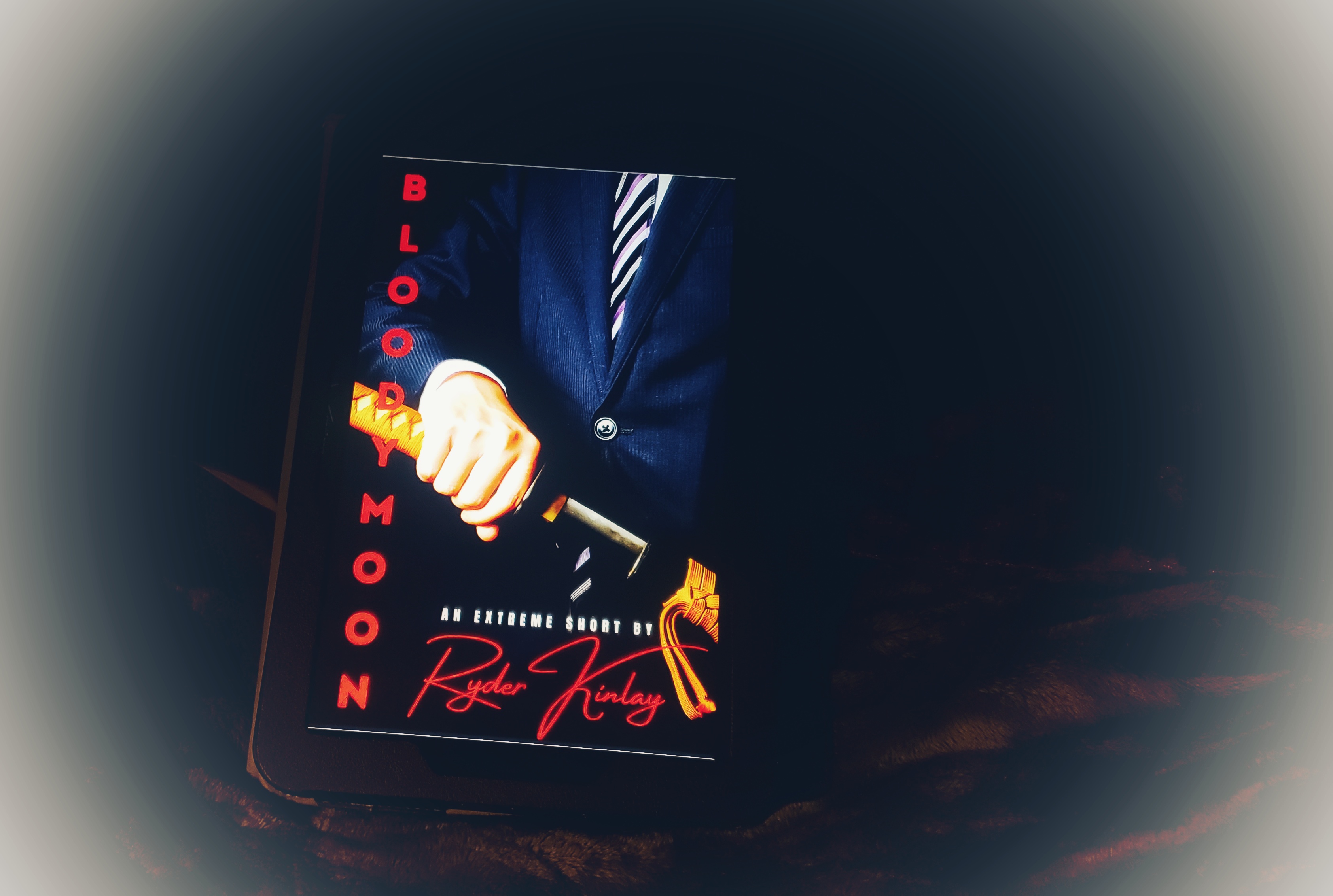
The rich really are different. Never honeymoon in Thailand. Those are the biggest takeaways from Kinlay’s Bloodymoon. We meet the celebrating couple just as a plum is to be propelled from the vagina of a woman on stage into the new bride’s mouth. How can you go wrong with a story that starts like that? From there, Kylie–increasingly intoxicated–allows her husband, David, to drag her along in his wake as he seeks even greater and more taboo forms of enjoyment. Unfortunately for Kylie, she might have married into the wrong family. Bloodymoon is a story that starts out feeling like The Hangover only to transition into Hostel, and it’s quite an adventure getting from origin to destination.
You can obtain this short story for yourself by going to http://www.godless.com or by downloading the Godless app for Apple and Android Devices. The link for the story is below:
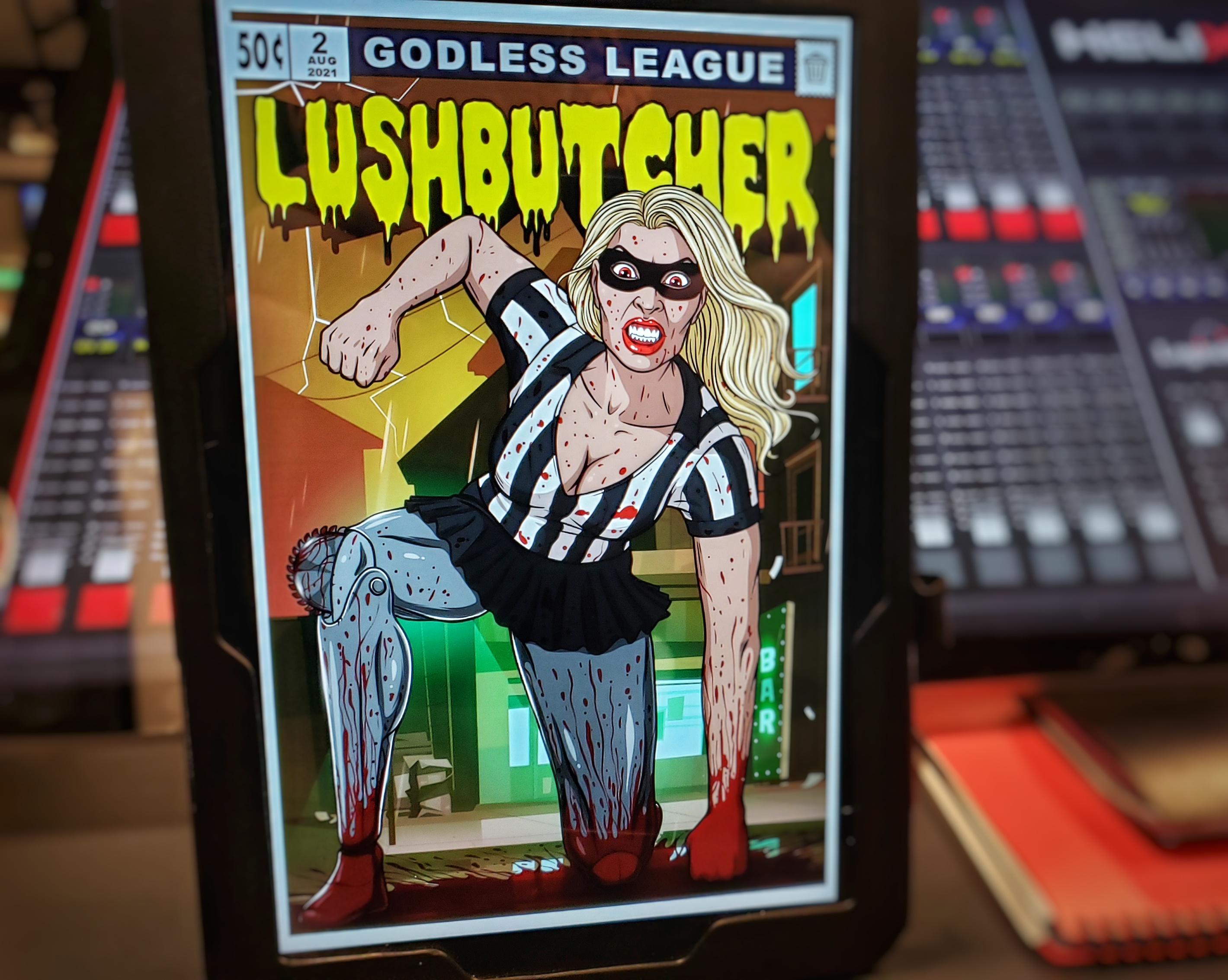
Lushbutcher expands on The Godless League in a wildly different direction from the first installment. Where John Stabberger seemed like a sane, albeit homicidal, character, Jane Lushbutcher–not her real name–seems far more indiscriminate in her targeting of drunks, and her state of mental health is questionable, to put it nicely. With a motivation born from the combination of childhood tragedy and a mission bestowed on her by God–who speaks to her through various inanimate objects and discarded food items–she seems initially sympathetic. The execution of her single-minded objective to stop drunk drivers wherever she can find them seems to be a bit more flexible in Lushbutcher’s interpretation–as well as the perspective of her God. There’s no denying that this is a fun, violent joyride through the seedy streets and rooftops of Pittsburgh. But with victims less cut and dried as bad guys, Lushbutcher doesn’t come across as quite as focused and relatable as Stabberger. Don’t let that turn you away from the story, though. It’s still an exciting, delirious adventure.
You can check this one out for yourself by going to http://www.godless.com or by downloading the Godless app for Android and Apple. The link for this title is below:
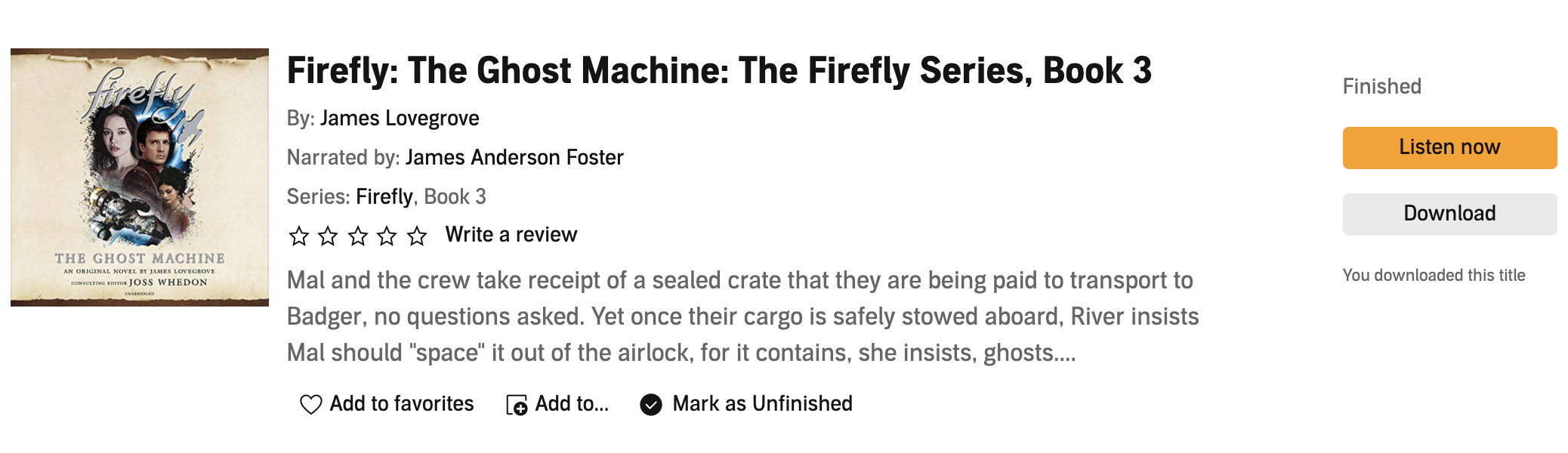
It was bound to happen, but I sort of hoped I would be wrong. Firefly: The Ghost Machine wasn’t the best of the tie-in novels following up the abruptly terminated Firefly series. I’m not suggesting it’s not a good story or that it’s something I’d recommend skipping over, but it wasn’t as good as the previous two books from James Lovegrove. This third installment of the series of books filling in the gap between the Firefly finale and the continuation provided by Serenity falls into the interval after both Inara and Shepherd Book have left Serenity. The loss, relatively recent, leaves a discernable and tender hole in the lives of the remaining crew. Lovegrove’s writing succeeds in capturing that despondency without being heavy-handed about it. At the request of Badger, the crew of Serenity heads to a distant location for recovery of a case containing an unknown device to deliver it to Badger for a client. Unhappy and unsettled by the lack of information provided–as well as Alliance patrols in that region of space–Mal determines he doesn’t like the deal and opts to pass on the money. The supplier doesn’t take kindly to Mal’s repudiation, and bullets fly. Unbeknownst to Mal and the rest of the crew, Jayne sneaks the parcel onto Serenity, and everything goes sideways. The device was designed as a form of mind control and crowd suppression, triggering those in proximity to lapse into hypnogogic states. As the crew of Serenity finds themselves trapped in dreams they can’t rouse themselves from, River is the only one aware of the problem and hopes she’s capable of breaking her family aboard the firefly from their respective trances before it all ends in tragedy. Naturally, we know they come through the other side since Serenity takes place…but we do catch glimpses into the dreams and nightmares of the remaining crew members along the way. Unfortunately, there’s not much more to the story than that. As with the previous books, the narration from James Anderson Foster is spot-on. Aside from a full cast reading of the scripts, I don’t think they could have found a better narrator for these books.
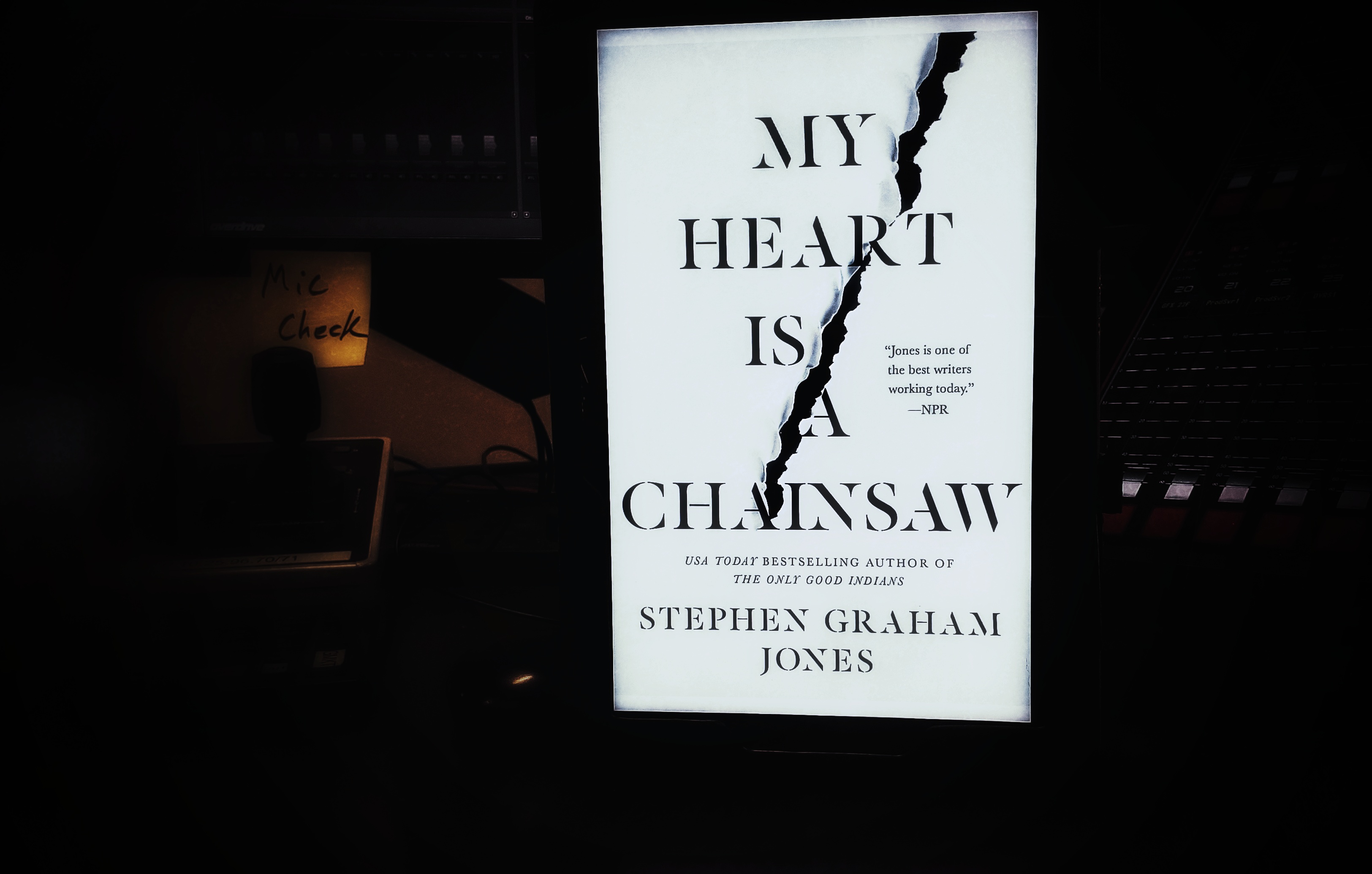
After The Only Good Indians last year, Stephen Graham Jones set the bar higher than most authors could dream of achieving. I say that because The Only Good Indians was easily one of the best novels I’ve had the pleasure of reading, regardless of the genre…ever. My Heart Is a Chainsaw isn’t likely to leave quite as profound of a lasting impact as that book, but it’s a different sort of beast altogether. And boy, is it a beast. Jade Daniels is a walking, talking archive of all things slasher-related, or even slasher-adjacent. She’s a socially awkward outcast who speaks to others in slasher genre shorthand. To her, everything in life can be easily compared and contrasted with plot points of one or more of her favorite movies. Every occasion has an appropriate quote from the slasher genre. As a person, she’s equal parts aggravating and endearing to the reader–assuming the reader, like me, is a hardcore slasher fanatic. Finally, her dead-end life in a dead-end Idaho town appears to be heading toward a fantasy come true. With the arrival of Lethe Mondragon, the final piece falls into place as Jade determines she’s located the archetypal “final girl” for the real-life slasher horror to play out. Is Jade another Cassandra, doomed to warn everyone of the impending nightmare and tragedy, only to be dismissed as all youth are in the movies she so adores? Is she simply a troubled girl who has lost the capacity to differentiate between fantasy and reality, on the verge of returning to the institution from which she’d only recently been released? You’ll have to read the book to find out. If you’re familiar with Jones as an author, you should know you won’t be disappointed. As you reach the halfway point of this novel, everything begins cascading out of control with a feverish pace and such a dizzying assortment of horrors that you’ll hardly see the next twist coming–and there are indeed twists. The novel is so much more than a slasher story. I’d love to tell you more, but I’d be giving too much away. My Heart Is a Chainsaw is also a coming-of-age tale about an indigenous girl haunted by her past and fixated on the haunted history of the mountain town she calls home. This is a story of friendship, a dysfunctional family, and an even more dysfunctional community. My Heart Is a Chainsaw should assure any readers that Stephen Graham Jones is–I say this without a doubt in my mind–perhaps the single greatest writer currently active in the horror genre.
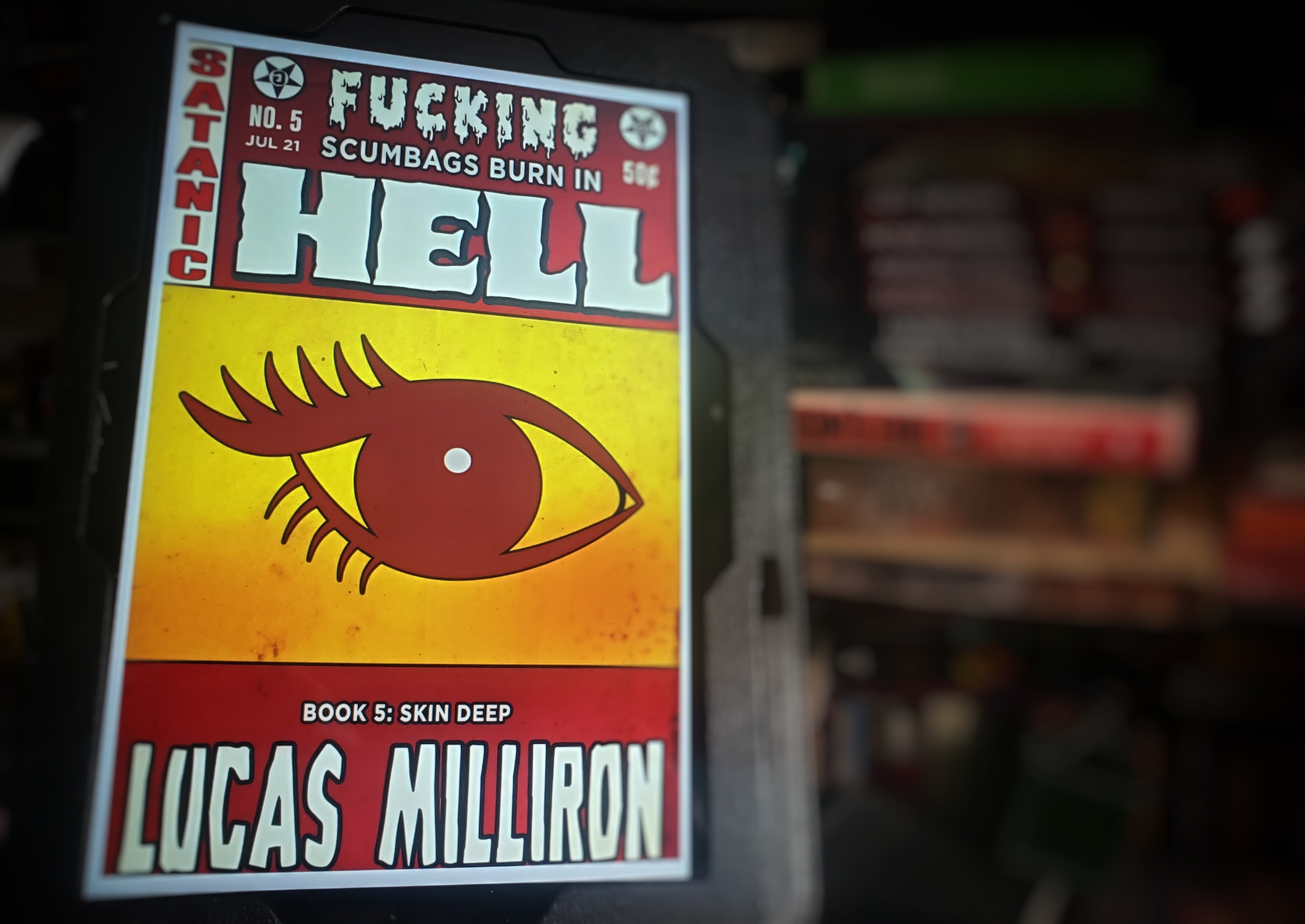
Skin Deep feels like the answer to the unanswered question, “What if Nip/Tuck had included an absolute sociopath as a protagonist?” Lucas Milliron expertly answers that question by crafting a narrative that showcases both the depravity and evil of Mike’s character but also the vulnerability and fear that serves as the substrate of who he’s become. The random glimpses into a horrifying childhood make it almost impossible to write Mike off as a two-dimensional piece of shit caricature. However, no amount of childhood trauma and abuse can make his actions throughout the story palatable or justified, and a reader can’t help but wish for Hooper to come along. Milliron brings a different style to the Hoopiverse. He provides the reader with a frenetic, hallucinatory barrage of set pieces that manage to be simultaneously jarring and free-flowing. At no point does the reader see around the corner to what the next scene brings to the table, and that adds to the bewildering nature of this installment of the series. As someone who can’t bear to have objects in/near my eyes, there was something viscerally unsettling about different aspects of this story.
As with the other installments of Fucking Scumbags Burn In Hell, you can obtain your own copy of this story at http://www.godless.com or on the Godless app, available for both Apple and Android users. The link to the story is below:
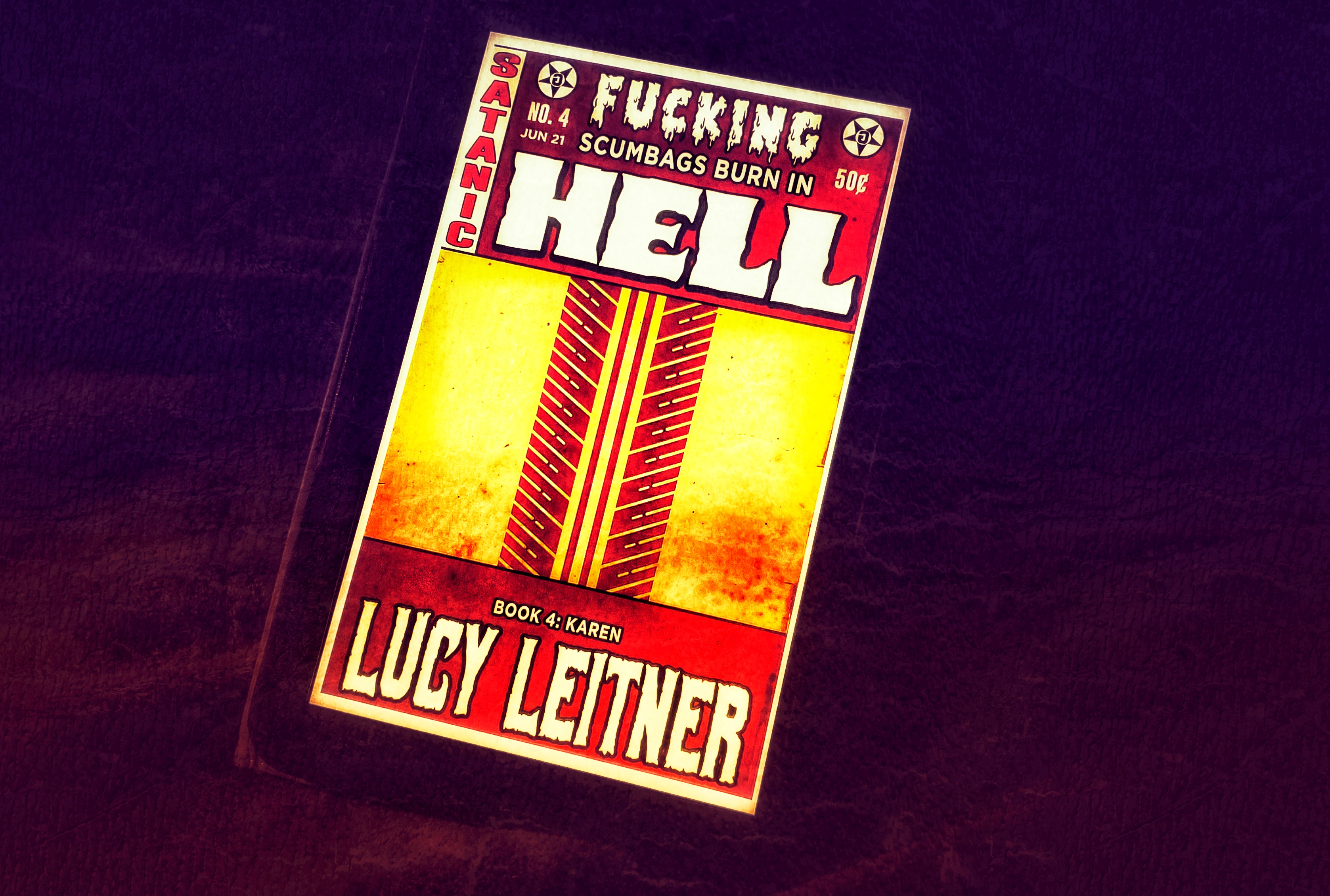
Karen is the fourth installment of the Fucking Scumbags Burn In Hell series, initiated by Drew Stepek. This volume was thrust upon us by Lucy Leitner. She was perhaps the perfect writer for him to next incorporate into his Hoopiverse. It’s plain to see that, as soon as Stepek allowed Leitner to take the wheel, she proceeded to plow her BMW through no less than half a dozen overweight men, women, and children in a rampage from which the reader can’t turn away. Karen is…well…a Karen in every conceivable sense. If you don’t know what that means, I’m curious about how you’re reading this review from your space beneath the rock under which you’ve clearly been residing. Karen’s not someone you’d want to follow on Instagram, for sure, unless you’re looking for tone-deaf comparisons with concentration camps. That particular gag reminded me a great deal of Marjorie Taylor Greene, and I subsequently pictured Greene in the role of Karen for the rest of the story. By the time Hooper comes along, you’re practically begging to see this monster receive the comeuppance you know she’s got coming. Leitner does not disappoint!
You can find this title, as well as the other amazing contributions to the Hoopiverse, by going to http://www.godless.com or by downloading the Godless app to your Android or Apple device of choice. I’ve included the link to the Hoopiverse titles below:
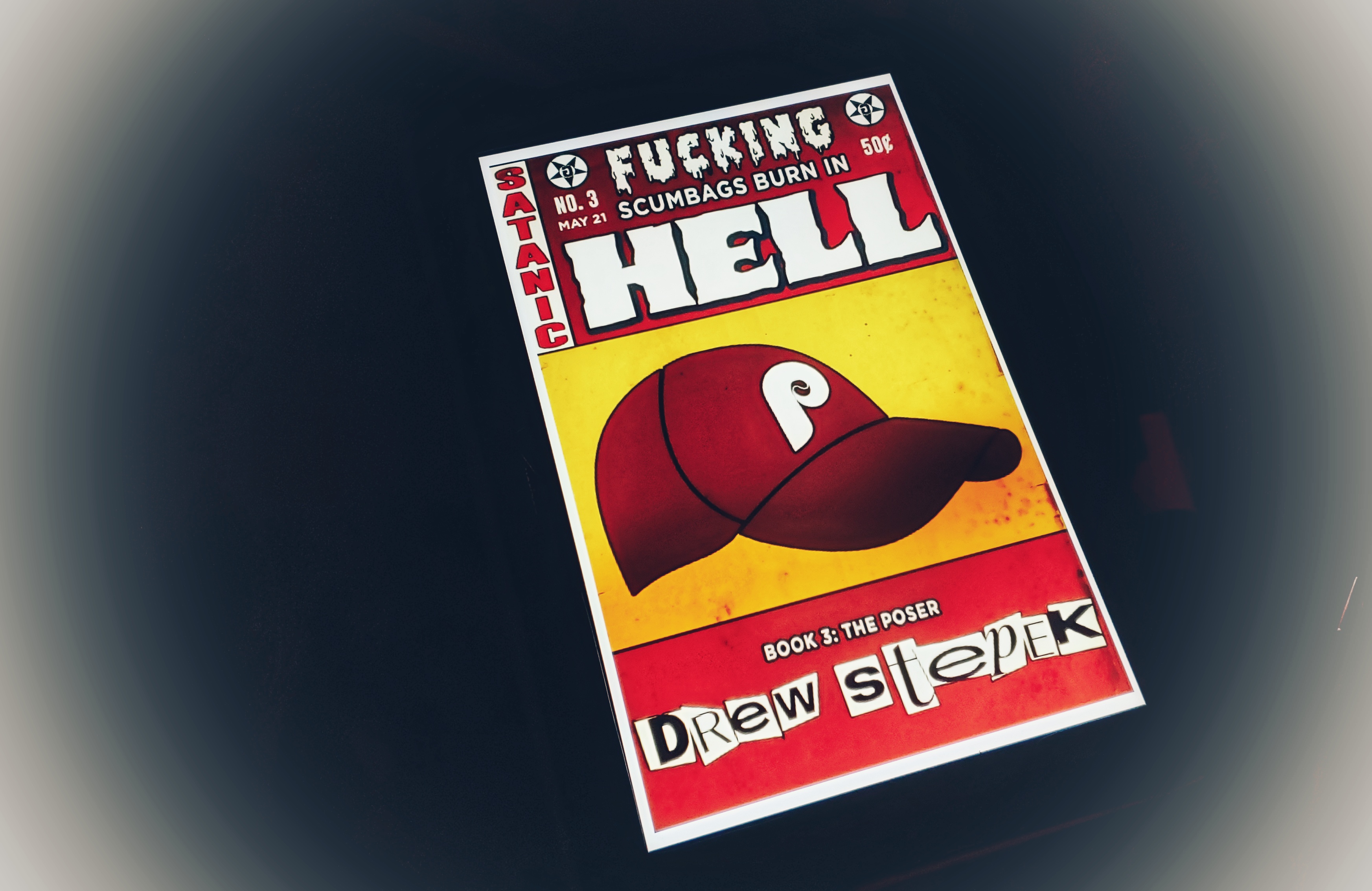
The third installment of Stepek’s Fucking Scumbags Burn In Hell introduces us to the titular Poser, Sully. Through a combination of bleeding-edge technology and innate talent, Sully can hijack the bodies of the people who become his victims. Of course, he does this for a profit. We begin by witnessing as Sully thoroughly demolishes both the fortunes and the future of a pop star with a flourish that takes Britney Spears’s apparent breakdown from 2008 and amplifies it. It seems that Sully has a knack for going above and beyond the wishes of his clients, relishing in the fact that he feels no guilt nor shame for the awful things he does while he pulls the strings from within his victims. It’s with a grim sense of satisfaction that we see Hooper enter the scene, promising a whole new experience that Sully can’t refuse. Lulled into a false sense of security, Sully greedily marches into the trap as the reader smiles and waits for the other shoe to drop. As with the previous two volumes in the Fucking Scumbags Burn In Hell series, Stepek provides us with a glimpse of extreme comeuppance for another of the worst of the worst.
You can obtain your own copy of The Poser by going to http://www.godless.com or by downloading the Godless app for your preferred mobile device. The link to the series of shorts is below:
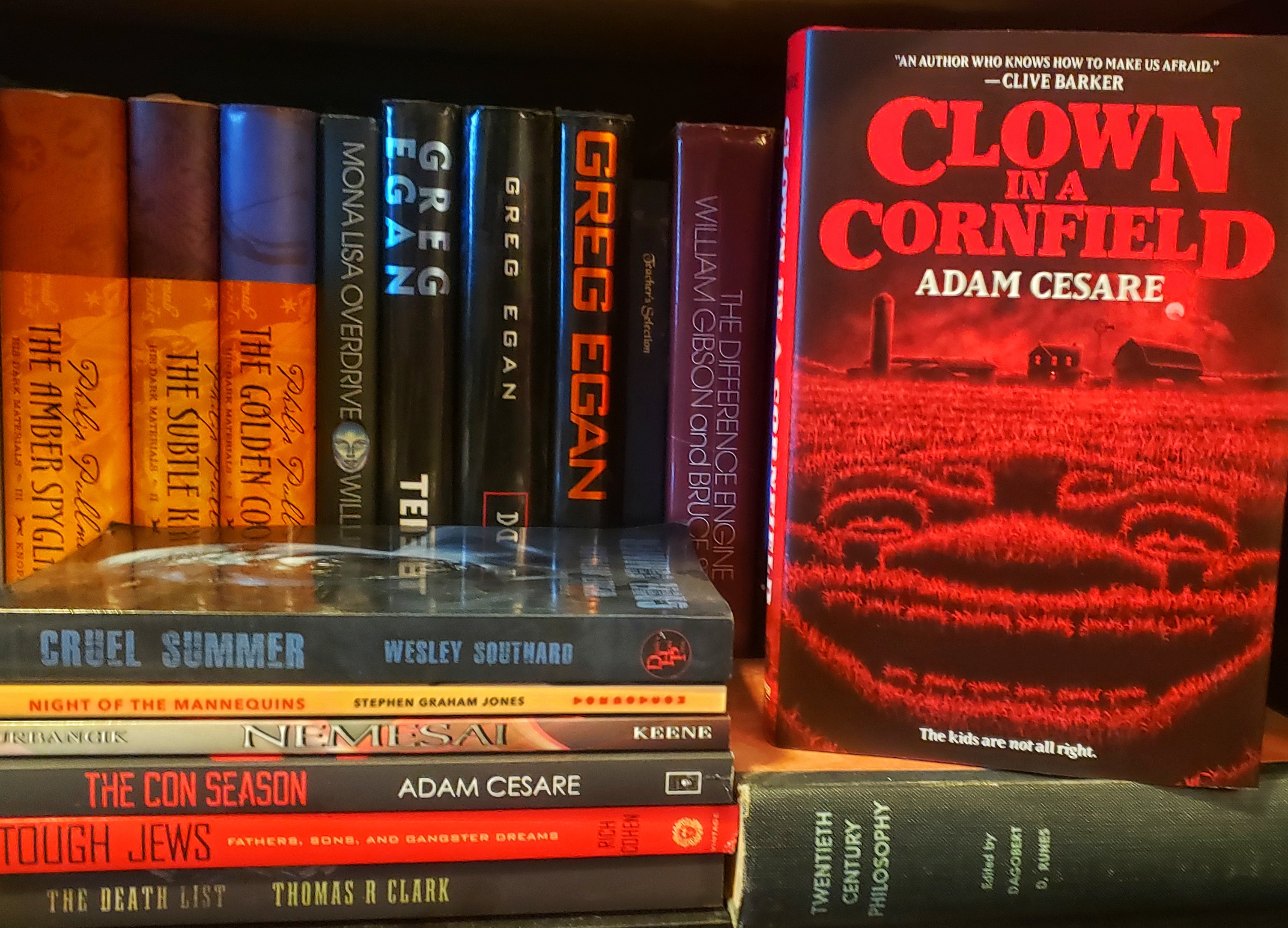
It was going to be challenging enough for Quinn Maybrook to adjust to the transition from Philadelphia to Kettle Springs, MO, under the best of circumstances. Unfortunately for Quinn and her father, Kettle Springs isn’t simply another small town in the rural Midwest. Kettle Springs is suffering from a terrible pressure building up just beneath the surface of the seemingly prosaic day-to-day rustic community. Cesare lets the tension build as we familiarize ourselves with the mostly quaint environment of Kettle Springs. Dedicating the first half of the novel to a character study and framing the narrative as a coming-of-age tale that we anticipate taking a darker turn makes the latter half of the book more potent. The tension gradually builds, punctuated by scenes that guarantee the reader is in for more than just a fish out of water tale long before the party in the cornfield transforms into a nightmare. While I understand that this is ostensibly a young adult novel, it never pulls punches or treats the reader like they won’t be able to handle the visceral one-two punch once the violence kicks off. At its core, Clown In a Cornfield is a story of intergenerational conflict. We’re forced to face the ever-present conflict between youth and adulthood or tradition and novelty. When we join the story, we’re an ancient god and a charismatic child away from this book going the route of Children of the Corn. Similarly, we’re government sponsorship away from the story turning into Battle Royale. As the tale evolves from coming-of-age drama into slasher horror and finally into something altogether more ominous, we’re carried along by Cesare’s masterful storytelling. This is a young adult novel that is far more suited for adult readers than the books in the Harry Potter–and not solely because Rowling is a TERF and a bigot–or The Hunger Games series. Don’t let the YA categorization push you away from a fantastic dark tale for all ages.
A Little Bit Country, the introduction to the terrific Fucking Scumbags Burn In Hell series, sets the bar high and showcases a uniquely cruel and sardonic portrait of Hell. It’s not supposed to be a fun place, after all. The important thing to remember is that these people belong there, and the torment awaiting them is one that would make Dante proud. Reading about the experience of “Country” as he finds his place in the realm of the damned, I’m forced to reconsider Jean-Paul Sartre’s assertion that “Hell is other people,” and suspect that perhaps Hell is more appropriately ourselves. There is something of No Exit in this brief, humorous tale, in that Hell is not the place we expect it to be, and it’s that subverted expectation that contains the trap waiting to spring closed and provide the torture we’ve earned. Country seems almost sympathetic at first, but I think there’s a little bit of Hooper in all of us, and the satisfaction at seeing how everything comes back around can’t be understated.
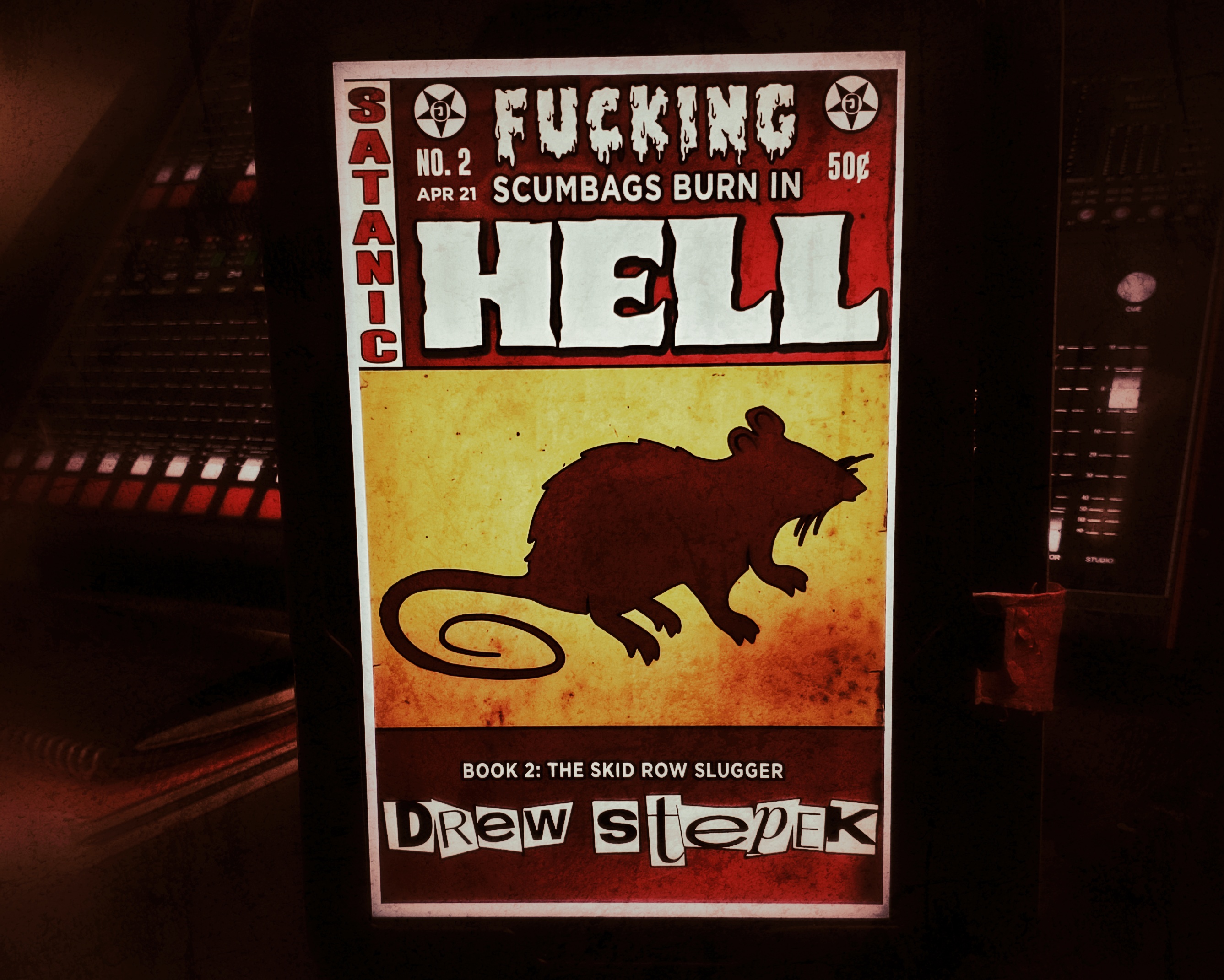
The Skid Row Slugger is an amazing follow-up to A Little Bit Country, taking more time to flesh out the newest victim than we had with Country. While the first installment reminded me of C. S. Lewis and Chuck Palahniuk, with the portrayal of Hell as a dead-end job filled with bureaucracy and confusing rules, the follow-up feels more like a Clive Barker experience. This second tale also provides a tantalizing glimpse of how devious Hooper can be. There’s nothing sympathetic or redeeming in the character of our protagonist. A racist, violent, and sexist LA cop isn’t exactly the sort of person I imagine anyone cheering for–but supporters were speaking up in favor of the former officers involved in the Rodney King case and every major incident since then. The Skid Row Slugger isn’t a story for those assholes, though. This is a tale written for those of us who feel that thrilling chill running up our spines when we witness a neo-Nazi punched on camera. It’s the fictional catharsis we need when we try to live our lives as civilized people who won’t resort to violence. Again, there’s a sense of delight in reading this story, and we owe Drew Stepek a favor for giving us this cherished sense of satisfaction.
You can find both stories, along with additional installments of the Fucking Scumbags Burn In Hell series at http://www.godless.com
A little backstory might be in order for this review. This story is built around the old Screen Gems release of Universal horror pictures in syndication to television stations in the late 1950s. With the encouragement that the stations bring in a host to introduce the “Shock” and later “Son of Shock” pictures, Screen Gems helped to platform an industry, first popularized by Vampira, the original horror host on television. There have been many others along the way, including notable icons such as Vincent Price, Joe Bob Briggs, and Elvira. Midnight Horror Show captures a nostalgic snapshot of a time that’s lost in memory, turning it into something truly sinister, and telling a fantastic tale along the way. With a series of unusual killings in the sleepy Iowa town of Dubois in 1985, Detective David Carlson finds himself thrust into the midst of an all-too-real horror show. Investigating the seemingly unrelated crimes, he encounters James West, a strange young man with a fixation on horror and heavy metal, soon to host his own horror show at a local drive-in with a dark history. James’s obsession with a former television and drive-in host, Boris Orlof, brings Detective Carlson face-to-face with secrets and terrifying truths previously buried in the past. Confronting his own forgotten memories, a file of missing person cases from twenty years before, and the very real possibility that there’s more than simple movie magic taking place behind the scenes, Detective West finds himself fighting a ticking clock to solve the unbelievable mystery and save the young man he’s grudgingly befriended before Halloween night. Midnight Horror Show is a captivating story that leaves you guessing what’s going to happen right up until the end. When you think you have a handle on what’s next, Lathrop manages to dodge your assumptions and veer off in a different direction. The narration provided by Tee Quillin is fantastic and believable as he voices the assorted characters populating the tale with seeming ease.


 Domus Necrophagous