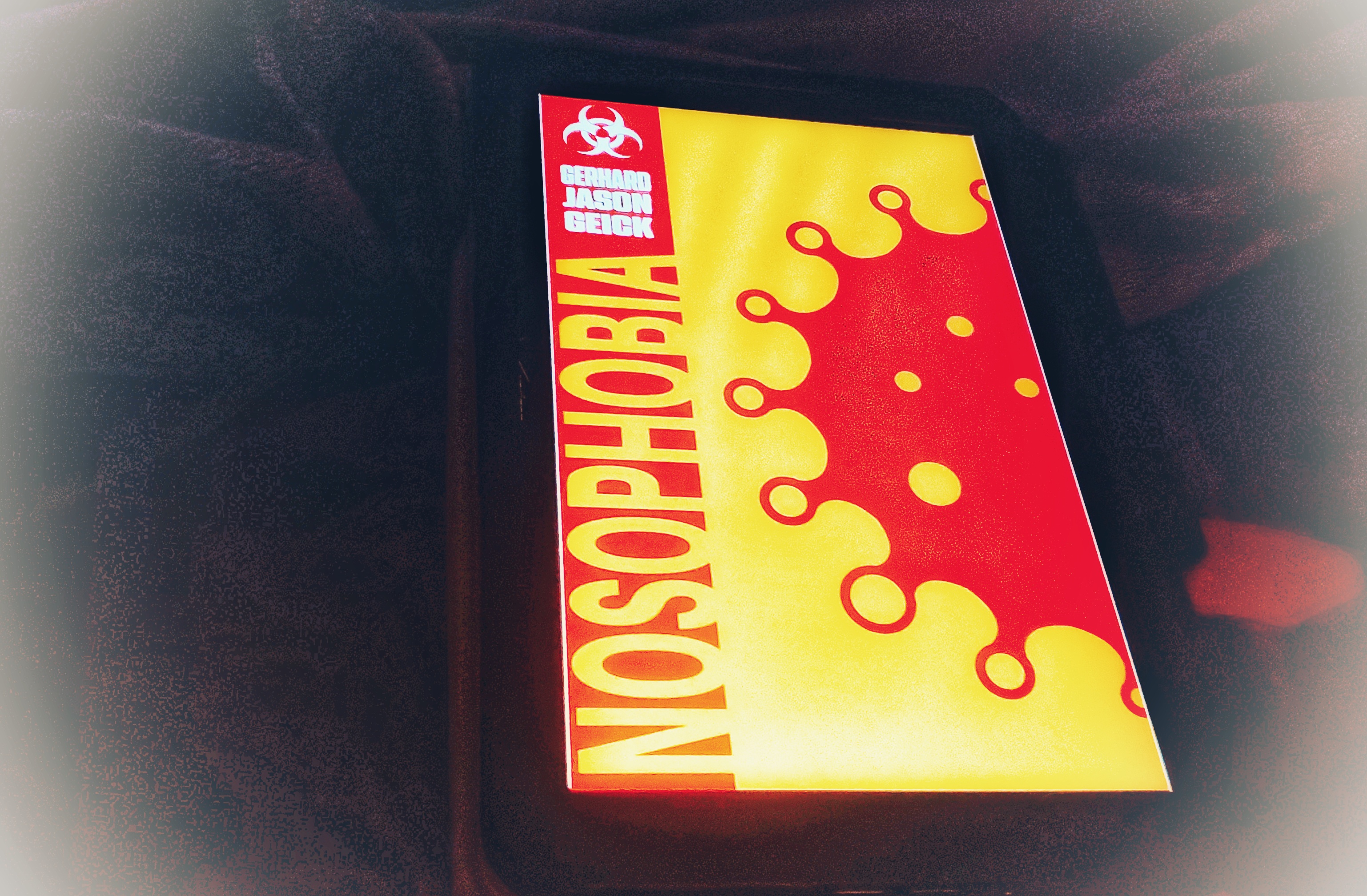
What do you do when your life is falling apart around you because your kinks and perversions are too shameful for loved ones to accept? What if you also have neither the motivation nor the courage to sort things out? In the case of our protagonist, you pack your bags and head for China to teach English as a second language, evading your problems while hoping to return someday with unearned closure in tow. While unsympathetic, our protagonist is relatable in more ways than is probably comfortable to admit. Geick dips into the well of our shared experiences of insecurity, loneliness, shame, and isolation to craft a character that reflects some of our least appealing traits. A night of drugs and exotic dining, characterized by increasing haziness and disorientation, leads us to a conclusion that the reader sees coming just a short while before the revelation hits home. Nosophobia should rank among the best works of short fiction to arise from the pandemic conditions of 2020/2021.
You can obtain your own copy of this fantastic short story through http://www.godless.com at the link below:
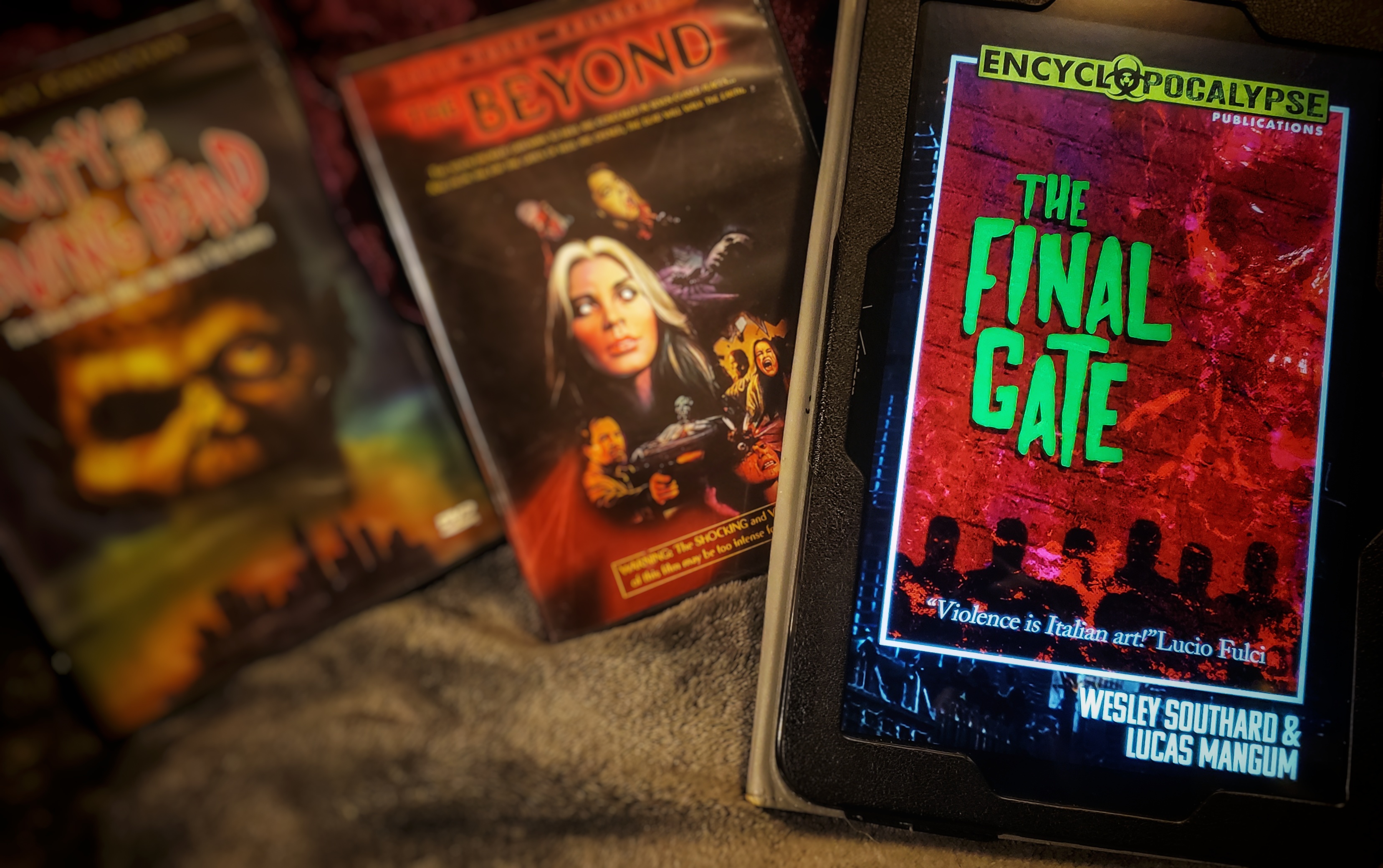
If Italian director Lucio Fulci were alive today, creating movies at 94-years-old like those he’d filmed four decades ago, this novella could be the novelization of his newest masterpiece. Southard and Mangum display a sincere and passionate love for the atmosphere, over-the-top gore, and idiosyncratically disjointed flow of Fulci’s oeuvre. That deep and abiding adoration is necessary to so accurately capture the feel of a Fulci movie with The Final Gate. The more dedicated fans will perhaps experience a sort of wavering, rippling effect in their imaginations, seeing the face of Bob from House By the Cemetery transitioning into the much older face of Robert, the caretaker of St. Luke’s Orphanage. As pleased as we are to make his acquaintance again–and to see that he’s grown into a man who found a way to help children who were orphaned just as he was–it would seem that Bob’s encounters with supernatural horrors aren’t over. After racing into the orphanage in response to a young boy’s desperate cries for help, Robert’s story comes to an end when he enters Bryce’s darkened bedroom. The rest of the book follows Brandon, Bryce’s older brother, and various other characters as Brandon desperately tries to make up for the mistakes of his earlier years. He hopes that by locating his younger brother and rescuing him from an orphanage that seems increasingly sinister, the deeper he digs into it, he’ll find a sense of fulfillment and redemption. With the assistance of Jillian, his girlfriend, and Jillian’s ex-boyfriend, Dan, Brandon faces something far more mysterious and awful than he could have anticipated. In true homage to Fulci, the authors leave you wondering who–if anyone–will survive and whether there’s any chance of a happy ending when the gates of hell are involved. Any fans of Lucio Fulci, Dario Argento, Mario and Lamberto Bava, Ruggero Deodato, Umberto Lenzi, Bruno Mattei, and the other Italian greats should immediately pick up a copy of this book in August when it releases. No other book I’ve read has so perfectly demonstrated the Italian exploitation cinema tone the way this one has.
Andrzej Sapkowski’s The Tower of Fools won’t necessarily appeal to fans of his far more popular The Witcher series. While elements of his distinctive writing style carry over to this first book of the Hussite Trilogy, the story itself is a major departure from what readers might expect. The Tower of Fools is more akin to Neal Stephenson’s Quicksilver (the first book of The Baroque Cycle) or Susanna Clarke’s Jonathan Strange & Mr. Norrell, in that it’s a dense fantasy tale firmly embedded within true European historical context. Whereas The Baroque Cycle transpired in a fictionalized version of the late 1600s to early 1700s, and Clarke’s novel took place in the 1800s, Sapkowski’s trilogy inserts itself into Eastern Europe of the 1400s. We are introduced to Reinmar of Bielawa, an unlikely and peculiar hero, as unwanted adventure is thrust upon him by virtue of Reinmar caught in the process of a different sort of thrusting–with the wife of a member of a wealthy and powerful family. On the run from vengeful aristocrats (and those working on their behalf), the inquisition (for being a magician and heretic), and sinister forces with unknown motives, Reinmar finds himself on a meandering scramble across the Eastern Europe of the late Middle Ages. Populated by an almost intimidating cast of additional characters, while not as bad as Pynchon’s Gravity’s Rainbow–a book I’ve never been able to finish–it becomes challenging at times to keep track of precisely who is who. Strange acquaintances along the way become friends, friends become enemies, and enemies become victims of the peculiar sort of charmed life Reinmar seems to live. With the familiar wit and subtle comedic writing Sapkowski brings to the narrative, we witness an extreme example of fortune favoring the fool. As Reinmar stumbles from one bit of trouble to another, dragging unfortunate allies with him as he careens from frying pan to fire and back again. Densely packed with historical events and figures of the Hussite Revolutionary period, The Tower of Fools is as much a history lesson as a tale of fantasy. Though Sapkowski’s novel incorporates elements of magic, witches/sorcerers, and supernatural beings aplenty, the narrative is so deeply fixed in a foundation of historical veracity that it all feels more textured and real than it might otherwise. Of course, those familiar with The Witcher are well aware that the author is capable of fleshing out a fictional world without the benefit of drawing the fine details from real-world history. It’s a nice touch, though, being able to explore a historical period many of us aren’t familiar with. The titular Tower of Fools–though referenced at numerous points throughout the story–makes an appearance in Chapter 26, at almost the end of the book. It could be argued that the wider world we witness in the book is the real Narrenturm, and the whole of Eastern Europe and the Holy Roman Empire makes up the real Tower of Fools. Though the story is not one that I can praise in more than peculiarly specific ways, the narration provided by Petter Kenny is spectacular. This narrator is impressive, to put it mildly. He successfully tackles various accents, dozens of characters, as well as songs and chants performed in Latin and other languages, all with a clarity and quality that almost astounded me.
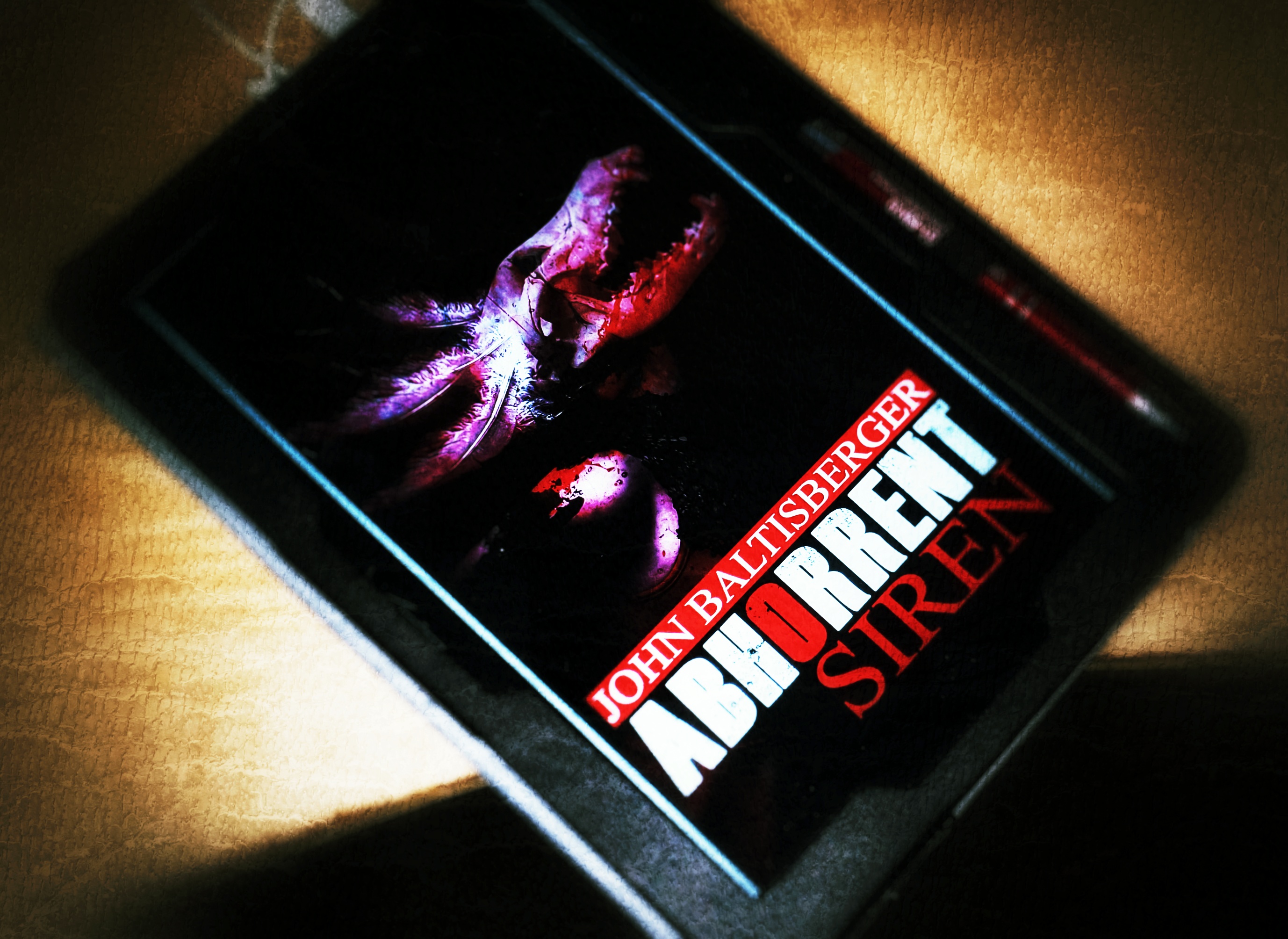
I had the extreme pleasure of reading this book a few months ago. I immediately procured a copy once it was available on sale through http://www.godless.com because I sincerely believe that Baltisberger deserves all the support the indie horror community is able to provide.
Abhorrent Siren takes Baltisberger’s love of kaiju and elevates it to a new level beyond what readers had witnessed from previous titles like Blood & Mud and the epic poem, War of Dictates. This book is truly the love letter to the body horror and giant monster genres readers didn’t even know they needed. It’s all too easy to get excited watching kaiju movies while never conceiving of the desperation and terror of those in the path of whatever horrifying monstrosity is lumbering their way. All too often, we witness those tales from the perspectives of individuals at a safe distance or the larger-scale perspective of the monsters themselves. Abhorrent Siren is not one of those stories. This book is Cloverfield rather than Pacific Rim. We are not on even footing with the creature slithering its slimy way North across Texas. We are not at any sort of remove from the horrific events taking place, at least not for long. This is not to say that we aren’t provided with some perspective from those analyzing the situation and struggling to find both an explanation and a solution. Following the scientists, as they race against both the clock and the toxic mist exuded from the monstrous axolotl, to share their findings with those who might be able to do something is fascinating and rife with harrowing experiences along the way. As we receive intimate, first-hand experiences of the body horror happening at ground level in advance of the creature’s arrival, we find ourselves equally horrified and disgusted by the transformations taking place both in mind and body. As readers, we are never allowed to forget the afflicted–while malformed and misshapen in every conceivable way–were once human beings. That constant reminder that these were once people serves to make the events all the more awful. The author wasn’t satisfied simply to write a violent, breakneck-paced monster story. As with other material from Baltisberger, there are layers of subtext and social commentary laced within his viscerally poetic imagery. Embedded within what is a captivating–sometimes alarming–tale of grotesque, splattery horror, one will find a scathing meta-commentary on the opioid epidemic plaguing America. As we witness Barbara’s inability to escape the nightmare unfolding around her in her attempts to distance herself from the clinic, the commentary becomes all the more poignant. Just wait until you reach the point in the story when Barbara comes home to Owen. It’s all downhill from there in the most gloriously, gratuitously disgusting way–especially after she brings another partner back with her.
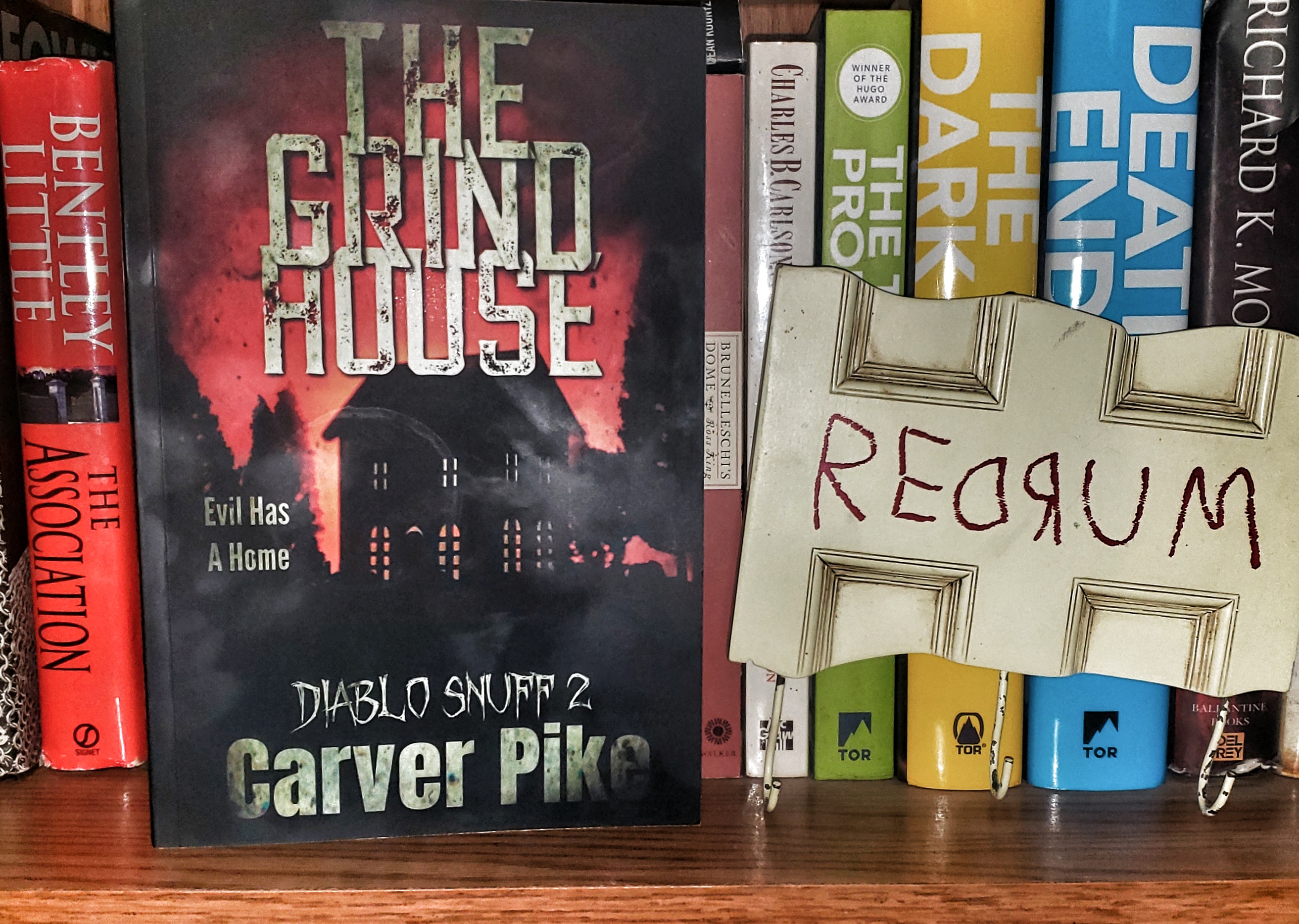
The Grind House continues the descent into madness that is Pike’s Diablo Snuff series of books. If you’ve read A Foreign Evil and Passion & Pain, you’ll have some idea what to expect while still finding yourself surprised around every twist and turn captured by the author’s impressive imagination. While the previous two installments focused heavily on monstrous cruelty and torture inflicted by agents of the malevolent organization known as Diablo Snuff, this book leans heavily on things that can’t be perceived as anything other than the supernatural. The visions of demonic entities–post-climax–in A Foreign Evil could easily be dismissed as little more than the feverish hallucinations of a man who went through hell. It’s far more challenging to similarly write off shared visions of inhuman horrors and other aspects of the tale unfolding within The Grind House. Of course, we all knew these things were real–in the context of the story–but it hits home much harder in this book than the previous immersions into the world of Diablo Snuff. Fans of the previous two stories in the Diablo Snuff series will be happy to encounter some familiar characters at different points in this novel. I know I certainly was. In this book, as in the previous two, Pike’s history as a writer of dark romance and erotica comes to the forefront in a big way, weaving together heavily eroticized encounters with sheer, unrelenting lunacy. It takes a certain undefined skill to seamlessly blend graphic, sensual intimacy with a bewildering, undercurrent of horror, but it’s a skill Pike has in spades. It’s The Shining on MDMA. If Shirley Jackson had channeled Marquis de Sade when writing The Haunting, we might be coming close to what you’ll find within these pages. This isn’t necessarily to suggest The Grind House is a haunted house tale, but in a sense, it most certainly is. If a place can absorb the evil of those within its walls–or beneath its foundations, The Grand Georgina most certainly has. Tobias (T.K. Tantrum) is in for far more than he or his assistant anticipated when he was signed up to attend the writers retreat at The Grand Georgina. He hoped to write the masterpiece that had eluded him so far in his modestly successful career, but he finds himself drawn into real-life peril that rivals anything he could have written. As the abominations of both past and present are revealed, the insidious trap Tobias finds himself within may be something from which even madness provides no escape. As prurience gives way to panic, it may already be too late for any to escape the clutches of Diablo Snuff.
This review was originally written in July of 2015
Ex Machina starts off slow but remains compelling from the beginning through to the end, and it managed to prove itself to be easily the most well-written and well thought out story to touch on this subject matter. Chappie was entertaining and sort of sweet, Age of Ultron was exciting, but Ex Machina was the best and most honest exploration of artificial or emergent intelligence I have witnessed on screen. Everything from the introduction of Ava, through the process of getting to know her as she is put through a protean sort of Turing test by a gifted coder, to the intense and chilling (but somehow still understated) climax of the film is insanely captivating. The interactions between the relatively naive Caleb (the programmer) and the erratic and controlling Nathan (his boss and the man who developed Ava) fluctuate between bizarre and somewhat friendly but with an ever present sort of tension that builds as the narrative continues. The true star of the movie is Ava herself, portrayed by Alicia Vikander…and she most certainly shines in her role, showing that it might not be the best idea to strive for human emotional development and sexuality when working towards AI. Elements of the movie definitely take a cue from Bladerunner…questions of identity, what it is to be human, and how far we might go in simulating humanity when creating a new form of life…in addition to exploring all too common human issues like insecurity, desire, and mistrust. I want to say more. I want to discuss specific points in the narrative, but I don’t want to include any spoilers. I hope that you’ll see it for yourself. There is no doubt in my mind that this is one of the best science fiction movies I will see in a good long while, and I believe you will feel the same if you take the time to watch it.
This review was originally written in July of 2015
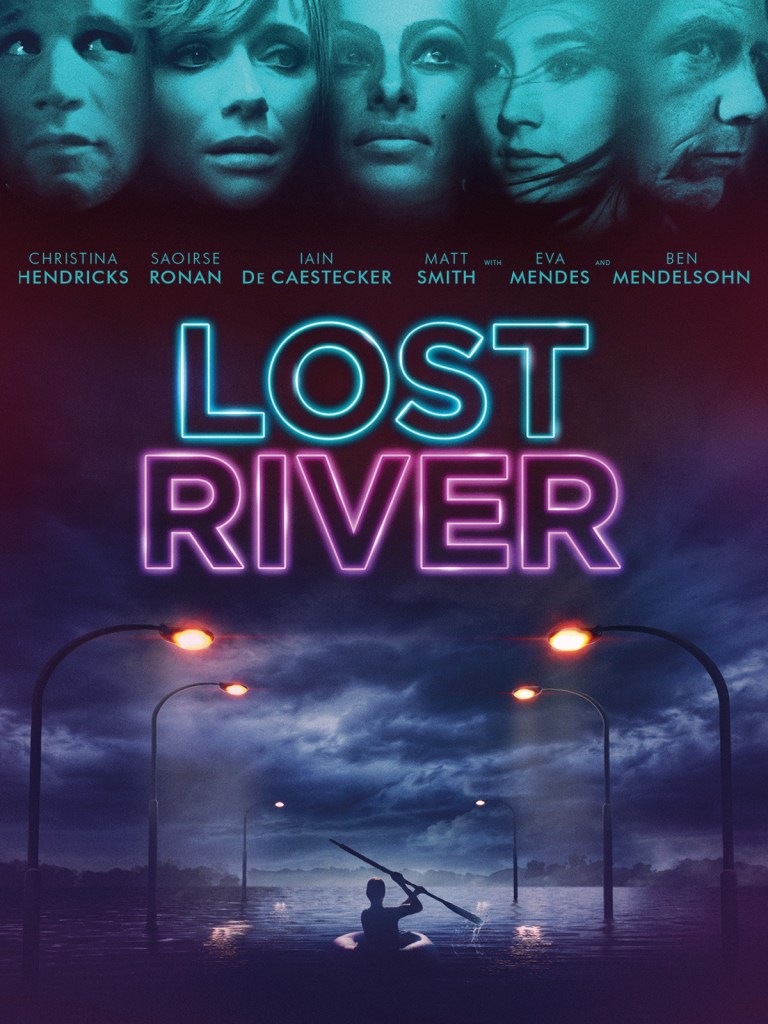
On the surface Lost River is a devastating portrait of urban decay after the housing collapse, delving into the virtually empty remnants of what were once thriving Detroit neighborhoods…but it ends up being so much more than that. Ryan Gosling proves himself to be perhaps more talented as a writer and director than as an actor, which is an impressive feat considering just how good he really is as an actor. As grim and heartbreaking as the story is, there is a sense of stubborn hope and refusal to give up threaded throughout the narrative. In the desolate and unsettling environment and conditions in which the movie takes place we find Gosling displaying intense imagination and creativity as he weaves a story that is as much dark fantasy as it is drama. Matt Smith (yes, that Matt Smith, The Doctor) portraying a deeply unstable and psychotic antagonist taking control of the neighborhood is fantastic opposite Iain De Caestecker (probably best known for his role in Marvel’s Agents of S.H.I.E.L.D.) in his role as a son desperate to help his family survive by stealing copper from the abandoned buildings around where they live. Christina Hendricks (Saffron from Firefly) is amazing as the mother driven to extremes trying to keep her home and her family together. Honestly, I can’t think of anything I disliked about this movie and I am damn glad that I took the time to watch it. Gosling’s writing and directing are about perfect, the acting is superb, the filming locations manage to get under the viewers’ skin and create an atmosphere that truly works with the beautiful score to enhance every aspect of the story that’s being told, and the cinematography is so well done that it really draws you in.
The final installment of the Fear Street trilogy from Netflix had some weaknesses, but it was an overall satisfying conclusion to the story. In a sense, it was like two movies in one. As Deena restores the skeleton of the witch, Sarah Fier, she finds herself transported back in time to the colonial community of Union, where she experiences the final days of Sarah Fier’s life through her own eyes. We discover that the history everyone had taken for granted throughout the previous two installments is not the reality of what happened during those fateful days in 1666. Sarah and Hannah Miller–much like Deena and Sam in 1994–are lovers in a time when it was most certainly less socially acceptable than it is today. Jealous men of the village spurned in their advances, use this forbidden love as justification for cries of witchcraft and devilry. It just so happens that there is witchcraft afoot, but Sarah and Hannah are, of course, innocent. There was a satisfying moment in the story when Sarah determines that she will bring the devil down on the citizens of Union in a sort of self-fulfilling prophecy. Already condemned for practicing witchcraft, she feels there’s nothing to lose. Instead, she discovers the truth of who is behind the apparent curse afflicting the village before she is captured and hanged by the overzealous Union residents. It’s this discovery that brings us back to the present of 1994–and the latter half of the movie. Deena, Josh, and Ziggy–along with the custodian, Martin–craft a desperate plan to bring down the real witch and end the curse that’s afflicted Shadyside for more than 300 years…hopefully, saving Sam in the process.
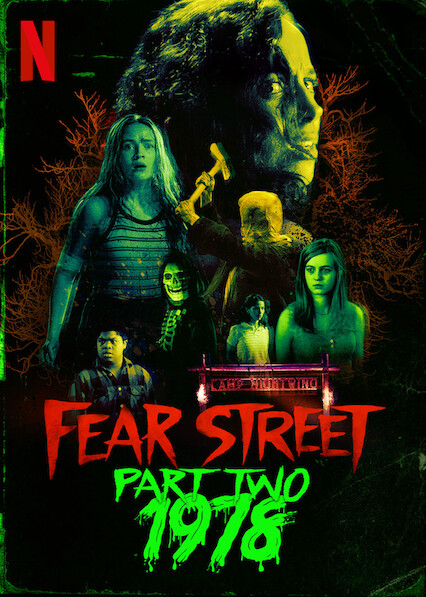
Where the first installment of the Fear Street trilogy paid homage to the pivotal slasher flicks of the 1990s, Fear Street: 1978 devotes itself to crafting a tale reminiscent of classic films like Friday the 13th, The Burning, and Sleepaway Camp. Desperate to save Sam’s life–and perhaps her soul–Deena and Josh turn to one of the only survivors of the massacre at Camp Nightwing, hoping to discover any clues that might assist them. To discover what–if anything–can be done, they experience the tale of that horrible July as shared by the traumatized sister of one of the victims. The filmmakers did an excellent job of capturing the summer camp slasher aesthetic throughout this installment of the Fear Street series. It felt both authentic and immersive. I was impressed. We discover more of the mythology associated with the witch and the curse afflicting Shadyside, and there is some fantastic creepiness in the caves beneath the camp itself. Young campers and camp staff are slaughtered left and right, and there’s no skimping on the violence except where the killing of some of the younger children is concerned. I don’t know if I can claim to be disappointed by that, as it was sort of expected that Netflix wouldn’t go the whole hog on slaughtering children. It sets the stage nicely for the final installment of the trilogy, and I certainly can’t pretend I wasn’t immediately interested in seeing Fear Street: 1666 and discovering just how this tale will end.
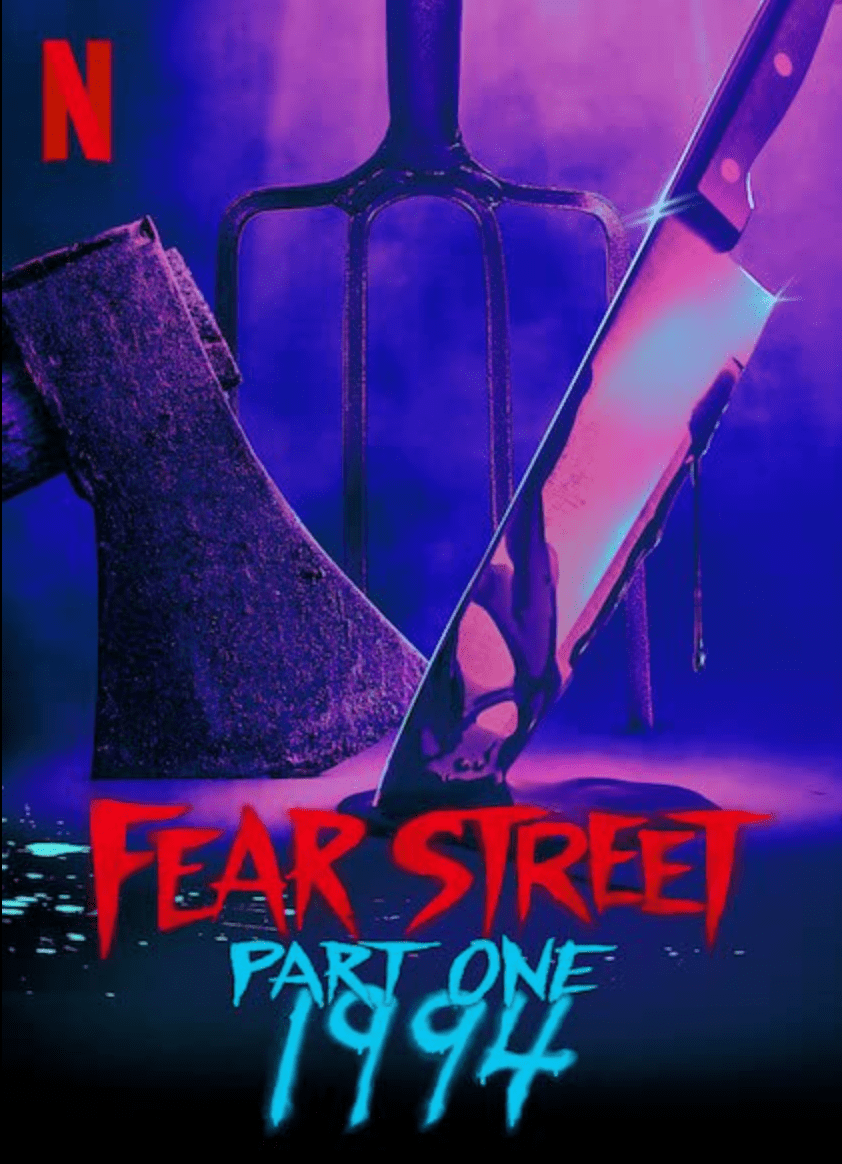
Loosely based on the young adult horror books written by R. L. Stine during the 1990s, the first installment of the Fear Street adaptation achieves a good deal of success in capturing elements of Stine’s writing while gearing the production for an audience now well into adulthood. Though likely to draw a new audience unfamiliar with the source material, this movie was produced to appeal to those who might have grown up reading Stine’s books for younger readers and young adults. While the Fear Street books were more violent and gory than a lot of Stine’s writing geared toward a younger audience, this movie amplifies that element quite nicely. A killer is on the loose in Shadyside, but this isn’t the first time. In a town with a history of mysterious plagues of madness and murder, can Deena and her brother Josh hope to discover the secret behind these horrors before they–and all of their friends–are slain? On the surface, it’s a color-by-number slasher flick complete with Shadyside High School students as fodder, but more backstory and mythology is forming the substrate than is typical in slasher fare. With an obvious fondness for the slasher flicks of the 1990s, one can’t help but see ample homage to such borderline classics as Scream, I Know What You Did Last Summer, and Urban Legend. Fear Street: 1994 goes beyond the superficial slasher characteristics, however, and incorporates a tale of witchcraft, and a town cursed for centuries into the narrative, setting the stage for the subsequent two volumes of the series. The deaths are often fantastic, brutal, and gory–I doubt anyone will look at an industrial bread-slicer the same way again–and the story flows nicely at a fast pace, balancing suspense and jump scares as well as one could hope for. The characters don’t consist solely of two-dimensional ciphers, as has become the meme for these types of movies, but they almost couldn’t be if the series is expected to span three movies. I found them largely likable and sympathetic.



 Domus Necrophagous