Randomize by Andy Weir: Narrated by Janina Gavankar

Andy Weir’s Randomize is a fascinating exploration of the superficial topics regarding advancements in and increasing availability of quantum computing devices as well as the impact those things could have on a world not yet prepared for those things. More than that–and the saving grace of the story–it’s a layered story about predictability vs. unpredictability and human nature. That human element is the important thing to focus on.
There’s a lot to unpack in this short story about the capacity to apply pattern recognition to things with seemingly no patterns.
The science behind the technology in this story is lacking in several ways, but that’s often going to be the case in fiction. I’ve grown accustomed to overlooking those elements to enjoy the stories I read regularly. It does sort of invalidate the premise underpinning the whole narrative if you pick away at it too much.
I rather like the final message I took away from the story, in that it wasn’t the highly advanced computational device that got the protagonists/antagonists what they wanted, but the computational abilities of a brilliant human mind. There’s a moral to this morally questionable tale, in that a great piece of advanced technology will never be half as useful without a similarly great mind behind the operation.
Janina Gavankar’s narration is effective, especially in her portrayal of Sumi Singh.

You Have Arrived At Your Destination by Amor Towles: Narrated by David Harbour

You Have Arrived At Your Destination by Amor Towles is, in my opinion, the weakest of the installments in the Forward collection assembled by Blake Crouch.
The story proposes an interesting premise regarding eugenics, the effects of combined nature and nurture on our offspring, evaluation of one’s life in retrospect, self-determination, and relationship dynamics. Sadly, that premise full of promise seems to peter out and go not too far at all.
It could be the author’s intention to have tossed several potential red herrings into the narrative for the purpose of making the reader/listener assume they know where it might be going from this point or that, but ultimately it led to a fairly disappointing overall experience. I’m not otherwise familiar with the author, beyond having heard that they’re quite well-respected for other material they’ve written…so I might have a greater appreciation for what they were attempting if I had a better handle on the author’s style as a whole.
We join our protagonist at a pivotal moment in his life, as he’s faced with one of the most important decisions of his life. He and his wife are considering an enhanced version of family planning, but it all appears to be too much for him. That’s it. That’s how one could sum up the story, and that’s precisely what I’m going to do.
The narration of the audiobook by David Harbour is great. His voice works particularly well for the middle-aged protagonist and the slick, salesman pitching the offerings from his company. That narration alone is the thing that makes the audiobook worthwhile…but that’s about all it had going for it.

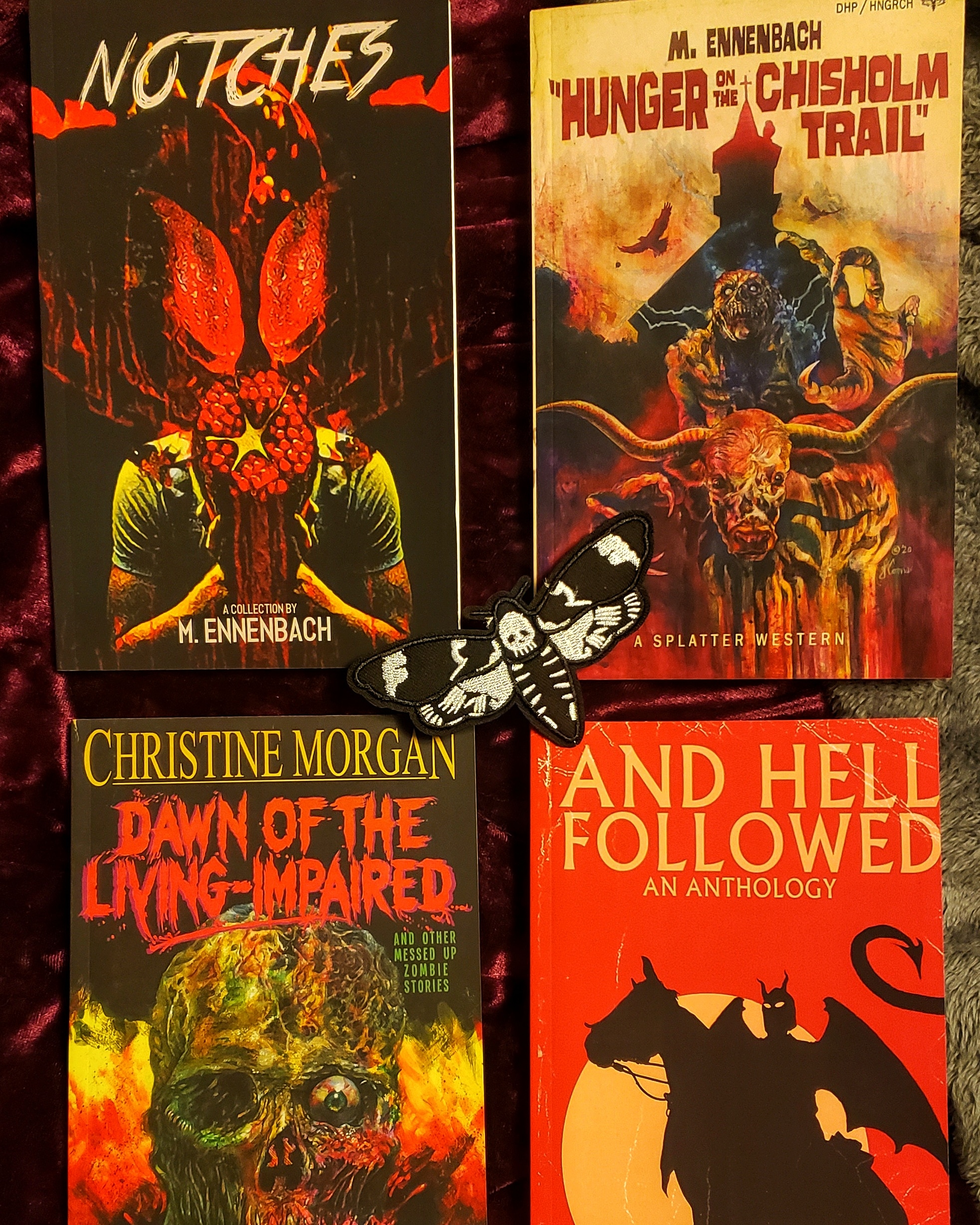
And Hell Followed: An Anthology

I hate trying to review anthologies.

Most of the time, I’ll rate them and leave it at that, but it also means I’m left with a lot of my reading material never receiving the review it deserves. I’m going to try to get better about that.

Death’s Head Press decided the Christian apocalypse–as popularized by The Book of Revelation, that hallucinatory bit of end times fan fiction John the Revelator got included in the Bible–would make for a fitting topic. They weren’t wrong.

It’s an uneven anthology, but it’s challenging to find one that maintains a certain tone throughout, so that’s not a fault. It’s not a bug, it’s a feature…so to speak. Whatever sort of horror you might be in the mood for, there’s something in this book for you.

We’ve got stories that are heartbreaking and strangely touching like Chris Miller’s Behind Blue Eyes and Godless World by Michelle Garza & Melissa Lason (The Sisters of Slaughter).

There’s sacrilegious, irreverent humor in Christine Morgan’s Censered, K. Trap Jones’s Ham and Pudge, and Hell Paso by C. Derick Miller.

There are unique, takes on the apocalypse or the interpretation of Revelations like those found in Apocalypse…Meh by John Wayne Comunale and Wrath James White’s Horse.

That’s not even half the contents of this anthology. As I said, there’s a little something for everyone. If you’re not opposed to a little bit of heresy and a whole lot of hell on Earth, I absolutely recommend this anthology.

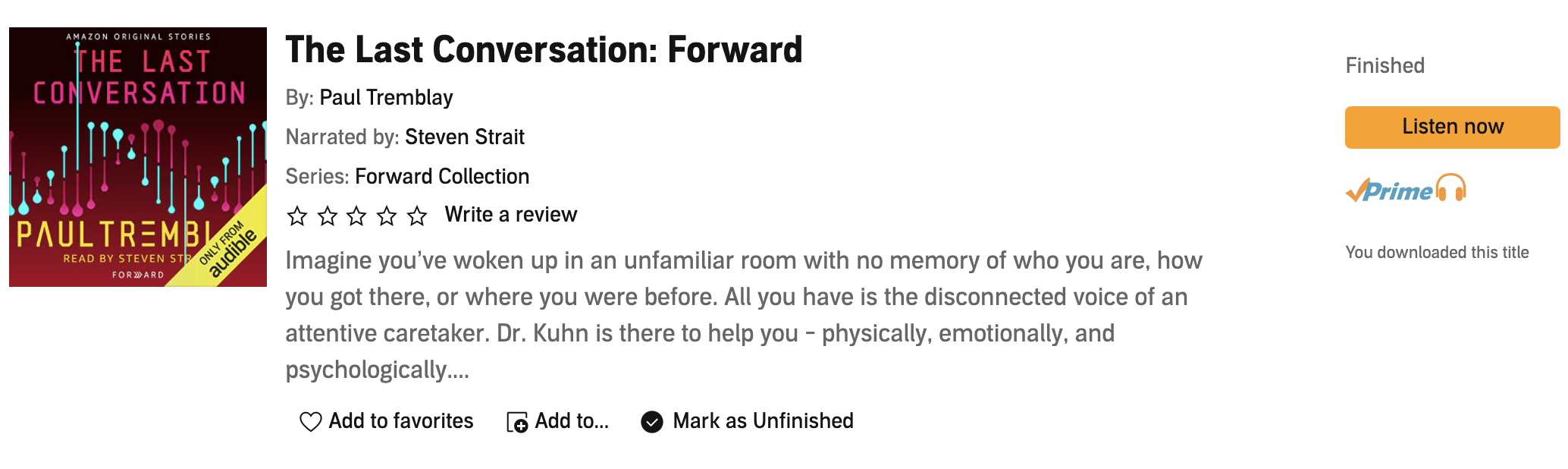
The Last Conversation by Paul Tremblay: Narrated by Steven Strait

The Last Conversation is the third of the six short stories in the Forward Collection assembled by Blake Crouch I’ve listened to. It is also the first time I’ve experienced Paul Tremblay as a science fiction author, and the experience was an interesting one.
I’m sure he’s written other stories or books that have crossed into the science fiction territory, or at least I’d be surprised if he hasn’t, but I’ve only been familiar with him as a horror author and occasionally as a dark fantasy author. This brief tale showcases his talent for wearing a variety of hats with efficacy.
It’s a solid second-person narrative detailing the awakening of the protagonist in isolation to protect him from a global pandemic, while the only other person–seemingly still alive–coaxes them through restoring memories and physical capabilities. The story was ultimately predictable, but no less satisfying for the very predictability of it. It wasn’t about telling us a new tale so much as providing a platform for the discussion of morality, humanity, the devastating combination of solitude and grief, and the ethics involved in cloning. In that sense, Tremblay packs a big punch into a small number of words. He utilizes and capitalizes on the elements of science fiction that have always been used by authors, the capacity to frame thought experiments in a fictional narrative that makes the philosophical subject matter more palatable and digestible for the readers (and sometimes the author).
The narration, performed by Steven Strait, is superb. Strait captures the stubborn resistance of the protagonist to being held captive–even if it is for his own good–as well as the sadness and pity that mingles with that oppositional nature as the truth of everything is revealed in the end.

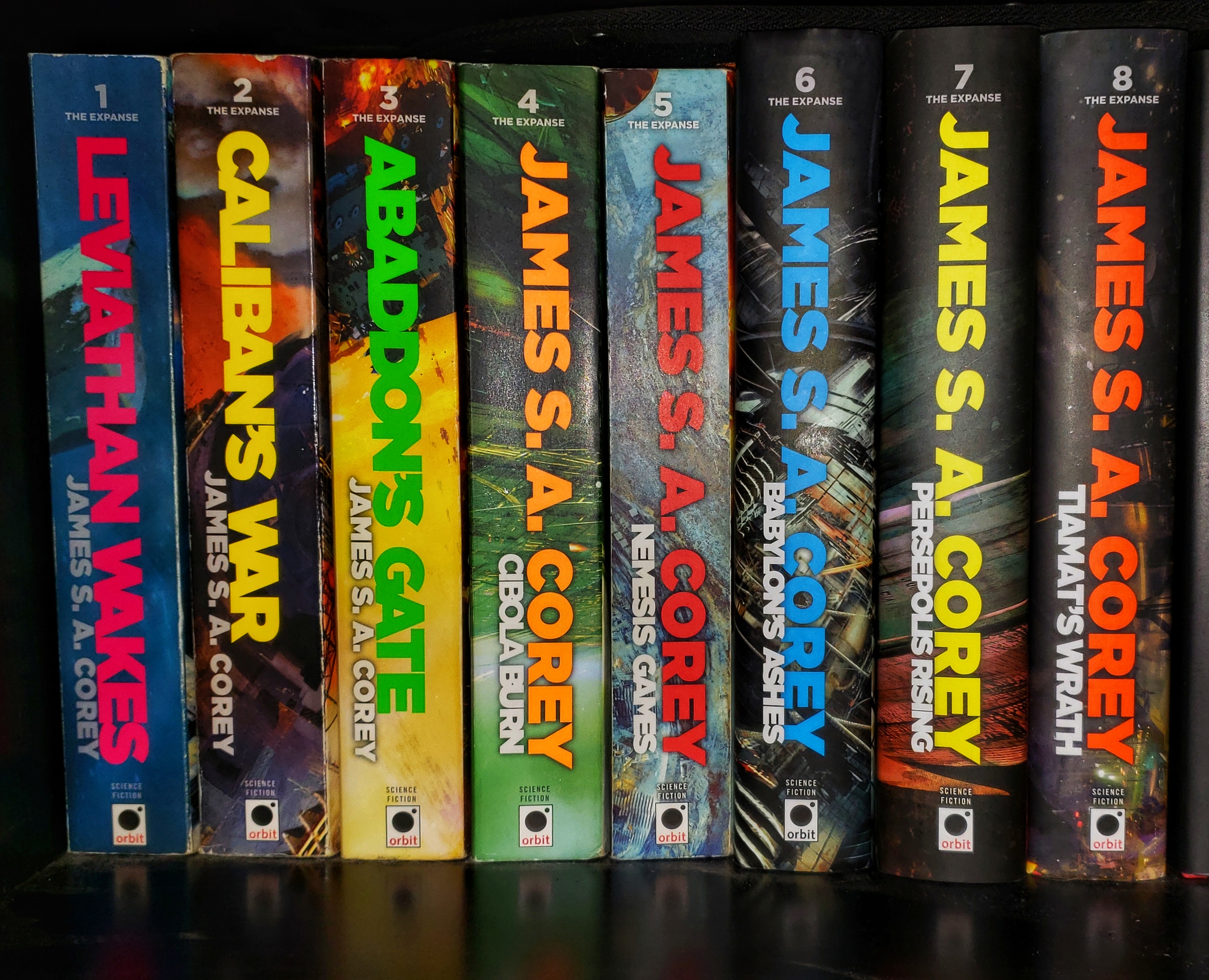
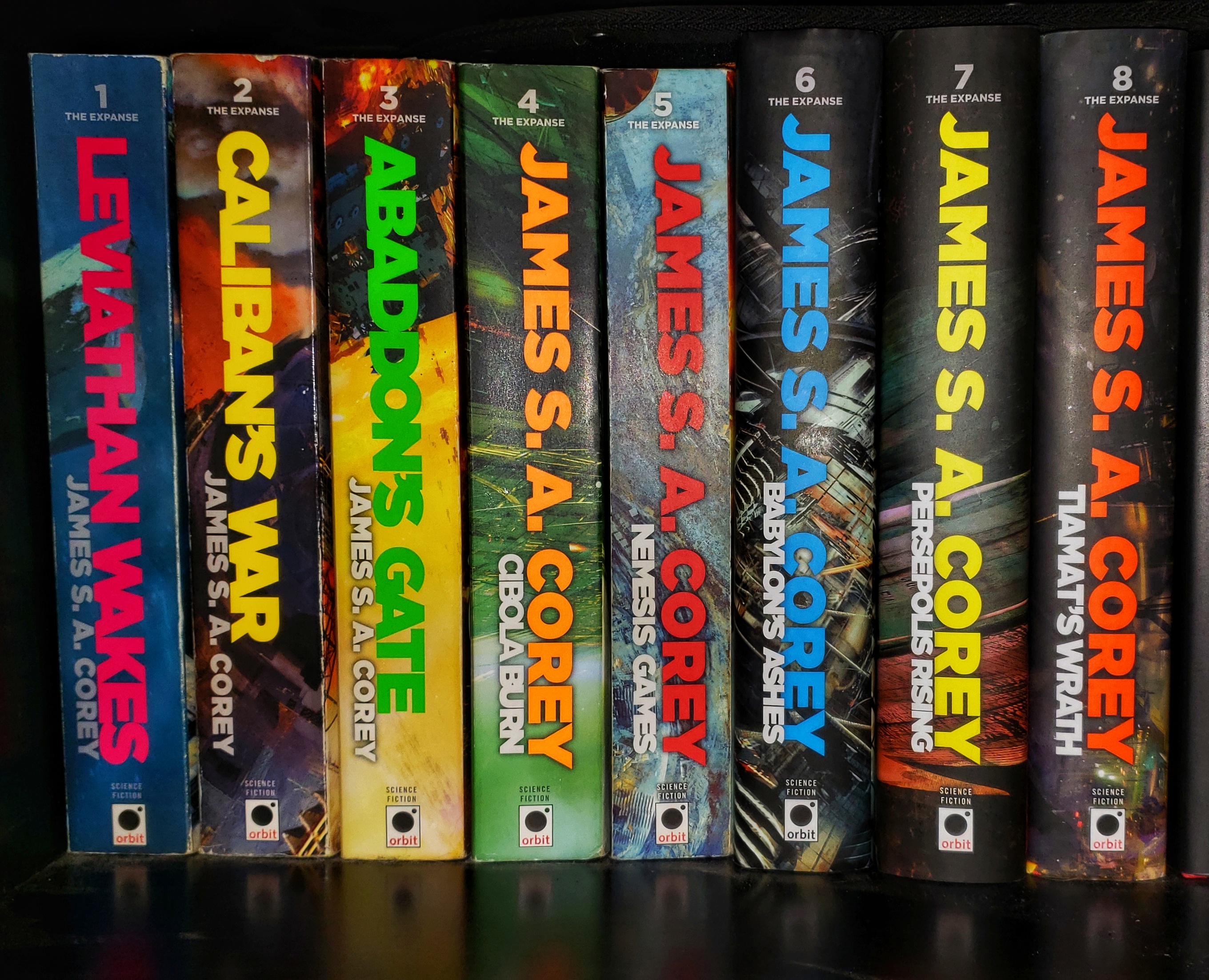
Nemesis Games by James S.A. Corey

This review was originally written in February of 2017.

Nemesis Games, more than the other books of The Expanse series, is a novel about isolation.
Each of our protagonists from the crew of the Rocinante are separated from one another throughout the bulk of the story, all of them longing to return to the family they realize themselves to be for each other.
In the midst of an insurgency from a radical wing within the OPA (supplied by a treasonous, escapist faction of the Mars Navy), we witness periods of combat and senseless devastation from multiple angles that weren’t present in the previous novels with nearly this sort of depth and insight. As an added bonus the reader even gets to witness the grand acts of terrorism from within and without, while not providing anything particularly sympathetic where the terrorists are concerned. It was a bold, and well-executed move by the authors…to humanize the perpetrators of unparalleled acts of aggression without making the reader feel like they might have a valid reason to do the horrible things they are doing.
This was a smaller scale piece of storytelling than the galaxy-spanning, alien technology oriented action of the previous novels, but it was a very satisfying exploration of the inner worlds of the characters we’ve become so close to over the course of the previous four books.
The end does set the stage for something potentially horrifying coming up though, and it certainly kept me invested enough that I want to read the sixth installment.

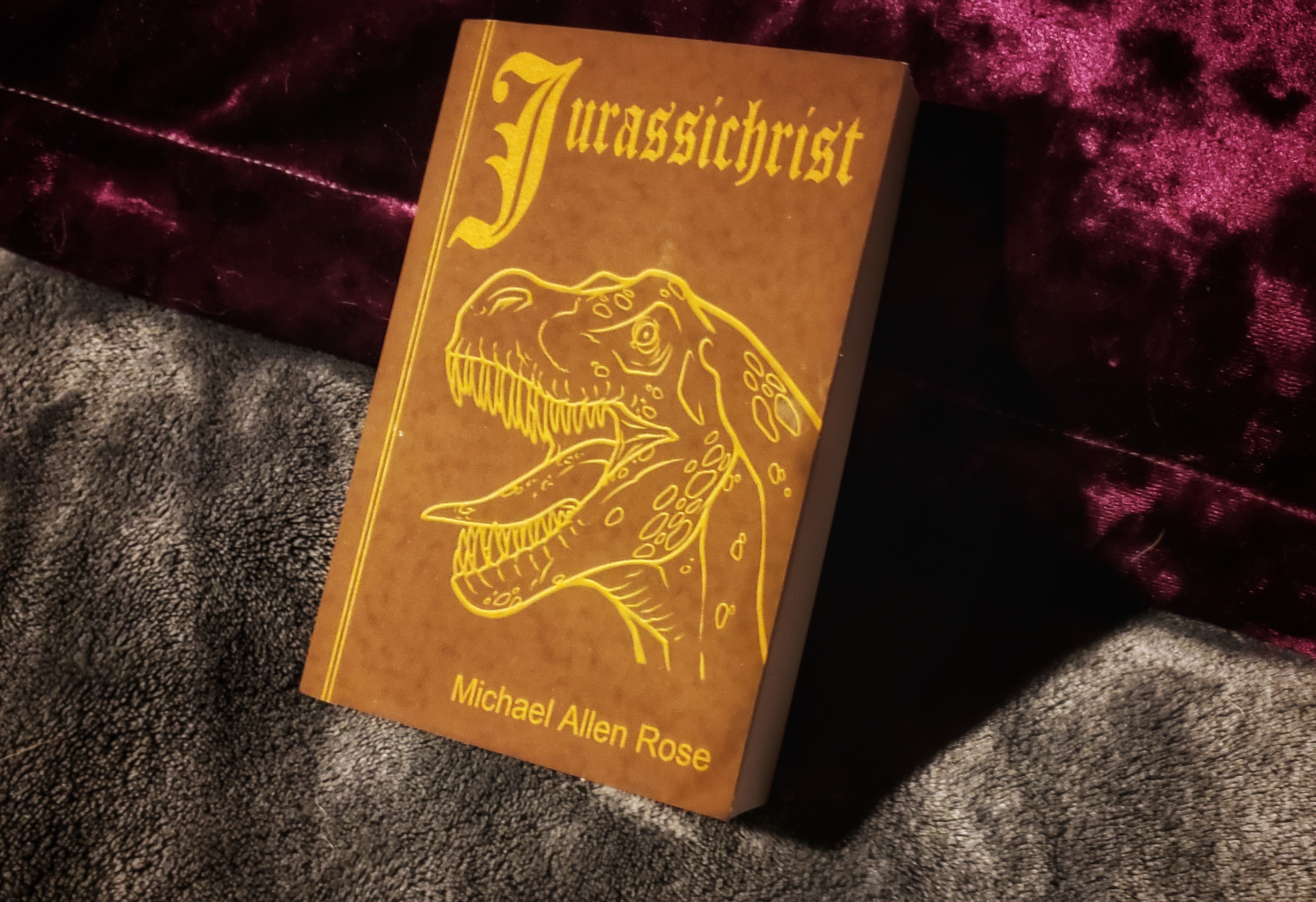
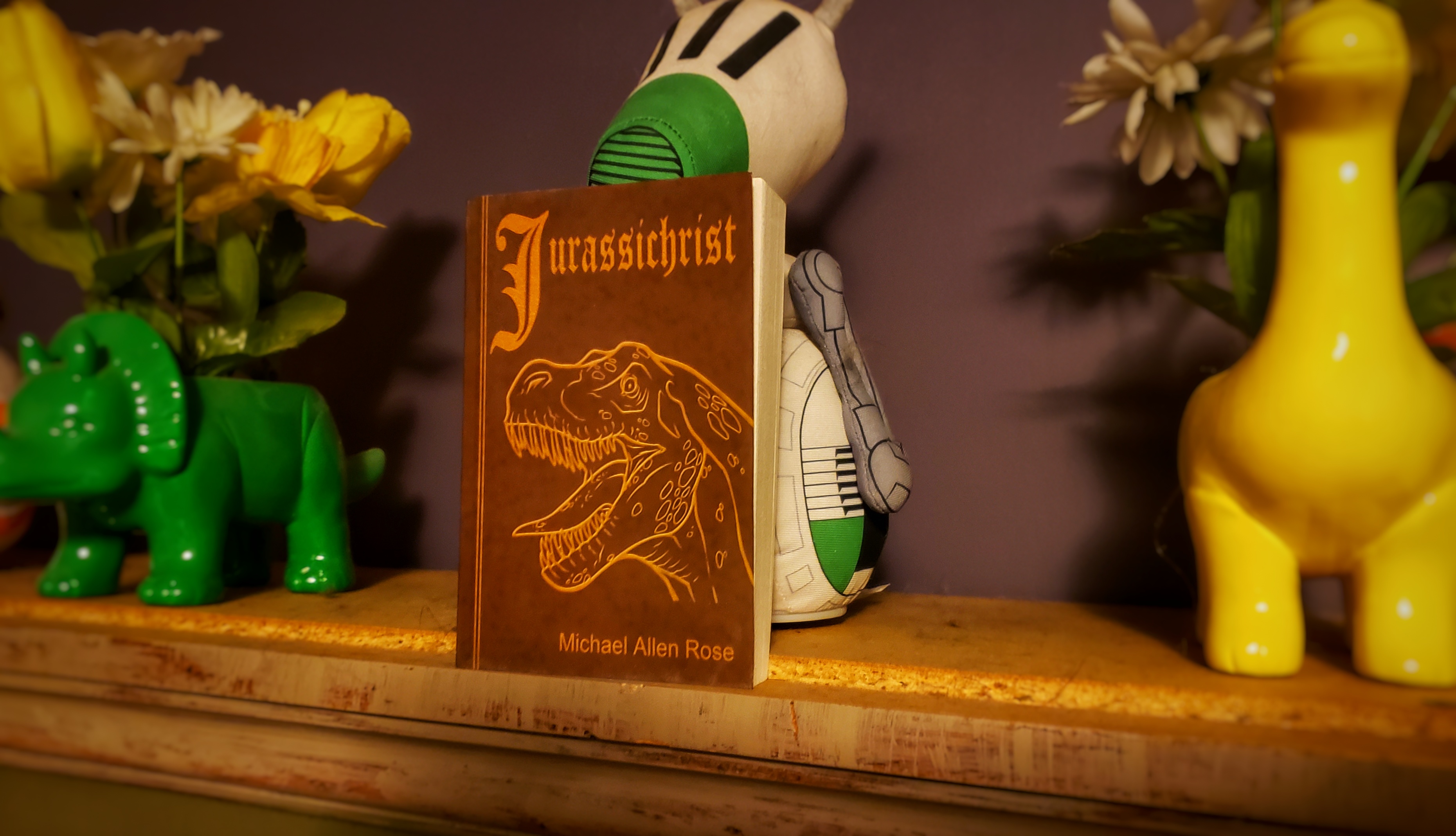
Jurassichrist by Michael Allen Rose

It all starts when Jesus Christ botches his second coming most spectacularly in Michael Allen Rose’s new book, Jurassichrist.
It’s time, the designated hour and day has reached us. J.C. leaps into the stream of spacetime to arrive just when humanity needs his return, full of confidence and righteousness. He does not stick the landing. Instead of arriving two millennia after his departure, he arrives on Earth a few hundred million years before he’d been born. Time is tricky like that. He can’t really be blamed, though, can he? We’re all guilty of being attracted to shiny things…he did see a bright blue pulsing light and he aimed for it.
Muddy, disoriented, and chagrined, J.C. finds himself in the age of thunder lizards, unsure how he’s supposed to get crucified for a return trip home and a fresh start. Utilizing his knowledge of 1980s action movies and his divine power to materialize firearms, Jesus doesn’t sit idly by to become dinosaur chow. Soon enough, he’s covered in as much blood as mud as he cautiously approaches the source of the blue light that shouldn’t exist in this place and time.
He’s soon forced to face the fact that what he thought he knew about dinosaurs is entirely wrong. More disturbing than that, the mammals (barely more than rodents) appear to be addicted to “As Seen On TV” trinkets, and they’re evolving quite alarmingly in response.
That’s when things get weird.
This book is packed with so many absurdities and so much drama it’s almost too much to describe. It’s a mystery that leads J.C. through various planes of existence and points in time. It’s an adventure story, complete with dungeons and traps. It’s a story of friendship emerging under the strangest of circumstances. It’s Band of Brothers, but with dinosaurs…and saviors…and time travel…
Ok…so it’s not really Band of Brothers at all.
What it is, is fantastic and hilarious, sacrilegious and utter lunacy…it’s a must-read.

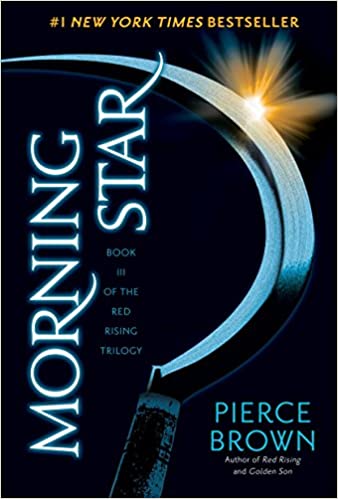
Morning Star by Pierce Brown

This review was originally written in August of 2016.

I finished reading Morning Star by Pierce Brown yesterday and that was easily one of the more satisfying conclusions to a trilogy I’ve had the pleasure of reading, though now I kind of wish there was more simply because I enjoyed the characters (and how they grew and evolved over the course of the series) and the story itself.
I don’t know if it’s just that it was predictable or if I had come to be so familiar with how the protagonist thought, but there was nothing at all surprising about the twist at the climax, and yet I still found the experience of reading through it to be thrilling.
Also, there’s something to be said for Brown somehow finding the ability to weave the phrase, “Bye Felicia,” into the narrative without seeming like a total jackass in doing so…especially in a trilogy that takes place more than a thousand years from now.
It was honestly refreshing to read a relatively near-future action science fiction series that wasn’t packed full of dystopian tropes and instead borrowed heavily from Greek, Roman, and even a bit of Norse mythology for the structuring of both the story itself and the society within which it transpired

War Factory: Transformation Book Two by Neal Asher

This review was originally written in July of 2016.

War Factory by Neal Asher took what he started in Dark Intelligence and amplified essentially every captivating element. This series within the Polity universe (the fictional future in which most of his novels take place) is actually becoming my favorite of his work, and I never expected anything to outshine the fantastic and far reaching story that started in Gridlinked.
Numerous, at first seemingly loosely related, narratives weave together in a puzzle being fabricated and assembled by Penny Royal–a rogue AI with nearly godlike abilities and the associated detachment from conceptions of right and wrong–and when those stories come together it is in as intense a climax as anything else Asher has written, but on a more intimate scale than a lot of the previous novels. It’s interesting how the relatively small scale events of this series can potentially have far more widespread and profound consequences than the massive events of many of his other novels, but it is definitely intriguing to watch it play out on the pages.
Asher happens to be one of those authors who simply becomes better as he continues writing, and I personally hope he never stops. The future that he envisions in these novels that take place within or ancillary to the Polity universe is a future I would be happy to witness for myself. Thankfully, the quality of the author’s writing is such that I am able to experience it in a more visceral way than I would with anyone else at the helm, I suspect.

Cibola Burn by James S.A. Corey

This review was originally written in July of 2016.

Halfway through another book it dawns on me that I neglected to write up a brief review for Cibola Burn by fictional author James S.A. Corey…and that was silly of me.
With the fourth installment of The Expanse series, the previous novel’s full blown space opera narrative leads us to a story that takes place almost exclusively on an unfamiliar planet an unknown distance from Earth.
Human nature takes its natural course when early settlers from the devastated Europa base established a colony on the new planet prior to a joint corporate/scientific exploration colony arrives under charter from Earth government.
Terrorist acts from the settlers and attempts to establish authoritarian control by the newly arrived corporate interests produce a tense and untenable relationship that prompts the governments of Earth and the outer planets to send James Holden and the crew of the Rocinante through the gate and to this planet to serve as a mediator. The whole thing goes about as well as anyone familiar with the previous three books would expect.
The shame about this book is that, much like the scientific personnel who arrived, I didn’t get nearly enough opportunity to explore the planet. It’s a planet which has been geoengineered by the godlike aliens who had created the protomolecule that led to the gate from our solar system into the realm where hundreds of other gates lead to systems with hundreds of other planets. Containing presumably it’s own biodiversity combined with organic machines developed by the disappeared aliens, it would have been a fascinating planet to have experienced in greater depth.
That is my only dissatisfaction with the book, and realistically the authors couldn’t have actually written the sort of detail I would have liked without including an actual xenobiology textbook along with the story…and I suspect most people would have been far less inclined to read it if that were the case.

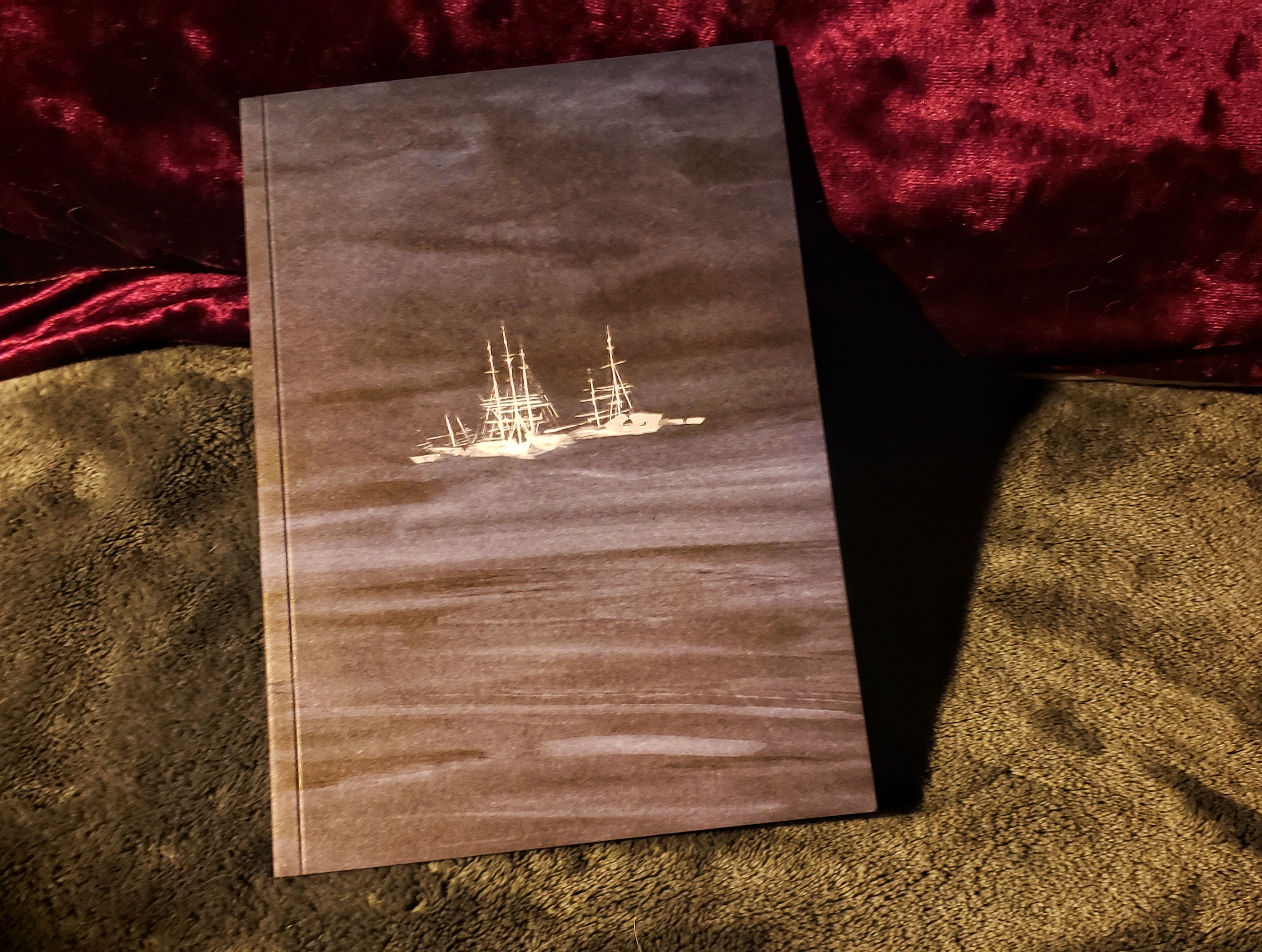
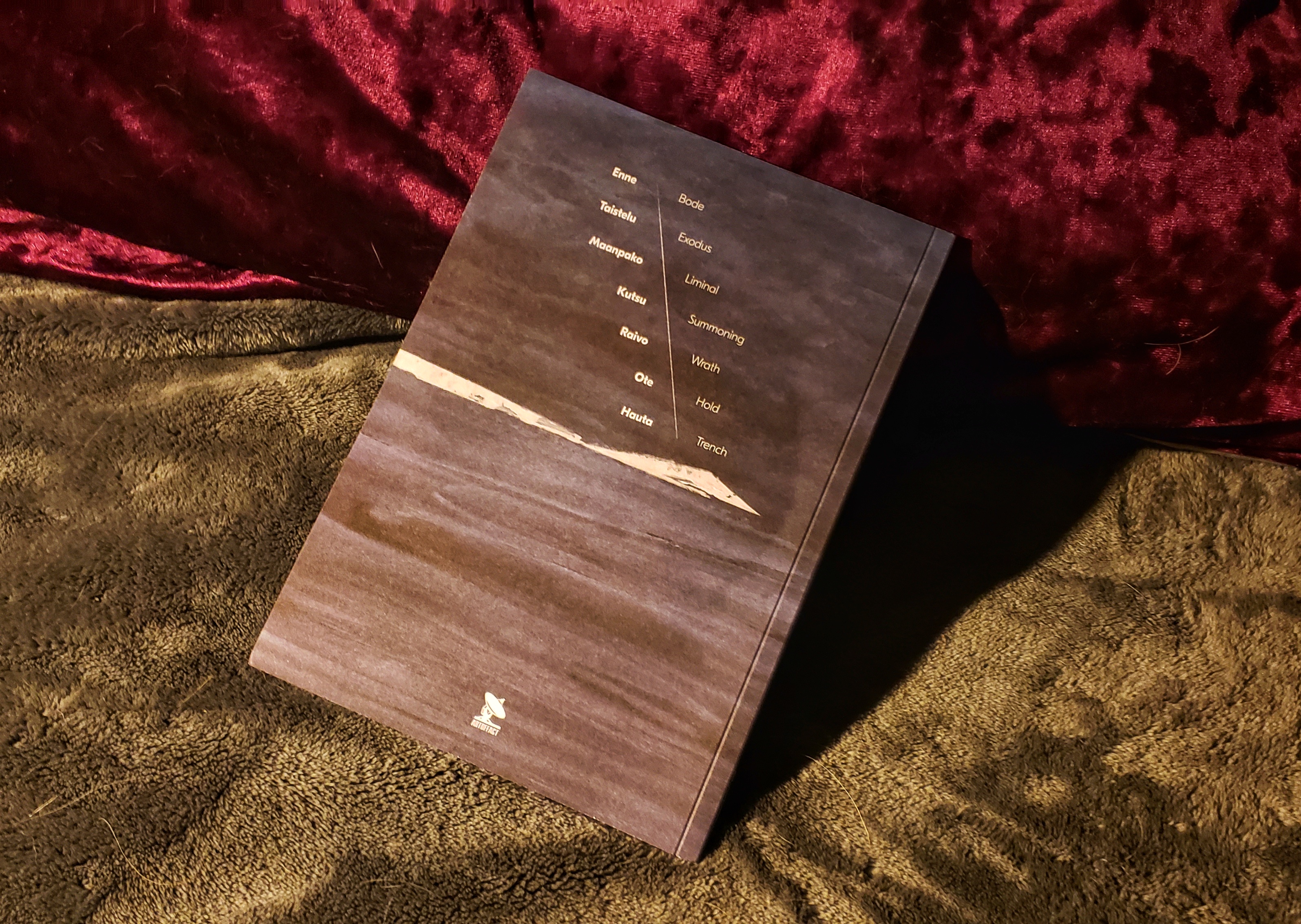
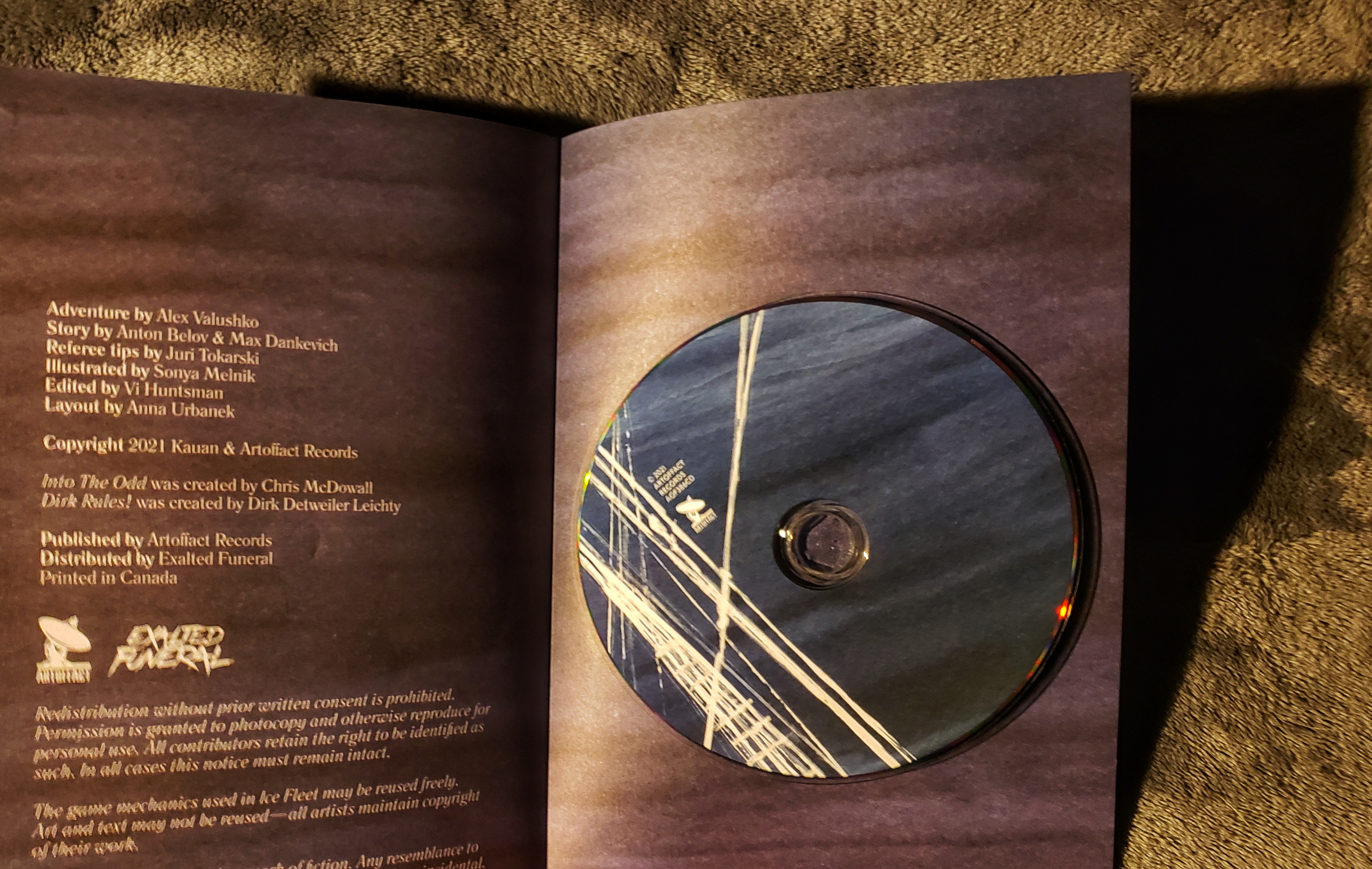
Ice Fleet by Kauan (2021): Artoffact Records

Kauan’s Ice Fleet is a somber, moody album filled to the brim with post-rock sensibilities and a pronounced focus on the atmosphere and texture of the sonic environment the artists are producing.
On its own merits, the album is fantastic.
Those who know me are aware of the fact that my personal musical preference tends to lean the direction of industrial (including most–if not all–of the numerous subgenres and related musical styles). That genre is followed by punk, metal, and indie-rock/pop or alternative.
But, for writing and meditation, post-rock and post-rock adjacent material is my absolute favorite. When I’m in a particular frame of mind or when I want to slide into that space, there’s nothing better. This album is going into the respective playlists where I’ve accumulated days’ worth of similar material to listen to on shuffle.
Primarily instrumental, Ice Fleet builds from soft, melodic tracks to a more harsh, higher tempo crescendo as the concept album (feeling more like one long, seamless track rather than a series of individual songs) reaches its pinnacle before smoothing back out and softening again.
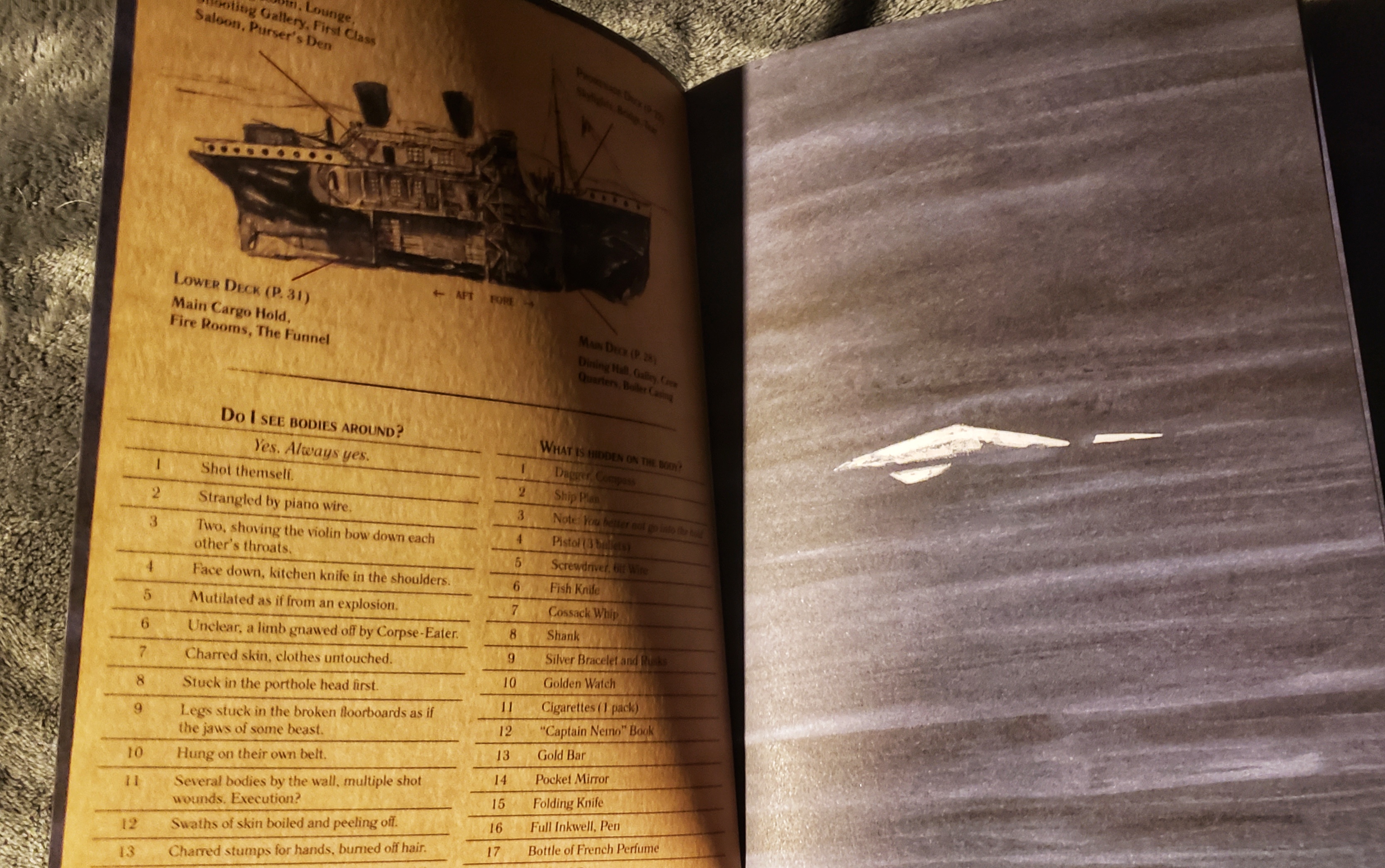
Not satisfied to simply tell a story in the way most concept albums do, Kauan went above and beyond, crafting a tabletop RPG module built on the Into The Odd framework that immerses the listeners into the world of Ice Fleet. The players will have the pleasure of discovering a long-lost steamship frozen in the ice. While they explore the vessel, it isn’t simply man-eating polar bears and peculiar rats that threaten them, but cosmic horrors manipulating both time and space.
This is more than just a CD, it’s an experience designed to last the listener many hours of chilly terror and pleasure.