Full Brutal by Kristopher Triana, narrated by Dani George

If you’ve ever asked yourself what American Psycho’s Patrick Bateman would be like if he were a teenage girl living in the current age as opposed to Wall Street of the 1980s, Full Brutal by Kristopher Triana is the book for you. I’m only joking a little bit with that introduction because–much like Ellis’s most popular character–Kim is pretty, popular, and superficially passing as being not only normal but successful and even a role model of sorts. This is, of course, a facade.
As the story unfolds, Kim goes from being a calculating, manipulative sociopath dwelling on suicide–as much out of boredom and a desire to shock/stun the people who believe they’re close to her as very real depression over the fact that nothing brings her any sort of pleasure in life–to a cold-blooded monster. The turning point seems to be that pivotal decision in many teenager’s lives, whether they should have sex and with whom.
Developing a fixation on serial killers as well as torture-porn movies (and actual pornography featuring torture) and finding a spark of pleasure in these things, it’s no real surprise that everything goes dark and brutal from there. She determines her first time should be with someone she has to break down and degrade to get there, and she sets her sights on her sex-ed teacher. When sex itself turns out to be less than the life-changing experience she was hoping for, instead of letting it depress her further, she finds entirely new ways to get herself off.
Destroying lives, creating turmoil that spreads everywhere around her, and always seeking an even greater thrill, Kim finally discovers that catharsis she was desperately searching for. As she decides to go “full brutal” everything continues getting worse for those surrounding her.
Dani George provides fantastic narration that captures the coldness and cruelty of Kim as well as breathing life into the vapid superficiality of her peers and friends–if one could consider these people to be either of those things.
I’m torn, because I appreciate the way this book turns the psychopathic killer trope on its head in a sense, transitioning the usual victim of these sorts of stories into the perpetrator. The skillful storytelling is the same as I’ve come to expect from Triana, along with the depravity and attention to gritty, unsettling details. Those things are fantastic elements.
On the other hand, I feel like Kim is sort of an exaggerated, almost sexist caricature of the sort of girls all rape-culture assholes like to pretend are all over the place. You surely know what I mean if you’ve bothered to torture yourself by reading incel screeds and the like. To a certain sort of guy, the world is populated by girls/women who will manipulate, dominate, and take what they want at any cost. For that sort of person, all girls are a stone’s throw from threatening to cry rape if they aren’t getting everything they want, or just because it’s funny to ruin someone’s life. To guys like that, most (if not all) girls are secretly very much like Kim…excepting the murderous streak. In that sense, I find the character and the story to be a bit problematic in the same way I would if the protagonist were a caricature of the mythical “welfare queen” from the Reagan era…as it sort of breathes life into an ignominious stereotype that should be allowed to die the off-screen death it deserves.
Taking the good with the bad, I still can’t help but recommend this book to anyone who enjoys extreme horror. The best sort of horror is the kind that makes you uncomfortable and forces you to examine things you’d rather ignore, and that’s precisely what you get with Full Brutal.

Eight Cylinders by Jason Parent, narrated by Joe Hempel

Jason Parent’s Eight Cylinders captures a sort of grindhouse action/horror vibe that I appreciated a great deal. We’ve got a story about crime, cars, creatures, confusion, and condemnation in the middle of the desert…and if that doesn’t appeal to you at least a little bit, there’s probably something wrong with you.
Comparing it to movies and other visual mediums, as I usually do, it’s a little bit Tremors, a touch of From Dusk Till Dawn, a good bit The Road Warrior, and a dash of the old show The Prisoner (or maybe, for those who never watched that one, Lost). If you were to toss all of that into a blender and add a splash of cosmic horror, you’d end up with something along the lines of Eight Cylinders.
This story had me invested as soon as Seb began using a novelty Magic Eight Ball glass eye to make his decisions for him as he sped away from Vegas after a deal gone exceedingly bad. Criminal and “bad guy” that he might be, Seb is particularly relatable as a protagonist, and you can’t help but cheer him on as he races through the desert multiple times throughout this short tale. The attention to detail concerning cars, trucks, and ATVs through the narrative gives one the impression that Parent is a bit of a gearhead at heart, or certainly one who spent some quality time researching this tale with gearheads…and that comes through clearly with Seb’s absolute love for his Dodge Charger and his appreciation of other vehicles in the narrative.
Joe Hempel’s narration is excellent, and I’ll surely be watching for other titles he’s provided his voice talents to.
My sole complaint about this story is that it felt a little rushed at times like we were racing from one point to another without getting enough time to really experience where we were.

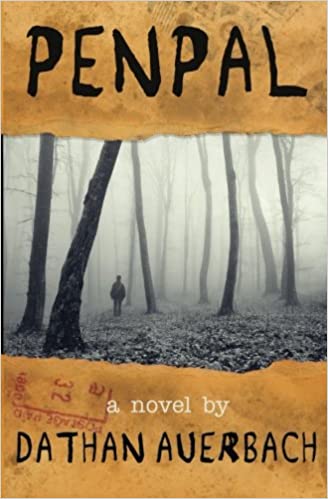
Penpal by Dathan Auerbach

This is a review I’d originally written in January of 2016. I wanted to post it here because this happens to be one of my favorite books.

Dathan Auerbach created one of the most disturbing novels I think I will ever read with Penpal.
I don’t know that I will be able to shake the feeling left behind from reading this book for a while to come.
Perhaps some of the feeling of being unsettled is due to the fact that I relate a great deal to the protagonist laying out the story. As a child I had few friends, when I had any, and a great deal of that youth was spent wandering aimlessly through the woods here in the Black Hills of South Dakota…either by myself or with one or another of the small number of friends I was somehow fortunate enough to make. Much like the child in Penpal, I filled the forest with sinister things in my own imagination, especially in the darkness as night approached. Needless to say, I felt a sort of kinship with the young boy in this book, and that made the events of the narrative that much more difficult to shake.
Even without that sort of association, the story would be a spooky one though for anyone, I think.
During Kindergarten, the boy’s class has a project. They were to write a brief letter to accompany a helium-filled balloon requesting a letter and a photo. As the letters begin coming back as response, our protagonist finally receives a single Polaroid photo without any explanation. More letters come in and are ultimately ignored until months later when it is discovered that he is in many of the pictures that his new penpal is sending…and that is really just the beginning.
As a parent and as a former boy who spent his days and nights exploring the woods near home, this is without a doubt one of the most uncomfortable books I have had the pleasure of reading. I am torn between hoping that Dathan Auerbach has more books to come and half-heartedly wanting him to call it quits after a novel that would be challenging to top.

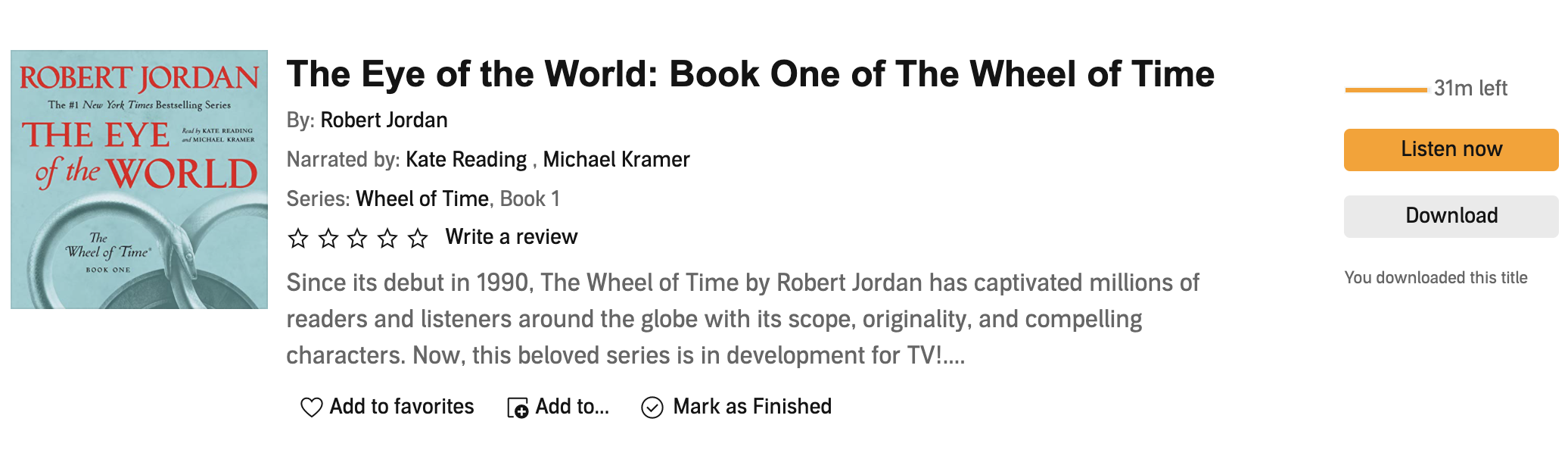
The Eye of the World by Robert Jordan Narrated by Michael Kramer & Kate Reading

Thirty years after its original publication, Robert Jordan’s The Eye of the World remains as timeless and captivating as it was when it first came out while I was still in my pre-teens. Following in the footsteps laid by previous epic fantasy series from authors like J.R.R. Tolkien, C.S. Lewis, and Terry Brooks, Jordan’s Wheel Of Time stands as a someday classic series of epic fantasy in its own right, though it does borrow elements from those earlier works.
That’s a petty complaint to level against Jordan’s books since his doing so was far less dramatic and obvious than Terry Brooks’s borrowing from Tolkien with major elements of The Sword of Shannara. Nothing we read is truly original and written in absolute isolation from the books and stories that inspired the author. It’s this same understanding that makes it easy for me to also enjoy Terry Goodkind’s series, The Sword of Truth, which transparently borrows some elements from The Wheel of Time as well as from those earlier epic fantasy series.
Following Rand and his friends from their humble but auspicious origins in Emond’s Field in the Two Rivers district to the horrific landscape of the Blight as they’re led by Moiraine and Lan is as exciting now as when I was a child, though I find myself relating more to characters I’d not related to as strongly when I was a younger reader. That is a sign of a great author indeed, that the novel can still appeal to readers (albeit differently) when they’re young men and when they’re adults in middle-age. This book (and the subsequent series) is a coming of age tale as much as it is a thoroughly engaging fantasy, exploring the nature of fate/destiny and the cyclic nature of civilization, society, and (within the series) time itself.
I’ve never read the concluding few novels of this series nor the prequel to The Eye of the World, and I thought it might be appropriate to listen through the audiobook recordings of the books I’ve already read, to catch myself up to where I need to be. The narration provided primarily by Michael Kramer and occasionally by Kate Reading (when Nynaeve is the focal point of the chapter) is immersive and successfully propels the story forward. It’s a different experience to hear this book in a different voice than the ones in my head.
Michael Kramer manages to breathe life into the characters of Rand al’Thor, Matrim Cauthon, and Perrin Aybara in the way they deserve. This is a relief, seeing as how he and Kate Reading are the narrators for at least the first five books of the series (those are the ones I’ve purchased from Audible so far).

Willy’s Wonderland (2021)

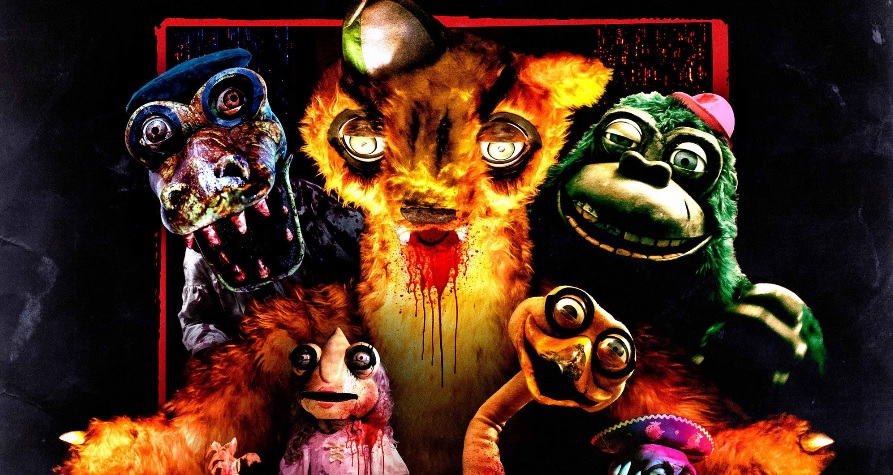
Willy’s Wonderland comes closer to being an adaptation of Five Nights At Freddy’s than The Banana Splits Movie managed a couple of years ago. I loved them both, but I have to say Willy’s Wonderland succeeds in surpassing The Banana Splits Movie in almost every way one could imagine. This could easily be one of the best horror/comedy flicks I’ll ever see.
Nicolas Cage, as the unnamed janitor, does more with over-the-top expressions and action than many actors could pull off with a full script of dialogue. There’s a sort of hilarity to the total and complete lack of dialogue from the actor and the focus on a face that conveys exaggerated grimaces and sneers with such ease. We learn nothing about the janitor’s life before unfortunate circumstances led to his being locked in the dilapidated Willy’s Wonderland building overnight. Dog tags dangle from the rearview mirror of his car, hinting at possible military service in the past, but that is the extent of our protagonist’s backstory.
That’s ok, though.
We learn enough to know that if we ever need a janitor who can excel with a virtually impossible job on their plate and constant distractions, this guy is our man. If this were a video resume, I’d hire the dude for his work ethic alone…though he does appear to be a bit inflexible concerning when he takes his breaks.
We learn plenty of backstory regarding the town of Hayesville and the history of Willy’s Wonderland itself. A Chuck E. Cheese-like establishment owned and operated by a serial killer who hired other serial killers to work as the staff. There’s something about a Satanic suicide ritual that allows the murderers to inhabit the animatronic bodies of the various cartoonish hosts of the place, and an uneasy bargain struck with the town’s inhabitants to keep the evil contained to the building itself.
It’s absurd, gory, and ridiculously violent…and it is, in my opinion, a must-see for anyone who enjoys the Five Nights At Freddy’s games or any sort of ludicrously violent movies where teenagers and other people are slaughtered and oil replaces blood splatter as animatronic monstrosities are dismembered by the best janitor the world will ever see.

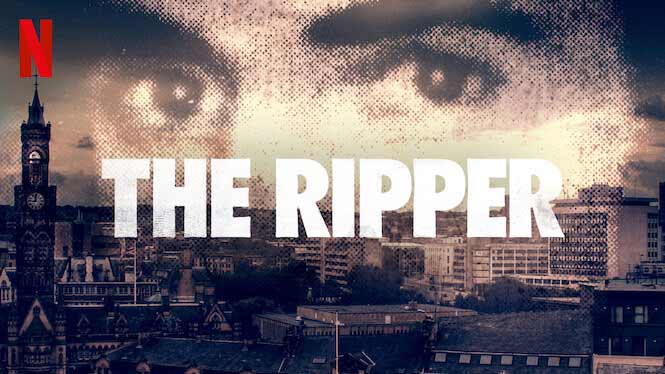
The Ripper (2020)

After disappointing documentaries focused on Richard Ramirez and the Elisa Lam disappearance at the Cecil Hotel, I was hesitant to sit down for another Netflix true-crime documentary.
I’m pleased to say The Ripper more than makes up for the frustration of those other two recent documentary series from the streaming service. Gone is the transparent, painful hero-worship of the police involved in the investigation I found so agonizing to sit through during the Ramirez documentary. Similarly missing is the fixation on incompetent, repeatedly detrimental “contributions” from amateur sleuths in the Cecil Hotel documentary. What we’re left with is a straightforward documentary about the crimes of Peter Sutcliffe, the appropriately named Yorkshire Ripper, and the difficulties plaguing those attempting to investigate the crimes (difficulties often produced or amplified by the investigators involved).
The most interesting aspect of this documentary is that it showcases just how awful the people leading the investigation were at their jobs. The Yorkshire Ripper title applied to the unknown killer seemed to have intensified a series of biases held by these men, nudging them down dead ends and imaginary lines of inquiry. In the minds of those in charge, this man was simply another prostitute killer like the Whitechapel ripper of a century before…even though there was little to no evidence supporting numerous early victims being associated with prostitution at all…beyond the assertions of the investigators speaking to the press.
Latent and widespread misogyny, refusal to look beyond anything that fit a pet theory, and fixation on letters and tapes supplied by someone wasting their time directly and unambiguously led to more murders being committed by Sutcliffe than he would have successfully committed if they’d simply worked with the facts they had in front of them rather than distorting their perception of the facts to fit the preconceived notion of who the killer was and why he was committing these terrible atrocities.
It’s fascinating to see this investigation from the outside, in retrospect, because there’s no reason the case couldn’t have been closed years earlier than it ultimately was. Sutcliffe had been interviewed by investigators a total of nine times during the investigation and one of the cops involved was concerned at just how well Sutcliffe matched a sketch of the assailant from one of the attempted murders. Instead, his superiors ignored his report because there was a single-minded fixation on a certain accent the killer was expected to speak with.
Where the Ramirez documentary spent so much time praising the superstar detectives involved in bringing The Night Stalker to justice, The Ripper spends a lot of time following the case only to finally display just how botched and bungled the investigation was when they finally had their man in custody. It was a matter of a good cop acting on a hunch–a cop who was not associated with the investigation–that brought Sutcliffe to justice.
This one is worth watching.
It delves into the lifestyles and living conditions of post-industrial England and the underlying conditions that made it not only possible but perhaps even easy, for Sutcliffe to perpetrate the crimes he committed. Similarly, it provides a fantastic argument against linkage-blindness and confirmation bias in these sorts of investigations.

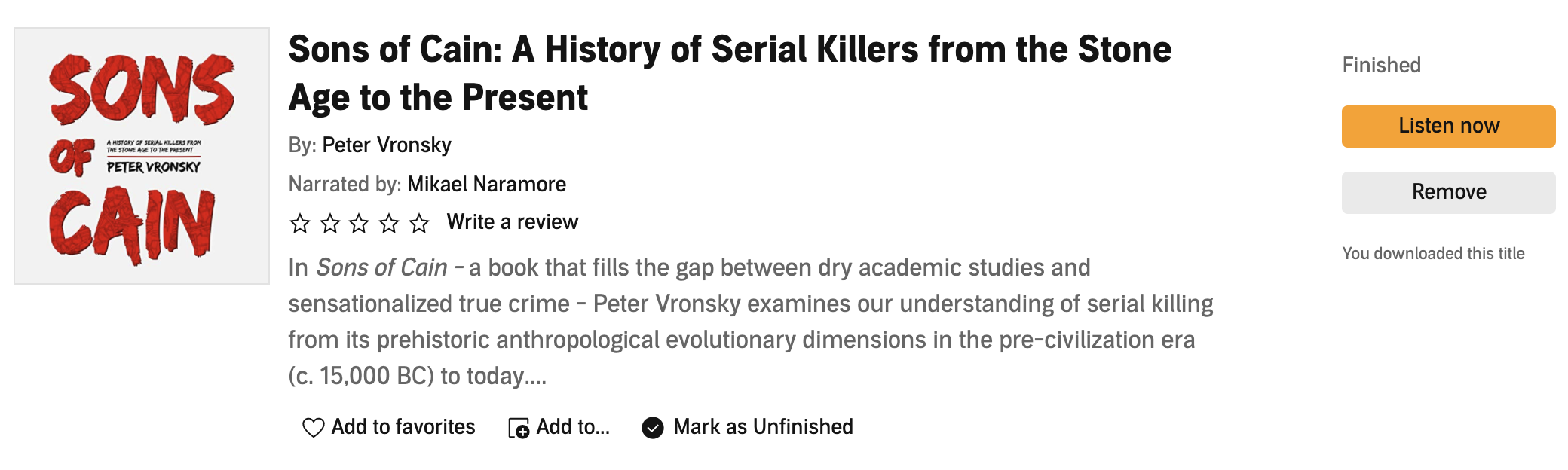
Sons of Cain by Peter Vronsky narrated by Mikael Naramore

Normally, when I’m reviewing an audiobook, I wait until the end to comment on the quality of the narration. I have to make an exception here. Mikael Naramore’s narration of Vronsky’s fantastic history of serial killing is perhaps the most perfect match-up I’ve ever witnessed in an audiobook. The most important element is that he so perfectly captures the wry, often sardonic humor of the author. I was disappointed to see that Naramore didn’t further narrate other titles from Vronsky, because there’s no chance in my mind of another narrator embracing and conveying the strange blend of casual discourse and in-depth history lesson to be found in all of Vronsky’s texts. I’ll surely give the other audiobooks a chance, as my significant other and I listen to these while we’re out adventuring, but I feel a sense of disenchantment in advance that is unfair to the other narrators who’ve worked on Vronsky’s books.
Sons of Cain: A History of Serial Killers from the Stone Age to the Present is a mouthful of a title, to be sure, but it’s a fitting title for such a densely packed deep dive into the history of serial killers throughout recorded civilization.
Spending a period focusing on the development of the triune brain, as proposed by evolutionary neuroscientist Paul D. MacLean in the 1960s (which, while oversimplified based on our current knowledge, is still a rather useful tool for understanding the way our brains work and how they sometimes malfunction), Vronsky discusses the four Fs that defined the existence of early man (and still define the existence of most life as we know it). Feeding, Fucking, Fighting, and Fleeing are still the core behavioral motivators underlying our daily lives, but with trappings of civility and leisure tossed into the mix.
There’s some analysis of why and how homo sapien became the dominant hominid and the potential role of necrophobia in that success. There’s surely some strong argument in opposition to his theories and hypotheses regarding how and why early man survived while other competing branches of the same evolutionary tree did not, but none of them are any more likely to be valid or accurate. It’s all conjecture and educated guesswork when we’re talking about things like that.
From there, we move on to the meat of the book, detailing early records of “lycanthrope” lust murders from early history, evaluating these past instances through the lens of the present, and applying our current understanding to these things. It’s truly fascinating and well worth the time, reading or (in my case) listening to Vronsky’s meticulous considerations of mass murder cases from centuries ago.
Arguably, the most rewarding aspect of this book is the author’s discussion of Diabolus In Cultura, the combination of cultural factors and arrangements that contributed to the growing numbers of serial killers and the periods wherein we’ve experienced surges of what we would classify as modern serial killers. It’s never one thing, isolated from other elements, but rather a concatenation of sorts that produces a surge of individuals prone to that sort of behavior.
Fair warning, as the end of the book approaches, and Vronsky is discussing the “Golden Age of Serial Killers” here in America, spanning from the mid-1960s through the 1990s, there are some rather long lists involved. They can become more than a little tedious but are essential to capturing a full understanding of what he’s trying to convey. That was the one section of this book where I’d have preferred to be reading rather than listening to the narration.

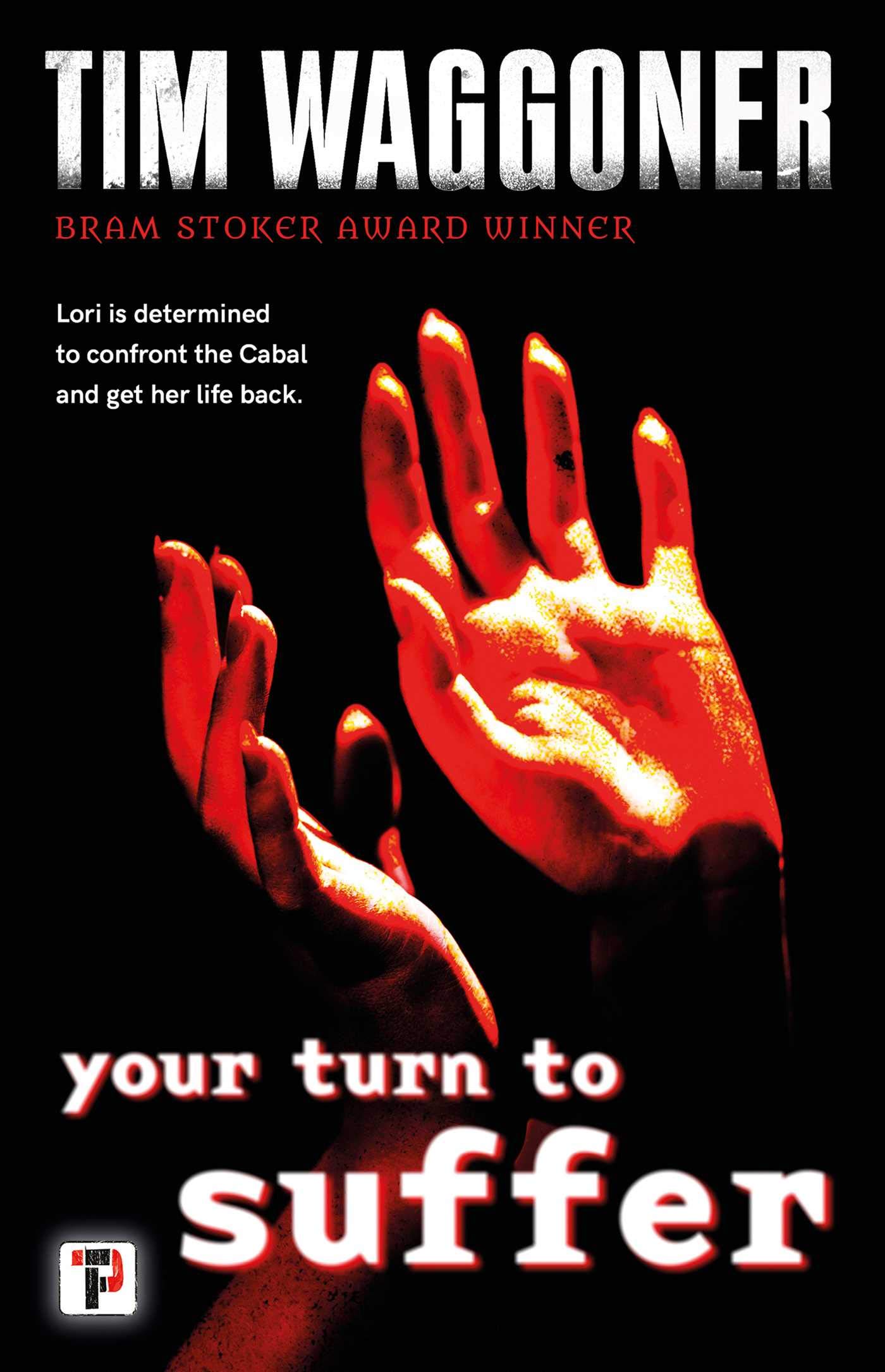
Your Turn To Suffer by Tim Waggoner

Tim Waggoner’s Your Turn To Suffer is one hell of an experience. The story that unfolds on these pages is reminiscent of Clive Barker at his horror and fantasy weaving best, while still feeling original and authentic as a Waggoner novel. Blending horrors both supernatural/unnatural and psychological, Your Turn To Suffer draws you in and refuses to let go.
Seemingly out of nowhere, a random encounter on the street, followed a week later by an even more surreal and disturbing one in a grocery store sends Lori’s life spinning out of control. From an admittedly disorganized life as a physical therapist with a complicated living arrangement with her slob of an ex, her world becomes something unrecognizable as familiar places become unsafe and the people in her life are transformed into horrifying, monstrous strangers.
Lori is forced to come to terms with her past as she struggles desperately to discover what she needs to confess to and atone for.
This story reads like one of those nightmares you wake up from only to learn you’re still sleeping and experiencing a nightmare…except that it just continues like a Russian nesting doll of nightmares within nightmares. The narrative paints a distorted and dreamlike allegory, showcasing how guilt, even (or especially) when associated with long-forgotten–or suppressed–memories can weigh heavily on us.
Once you’re on the Nightway and heading toward the Vermillion Tower, it’s already too late. The Cabal has you. You will suffer.

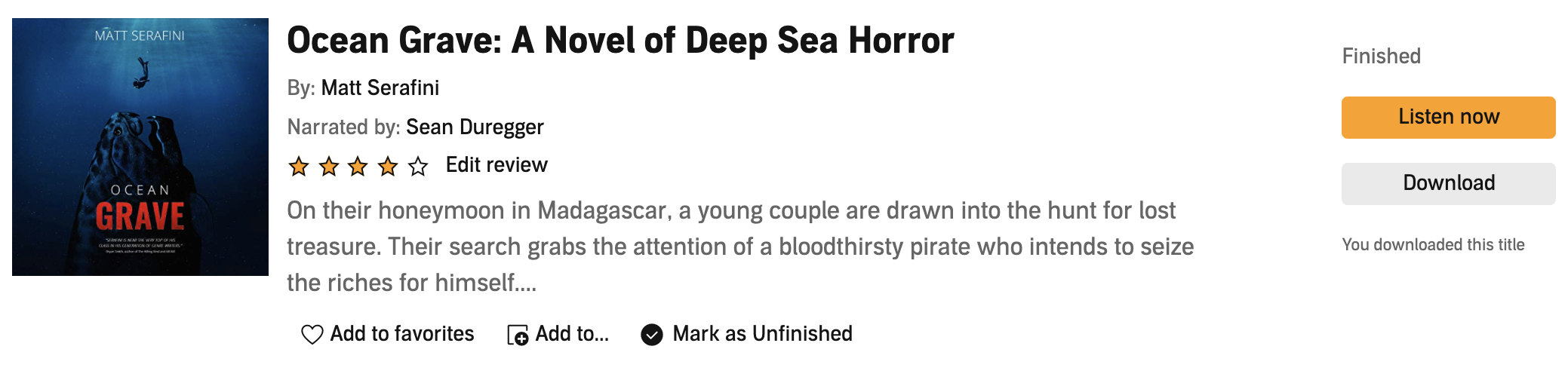
Ocean Grave by Matt Serafini narrated by Sean Duregger

Matt Serafini’s Ocean Grave is a much larger story than I could have anticipated. When I say it’s larger, I don’t mean in page-count or anything, but rather all of the elements involved in the narrative. There is a lot more to this story than it seems like there could be, and somehow it still works. It manages to add some social commentary into the mix as well, as the best fiction usually does…involving international relations, the Western world’s obsession with a sanitized tourism-focused exploration of untamed locales, and the widespread impact of poverty in third-world nations.
This book has something for anyone who enjoys adventure…a honeymoon retreat plagued by secrets, treasure hunting, pirates, soldiers of fortune, a centuries-old mystery, inhuman creatures, and a seemingly unstoppable sea monster. Even with all of these elements, Ocean Grave never feels particularly disjointed or difficult to follow.
One thing I will say is that, if you get to know a character within this narrative, you can expect them to have a 70/30 chance of dying before the tale is complete…and it won’t be some noble, glorious death. This story is real-to-life, in that the characters aren’t unnaturally lucky or imbued with the almost superhuman ability to survive the impossible conditions they face. Like those of us in the real world, most people don’t survive extreme situations involving modern-day pirates and warlords…and when you add in a monster lurking in the ocean depths, no one walks away unscathed.
The narration from Sean Duregger is clear and professional. He does an excellent job of providing characters with distinct voices and accents (where appropriate).
One bit of warning, if you, like me, get tired of hearing the term “CIA spook” over and over again during one of the earliest chapters of the book, don’t worry…that repetitive nature doesn’t persist through the rest of the story. It took me a lot longer to finish listening to this audiobook because I stopped it near the end of that particular chapter precisely because that repetitive terminology was driving me mad. I wish I’d just powered through it because the story is excellent after that.

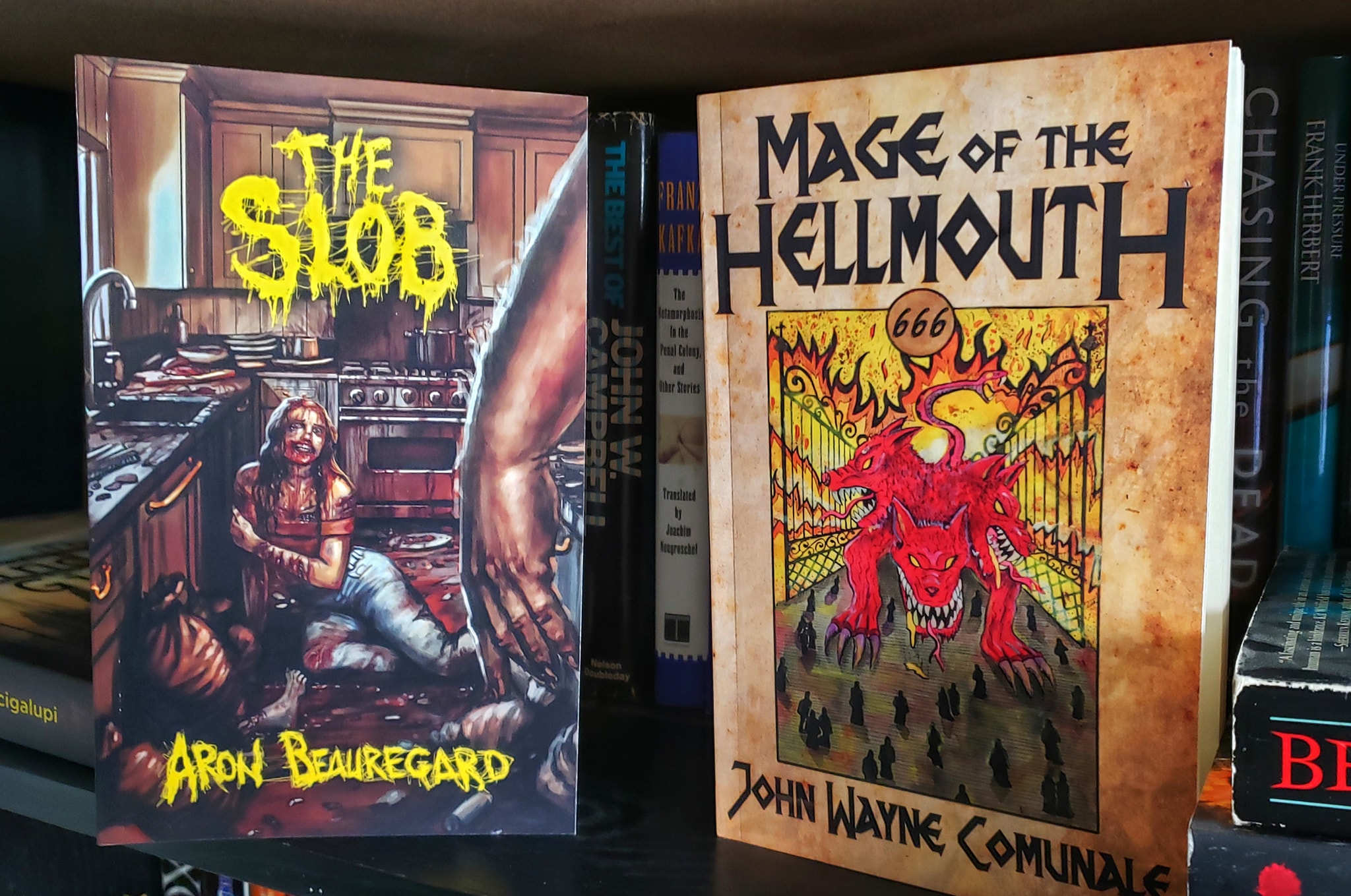
Mage Of the Hellmouth by John Wayne Comunale

John Wayne Comunale’s Mage of the Hellmouth is both surreal and captivating. It’s entertaining in the way a lot of subversive fiction is, and the horror of it sort of runs along with a similar style to Jacob’s Ladder and other psychologically unnerving horror stories that make you question what’s real and what’s not along with the characters. Apropos of the Jacob’s Ladder reference, this book even includes a bizarre scene of graphic sex at a party where our protagonist, Jake, is forced to question whether he’s simply too intoxicated or really witnessing the events taking place.
It’s a quick read, and it’s well-paced to keep you invested in everything taking place on the page…as you follow Jake from his late-20s slacker, stoner, drunk life of tedium working for the Fam-Mark ice cream company through the progressively sinister experiences and encounters with co-workers and friends as he takes on his new role at the main facility. And when I say “role” it has multiple meanings, as the events in Jake’s life dovetail with an old tabletop RPG he’d played as a child, Mage of the Hellmouth.
In the end, this is an example of no good deed going unpunished…as Jake receives the reward for the marginal part he’s played in grand events he had no way of anticipating.
The only issue I have with this book is a time jump/recollection that initially seemed like a formatting error. Upon finishing Chapter 7, the content that doesn’t appear until Chapter 10 seemed like it should have followed…making Chapters 8 and 9, Chapters 9 and 10 respectively. The ambiguous shift back to earlier in the story is not a deal-breaker by any stretch of the imagination, since the story as a whole was a terrific read just the same, but it was a bit jarring and led to momentary confusion until I’d caught on to what was going on.