The Lesser Dead by Christopher Buehlman, Narrated by Christopher Buehlman

While Christopher Buehlman doesn’t add anything new to the heavily-tread mythology of the vampire, what he does provide us with is a fresh and captivating story with characters that come to life–or undeath–and a gritty 1970s New York that feels tangible, even if we do spend a significant amount of our time in the sewers and subway tunnels beneath the city itself. The admittedly unreliable narration of the tale from Joseph H. Peacock is both entertaining and, at times, depressingly bleak.
A spoiled child from an affluent family in the early 20th century, Joey was accustomed to getting what he wanted, and when his mother insists that the cook who adores him has to go, Joey doesn’t take kindly to the replacement. A successfully implemented plan to remove the new cook from his household triggers the cascade of events that leads to Joey becoming a vampire at the young age of 14.
Forty years later, Joey lives beneath Manhattan with an eclectic assortment of other vampires when he first sees the children mesmerizing their victims on the subway. Concerned with the hazard these child vampires pose, Joey’s undead family begins the hunt for these strange and unexpected creatures. Monstrous, cruel, and driven by a sort of nightmarish glee, the children represent a greater threat than any of the other vampires imagined.
Buehlman weaves a fantastically disarming narrative filled with twists and turns that keep the reader reeling. Characters are developed only for the reader to discover that they have to dispel what they thought they knew. Minor details take on sinister connotations as new information gets revealed.
As a narrator for his book, Buehlman displays a keen talent for accents and speech patterns, thoroughly gifting his characters with distinct personalities that come through the tone and inflection of his voice. I’ve heard lower-quality narration from numerous “professional” narrators and voice actors in the past.

Darker Than You Think by Jack Williamson, Narrated by Jim Meskimen

Jack Williamson managed to craft a different sort of werewolf tale with Darker Than You Think, creating whole new mythology along the way and tethering it all with the cutting-edge science–and pseudoscience–available at the time the story was written. It’s a strange thing that more writers didn’t take his lead and incorporate elements of this mythology in novels written since the 1940s.
The narrative follows Will Barbee, a reporter with close ties to members of a concluded expedition into the Gobi desert. On scene when the leader of the expedition experiences a sudden, suspicious death just as he’s preparing to make a grave announcement regarding their discoveries, Barbee doggedly pursues the story he knows is there. What follows is a disorienting melange of waking life and dreams, the questionable nature of reality, and the blurred line where fact meets fiction.
At its core, Darker Than You Think is a tale of a millennia-long conflict between human beings and a close relative hiding in plain sight while preying on humanity. Centuries before, humankind had thought they won the war; but a rising tide of Homo lycanthropus has been utilizing advances in scientific understanding to build their numbers and grow in strength. Awaiting the emergence of the Child of Night who will lead them to a golden age for their kind, the lycanthropes have only one thing to fear, an ancient weapon humanity can use against them, recovered on the expedition to the deserts of Mongolia.
A race against time ensues as Will Barbee, led by the enchanting April Bell, struggles to discover the nature of this weapon and neutralize the threat it poses.
The pulpy writing style of the times is a refreshing transition from modern literature. Though the identity of the Child of Night was so predictable that any discerning reader will have it figured out shortly after the mystery is proposed, the story is still an enjoyable one. Will Barbee comes across as almost painfully stupid at times, and his denial of what he’s experienced is stretched far beyond what should be credible for even the most disoriented and frightened individual.
Jim Meskimen’s narration is perfectly suited for a book written in the 1940s, sounding almost like the narrator of the radio dramas popular at the time. He captures the feel of the times in a way a lot of narrators might struggle to embody.

The Ruins by Scott Smith, Narrated by Patrick Wilson

Scott Smith pulls no punches with The Ruins, delivering an increasingly disorienting barrage of horrors until the reader arrives at what can be the only conclusion this story could have. There will be no ersatz happy ending shoehorned into the tale Smith shares with the progressively uncomfortable reader. I must rip that bandage off right away. The Ruins is a horror story that mingles body horror with the terror of isolation and the unknowable.
While on vacation in Mexico, two couples befriend a German tourist who was on a holiday of his own with his brother. When Mathias’s brother doesn’t return from an archaeological dig he’d ventured off on, the two couples and another tourist–one of a trio of Greeks who speak no English–join Mathias in his search. The journey takes them deep into the jungle of the Yucatan, far from the beaches and resorts crowded with revelers.
Following a crudely drawn map, the group manages to find themselves approaching a vine-covered hill where Mayan locals accost them for unknown reasons, though seemingly attempting to keep the tourists from venturing any closer to the mound across the clearing. When one of the tourists backs into the vines while trying to capture a photo of the language barrier-hampered exchange taking place, the Mayans’ attempt to keep the six of them from approaching the hill transforms into a merciless bid to keep the tourists from venturing back across the clearing.
As misfortune and decreasing odds of survival strain the group’s optimism and belief they’ll walk away from this misadventure unscathed, it gradually becomes clear that they’re facing something insidious and terrifying that defies comprehension. Discovering the truth behind the Mayans’ desperate need to keep the six of them confined where they are, threatens to push the group of friends and acquaintances beyond the limits of what they can endure.
Scott Smith does an excellent job of balancing the threats, making the experience feel as claustrophobic and intense as he can without placing the reader in similar circumstances. Between the Mayans patrolling the perimeter of the hill, the diminishing supplies, the environment itself, and the terrifying life inhabiting the mound, it’s always up in the air which hazard will prove to be the deadliest.
Patrick Wilson’s narration is both professional and competent, effectively differentiating the characters and articulating the narrative. He also successfully tackles Mathias’s accent and aloof character without dropping the ball.

Permafrost by Alastair Reynolds, Narrated by Natasha Soudek

Most of my exposure to Alastair Reynolds has been in the form of grand, far-future space operas. Reynolds’s work appeals to me, in large part, because it’s typically heavy on the darker aspects of human nature–as well as the incomprehensible or frequently sinister nature of other intelligences humanity encounters amongst the stars. Of course, there’s also the necessary focus on the uncaring and hazardous nature of the universe itself.
While Permafrost takes place on Earth, in our not-too-distant future, it’s imbued with that theme of humanity struggling against forces of a universe that is indifferent to our survival. Only a couple of decades from where we find ourselves today, an unexpected global catastrophe begins. As insect, plant, and other animal life dies off, we find the remaining human population facing imminent starvation and dwindling numbers. The only solution is to find a way to make small changes in the past that will allow the humans of 2080 to implement their only chance of saving the human life that remains.
Unfortunately, we can’t send anything like a human being into the past. However, scientists have discovered a way to tether two consciousnesses separated by half a century or more via a neural interface grown from nanoscale machines transported back in time. By sending pilots–individuals who will assume control of an unwilling and presumably unwitting subject–downstream and into these hosts, the Permafrost project hopes to salvage the only thing that can save the future.
The unlikely protagonist of Valentina was a surprising choice, an elderly woman and mathematician, the daughter of a mathematician who specialized in paradox and the potential for time travel. Chosen as the first pilot sent back, Valentina soon discovers unanticipated consequences of assuming control of a host. More than that, Valentina learns the chilling truth that there might be forces further upstream, unexpected foes who might not want them to succeed in their mission.
The final scene of this novella is positively heartbreaking but totally in line with the sort of ending one might expect from Reynolds.
Natasha Soudek’s narration is perfect for both Valentina and Tatiana, capturing the differences between the two characters with effective nuance. She successfully managed to tackle the other characters no less effectively.

Firefly: Life Signs by James Lovegrove, Narrated by James Anderson Foster

With Life Signs, James Lovegrove addresses one of the well-known–though never overtly stated–elements of the Firefly narrative. Had the show been allowed to flourish–beyond the abbreviated single season–it would have become a plot point that Inara was dying before she’d ever joined the crew of Serenity. There were hints and allusions in the existing episodes, setting the stage for that revelation, but Firefly didn’t have sufficient time to delve into the assorted elements it was establishing.
When it came time to create Serenity as a follow-up to the series, the fat had to be trimmed, to make a story that would appeal to both the disaffected fans of the original series as well as a new audience not already immersed in what had come before. There was no time to dig into the more obscure details that only the most die-hard fans were aching to see as the filmmakers’ focus. Thus, a whole narrative thread was snipped and allowed to drift away like a leaf on the wind.
Thanks to a team of writers who never stopped fleshing out the world of The Verse, there have been graphic novels as well as these supplemental novels providing us with answers to questions we had as well as some we’d never thought to ask.
This book, more than the other four, satisfies the Firefly fan by addressing Inara’s sickness. It also provides a much-desired glimpse into the story that was taking place between the conclusion of Firefly and the opening scenes of Serenity.
Because this story relies on the reader having been previously introduced to characters who weren’t set up during the television series, it makes sense that Life Signs is the fifth of these releases.
Learning of Inara’s terminal cancer, Mal is desperate to find some way to restore the woman he loves to good health. The knowledge that there is a scientist who might have developed a cure sends Mal and the crew of Serenity on a trajectory that leads to a distant, frozen prison planet where The Alliance deposits only those they most want out of sight and out of mind.
In the frigid wastes of Atata, the crew faces impossible odds as Mal’s desperation to save Inara endangers everyone. Alliance forces, dangerous inmates, mutated predators brought about by failed terraforming, and an environment unsuitable for human life might be less hazardous than the quixotic pursuit Mal leads Zoe, Jane, and Simon on as he drives them toward unknown dangers.
As with all of the previous installments in this series, James Anderson Foster does a superb job of bringing the characters to life with his expert narration.

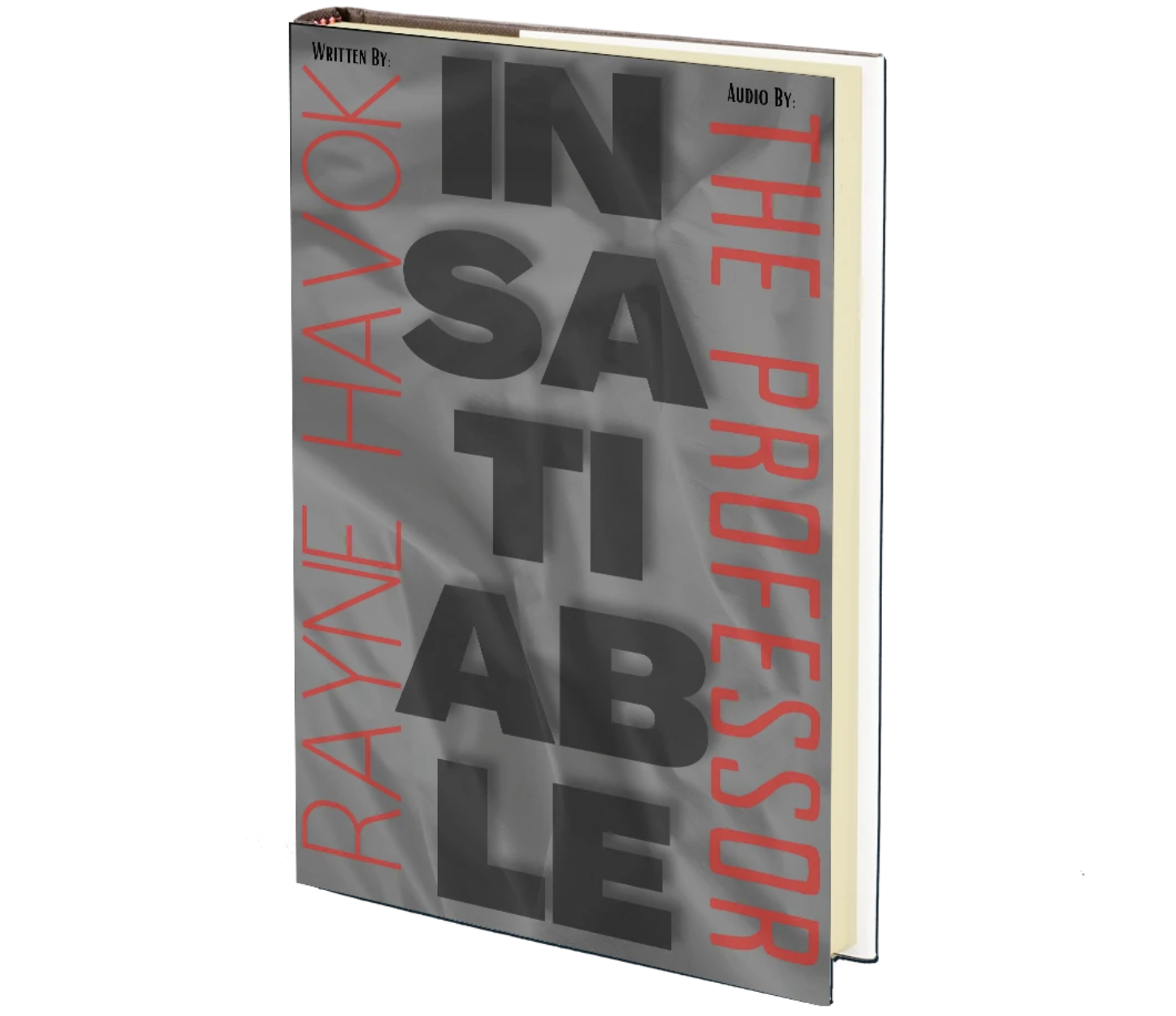
Insatiable by Rayne Havok, Narrated by The Professor

Insatiable is, at least for those who listen to the audio narration, a match made in Hell. Rayne Havok’s tale of uncontrollable lust giving way to hunger that bleeds into gluttony is, on its own, a spectacularly visceral story. When one includes the eloquent and superbly articulate narration provided by The Professor into the mix, it serves to take the story to an entirely different level. His voice lulls the listener into a receptive state with an almost soporific cadence that belies the sinister undertones hinting at what’s to come. Even as we arrive at the tale’s vile and blood-drenched conclusion, we’re still held captive by the strangely soothing, borderline palliative quality of The Professor’s voice.
Havok captures the all-consuming nature of obsession with Insatiable, portraying in literal terms the insatiable need of our narrator as well as the object of that attention. Insatiable feels like the result of what we’d discover if one were to eavesdrop on a sexting exchange between the smuttiest members of the extreme horror community; this story could be the adaptation of that cruel, visceral, and uniquely erotic conversation. With The Professor’s narration in the mix, the listener might be forgiven for suspecting that they’d dialed into the phone sex line of the damned. For those old enough to remember the late-night advertisements promising forbidden pleasures with real live participants only a phone call away–and some ungodly per-minute price. Ungodly is certainly an appropriate term in the context of this story, but the price is far more palatable.

This title is available from http://www.godless.com or through the Godless app. The link is below:

The Night Parade by Ronald Malfi, Narrated By Tom Taylorson

At its heart, The Night Parade is a story about a father’s love for his daughter and the risks a parent will take to keep their child safe from what they perceive as harmful. It’s also a story about mortality; it’s about coming to terms with it and recognizing that we won’t always be there for those we love. All of this heavy emotional content Malfi explores within the story is played out against the backdrop of a society in the process of collapsing, as madness consumes both those infected by “Wanderer’s Folly” and those forced to react to something so devastating.
Given no time to mourn the loss of his wife, David has no choice but to pack up their eight-year-old daughter, Ellie, and hopefully keep her away from the doctors and scientists he blames for his wife’s death. Immune to the disease ravaging the world, both Ellie and her mother were of great interest to the authorities who hoped to find a cure in their blood. But Ellie is special in a way her mother was not; she has a gift that might make her even more valuable to those who seek to exploit her.
Unfortunately, David is not immune. As he races across the steadily decaying husk of the United States in search of somewhere he can shelter Ellie, he’s also racing against time as his mental state declines. The reader’s forced to wonder how much of what he’s experiencing is real. How much is the result of hallucinatory nightmares that will ultimately consume what’s left of his mind?
The Night Parade is a horror story, but it’s also a tragically poignant tale. Malfi digs into the reader’s heart and begins systematically tearing away at it piece by piece as the narrative continues.
Tom Taylorson’s narration is largely excellent, though his performance of Ellie’s voice falls a bit flat. As a whole, where female voices are concerned, there’s a little left to be desired, but that’s a problem that plagues many male narrators. I certainly couldn’t have done any better.

The Handyman by Bentley Little, Narrated by Chris Andrew Ciulla

Daniel is a real estate agent leading a couple through a cabin when the husband suggests, “It’s like a Frank house.” From there, everything changes in Daniel’s life. When Daniel was a child, his family had purchased land in Randall, AZ from a man named Frank Watkins, and they’d hired Frank to assemble the prefabricated A-frame they’d be using as a vacation home. He knew, first-hand, what it meant to live in a Frank House, but he’d still only glimpsed a fragment of what that meant.
As the memories of his surreal childhood experiences with Frank come rushing back to him, along with the tragedies that followed, Daniel finds himself driven by a compulsion to find the strange and sinister man who ruined his life. As he’ll soon discover, Daniel’s was not the only life ruined by living in a Frank House, and it’s more than shoddy workmanship and incompetence involved. It seems like there might be some cruel design behind it all.
The reader is treated to unsettling glimpses into the world Frank is crafting with his seemingly alien compulsions, whetting the appetite and setting the mind awhirl as we approach the dizzying and horrific conclusion in the missing town of Plutarch, TX.
A ghost story with a hint of cosmic horror resides at the center of the mystery Bentley Little lays out for us with The Handyman. There’s a hint of Danielewski’s House of Leaves in these pages and a little bit of the Winchester Mystery House thrown in for flavor, but it’s distinctly Little in craftsmanship.
The narration provided by Chris Andrew Ciulla is fantastic, especially on those rare occasions when we get to hear Frank brought to life with his peculiar speech pattern and unusual cadence.

Razorblade Tears by S. A. Cosby, Narrated by Adam Lazarre-White

There is no question why S. A. Cosby’s Razorblade Tears made it to many national publications’ best of 2021 lists. This novel rests near the top of my list of best titles published in 2021 as well, especially when I focus on non-horror titles. 2021 was a good year for crime and suspense literature. Stephen King released Billy Summers, Kristopher Triana released And the Devil Cried, and S. A. Cosby released the absolute masterpiece Razorblade Tears.
Neither Ike nor Buddy Lee were great fathers when their sons were alive. Between recurring stints in prison and their prejudices about the fact that the boys were gay, in large part informed by antiquated perspectives on what it meant to be a man, the two men had driven substantial wedges between themselves and the sons they loved with reservations. It was only after the two young men were murdered that either father allowed themselves to embrace the sons they’d shown far too little affection when they were alive. Isiah and Derek, the interracial married sons, are like ghosts at the periphery of the tale Cosby weaves for us. They haunt the two men we come to admire, despite all of their faults, at the core of this novel.
Had Ike and Buddy Lee been able to overcome their ingrained bigotry while the boys had been alive, the two would have met years before the funeral, but that was not who the two men were. It turns out that the meeting of these two vastly different–yet strangely similar–men would be a fateful occasion that would lead to more bloodshed than either of the men could anticipate.
As the police investigation into Isiah and Derek’s deaths stalls out, Buddy Lee approaches Ike with a proposition that the two of them might have better luck taking matters into their own hands. Unraveling the mystery behind the brutal murder of the boys will force the two ex-cons to confront their pasts, their preconceived notions, and their concepts of love as the trail leads them through Hell and back before bringing them closer to home than they could’ve imagined.
The regret and retribution at the core of this book are at turns heartbreaking and viscerally satisfying. Most important, Cosby doesn’t shoehorn in any ersatz redemption for Ike and Buddy Lee because both men are so damaged and broken that redemption, in the sense that many writers would define it, simply wouldn’t make sense. That is not to say there’s no redemption here; there is redemption in these pages, but it’s the hollow sort that arises from the transformations coming far too late for it to make any difference.
Witty dialogue, well-crafted characters, and realistic portrayals of race relations, homophobia, and the difficulty associated with escaping a criminal past fill this novel with so much depth and honesty that it would be impossible to convey in a review. All I can say is that anyone delving into this book will come out the other end with an understanding that they didn’t have when going in.
Adam Lazarre-White’s narration for the audiobook is phenomenal. The additional character he brings to both Ike and Buddy Lee with his delivery of their dialogue is something that weighs heavily in favor of the audiobook edition of this novel because there’s such life and depth added to the characters with that extra texture.

Alien: River of Pain, An Audio Drama Adapted from the Novel by Christopher Golden

I wasn’t entirely sure what to expect when I picked up Audible’s Alien: River of Pain audio drama. It seemed like an interesting alternative to the usual audiobook material I listen to, so I wanted to give it a shot. I have a massive collection of old 1940s, 50s, and 60s radio dramas in digital format, consisting of radio programs like The Weird Circle. This Audible Original was not entirely dissimilar to those experiences.
In place of the narrative, an ensemble cast performed the dialogue while digital Foley was used to provide the drama with background noise and contextual sounds that enhanced the three-dimensionality of the overall experience. Though this audio drama was missing the writing style of Christopher Golden’s actual novel, it did capture his written dialogue quite nicely. Impressively, even without the story elements from Golden, it wasn’t at all difficult to follow the events as they were taking place.
River of Pain provides us with details of the events taking place on LV-426 from the point the earliest terraforming efforts were underway. This fills us in up to the loss of contact that led to Burke enlisting Ripley to join the Colonial Marines as they made their way to the fateful–and fatal–encounter with the xenomorphs infesting Hadley’s Hope. We benefit from getting to know characters we barely met in Aliens being fleshed out, in addition to meeting characters we’d never known to exist. Additionally, we catch a glimpse of the overall decency of Gorman before his final moments of life during the events of Aliens.
The experiences on LV-426 are placed in the appropriate location in the timeline with relatively frequent snapshots of the events we’re familiar with from the movie. We’re treated to events we know well, from Ripley’s discovery by the salvage crew to her waking up from nightmares in the hospital, from her demotion to the moment Burke requests that she join the expedition to the colony.
All things considered, I feel like this drama might have been a more immersive experience than a standard audiobook, but it’s not something I’d consider a substitute for the book itself. There’s certainly plenty missing in erasing the narrative of the story, especially when written by someone as talented as Christopher Golden, but this does have its unique value.
There were too many exceptionally talented individuals lending their voices to this audio drama, so I’ll focus on the performances that stand out the most. The dialogue from Ripley was so amazing that I initially assumed they’d simply pulled it straight from the movie. I occasionally felt the same where Newt’s dialogue was concerned. Captain Brackett’s dialogue was performed spectacularly well by the voice actor involved in bringing him to life.