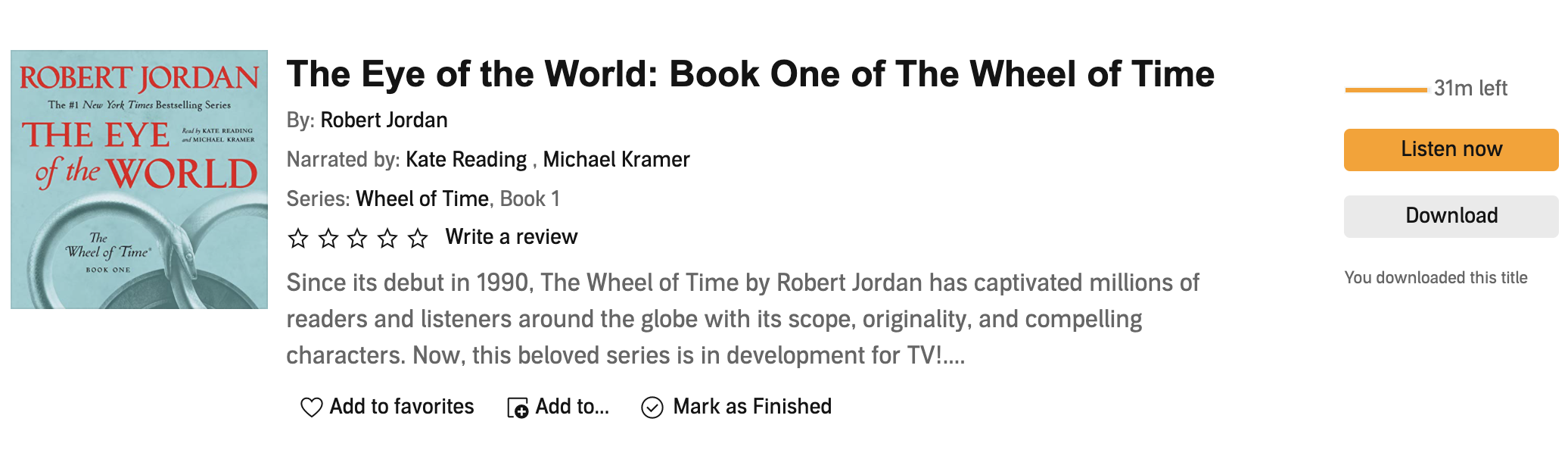
The Eye of the World by Robert Jordan Narrated by Michael Kramer & Kate Reading

Thirty years after its original publication, Robert Jordan’s The Eye of the World remains as timeless and captivating as it was when it first came out while I was still in my pre-teens. Following in the footsteps laid by previous epic fantasy series from authors like J.R.R. Tolkien, C.S. Lewis, and Terry Brooks, Jordan’s Wheel Of Time stands as a someday classic series of epic fantasy in its own right, though it does borrow elements from those earlier works.
That’s a petty complaint to level against Jordan’s books since his doing so was far less dramatic and obvious than Terry Brooks’s borrowing from Tolkien with major elements of The Sword of Shannara. Nothing we read is truly original and written in absolute isolation from the books and stories that inspired the author. It’s this same understanding that makes it easy for me to also enjoy Terry Goodkind’s series, The Sword of Truth, which transparently borrows some elements from The Wheel of Time as well as from those earlier epic fantasy series.
Following Rand and his friends from their humble but auspicious origins in Emond’s Field in the Two Rivers district to the horrific landscape of the Blight as they’re led by Moiraine and Lan is as exciting now as when I was a child, though I find myself relating more to characters I’d not related to as strongly when I was a younger reader. That is a sign of a great author indeed, that the novel can still appeal to readers (albeit differently) when they’re young men and when they’re adults in middle-age. This book (and the subsequent series) is a coming of age tale as much as it is a thoroughly engaging fantasy, exploring the nature of fate/destiny and the cyclic nature of civilization, society, and (within the series) time itself.
I’ve never read the concluding few novels of this series nor the prequel to The Eye of the World, and I thought it might be appropriate to listen through the audiobook recordings of the books I’ve already read, to catch myself up to where I need to be. The narration provided primarily by Michael Kramer and occasionally by Kate Reading (when Nynaeve is the focal point of the chapter) is immersive and successfully propels the story forward. It’s a different experience to hear this book in a different voice than the ones in my head.
Michael Kramer manages to breathe life into the characters of Rand al’Thor, Matrim Cauthon, and Perrin Aybara in the way they deserve. This is a relief, seeing as how he and Kate Reading are the narrators for at least the first five books of the series (those are the ones I’ve purchased from Audible so far).
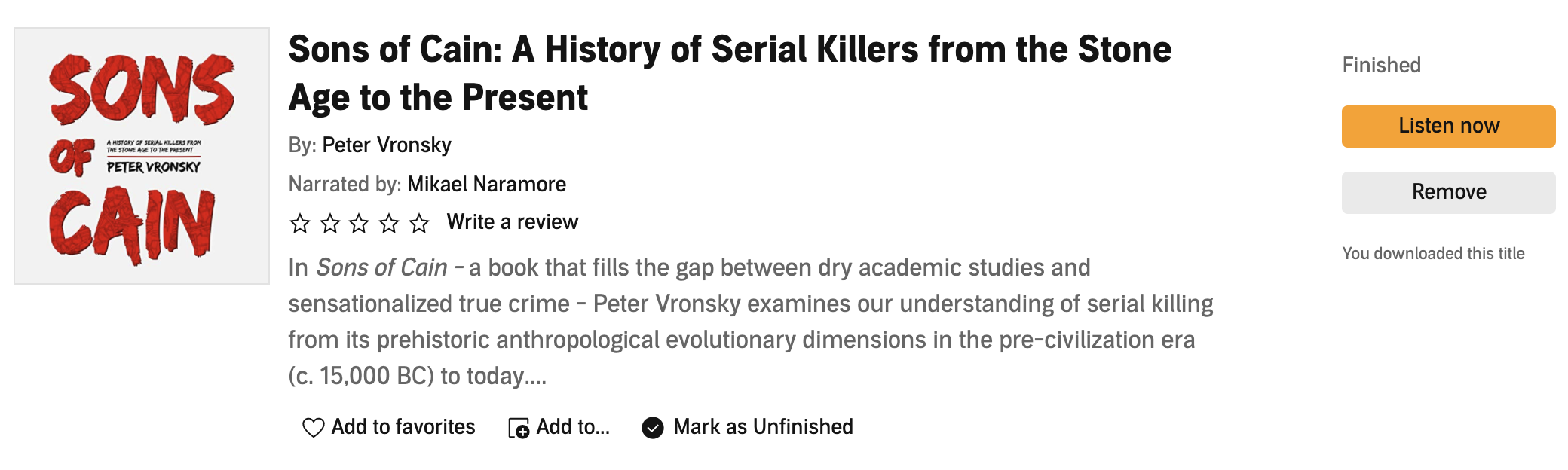
Sons of Cain by Peter Vronsky narrated by Mikael Naramore

Normally, when I’m reviewing an audiobook, I wait until the end to comment on the quality of the narration. I have to make an exception here. Mikael Naramore’s narration of Vronsky’s fantastic history of serial killing is perhaps the most perfect match-up I’ve ever witnessed in an audiobook. The most important element is that he so perfectly captures the wry, often sardonic humor of the author. I was disappointed to see that Naramore didn’t further narrate other titles from Vronsky, because there’s no chance in my mind of another narrator embracing and conveying the strange blend of casual discourse and in-depth history lesson to be found in all of Vronsky’s texts. I’ll surely give the other audiobooks a chance, as my significant other and I listen to these while we’re out adventuring, but I feel a sense of disenchantment in advance that is unfair to the other narrators who’ve worked on Vronsky’s books.
Sons of Cain: A History of Serial Killers from the Stone Age to the Present is a mouthful of a title, to be sure, but it’s a fitting title for such a densely packed deep dive into the history of serial killers throughout recorded civilization.
Spending a period focusing on the development of the triune brain, as proposed by evolutionary neuroscientist Paul D. MacLean in the 1960s (which, while oversimplified based on our current knowledge, is still a rather useful tool for understanding the way our brains work and how they sometimes malfunction), Vronsky discusses the four Fs that defined the existence of early man (and still define the existence of most life as we know it). Feeding, Fucking, Fighting, and Fleeing are still the core behavioral motivators underlying our daily lives, but with trappings of civility and leisure tossed into the mix.
There’s some analysis of why and how homo sapien became the dominant hominid and the potential role of necrophobia in that success. There’s surely some strong argument in opposition to his theories and hypotheses regarding how and why early man survived while other competing branches of the same evolutionary tree did not, but none of them are any more likely to be valid or accurate. It’s all conjecture and educated guesswork when we’re talking about things like that.
From there, we move on to the meat of the book, detailing early records of “lycanthrope” lust murders from early history, evaluating these past instances through the lens of the present, and applying our current understanding to these things. It’s truly fascinating and well worth the time, reading or (in my case) listening to Vronsky’s meticulous considerations of mass murder cases from centuries ago.
Arguably, the most rewarding aspect of this book is the author’s discussion of Diabolus In Cultura, the combination of cultural factors and arrangements that contributed to the growing numbers of serial killers and the periods wherein we’ve experienced surges of what we would classify as modern serial killers. It’s never one thing, isolated from other elements, but rather a concatenation of sorts that produces a surge of individuals prone to that sort of behavior.
Fair warning, as the end of the book approaches, and Vronsky is discussing the “Golden Age of Serial Killers” here in America, spanning from the mid-1960s through the 1990s, there are some rather long lists involved. They can become more than a little tedious but are essential to capturing a full understanding of what he’s trying to convey. That was the one section of this book where I’d have preferred to be reading rather than listening to the narration.

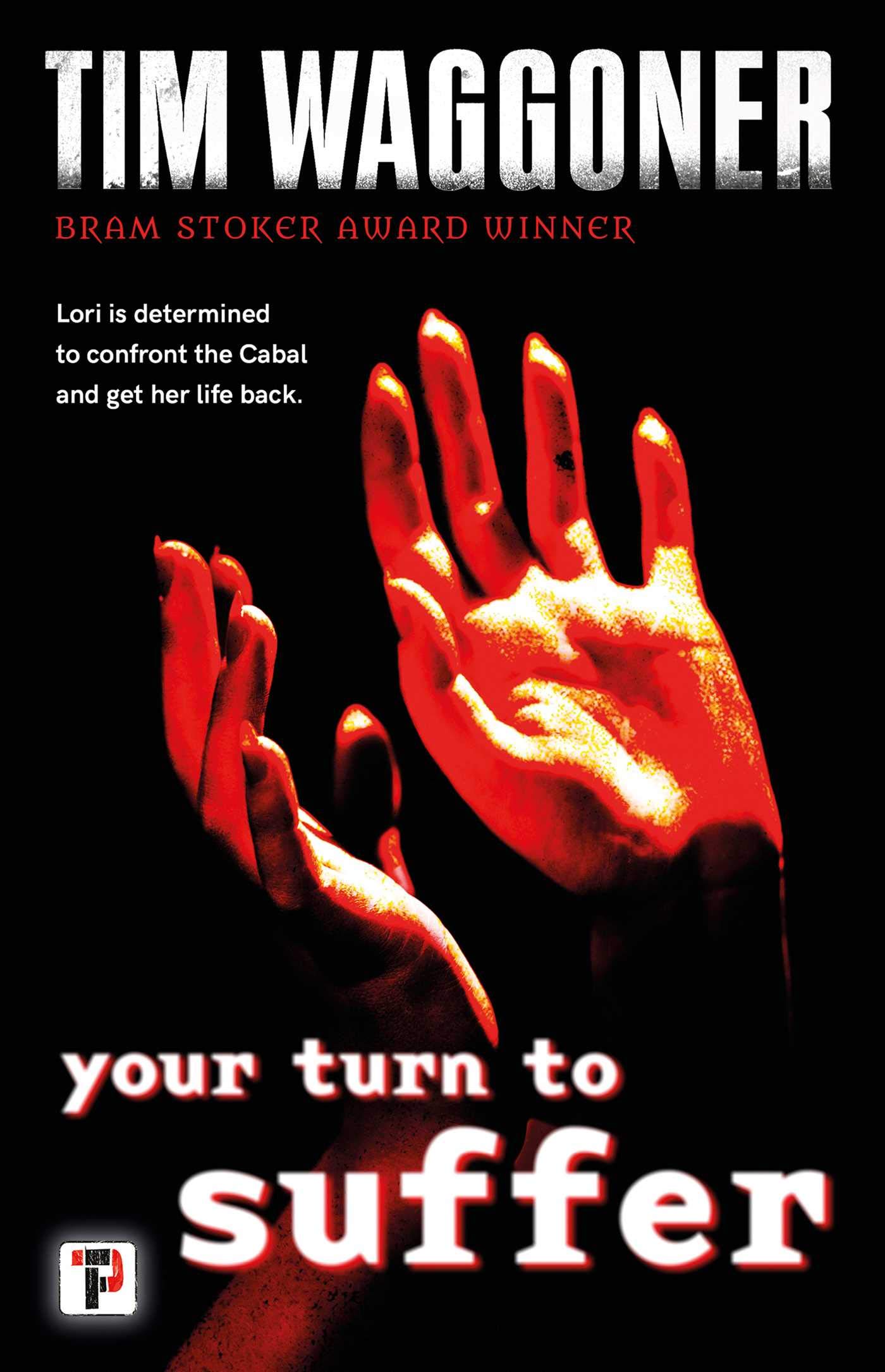
Your Turn To Suffer by Tim Waggoner

Tim Waggoner’s Your Turn To Suffer is one hell of an experience. The story that unfolds on these pages is reminiscent of Clive Barker at his horror and fantasy weaving best, while still feeling original and authentic as a Waggoner novel. Blending horrors both supernatural/unnatural and psychological, Your Turn To Suffer draws you in and refuses to let go.
Seemingly out of nowhere, a random encounter on the street, followed a week later by an even more surreal and disturbing one in a grocery store sends Lori’s life spinning out of control. From an admittedly disorganized life as a physical therapist with a complicated living arrangement with her slob of an ex, her world becomes something unrecognizable as familiar places become unsafe and the people in her life are transformed into horrifying, monstrous strangers.
Lori is forced to come to terms with her past as she struggles desperately to discover what she needs to confess to and atone for.
This story reads like one of those nightmares you wake up from only to learn you’re still sleeping and experiencing a nightmare…except that it just continues like a Russian nesting doll of nightmares within nightmares. The narrative paints a distorted and dreamlike allegory, showcasing how guilt, even (or especially) when associated with long-forgotten–or suppressed–memories can weigh heavily on us.
Once you’re on the Nightway and heading toward the Vermillion Tower, it’s already too late. The Cabal has you. You will suffer.

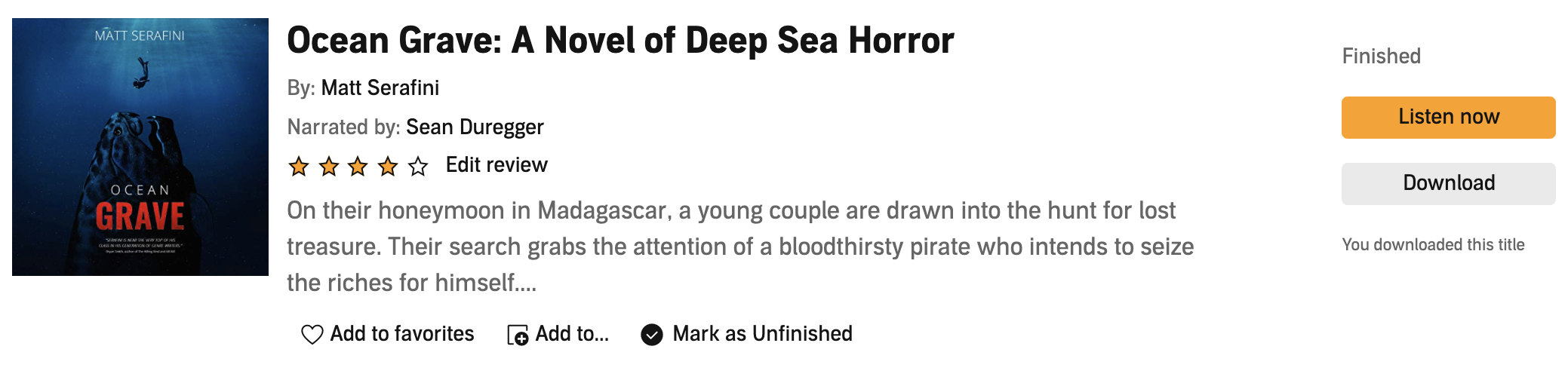
Ocean Grave by Matt Serafini narrated by Sean Duregger

Matt Serafini’s Ocean Grave is a much larger story than I could have anticipated. When I say it’s larger, I don’t mean in page-count or anything, but rather all of the elements involved in the narrative. There is a lot more to this story than it seems like there could be, and somehow it still works. It manages to add some social commentary into the mix as well, as the best fiction usually does…involving international relations, the Western world’s obsession with a sanitized tourism-focused exploration of untamed locales, and the widespread impact of poverty in third-world nations.
This book has something for anyone who enjoys adventure…a honeymoon retreat plagued by secrets, treasure hunting, pirates, soldiers of fortune, a centuries-old mystery, inhuman creatures, and a seemingly unstoppable sea monster. Even with all of these elements, Ocean Grave never feels particularly disjointed or difficult to follow.
One thing I will say is that, if you get to know a character within this narrative, you can expect them to have a 70/30 chance of dying before the tale is complete…and it won’t be some noble, glorious death. This story is real-to-life, in that the characters aren’t unnaturally lucky or imbued with the almost superhuman ability to survive the impossible conditions they face. Like those of us in the real world, most people don’t survive extreme situations involving modern-day pirates and warlords…and when you add in a monster lurking in the ocean depths, no one walks away unscathed.
The narration from Sean Duregger is clear and professional. He does an excellent job of providing characters with distinct voices and accents (where appropriate).
One bit of warning, if you, like me, get tired of hearing the term “CIA spook” over and over again during one of the earliest chapters of the book, don’t worry…that repetitive nature doesn’t persist through the rest of the story. It took me a lot longer to finish listening to this audiobook because I stopped it near the end of that particular chapter precisely because that repetitive terminology was driving me mad. I wish I’d just powered through it because the story is excellent after that.

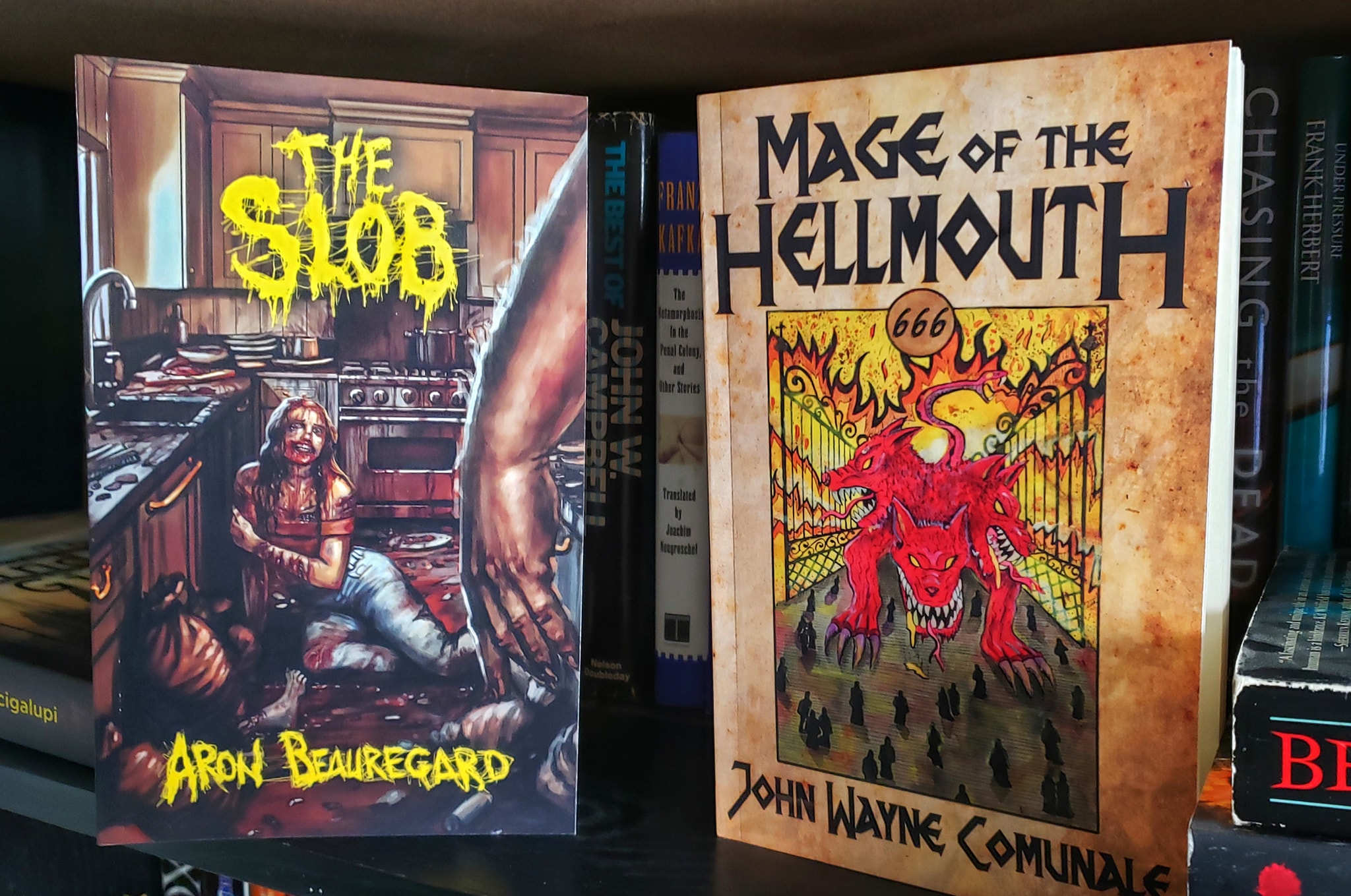
Mage Of the Hellmouth by John Wayne Comunale

John Wayne Comunale’s Mage of the Hellmouth is both surreal and captivating. It’s entertaining in the way a lot of subversive fiction is, and the horror of it sort of runs along with a similar style to Jacob’s Ladder and other psychologically unnerving horror stories that make you question what’s real and what’s not along with the characters. Apropos of the Jacob’s Ladder reference, this book even includes a bizarre scene of graphic sex at a party where our protagonist, Jake, is forced to question whether he’s simply too intoxicated or really witnessing the events taking place.
It’s a quick read, and it’s well-paced to keep you invested in everything taking place on the page…as you follow Jake from his late-20s slacker, stoner, drunk life of tedium working for the Fam-Mark ice cream company through the progressively sinister experiences and encounters with co-workers and friends as he takes on his new role at the main facility. And when I say “role” it has multiple meanings, as the events in Jake’s life dovetail with an old tabletop RPG he’d played as a child, Mage of the Hellmouth.
In the end, this is an example of no good deed going unpunished…as Jake receives the reward for the marginal part he’s played in grand events he had no way of anticipating.
The only issue I have with this book is a time jump/recollection that initially seemed like a formatting error. Upon finishing Chapter 7, the content that doesn’t appear until Chapter 10 seemed like it should have followed…making Chapters 8 and 9, Chapters 9 and 10 respectively. The ambiguous shift back to earlier in the story is not a deal-breaker by any stretch of the imagination, since the story as a whole was a terrific read just the same, but it was a bit jarring and led to momentary confusion until I’d caught on to what was going on.

Shards of Shattered Sentiments by John Baltisberger

This is the second collection of assorted poetry from John Baltisberger I’ve had the pleasure of experiencing. This time, it was in audiobook format rather than chapbook, as In Service of Slaughter had been.
There’s a good variety for anyone who enjoys horror and poetry in combination, though it is a bit on the short side, being adapted from a chapbook.
Baltisberger performs his own narration, which makes the experience more personal and intimate than I suspect it would have been from a third-party narrator.
“Nameless Leviathan” stands out for the simple fact that he layers his voice multiple times to create an effect similar to the verse/response effect one might experience in a church or temple. It creates a more chant-like quality rather than feeling like a straightforward piece of poetry, and I enjoyed that a great deal.
The limerick included is entertaining, for being so gruesome…but limericks, by design, are always amusing in a strange way…something to do with the rhythm and sing-song quality of the style.

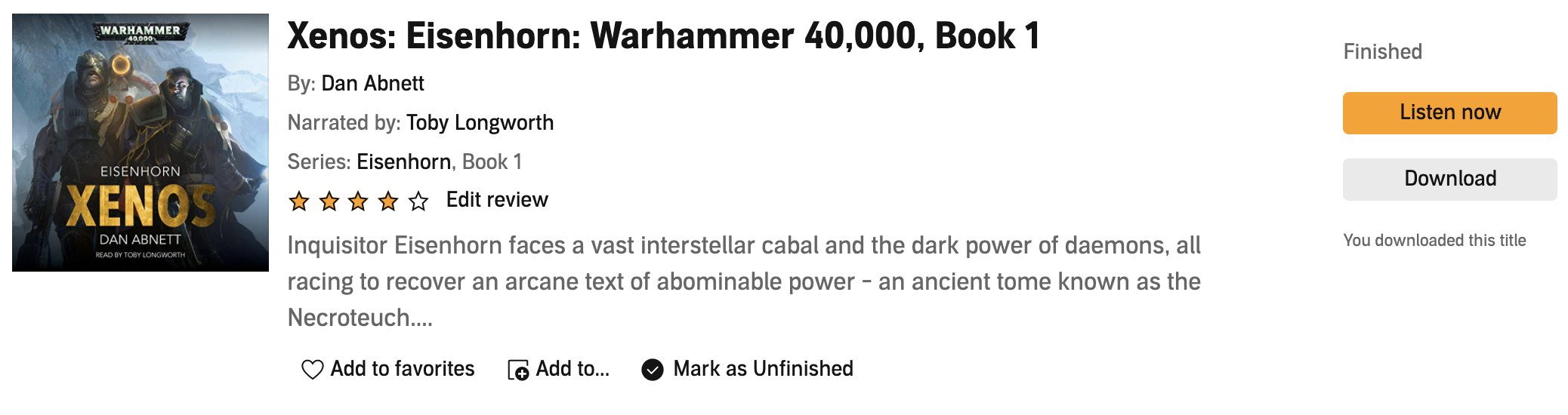
Eisenhorn Book One: Xenos by Dan Abnett

When people think of Warhammer 40K, it’s often in terms of large-scale warfare and military maneuvers/strategy. The tabletop game and the video games have often been more focused on those elements of the Warhammer 40K universe, so it makes sense that this is the thing first coming to mind. We all first imagine the indomitable space marine in their hulking power armor wielding a chain weapon or some absurdly massive firearm.
Eisenhorn: Xenos by Dan Abnett provides us with a more intimate, character-driven exploration of the Warhammer 40K universe, and it’s a great thing. Following Inquisitor Gregor Eisenhorn as he seeks to unravel the convoluted threads of a mystery involving ruling families, rogue traders, alien species, and Chaos Marines is an exciting ride indeed. With dire consequences looming on the horizon if Eisenhorn fails in his mission, we feel the tension all too vividly.
The narration from Toby Longworth for the audiobook edition is amazing as he brings to life the character of Gregor Eisenhorn as well as his compatriots and antagonists. An already captivating narrative is made all the more gripping with the harsh tones and grave articulation of this narrator.

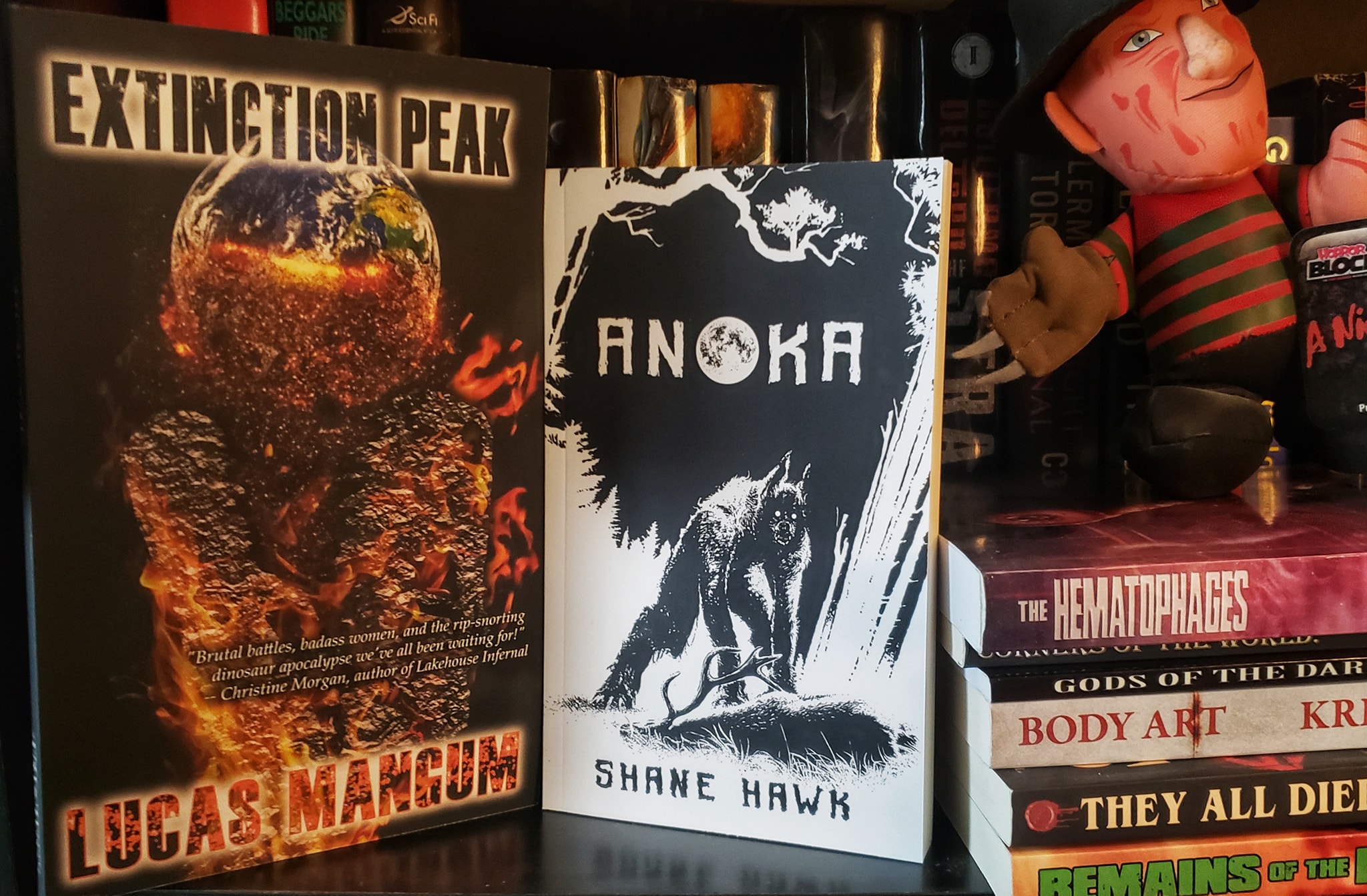
Anoka by Shane Hawk

Shane Hawk’s Anoka is a short but potent collection of short stories that range in length from flash fiction like “Soilborne” and “Orange” to longer pieces like “Wounded.” Touching on a range of topics from the alcoholism endemic within reservation communities–as those familiar with indigenous culture will already be aware of–to the epidemic of missing girls and women from tribal communities…and mingling those real-life concerns with supernatural and sometimes downright surreal narrative elements.
This fictionalized version of Anoka, MN would make for a truly horrifying place to live, the implication being that horror lurks not far beneath the surface of everything there.
“Wounded” and “Imitate” are perhaps my two favorite stories in this collection, and there are some similarities between the two. The stories in question focus on protagonists who are trying to make amends for the choices they’ve made earlier in their lives only to have terrifying circumstances arise. There’s a sort of morality play involved, reminding you–as the reader– that no amount of trying to make your life better will necessarily relieve you from the guilt of your past or the influences of your earlier decisions and mistakes. It’s a harsh reality, but it is reality just the same.
I’m looking forward to seeing more from Shane Hawk down the line.

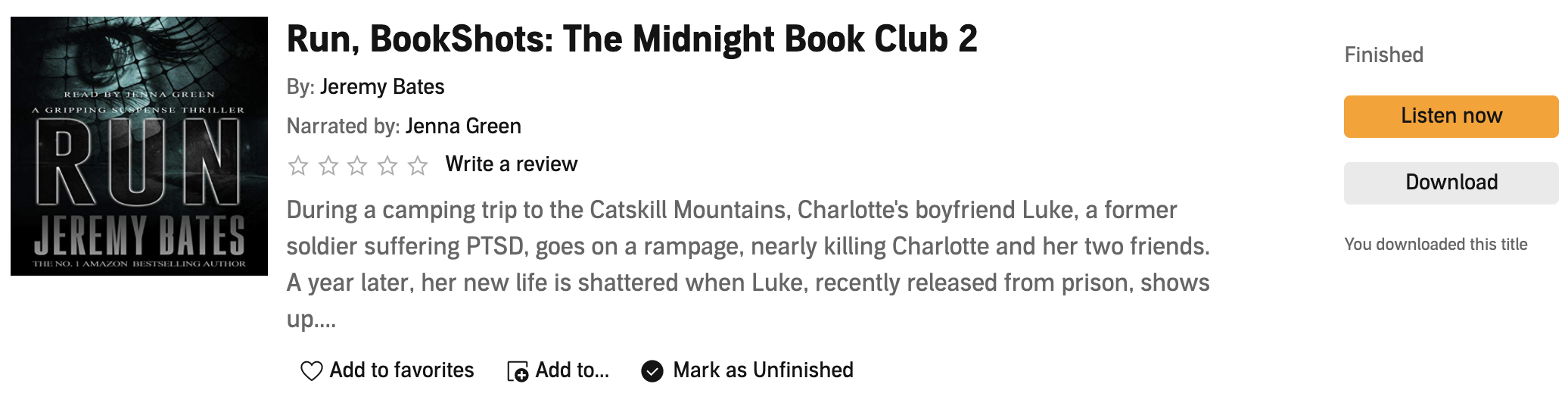
Run by Jeremy Bates

Jeremy Bates’s Run is a fast-paced, intense story with an underlying message of how we as a society have dropped the ball concerning mental health for our former military personnel.
Our protagonist, Charlotte, is a prime example of Murphy’s Law being in full effect. Her parents were murdered when she was a child and then her high school sweetheart returns from a series of traumatic deployments overseas (one of which terminating in multiple lives lost by those beside him) with psychosis that pushes at the very edge of worst-case scenario PTSD. During a camping trip that was intended to help Luke find his balance, he lashes out and severely assaults two of Charlotte’s friends before attempting to harm her as well.
We flash forward from there to a year later with Charlotte attempting to move on with her life, dating a new guy, and focusing on finishing school…and then Luke reappears after being released from prison.
Everything takes on a staccato quality from there, as Luke becomes increasingly paranoid and violent, his instability culminating in an act of violence befitting only those we consider terrorists.
It’s a short read/listen and it’s well worth taking the time to do so.
The audiobook is narrated by Jenna Green, someone I consider a friend, an individual I’ve known for a great many years–since we worked together once upon a time at a local television affiliate. The quality of her narration is superb, and I’m not saying that because I’m biased. I feel entirely confident that I have recommended her to other writers who are looking for a woman to narrate their audiobooks in the future.

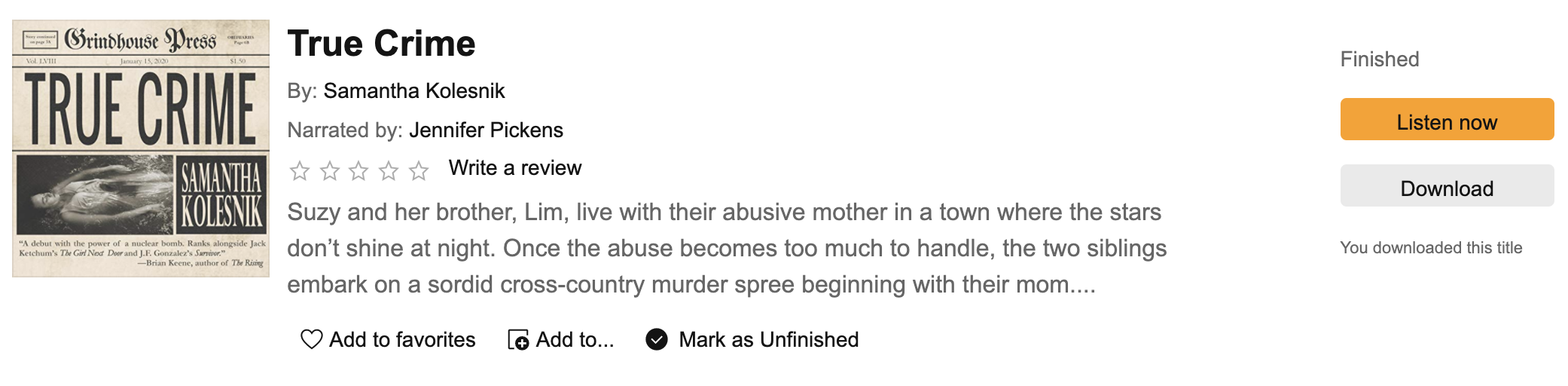
True Crime by Samantha Kolesnik

Samantha Kolesnik’s True Crime is a gritty deep dive into an abusive household and the horrible consequences of that abuse. It’s all the more awful for the plausibility of it.
Suzy’s only escape from the horrific emotional, physical, and sexual abuse from her mother–and boyfriend(s)–is reading True Crime magazines that she’s fixated on. Her only allies in the cruel childhood she’s experienced are her older brother, the emotionally detached Lim, and the unseen girl, Alice, held captive in the basement by Suzy’s mother, speaking to Suzy only through the heat registers. Little does she know that she and her older brother, Lim, are soon to create their own story befitting her favorite magazine…as she smashes an ashtray into her monstrous mother’s head…and that is only the beginning.
As Suzy evades justice and Lim winds up in prison for the murders no one imagines Suzy could have been involved with, we find ourselves wondering if she can be rehabilitated with a second chance and a clean slate.
The animal freakshow scene was deeply upsetting and made me want to attack the spectators as well, and the later scene where Suzy discovers the dogs made me sad too. Acts of cruelty and violence against animals do more to get under my skin than the same sort of violence perpetrated against people. It seems that Suzy and I have that in common.
Jennifer Pickens expertly narrates the audiobook edition of the story, capturing the equal measures of naivete and cruelty of Suzy’s first-person narrative.

I grew up in an abusive household in a rural region. This story hits close to home for anyone with that sort of background. While it was my father, rather than my mother, who levied the abuse, it doesn’t change much. That the abuse from my father was physical rather than sexual isn’t much of a difference. The sexual abuse, instead, came from a slightly older girl who lived next door and who saw a six or seven year old boy as a suitable way to learn about the differences between boys and girls. I wanted to include a little warning, in case anyone is triggered by these sorts of things.