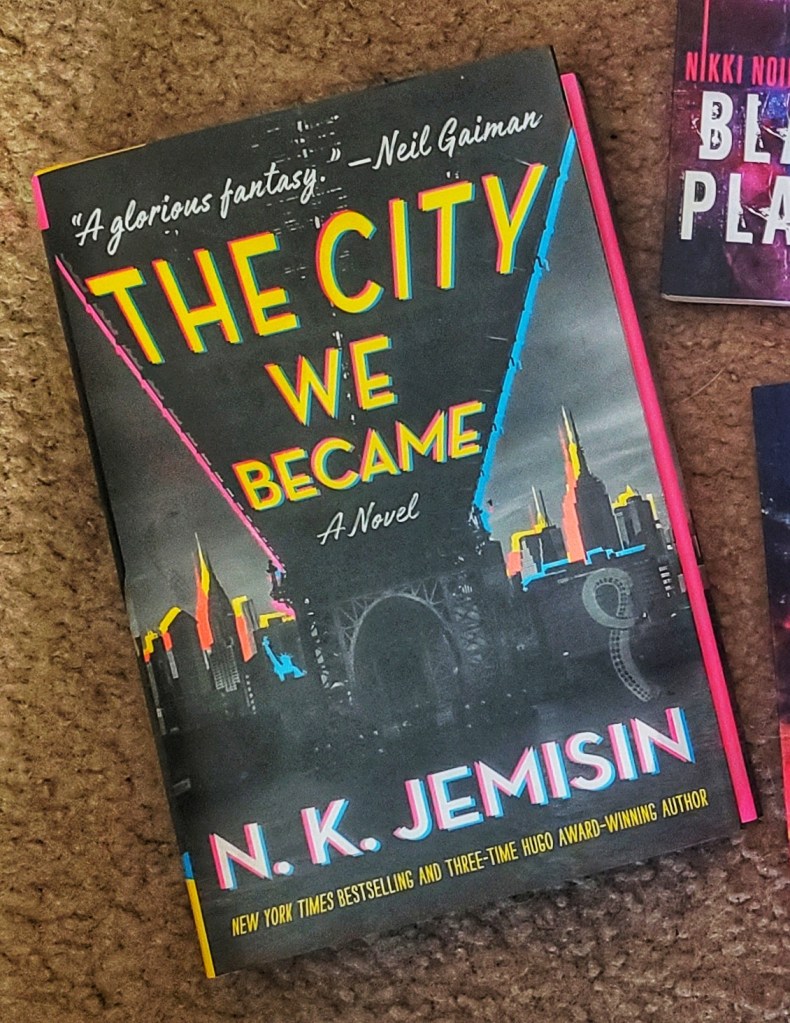
The City We Became by N.K. Jemisin

The City We Became is vastly different from the other books I’ve read by N.K. Jemisin. She manages to put the “urban” in urban fantasy in a way I’ve never seen from another author aside from maybe James Blish’s Cities In Flight (Okie) series. The urban fantasy tale is a huge departure from the straightforward fantasy I’d been accustomed to from Jemisin while adding a nice touch of cosmic horror into the mix.
Take a little bit of L. Frank Baum and a bit of Neil Gaiman and add a whole lot of the worldbuilding and myth creation fans of Jemisin are already familiar with, and you’ll end up with some idea of what The City We Became has in store for you. It’s as much a character study as a sweeping, grand fantasy tale…another thing fans of Jemisin should be expecting.
Jemisin fills this book to the brim with social commentary on a wide variety of topics from gentrification and art criticism to racism (overt and subtle) and mistrust of law enforcement. The six primary characters (representing the five boroughs as well as one individual representing the whole of New York City) take on lives of their own even as they come together and find their place in the synergy of a whole.
I will admit that I didn’t enjoy this book nearly as much as I’ve enjoyed the Inheritance and Broken Earth trilogies, but it’s only the first book of a series that I certainly still enjoyed enough to read what’s still to come.
The Damned Highway: Fear and Loathing in Arkham by Brian Keene & Nick Mamatas

Brian Keene and Nick Mamatas answer a question no one ever thought to ask with The Damned Highway: Fear and Loathing in Arkham. What if Hunter S. Thompson, instead of joining the campaign trail during the 1972 presidential primaries, traveled to the fictional town of Arkham, MA, where he experienced the horrors H.P. Lovecraft described in his writing?
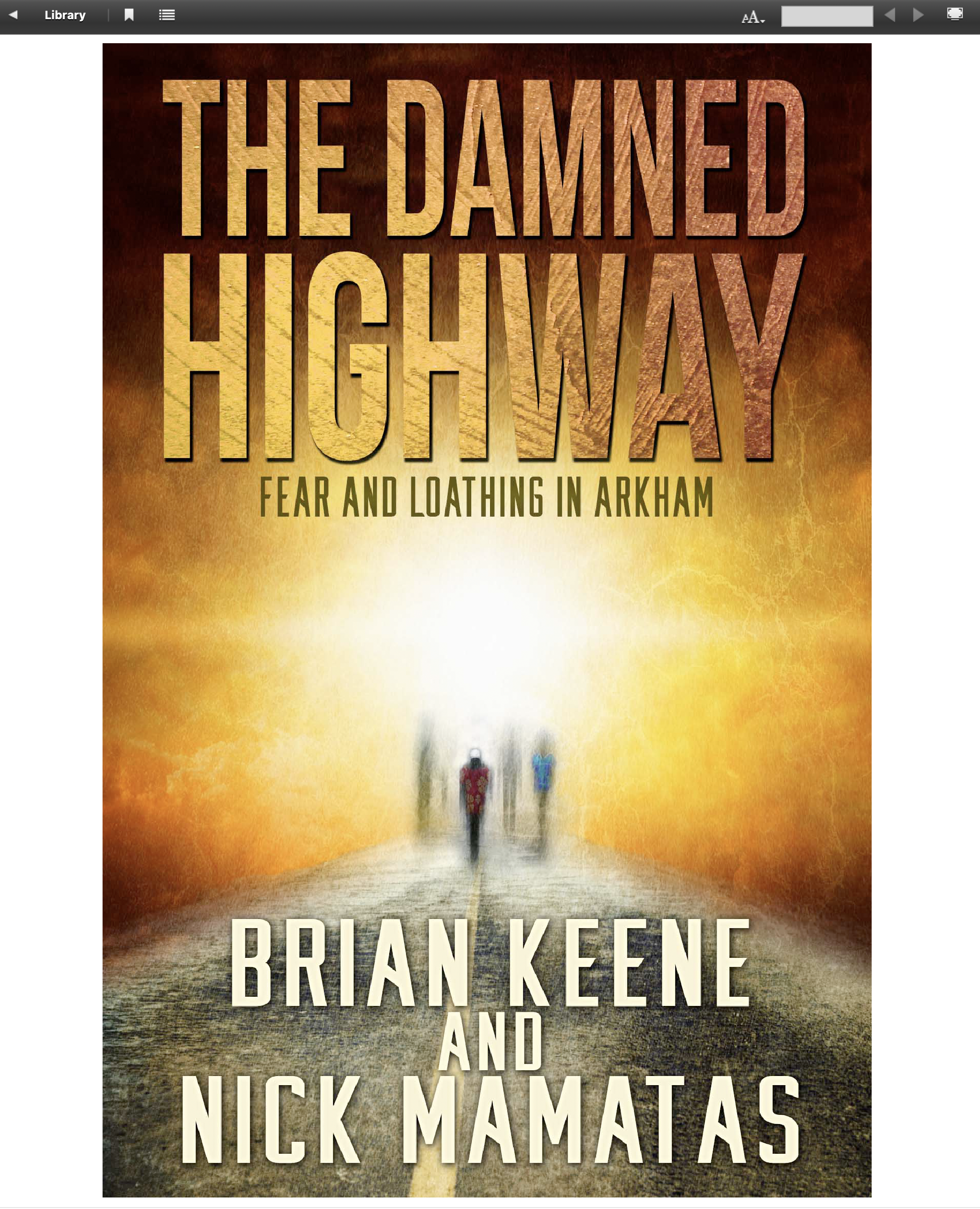
I’m honestly a bit sad that I didn’t know about this book when it was originally released ten years ago. The cover art for that edition is definitely superior and so perfectly captures the blend of cosmic horror and gonzo journalism one is destined to find if they crack the spine and open this book. When I say they’ve perfectly captured this blend of otherwise disparate things, I’m not joking. The Thompson pastiche doesn’t come across as being satirical or heavy-handed. As someone who’s read essentially everything Thompson had published, the style is unmistakable…and these two authors nailed it, including the unrelenting disdain for Nixon. I’ve never read any other work from Mamatas, though I’ve always sort of intended to (it just falls by the wayside). but I’ve enjoyed a good number of Keene’s books in the past, and nothing from his other work mimicked the style and texture of another author in this way.
Feeling as if he’s going to be crushed under the weight of both snow and an endless barrage of unwanted fan letters, our eminently unreliable narrator determines that he needs to escape from his Colorado compound. He can’t go West. That’s where all of this awfulness began. Instead, he chooses to go all the way in the opposite direction. Looking at the map on the bus station wall, he picks Arkham as his destination. A short while later, he’s waiting for the bus to arrive as an ethereal tentacle caresses his leg….and you can sort of guess where it goes from there.
The biggest difference between this fictionalized version of Hunter S. Thompson and the traditional Lovecraft narrators is the capacity to take in stride things that should drive any sane man mad. The moral of the story is that when you’re never quite sure that a thing you’re seeing isn’t just another hallucinatory episode brought on by the surplus of illicit substances you’ve carried with you, it’s far easier to cope with unearthly horrors. In that sense, it could be argued that there would be no better guide into the realm of eldritch horrors. It could be argued that a man with Thompson’s psychology is uniquely suited to document this descent into the unknown.
This is an odd book in so many ways, but it’s equal parts amusing and horrifying; it’s disturbing in both its depiction of cosmic horrors and the antisocial, drug-addled mind of our protagonist.

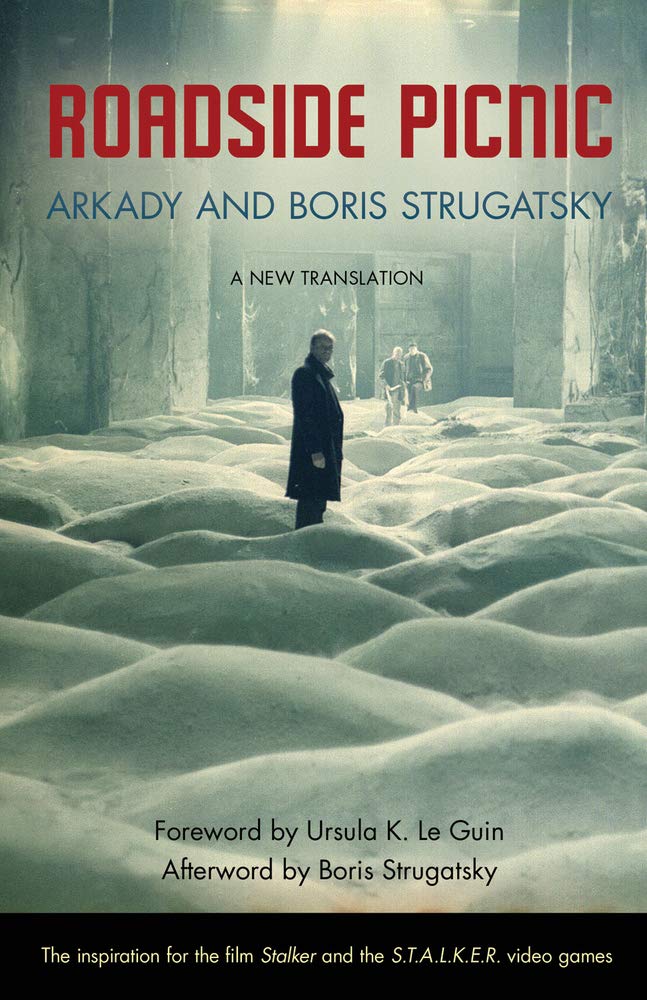
Roadside Picnic by Arkady & Boris Strugastky

I’m copying over some reviews of titles I’d written up in 2018 and earlier, just in case these titles are new for other people.

I’m glad that we have a solid English translation of Arkady and Boris Strugatsky’s Roadside Picnic. This is a book that people really should be reading, if only because there’s a perspective to it that we rarely see in science fiction or literature in general.
While this may be a science fiction novel, taking place a number of years after first contact that involved no contact at all, the narrative is more akin to horror than anything else.
Aliens arrived on Earth, landing in a handful of seemingly random locations and then left shortly thereafter without any attempt to interact with us. What they left behind in their landing locations were bizarre, hazardous, and toxic zones where people like our protagonist would illegally venture with the purpose of risking their lives to collect items of alien manufacture that could be sold to scientific institutes for study or private collectors for bragging rights. The odds of surviving these trips into the zone were slim and anyone who made it out was changed by the experience.
This is where the novel begins, the context surrounding a story that is equal parts inspirational and terrifying, disorienting and straightforward. This book should be considered not only a fantastic sample of Cold War era Russian science fiction but also an example of surreal horror at its finest.

Black Planet: Books 1-4 by Nikki Noir

Nikki Noir’s Black Planet: Books 1-4 collects together in one volume a sequence of novellas and short stories introducing us to a handful of residents of a Northern Arizona town and the sinister events corrupting and controlling those people, brought about by a mysterious, otherworldly object and the black goo that seems to be spreading through the North Woods.
Alternating between perverse sexual depravity, brooding cosmic horror, occult fanaticism, murder, and family drama, Noir manages to avoid missing a beat as she weaves a tale that keeps the reader begging for more…and then the final page arrives, and you can only hope for more to come.
She paints a portrait with the delicacy of a scalpel while utilizing a pallet produced by a hammer blow to the head and the arterial flow of a severed penis as she draws you into this world she’s created. If that description doesn’t make you want to read this book, I really don’t know what else I can say. Spoiling this particular story would be virtually impossible without dragging you, kicking and screaming all the way through the narrative itself, it’s such a feverish and surreal experience.
Keep in mind, as you read…the owls are not what they seem, a statement somehow more true in this novel than in Twin Peaks.

https://www.bloodgutsandstory.com/product-page/black-planet