Death Pacts and Left-Hand Paths by John Wayne Comunale, Narrated by John Wayne Comunale

John Wayne Comunale brings his usual irreverent humor and blasphemy to this tale of a working stiff who–like many of us–wishes he could find a shortcut to the life he would rather be living. Sometimes, that might be as easy as pushing someone in front of a bus, which–as it turns out–might be more challenging than you suspect. In this case, the desired shortcut comes in the form of a “Satanic” ritual.

A promotion at work, a life of ease, and the girl of your dreams, what would you do to have those things? Would you summon a peculiar little blob of a demon that resembles a demon about as much as the real Hell resembles the one you’ve always imagined from a lifetime of mythology and Christian upbringing–which is to say, not at all? Well, that’s what our protagonist decides to do, and he soon learns that there’s more work involved in making these dreams come true than it would have required if he’d just put in the effort in the first place. Mistakes were made.

Sometimes the shortcut isn’t much of a shortcut at all, but it’s difficult to see that until you’re already on the path, and by then it might be too late. Hindsight is 20/20, they say.

Comunale spins a fun little tale of a life spiraling out of control, the price of hubris, the hollow pleasure derived from cheating your way to success, and how important it is to be careful what you wish for. Along the way, he builds a new mythology of the realm we think of as Hell, the beings we think of as demons, and the harsh challenges associated with bridging that infernal realm with our own.

The author narrates his audiobook edition of the book, and there’s never any disappointment to be found in Comunale’s delivery. He knows just the right amount of sarcasm to imbue the narrative with, and the voices he has in mind for his characters.
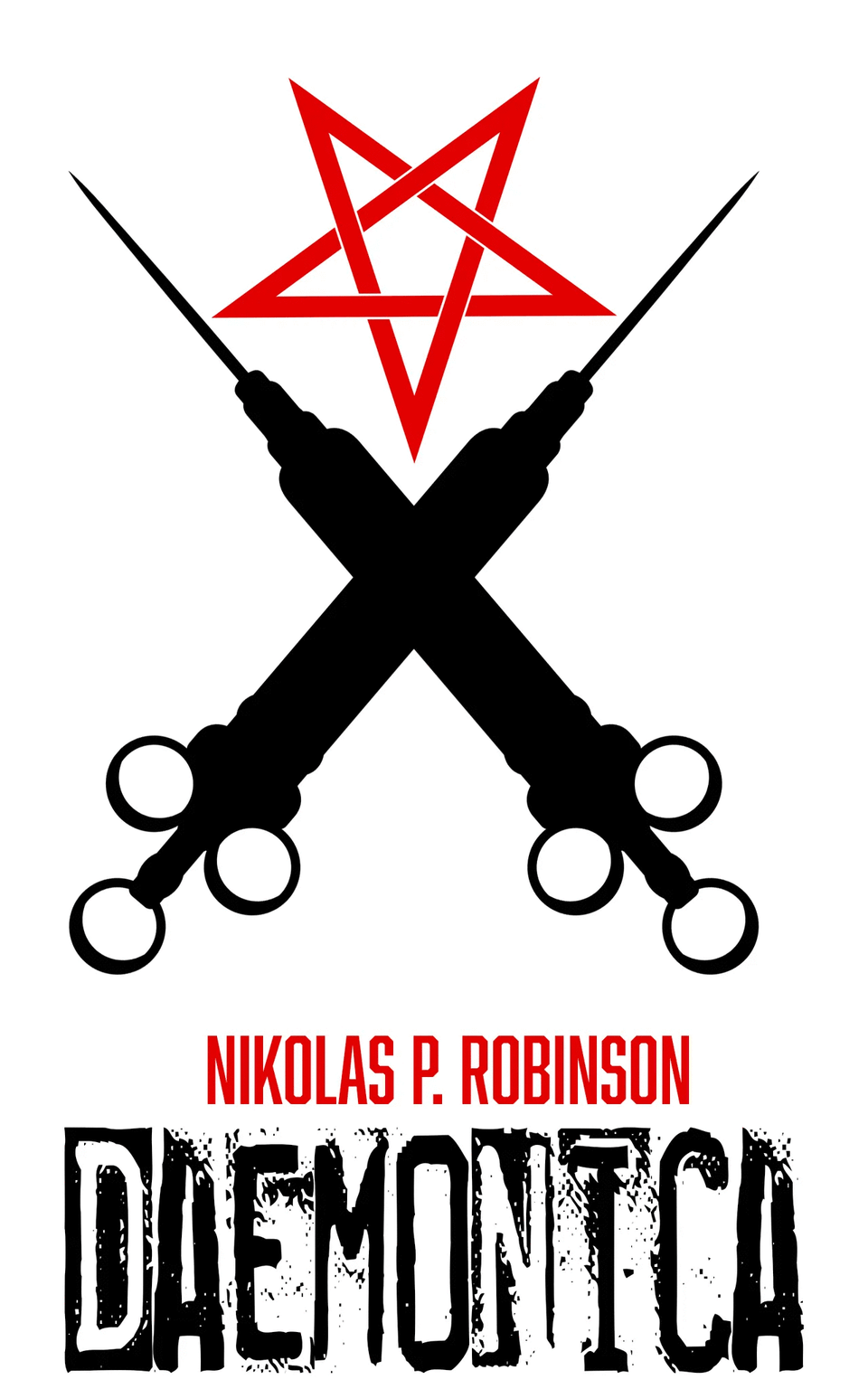
Daemonica

On August 3rd of 2021 I released Daemonica on the Godless platform. Daemonica is a stand-alone short story introducing readers to the larger story of Daemonica In Claritate, to be released at a later date.

Orphaned for the second time in her twenty-one years with the death of her older brother, Ethan, Layla Torres has been spiraling out of control. When she discovers the truth of what happened to Ethan and his friends, the secret stash of an entirely new drug in her brother’s belongings provides her with a chance for revenge. It’s a chance she’ll happily take.

The link to this title on http://www.godless.com is below:

Daemonica by Nikolas P. Robinson

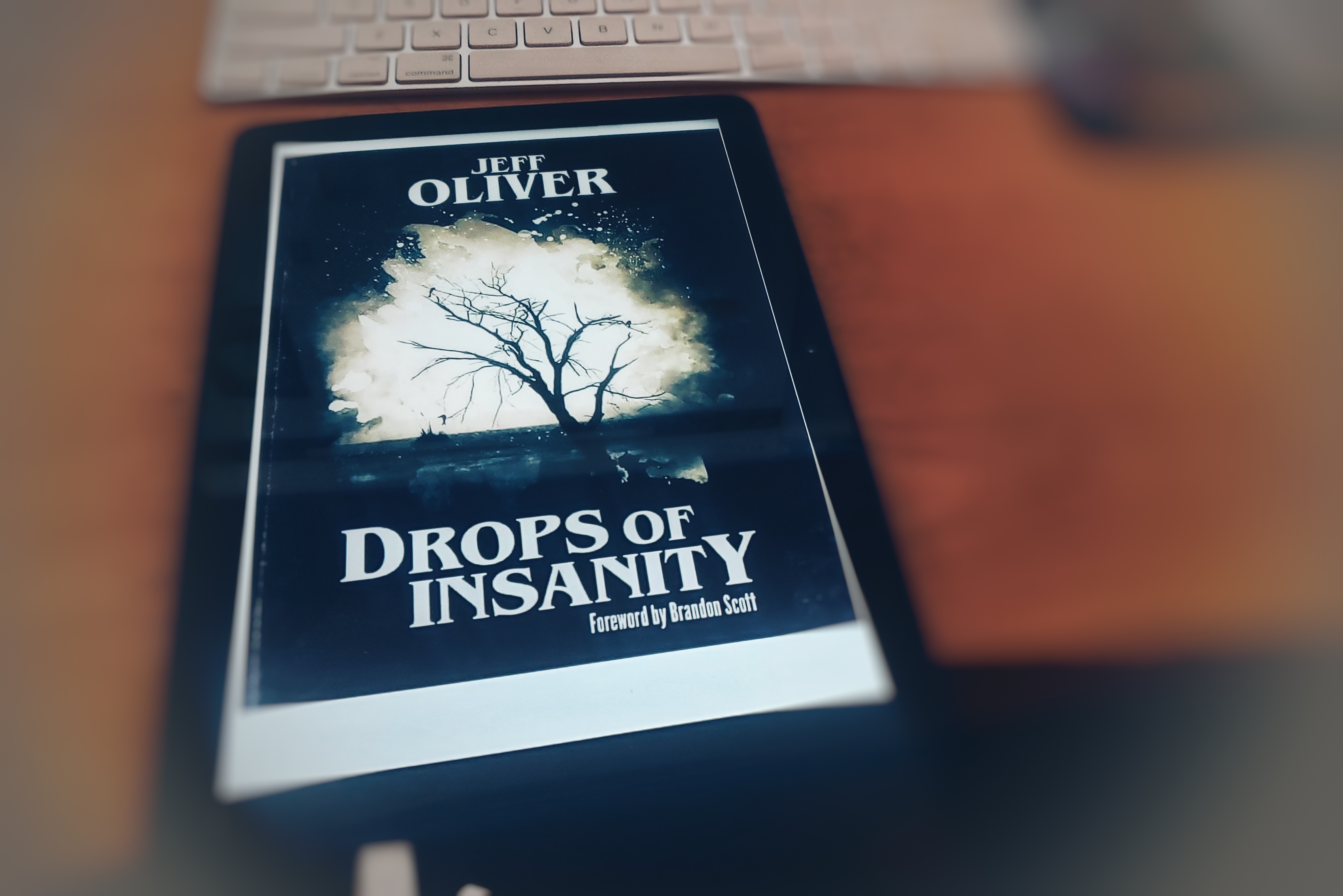
Drops of Insanity by Jeff Oliver

Jeff Oliver’s Drops of Insanity is a solid collection of poetry consisting primarily of short poems dealing with a variety of topics. Though largely focused on musings associated with identity and mental illness while navigating society and relationships with those factors involved, there are a great many poems that deviate into assorted horror-themed allegories and expressions of pain and suffering. It’s worth taking one’s time, reflecting on the word choice and symbolism implicit in many of the verses, especially since the vast majority are no more than ten lines in length.
It’s when we reach the longer form poem of “Her Soul To Keep” that the collection stands out at its strongest. A narrative expressed through the verse; this particular inclusion is a fascinating transition from the previous material collected in Drops of Insanity. At the core, it’s a breakdown of family, disappointment, revenge, and choices with consequences we’d not anticipated. It’s also a poem about demonic possession, murder, and the dissolution of the soul in the searing flames of Hell. What could be wrong with that?
While it may feel like this collection suffers from some repetition where content is concerned, I’m inclined to believe this was an intentional flourish from Oliver. Occasionally this repetition appears in the form of epimone, but more often it appears to be a method of creating a sort of cyclic flow to the material contained within Drops of Insanity. Hell is repetition, as we learned from the Stephen King screenplay, Storm of the Century, and mental illness is an exceptionally personal sort of Hell. Looking at it that way, it becomes difficult to imagine Oliver wasn’t attempting to immerse the reader in the overarching theme of this collection of poetry.