The Great Hunt by Robert Jordan: Narrated by Michael Kramer and Kate Reading

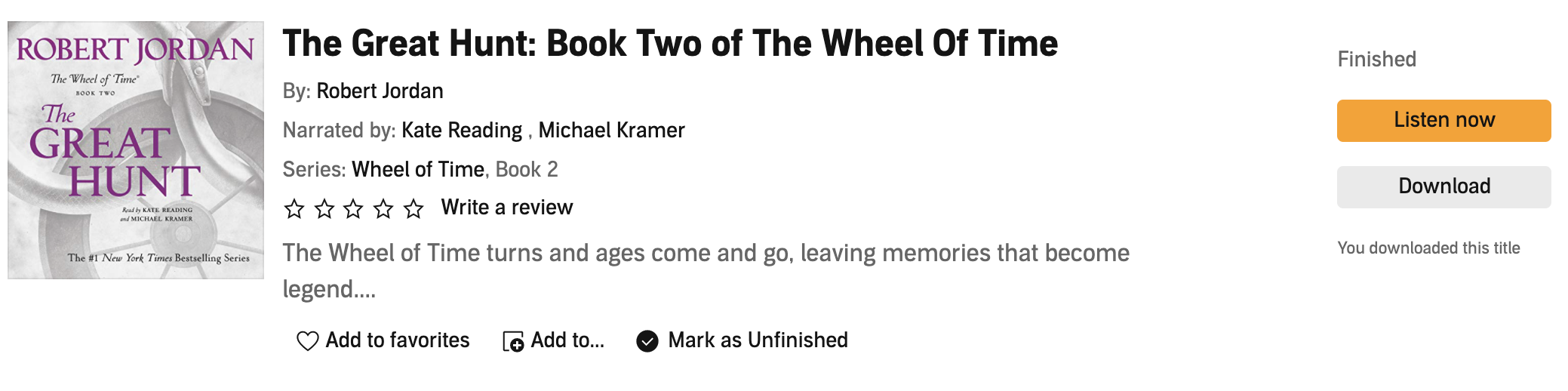
Robert Jordan’s The Great Hunt has always been one of the greatest follow-up novels to a series introduction. It could be argued that it’s the best installment of The Wheel of Time. As I indicated in my review of the audiobook for The Eye of the World, I haven’t read the whole series, so I can’t say for sure that this remains true throughout, but of what I’ve read, it is the best of the bunch.
At its core, The Great Hunt is a story of acceptance amidst transformation…recognition of the changes taking place and the role one must play in this changing world. We see Perrin finally coming to terms with what he is, embracing his status as a wolf brother when it becomes the only way to continue the search for the Horn of Valere. While in Tar Valon and after, we watch Nynaeve learning to embrace her role as Aes Sedai as well as her burgeoning feelings for Lan. Even Rand begins to accept who and what he is, though in action and deed more than in word. Though he spends the bulk of the novel insisting he is nothing more than a shepherd, he slips into the guise of a leader and a lord with increasingly greater ease.
I think that’s the aspect of this story that makes it my favorite of the portions I’ve read. There’s a vitality and realness just beneath the surface of the fantasy tale being woven, focusing on the nature of identity, diving into the differences between the versions of ourselves we know–or believe we know–and those others around us see and acknowledge.
Of course, there’s also a great deal of action and adventure to this story, and that certainly helps to make it one of the best fantasy tales I’ve ever had the pleasure of reading–or, in this case, listening to. We get to explore the potential of divergent realities, where events play out with lesser or greater similarities to the way we know they’re playing out. We have the introduction of the Seanchan and the horrific creatures they use as beasts of burden and war, along with their hideous practices of forcing dedication from people they encounter and enslaving women with the capacity to channel the One Power. We have the rising of legendary heroes from the mists of time as the horn is sounded. Of course, we also have that fantastic duel between Rand and Ba’alzamon that changes everything going forward, forcing him into an unhappy acknowledgment of his place as Dragon Reborn.
For books as old as these, and as popular, I don’t feel quite the aversion to providing spoilers, but I’ll try to keep it at what I’ve already given away.
As one could expect, knowing how this story plays out, Kate Reading has more of a part to play in the narration than she did in the previous volume. I’m pleased to see that she and Michael Kramer appear to have narrated every volume of the series. I had known they narrated the first five books since I already had them purchased…but I looked ahead at the remaining Wheel of Time audiobooks and felt a bit of relief at seeing those names again and again throughout.
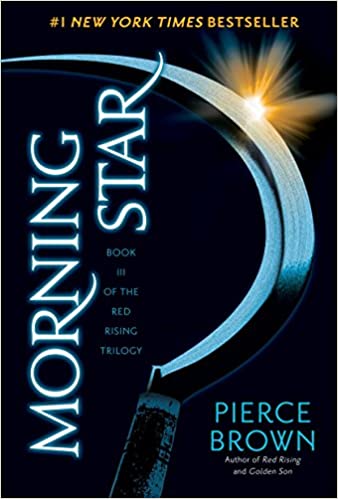
Morning Star by Pierce Brown

This review was originally written in August of 2016.

I finished reading Morning Star by Pierce Brown yesterday and that was easily one of the more satisfying conclusions to a trilogy I’ve had the pleasure of reading, though now I kind of wish there was more simply because I enjoyed the characters (and how they grew and evolved over the course of the series) and the story itself.
I don’t know if it’s just that it was predictable or if I had come to be so familiar with how the protagonist thought, but there was nothing at all surprising about the twist at the climax, and yet I still found the experience of reading through it to be thrilling.
Also, there’s something to be said for Brown somehow finding the ability to weave the phrase, “Bye Felicia,” into the narrative without seeming like a total jackass in doing so…especially in a trilogy that takes place more than a thousand years from now.
It was honestly refreshing to read a relatively near-future action science fiction series that wasn’t packed full of dystopian tropes and instead borrowed heavily from Greek, Roman, and even a bit of Norse mythology for the structuring of both the story itself and the society within which it transpired

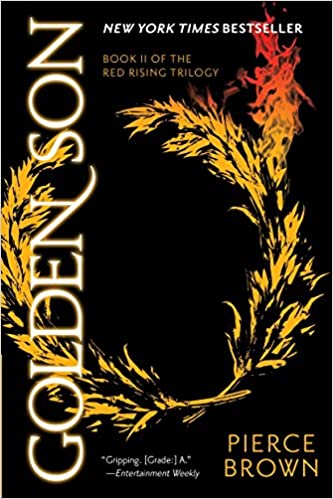
Golden Son by Pierce Brown

This review was originally written in June of 2016.

Surprisingly, this second installment in the Red Rising series is substantially better than the first.

Golden Son by Pierce Brown takes the two qualities I most enjoyed, the intensity and depth of character, from Red Rising and amplifies them both to unexpected levels.
I don’t know what I was expecting from the second book of the trilogy, but I certainly wasn’t anticipating the page-turning blend of action, drama, and utter despair that filled those pages…and I certainly didn’t expect the theme of betrayal to so seamlessly weave its way through the narrative from beginning to heartbreaking end.
What I do know is that I certainly need to pick up the third volume of the trilogy and discover where it goes from here.

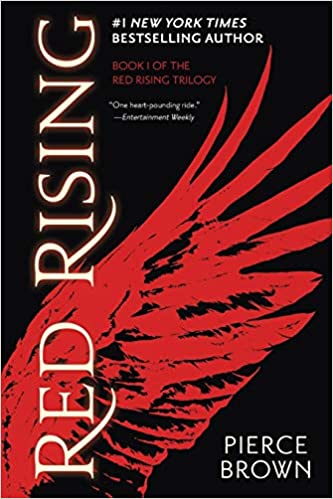
Red Rising by Pierce Brown

This review was originally written in April of 2016.

Pierce Brown’s Red Rising was a surprisingly good book, not necessarily because of the quality of the writing (which was good, just nothing outstanding) but because the story was compelling and original enough to feel like fresh ground.
It’s a fairly distant future science fiction novel, taking place on Mars, but with a solar system that has been thoroughly populated by the time the novel begins. The human population of Red Rising has been divided into very distinct castes, defined by biological and neurological differences that are both technological and evolutionary in nature…and that is at the root of the story.
Our protagonist is a “red” who works in deep tunnels below Mars, drilling and harvesting materials in exceedingly hazardous conditions for the noble purpose of terraforming the planet above. It’s only after his wife is hanged and he goes proudly to his own death that he finds nothing generations of his people had believed was true. The surface of Mars had been long terraformed and civilized as had essentially every planet or moon in our solar system.
He undergoes painful and extensive alterations of all sorts in order to pass for one of the ruling class for the purpose of exacting vengeance and righting the wrong that had been done to his people from within that upper class.
I’ve seen a number of people comparing this trilogy to The Hunger Games, which was one of the reasons I hadn’t bothered to read it until now. I didn’t care to read what I suspected to be a low-rent clone of a wildly successful series. Upon reading this book, I suspect any of those people comparing it to The Hunger Games haven’t read many other books, since the only similarities have to do with a corrupt and decadent ruling culture and a good deal of violence. There is more resemblance to Lord of the Flies and Ender’s Game than anything else, with a healthy dose of Roman (and a bit of Greek) mythology to set the stage.
I enjoyed this book enough that I plan to read the next two, and I think it’s got a fantastic degree of character development that makes it feel more three-dimensional than a lot of young adult fiction.

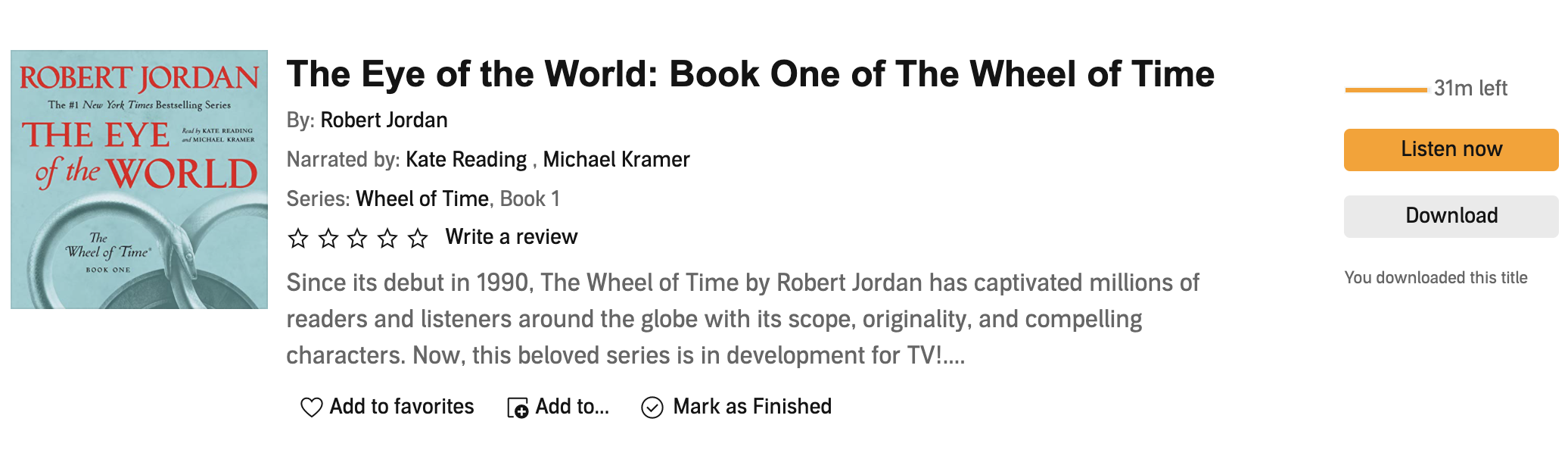
The Eye of the World by Robert Jordan Narrated by Michael Kramer & Kate Reading

Thirty years after its original publication, Robert Jordan’s The Eye of the World remains as timeless and captivating as it was when it first came out while I was still in my pre-teens. Following in the footsteps laid by previous epic fantasy series from authors like J.R.R. Tolkien, C.S. Lewis, and Terry Brooks, Jordan’s Wheel Of Time stands as a someday classic series of epic fantasy in its own right, though it does borrow elements from those earlier works.
That’s a petty complaint to level against Jordan’s books since his doing so was far less dramatic and obvious than Terry Brooks’s borrowing from Tolkien with major elements of The Sword of Shannara. Nothing we read is truly original and written in absolute isolation from the books and stories that inspired the author. It’s this same understanding that makes it easy for me to also enjoy Terry Goodkind’s series, The Sword of Truth, which transparently borrows some elements from The Wheel of Time as well as from those earlier epic fantasy series.
Following Rand and his friends from their humble but auspicious origins in Emond’s Field in the Two Rivers district to the horrific landscape of the Blight as they’re led by Moiraine and Lan is as exciting now as when I was a child, though I find myself relating more to characters I’d not related to as strongly when I was a younger reader. That is a sign of a great author indeed, that the novel can still appeal to readers (albeit differently) when they’re young men and when they’re adults in middle-age. This book (and the subsequent series) is a coming of age tale as much as it is a thoroughly engaging fantasy, exploring the nature of fate/destiny and the cyclic nature of civilization, society, and (within the series) time itself.
I’ve never read the concluding few novels of this series nor the prequel to The Eye of the World, and I thought it might be appropriate to listen through the audiobook recordings of the books I’ve already read, to catch myself up to where I need to be. The narration provided primarily by Michael Kramer and occasionally by Kate Reading (when Nynaeve is the focal point of the chapter) is immersive and successfully propels the story forward. It’s a different experience to hear this book in a different voice than the ones in my head.
Michael Kramer manages to breathe life into the characters of Rand al’Thor, Matrim Cauthon, and Perrin Aybara in the way they deserve. This is a relief, seeing as how he and Kate Reading are the narrators for at least the first five books of the series (those are the ones I’ve purchased from Audible so far).

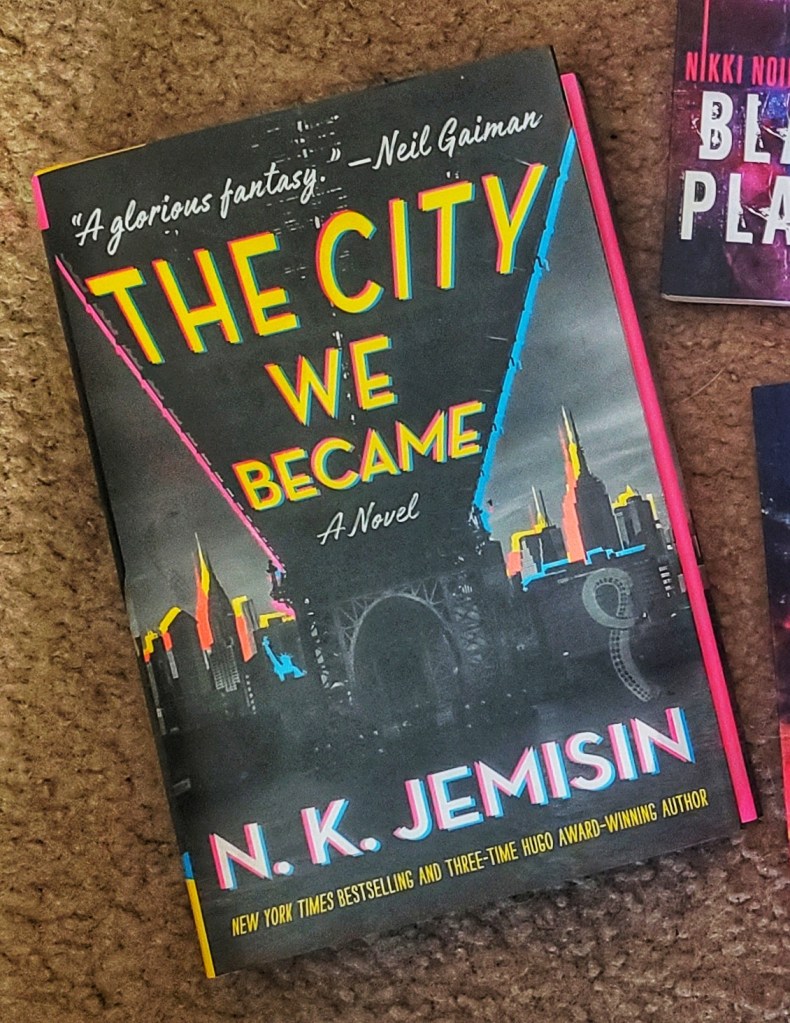
The City We Became by N.K. Jemisin

The City We Became is vastly different from the other books I’ve read by N.K. Jemisin. She manages to put the “urban” in urban fantasy in a way I’ve never seen from another author aside from maybe James Blish’s Cities In Flight (Okie) series. The urban fantasy tale is a huge departure from the straightforward fantasy I’d been accustomed to from Jemisin while adding a nice touch of cosmic horror into the mix.
Take a little bit of L. Frank Baum and a bit of Neil Gaiman and add a whole lot of the worldbuilding and myth creation fans of Jemisin are already familiar with, and you’ll end up with some idea of what The City We Became has in store for you. It’s as much a character study as a sweeping, grand fantasy tale…another thing fans of Jemisin should be expecting.
Jemisin fills this book to the brim with social commentary on a wide variety of topics from gentrification and art criticism to racism (overt and subtle) and mistrust of law enforcement. The six primary characters (representing the five boroughs as well as one individual representing the whole of New York City) take on lives of their own even as they come together and find their place in the synergy of a whole.
I will admit that I didn’t enjoy this book nearly as much as I’ve enjoyed the Inheritance and Broken Earth trilogies, but it’s only the first book of a series that I certainly still enjoyed enough to read what’s still to come.

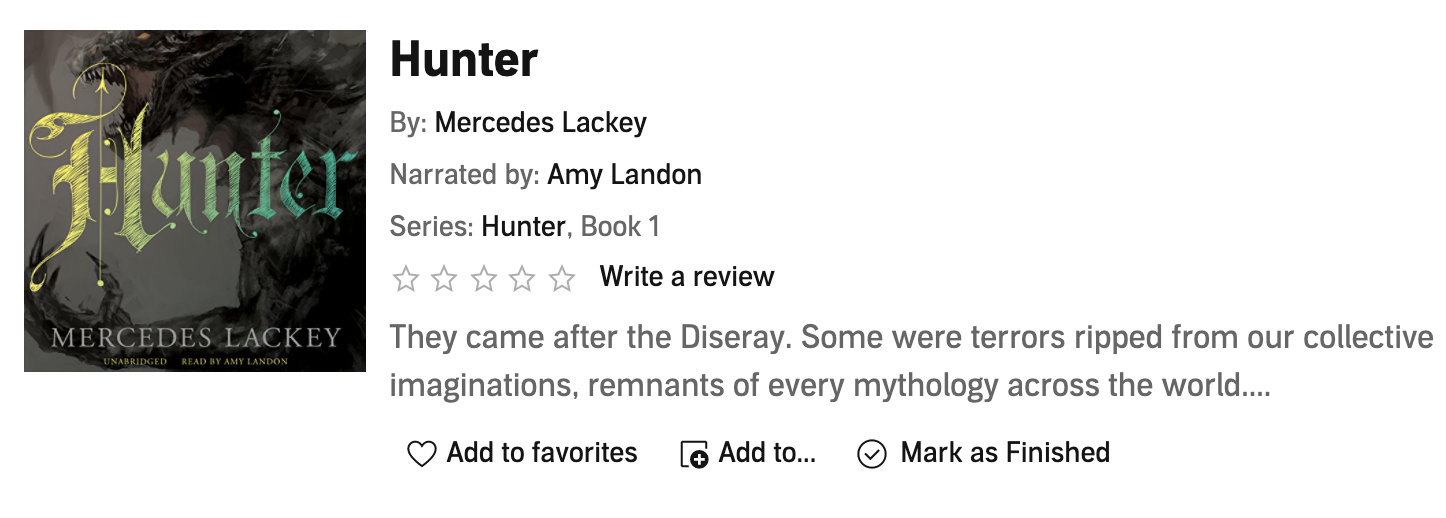
Hunter by Mercedes Lackey: Narrated by Amy Landon

Mercedes Lackey’s Hunter is the beginning of a trilogy that starts off feeling like it’s got a fair amount in common with a some of the more popular post-apocalyptic YA series; books written by Marie Lu, James Dashner, Suzanne Collins, Veronica Roth, and others. Though this novel does slip away from that feeling of being geared toward a young adult audience as it progresses, that feeling never quite dissipates altogether.

Lackey does manage to set herself apart from those other authors by deviating from the trend of dystopian science fiction and instead embedding within her post-apocalyptic America a dark fantasy environment that fans of her other books will recognize as being where she truly excels. My first experiences with Mercedes Lackey were thrilling, slow burn, dark fantasy standalone novels and series. She truly plays to her strengths with this first installment of the Hunter trilogy, and it pushes her into a whole different ballpark from those contemporary post-apocalyptic authors I’d mentioned previously.

We follow Joyeaux Charmand as she leaves the comfort and relative peace of her mountain enclave where she has trained to be a hunter, an individual capable of magic and the ability to summon “hounds” from another realm in order to combat a veritable plethora of monsters and creatures collectively referred to as “Othersiders” throughout the story. Borrowing from folklore from any and all cultures around the world, Lackey populates this version of America with creatures that may be familiar to some and unfamiliar to others (depending on your own cultural heritage or exposure to others). Joyeaux (Joy) is called to Apex, a massive, protected city on the East Coast where anyone with the skills to be a hunter are supposed to be sent for the purpose of training and employment by what is a strange military government.

It was after Joy arrived in Apex that I began to see strong correlations with The Hunger Games books, in that these hunters are treated as celebrities and forced to perform for cameras that are constantly monitoring them. That’s where the similarities disappear.

There is action, ample supernatural and fantasy elements, some horror, a bit of romance, a decent bit of intrigue and political thriller mixed into the narrative, and a great deal of character development. As an introduction to a trilogy, Lackey spends a great deal of time on the world-building, and she does an excellent job.

As I had picked this up as an audiobook, I feel it is worth noting that the narration captures Joy’s simpler perspective and relative (though not overwhelming) naiveté to a degree I found impressive. The voices are largely distinct and easily discernible as separate characters.

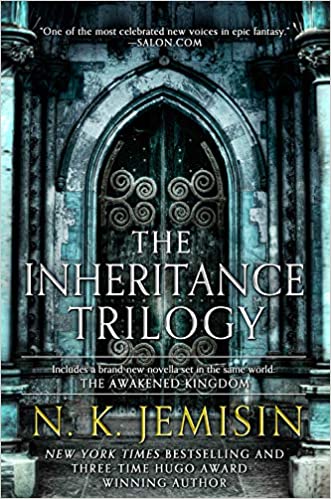
The Inheritance Trilogy by N.K. Jemisin

I’m copying over some reviews of titles I’d written up in 2018 and earlier, just in case these titles are new for other people.

The Inheritance Trilogy by N.K. Jemisin was one of the most interesting and original fantasy series I’ve had the pleasure of reading, and I’ve read a great many fantasy series over the years. These books have more in common with Greek, Roman, and Norse mythology than with anything written by Tolkien.
This author manages to do something that few others succeed in doing, weaving philosophy and political theory into the narrative without it ever feeling heavy-handed or taking away from the story.
Each of the three novels and the additional novella included in this anthology are very different tales, fully developing entirely different central characters with perspectives that never feel like they run together, while gradually fleshing out secondary characters that appear and reappear through all four pieces until the cast of characters all feel more like three dimensional beings than simply set pieces or plot devices.
The theology incorporated into the universe created by Jemisin is similar to one I had tossed around as a background for a book of my own, and I don’t think I could do it better.

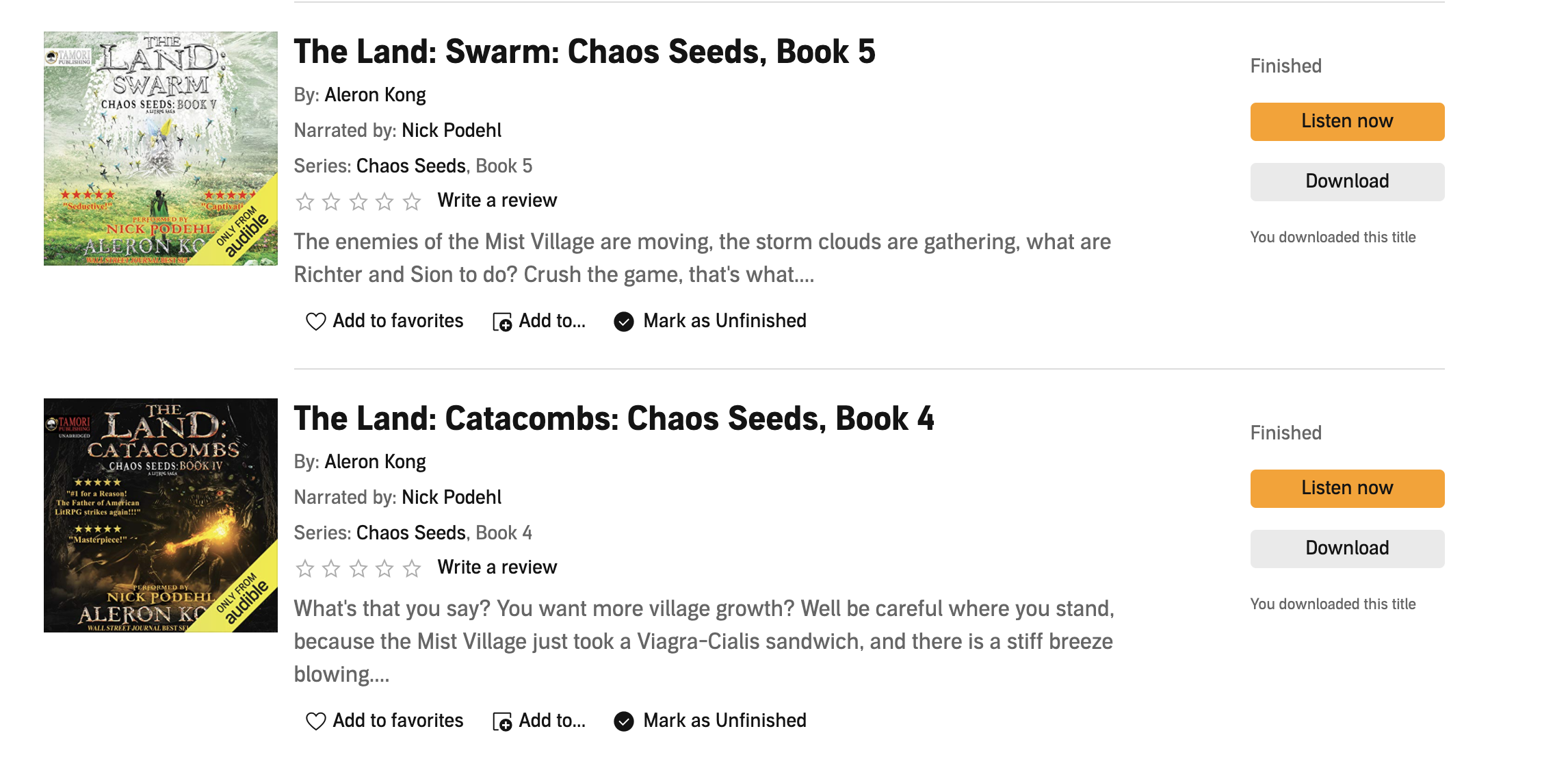
The Land: Swarm: Chaos Seeds Book V by Aleron Kong

This installment is primarily focused on Richter deciding to be more actively involved in the day-to-day life of the mist village. This book is largely dedicated to self-improvement and the development of skills and abilities. There are some major events included, just the same, and the battle that concludes the story is intense and well-written.
As with all of the other books in the series, I’ve listened to this on Audible. The narration is terrific and it flows perfectly with the story being shared. The first three books have been my favorites in the series, but this book and the fourth are still well-worth listening to or reading.

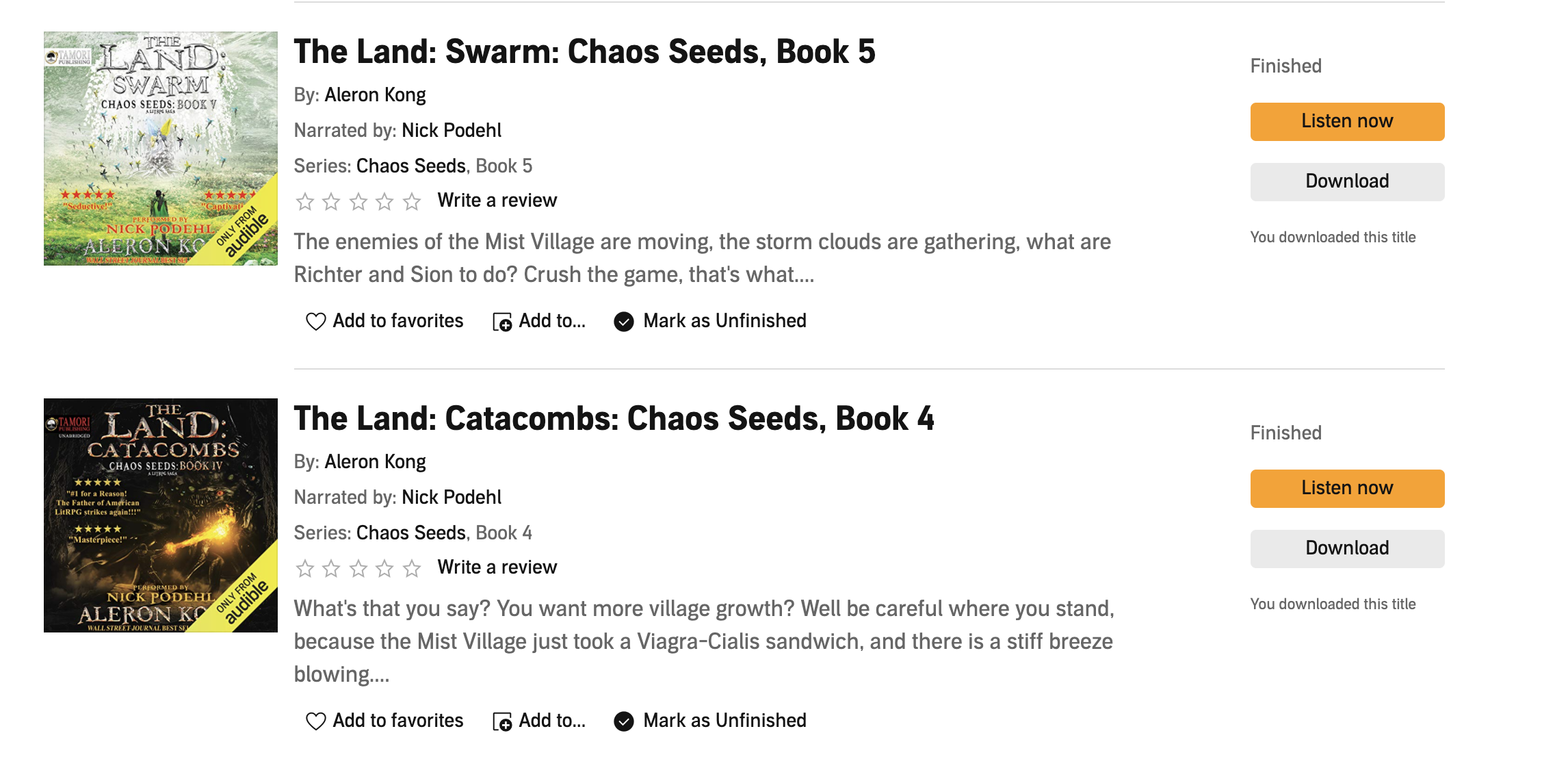
The Land: Catacombs: Chaos Seeds Book IV by Aleron Kong

With a title of Catacombs, I suspected that we would be exploring deeper into the tunnels beyond the Great Seal. There are definitely tunnels and subterranean adventures, but not the ones I went into this anticipating. With the pace we’re addressing some of the things I expected to see explored further, it seems like we’ll never get there in four more volumes in the series.
There’s nothing disappointing about the book or the narration for the audiobook, but I’m starting to worry that we’ll never see some of the adventures I’ve been waiting to witness.
I’m currently listening to the fifth audiobook in the series and I will absolutely still be picking up the remaining three books of this series.