On November 26th of 2020, I released the short story, Yeshua and Adonai.
Meant to supplement some of my other work by laying out the groundwork for some of the underlying mythology within books like You Will Be Consumed and Beneath the Unspoiled Wilderness.
A father shares a story with his young children, one that had been shared with him by his own grandfather. A story of Yeshua as both a boy and a young man, of how he discovered an unexpected and unwanted destiny placed on his shoulders by Adonai. The short story, Yeshua and Adonai, introduces readers to the wider literary universe of The Hungering Void by retelling the tale of Jesus in a horrifying new light.
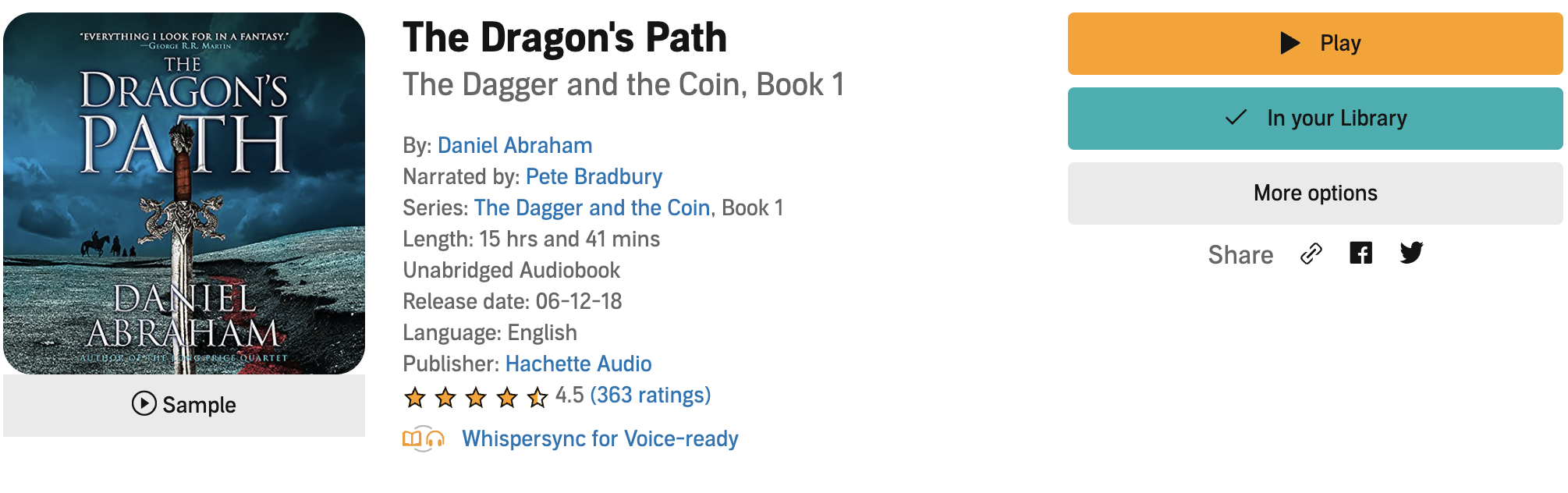
It’s not uncommon to encounter political machinations and glimpses of the underlying bureaucratic structure of the world in fantasy novels. Along with the history of the realms and people in question, understanding something of the politics of those fictional worlds is an important element in making them feel like real places. Daniel Abraham has taken this world-building further than most authors by focusing a great deal of his storytelling attention on the facets of finance and trade within the world of The Dragon’s Path. What’s superbly surprising about Abraham’s novel is how interesting he manages to make the details of this commerce. Of course, it isn’t all banking and trade relations. Abraham has packed this first novel of The Dagger and the Coin series with conflict (both small and large scale), gods and myth, political intrigue, and plenty of witty dialogue. Cithrin is a half-breed orphan raised as a ward of the Medean banking house of Vanai, and she carefully studied under the tutelage of Magister Imaniel. As the armies of Antea approach the city walls, the only way to keep the resources of the bank safe from plunder is to send them away from the city. Cithrin is tasked with escorting the bank’s property to safety as part of a caravan headed by the tragic hero, Marcus Wester. As it happens, Cithrin isn’t the only member of Wester’s party who isn’t who they seem. Marcus has replaced some of his complement with a troupe of actors led by Master Kit, the performers playing the role of soldiers and guards. But Master Kit is more than he seems as well. A past he’d thought he escaped will come back to haunt him again before the tale concludes. In the middle of everything is Sir Geder Palliako, a bookish and weak man who finds himself tossed about by fate and the machinations of those above him in the royal court of Antea. Struggling against forces he only barely recognizes as nudging him along, Geder becomes the key to leading the world down a path from which there will be no turning back. Abrahamson packs this novel with a diverse cast of characters, both sympathetic and flawed in equal measure, and he sends them on a series of adventures as captivating as they are well-thought-out. It would be virtually impossible to reach the end of The Dragon’s Path without wanting to see where this tale will take us. Pete Bradbury’s narration spectacularly breathes life into the vast cast of characters populating this story, setting them apart from one another without any apparent difficulty. His voice propels the listener through the circuitous web of the narrative, leading us to the end far more quickly than we want to arrive.
As much a collection of world-building elements as a story, The Raven Tower contains the same depth of political intrigue, examination of social structures, and mythological explorations one should expect if they’ve read other books from Ann Leckie. Much of the narrative is taken up by historical musings and the interactions of various gods, in particular The Strength and Patience of the Hill and The Myriad, two ancient gods who watched as humanity evolved and developed cultures and language. Relayed to us by that ancient god, The Strength and Patience of the Hill, The Raven Tower is the story of Eolo, a soldier and the aide to Mawat, the next in line to serve as Lease to the Raven, God of Vastai. Upon being called back home from the conflict at the border, Mawat discovers that his father, the previous Lease, has disappeared when he should have sacrificed himself upon the death of the most recent incarnation of the Raven. In his father’s place, Mawat’s uncle is sitting on the bench belonging to the Lease, proclaiming himself as such, in defiance of both custom and Mawat’s wishes. While Mawat mourns the father he believes to be dead and seethes with anger at his uncle’s presumptuousness and betrayal, Eolo sets out to solve the mystery of how any of this could have transpired. The truth, when revealed, might be too costly for those involved and far too dangerous for the kingdom of Iraden. As interesting as the story of court intrigue, murder, and betrayal happens to be, I found myself wanting to hear more about the gods, their machinations, and the history of this world the deeper I delved into the story. Leckie has a knack for creating worlds that beg for the reader’s attention, drawing us in and making us crave more. The Ancillary books had a trilogy that allowed for greater satisfaction of this need, and I’m hoping that this won’t be the last time we visit the world she’s created with The Raven Tower. The casual acceptance of Eolo as a trans-masculine character was a nice touch, without ever seeming shoehorned in or forced. This should come as no surprise to anyone who read the Imperial Radch trilogy, in which it was obvious that Leckie has a knack for exploring non-binary identities and cultures with the same deft hand that Ursula K. Le Guin brought to The Left Hand of Darkness. There are sure to be readers who dismiss this book because of that. But those are the same people who proclaim that they don’t want politics in their fantasy or science fiction, so it’s a simple thing to dismiss their opinions as uninformed, historically ignorant, and irrelevant. Adjoa Andoh’s narration captures a wide breadth of characters and accents with seeming ease, though there were times when certain accents initially seemed a bit silly or cartoonish at first. As the audiobook continues, those accents seem less pronounced as the listener adjusts to hearing them and becomes acclimated to the environment cultivated within the narration. I certainly prefer this over the alternative, where every character sounds approximately the same, and there’s no variation where cultural differences should exist.
The Bleed: Rupture is the beginning of something great, for sure. If the combined efforts of Mark Tufo, Chris Philbrook, and the always fantastic David Moody maintain this same sort of quality moving forward, this series will be spectacular. The three authors involved in this project successfully combine body horror, fantasy, and science fiction into something greater than the sum of the individual components. The individual stories meld together, creating a sweeping, epic tale of a multiverse in jeopardy as a race of gods and their halfbreed offspring fight a battle of attrition on one world after another against an unstoppable, all-consuming enemy, The Bleed. We get to experience the disastrous consequences of two gods with conflicting goals in modern-day London as Jenny struggles to come to terms with her heritage. We join the members of a lunar colony as their settlement faces catastrophic collapse. The small handful of survivors learn that there are secrets on the moon no one could have expected. And finally, we follow Arridon and Thistle, two half-gods, as their world approaches a horrifying end at the hands of a monstrous force that seeks to devour everything living and dead in absolute domination. As the stories tie together at the end in the most unexpected ways, I couldn’t help but want to move immediately on to the second volume in the series. The narration provided by Scott Aiello for the audiobook edition is fantastic. He tackles the cast of characters and their various accents better than many audiobook narrators I’ve heard.
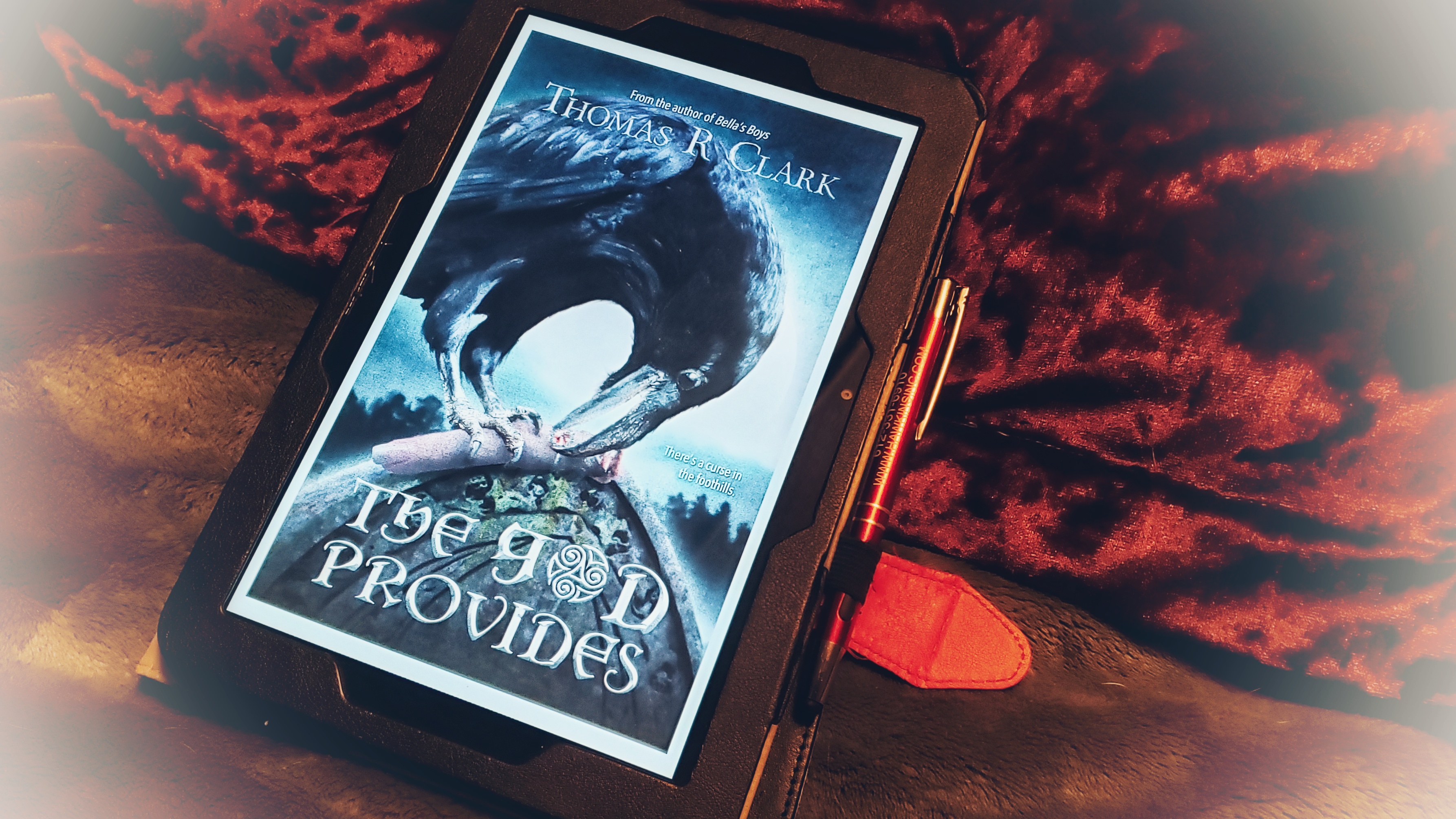
The newest book from Thomas R. Clark hits the ground running and never lets up. Beginning with a series of gruesome murders, The God Provides spins the reader a grimly beautiful tale rooted in old-world folklore and modern monster mythology. The blend of fantasy and horror is so perfectly combined as to produce something that transcends both categorizations. What you end up with is a narrative that feels like the modern-day retelling of a forgotten epic masterpiece. At the same time, Clark manages to craft a thrilling tale that feels like something fresh and new that only now sees the light of day. Delving into the McEntire family’s history–which isn’t at all what it might initially seem–we discover a community in rural upstate New York where ancient gods, witches, werewolves, fae, and other supernatural creatures thrive. All of this in plain view of any who might pass through the region…assuming they aren’t the sacrifices provided by the titular god. Take one part The Wicker Man (the original, not the god awful remake) and Midsommar, another part The Howling, and toss in some Macbeth and Beowulf for flavor, and you’ll have a recipe that might bring you within spitting distance of this story. You’ll also want to borrow a smidge of the considerable literary prowess Clark brings to the table. If splatter-folk is a genre…this is the introduction to that world.



 Domus Necrophagous