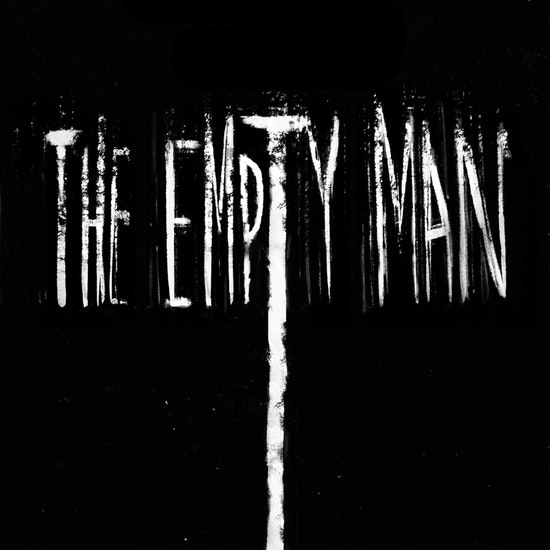
The Empty Man (2020)

I’ll start this off by saying that I’ve never read the Boom! Studios graphic novels by Cullen Bunn and Vanesa R. Del Rey that this movie was adapted from. Having seen this movie, I might need to change that…but I went into the movie blind. I’d seen a couple of trailers, but those serve as minimal preparation for what this actually is.

It took me a short while to build up the motivation to sit down and watch this one, in large part due to the more than two-hour runtime. It isn’t always easy to find that much free time to dedicate solely to watching a movie. I wish I’d found the time to do so much sooner. The trailers I’d seen led me to expect something potentially unoriginal. I suspected I’d be in for an amalgam of the movies The Bye Bye Man and Wes Craven’s (in my opinion, underrated) My Soul To Take. This was not at all the case.

What we have with The Empty Man is a highly original horror film that succeeds in providing an exploration of the nature of reality, memory, and cults within a deeply unsettling, atmospheric narrative. This is one of those stories that will stick with you long after the final credits begin rolling. It’s challenging to discuss anything about this movie without giving away elements that are best left a surprise for those coming into the experience fresh, as I did.

The movie begins with a group of four hikers ascending the Himalayan mountains of Bhutan in 1995. With a storm approaching, they seek shelter but discover something terrible instead. After this lengthy introduction to the supernatural/extradimensional nightmare seeking to bridge its way to our world, we experience a time jump to the modern-day, where a traumatized former cop finds himself investigating the apparent disappearance of a teenage girl. The mystery revolving around that disappearance leads him down a path of confusion, occult intrigue, and death. The exploration of a sinister cult intrinsically connected to the events at the beginning of the story calls into question the very nature of the reality we perceive and the reliability of memory.

To say that this was a heavy piece of fiction is to offer up a bit of an understatement. There’s so much densely packed into this movie that it’s probably worth watching two or three times.
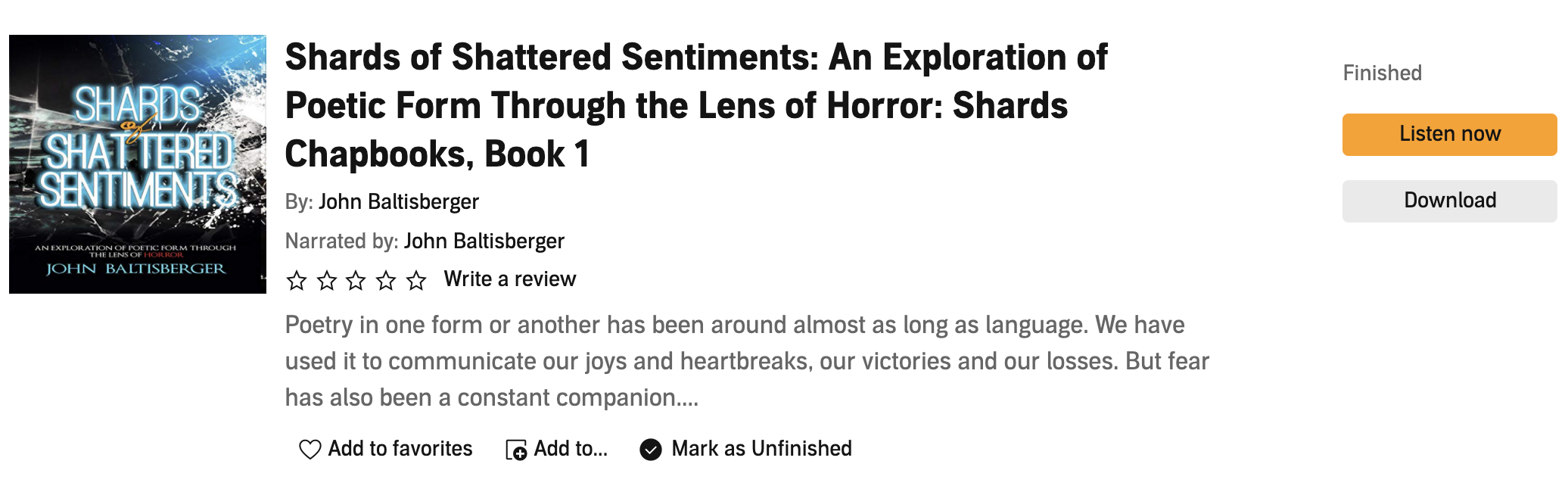
Shards of Shattered Sentiments by John Baltisberger

This is the second collection of assorted poetry from John Baltisberger I’ve had the pleasure of experiencing. This time, it was in audiobook format rather than chapbook, as In Service of Slaughter had been.
There’s a good variety for anyone who enjoys horror and poetry in combination, though it is a bit on the short side, being adapted from a chapbook.
Baltisberger performs his own narration, which makes the experience more personal and intimate than I suspect it would have been from a third-party narrator.
“Nameless Leviathan” stands out for the simple fact that he layers his voice multiple times to create an effect similar to the verse/response effect one might experience in a church or temple. It creates a more chant-like quality rather than feeling like a straightforward piece of poetry, and I enjoyed that a great deal.
The limerick included is entertaining, for being so gruesome…but limericks, by design, are always amusing in a strange way…something to do with the rhythm and sing-song quality of the style.

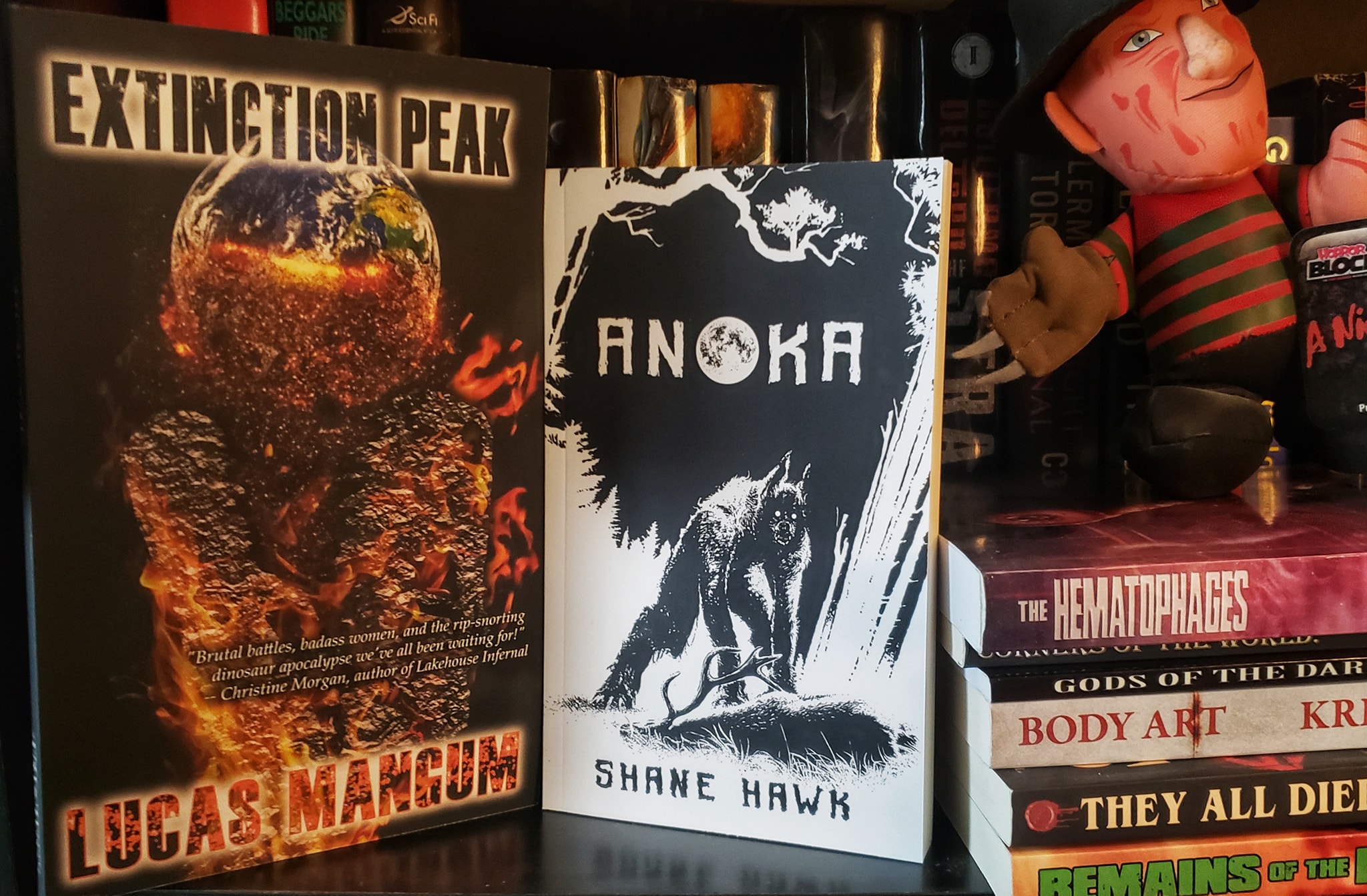
Anoka by Shane Hawk

Shane Hawk’s Anoka is a short but potent collection of short stories that range in length from flash fiction like “Soilborne” and “Orange” to longer pieces like “Wounded.” Touching on a range of topics from the alcoholism endemic within reservation communities–as those familiar with indigenous culture will already be aware of–to the epidemic of missing girls and women from tribal communities…and mingling those real-life concerns with supernatural and sometimes downright surreal narrative elements.
This fictionalized version of Anoka, MN would make for a truly horrifying place to live, the implication being that horror lurks not far beneath the surface of everything there.
“Wounded” and “Imitate” are perhaps my two favorite stories in this collection, and there are some similarities between the two. The stories in question focus on protagonists who are trying to make amends for the choices they’ve made earlier in their lives only to have terrifying circumstances arise. There’s a sort of morality play involved, reminding you–as the reader– that no amount of trying to make your life better will necessarily relieve you from the guilt of your past or the influences of your earlier decisions and mistakes. It’s a harsh reality, but it is reality just the same.
I’m looking forward to seeing more from Shane Hawk down the line.

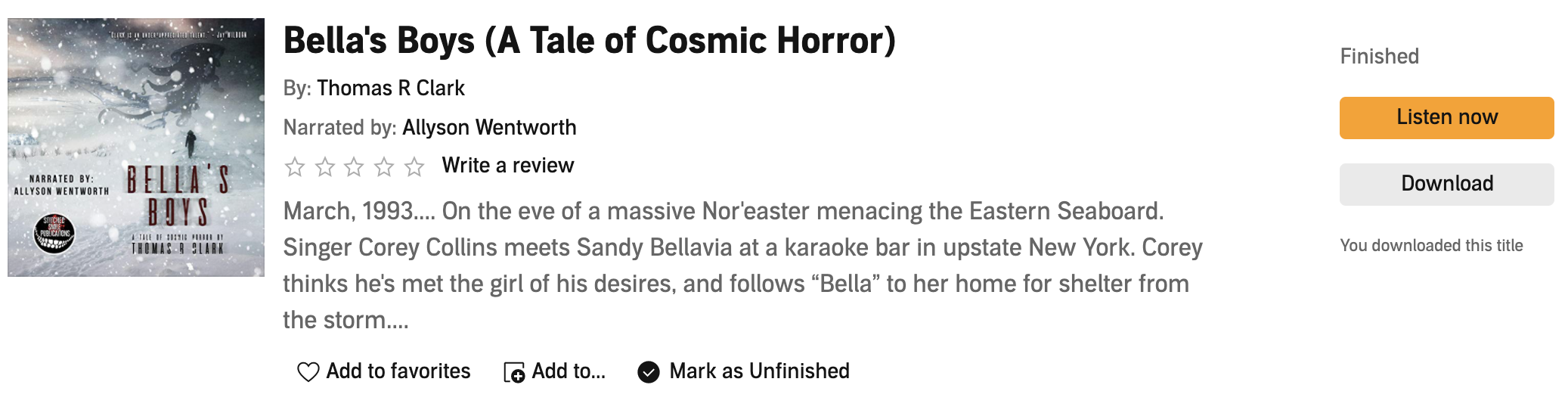
Bella’s Boys by Thomas R. Clark

Thomas R. Clark has crafted an interesting tale with Bella’s Boys. It’s a little bit American Psycho, a larger bit of cosmic horror, and a lot of splatterpunk erotica.
The reason I mention the novel from Bret Easton Ellis isn’t only because of the fixation on music and the almost overwhelming attention to detail associated with said music throughout the novella–but that does have something to do with it–it’s because this novella captures something of the 1990s dive bar, metalhead scene in the same way American Psycho satirized the white-collar, predatory capitalist world of the 1980s. At the same time, Bella’s Boys certainly depicts graphic acts of sex and violence (often simultaneously) with the same unrelenting and unfiltered lack of concern so many readers enjoyed from Ellis’s novel.
The afterward, providing a glimpse into the author’s life and the real-life snowstorm that inspired the blizzard taking place within the novella, was a nice touch. It’s fun and entertaining to see just how much of the story was pulled from a piece of Clark’s own life. I would certainly hope none of the people trapped in the house they were trapped in during the real blizzard ended up being converted into conscious bits of fecal matter…but maybe the truth is stranger than fiction?
The short story, Prey for Change, attached to the end is a tantalizing glimpse of a world that melds Viking society, werewolf mythology, and something reminiscent of the army of the dead from Game of Thrones. I would read more of that story, for sure.
Since I listened to the audiobook edition of Bella’s Boys, a comment on the narration is in order. It’s almost unfortunate that the sole weakness with this edition of the book is the quality of Allyson Wentworth’s narration. This isn’t to say the narrator does a bad job of it, but there was a certain flatness to elements that seemed like they merited a bit more passion or at least spirited delivery. From what I can see, she has only narrated a couple of books thus far, and it could be due to this being the beginning of her career as an audiobook narrator. Please don’t let my personal opinion on the narration dissuade you from checking out the book in whatever format most appeals to you. I sincerely doubt even my favorite audiobook narrators were at the apex of their craft when they started.

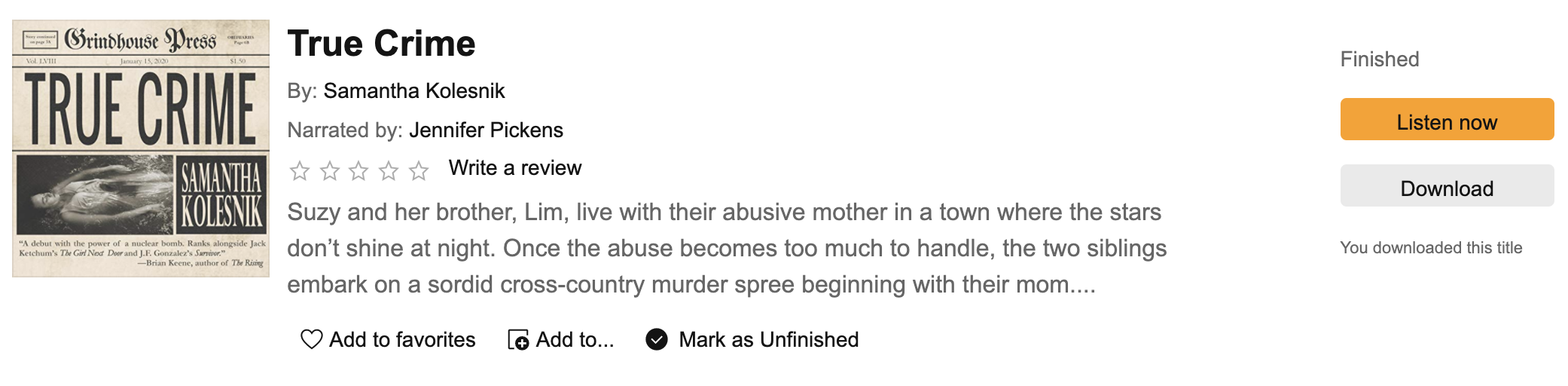
True Crime by Samantha Kolesnik

Samantha Kolesnik’s True Crime is a gritty deep dive into an abusive household and the horrible consequences of that abuse. It’s all the more awful for the plausibility of it.
Suzy’s only escape from the horrific emotional, physical, and sexual abuse from her mother–and boyfriend(s)–is reading True Crime magazines that she’s fixated on. Her only allies in the cruel childhood she’s experienced are her older brother, the emotionally detached Lim, and the unseen girl, Alice, held captive in the basement by Suzy’s mother, speaking to Suzy only through the heat registers. Little does she know that she and her older brother, Lim, are soon to create their own story befitting her favorite magazine…as she smashes an ashtray into her monstrous mother’s head…and that is only the beginning.
As Suzy evades justice and Lim winds up in prison for the murders no one imagines Suzy could have been involved with, we find ourselves wondering if she can be rehabilitated with a second chance and a clean slate.
The animal freakshow scene was deeply upsetting and made me want to attack the spectators as well, and the later scene where Suzy discovers the dogs made me sad too. Acts of cruelty and violence against animals do more to get under my skin than the same sort of violence perpetrated against people. It seems that Suzy and I have that in common.
Jennifer Pickens expertly narrates the audiobook edition of the story, capturing the equal measures of naivete and cruelty of Suzy’s first-person narrative.

I grew up in an abusive household in a rural region. This story hits close to home for anyone with that sort of background. While it was my father, rather than my mother, who levied the abuse, it doesn’t change much. That the abuse from my father was physical rather than sexual isn’t much of a difference. The sexual abuse, instead, came from a slightly older girl who lived next door and who saw a six or seven year old boy as a suitable way to learn about the differences between boys and girls. I wanted to include a little warning, in case anyone is triggered by these sorts of things.

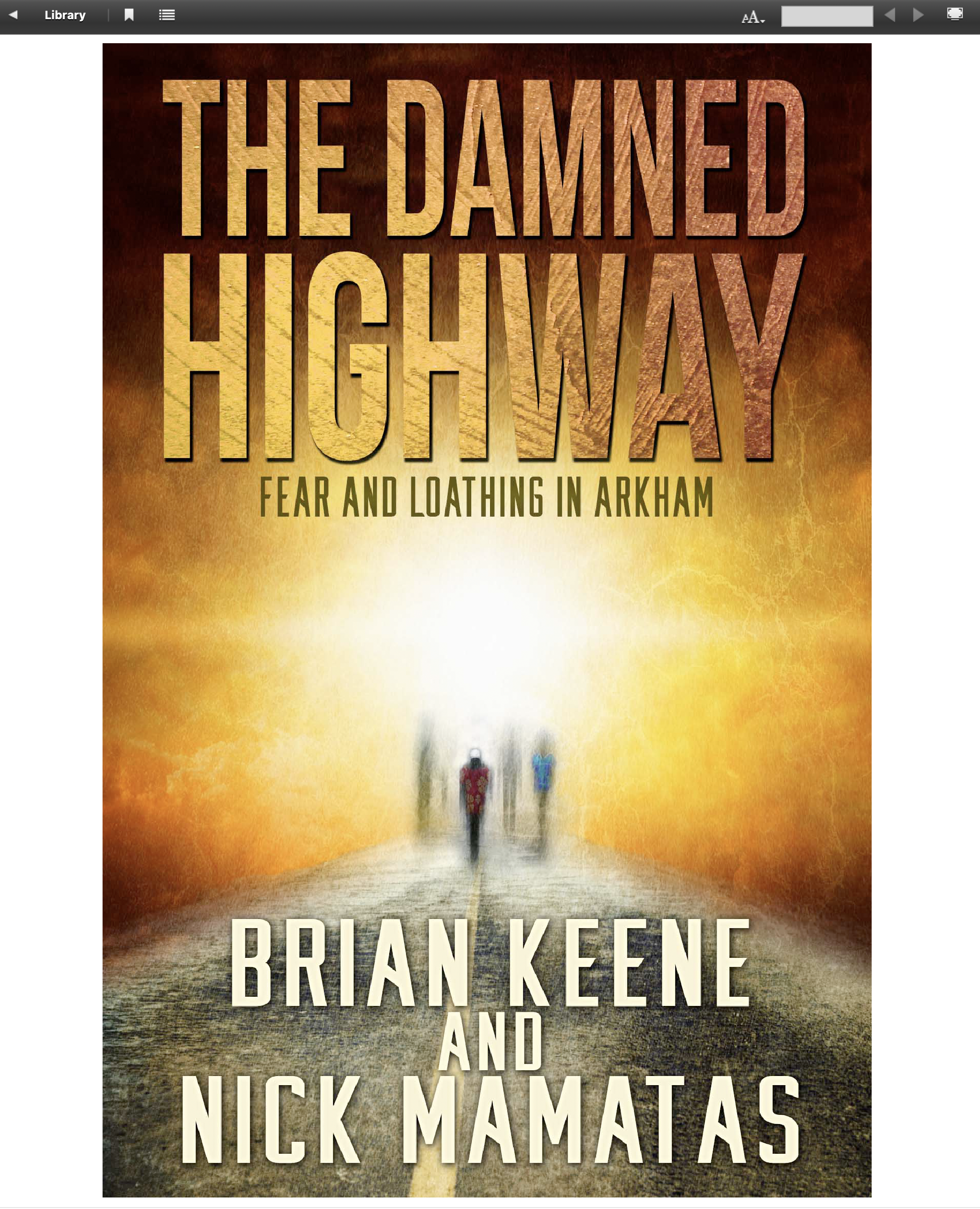
The Damned Highway: Fear and Loathing in Arkham by Brian Keene & Nick Mamatas

Brian Keene and Nick Mamatas answer a question no one ever thought to ask with The Damned Highway: Fear and Loathing in Arkham. What if Hunter S. Thompson, instead of joining the campaign trail during the 1972 presidential primaries, traveled to the fictional town of Arkham, MA, where he experienced the horrors H.P. Lovecraft described in his writing?
I’m honestly a bit sad that I didn’t know about this book when it was originally released ten years ago. The cover art for that edition is definitely superior and so perfectly captures the blend of cosmic horror and gonzo journalism one is destined to find if they crack the spine and open this book. When I say they’ve perfectly captured this blend of otherwise disparate things, I’m not joking. The Thompson pastiche doesn’t come across as being satirical or heavy-handed. As someone who’s read essentially everything Thompson had published, the style is unmistakable…and these two authors nailed it, including the unrelenting disdain for Nixon. I’ve never read any other work from Mamatas, though I’ve always sort of intended to (it just falls by the wayside). but I’ve enjoyed a good number of Keene’s books in the past, and nothing from his other work mimicked the style and texture of another author in this way.
Feeling as if he’s going to be crushed under the weight of both snow and an endless barrage of unwanted fan letters, our eminently unreliable narrator determines that he needs to escape from his Colorado compound. He can’t go West. That’s where all of this awfulness began. Instead, he chooses to go all the way in the opposite direction. Looking at the map on the bus station wall, he picks Arkham as his destination. A short while later, he’s waiting for the bus to arrive as an ethereal tentacle caresses his leg….and you can sort of guess where it goes from there.
The biggest difference between this fictionalized version of Hunter S. Thompson and the traditional Lovecraft narrators is the capacity to take in stride things that should drive any sane man mad. The moral of the story is that when you’re never quite sure that a thing you’re seeing isn’t just another hallucinatory episode brought on by the surplus of illicit substances you’ve carried with you, it’s far easier to cope with unearthly horrors. In that sense, it could be argued that there would be no better guide into the realm of eldritch horrors. It could be argued that a man with Thompson’s psychology is uniquely suited to document this descent into the unknown.
This is an odd book in so many ways, but it’s equal parts amusing and horrifying; it’s disturbing in both its depiction of cosmic horrors and the antisocial, drug-addled mind of our protagonist.

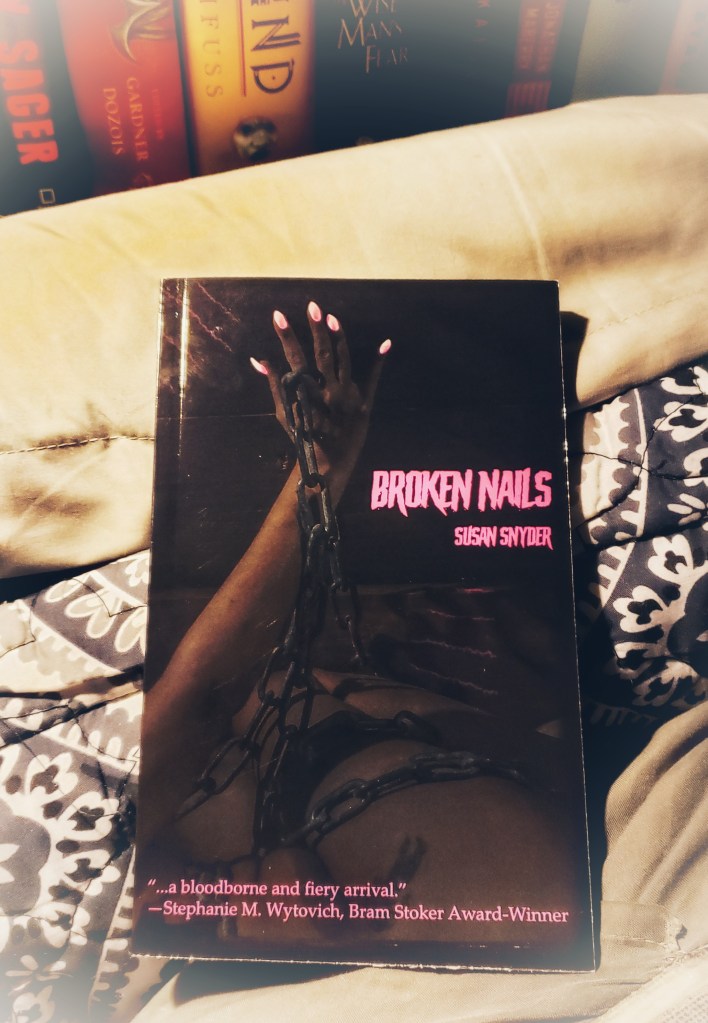
Broken Nails by Susan Snyder

The first thing I will say about Susan Snyder’s Broken Nails is that it is far too short. You’re reading–and often re-reading–the poems, getting drawn into the almost nightmarish world she’s assembling with her words…and then it’s the end.
It’s over.
You’re not ready for it to be over just yet.
As painful and raw as the experience was, you sort of want to continue exploring Susan’s interior. She’s ripped herself open for you and left herself exposed, but then it stops.
This poetry collection is separated into three sections, each with a certain overarching theme. The second section, Reflection, was my personal favorite. It was also the most horrific in a number of ways. It’s sincerely a little bit painful as you allow the poet to paint you a portrait of a life that’s included no small amount of suffering.
This is not poetry for those who are looking for flowery nonsense. This is poetry that examines topics like murder, sexual assault, suicide, and Satanism…and if you’re interested in that, dive right in.

Freaky (2020)

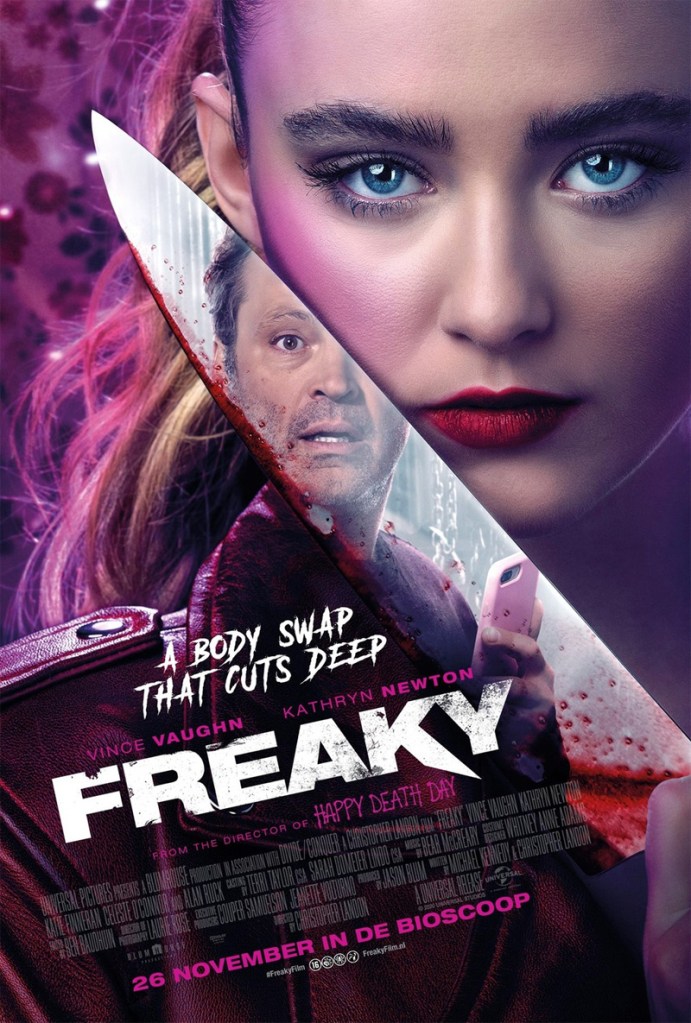
Freaky succeeds in being the perfect response to the Wheel of Fortune before-and-after puzzle, “Freaky Friday the 13th.” My personal favorite before-and-after remains my brother’s “Zyklon Bea Arthur,” but that would make for a far less interesting movie when you think about it. That’s neither here nor there.
If you enjoyed Happy Death Day, The Hunt, and other Blumhouse productions with a horror/comedy bent…there’s nothing disappointing about this one. A mousy, grieving high-school girl swaps bodies with a notorious local serial killer after he fails to kill her with an ancient sacrificial dagger. I mean, what could be wrong about that?
In a strange sense, it’s a coming-of-age tale about mourning and family…only with self-aware stereotypes and meta commentary on the usual slasher tropes. There are some interesting and gruesome kills throughout the movie, beginning with a play on my favorite kill from a slasher movie prior to this one, which was the wine bottle scene from Sorority Row (the 2009 remake of 1982’s House On Sorority Row).
Vince Vaugh was spectacular as both the killer and as the high-school girl trapped in an adult man’s body. Seriously, it’s the best performance I’ve seen from him. Kathryn Newton was pretty impressive as well, transitioning from being a virtually invisible teenage girl to being a bloodthirsty murderer in a young woman’s body.
As much as I enjoyed this one, I will say that it doesn’t tread any new ground and there’s nothing particularly surprising about it (beyond the quality of the performances and the graphic nature of some of the kills). It’s a fun movie for the sake of being a fun movie.

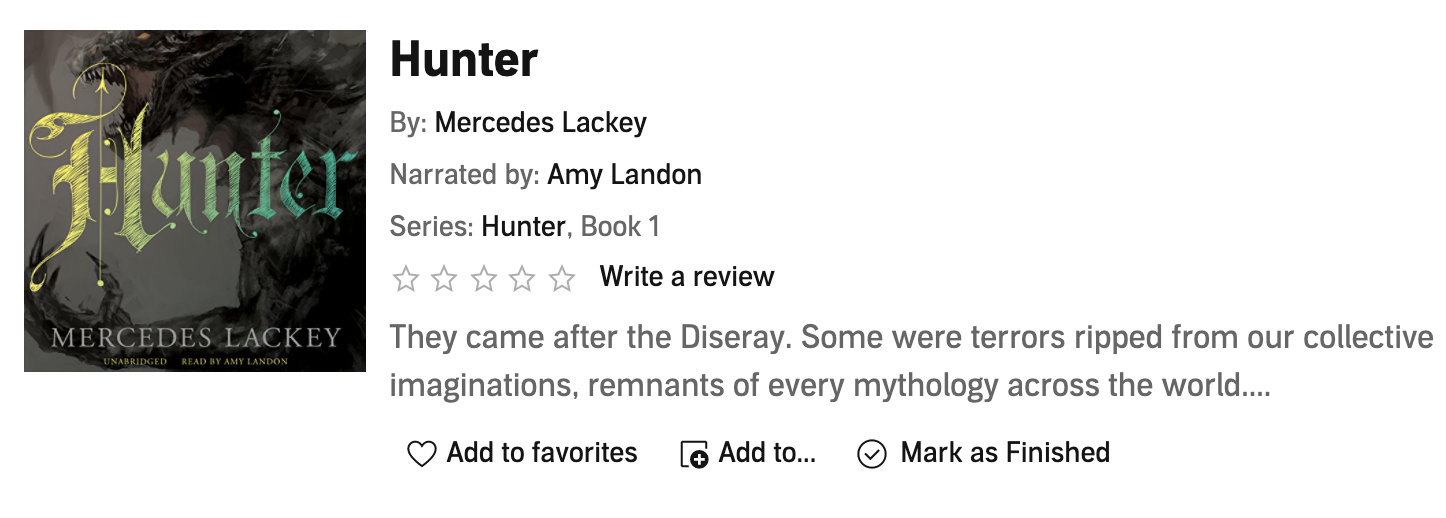
Hunter by Mercedes Lackey: Narrated by Amy Landon

Mercedes Lackey’s Hunter is the beginning of a trilogy that starts off feeling like it’s got a fair amount in common with a some of the more popular post-apocalyptic YA series; books written by Marie Lu, James Dashner, Suzanne Collins, Veronica Roth, and others. Though this novel does slip away from that feeling of being geared toward a young adult audience as it progresses, that feeling never quite dissipates altogether.

Lackey does manage to set herself apart from those other authors by deviating from the trend of dystopian science fiction and instead embedding within her post-apocalyptic America a dark fantasy environment that fans of her other books will recognize as being where she truly excels. My first experiences with Mercedes Lackey were thrilling, slow burn, dark fantasy standalone novels and series. She truly plays to her strengths with this first installment of the Hunter trilogy, and it pushes her into a whole different ballpark from those contemporary post-apocalyptic authors I’d mentioned previously.

We follow Joyeaux Charmand as she leaves the comfort and relative peace of her mountain enclave where she has trained to be a hunter, an individual capable of magic and the ability to summon “hounds” from another realm in order to combat a veritable plethora of monsters and creatures collectively referred to as “Othersiders” throughout the story. Borrowing from folklore from any and all cultures around the world, Lackey populates this version of America with creatures that may be familiar to some and unfamiliar to others (depending on your own cultural heritage or exposure to others). Joyeaux (Joy) is called to Apex, a massive, protected city on the East Coast where anyone with the skills to be a hunter are supposed to be sent for the purpose of training and employment by what is a strange military government.

It was after Joy arrived in Apex that I began to see strong correlations with The Hunger Games books, in that these hunters are treated as celebrities and forced to perform for cameras that are constantly monitoring them. That’s where the similarities disappear.

There is action, ample supernatural and fantasy elements, some horror, a bit of romance, a decent bit of intrigue and political thriller mixed into the narrative, and a great deal of character development. As an introduction to a trilogy, Lackey spends a great deal of time on the world-building, and she does an excellent job.

As I had picked this up as an audiobook, I feel it is worth noting that the narration captures Joy’s simpler perspective and relative (though not overwhelming) naiveté to a degree I found impressive. The voices are largely distinct and easily discernible as separate characters.

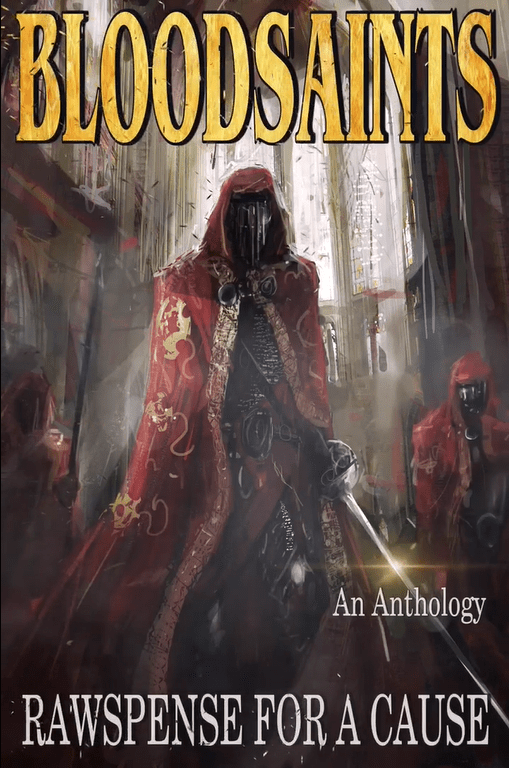
Bloodsaints: Rawspense for a Cause

A good number of months ago, a fellow author and friend of mine discussed with me the possibility of getting a handful of horror authors together for the purpose of assembling an anthology with the express purpose of raising money for COVID-19 relief.

We’ve all suffered during this pandemic in various ways, large and small…some far more than others. We wanted to do something that might help in some small way.

After a couple more months, this friend of mine settled on UNICEF as the charity we’d donate the proceeds to, as the most likely to provide a real, tangible benefit.

A couple of months later, he began working with Becky Narron of Terror Tract Publishing LLC for cover design and the actual publication of the anthology.

And here we are today, with the release hitting the Kindle store only a little over half a year after the first conversations began taking place.

Pick up a copy. Enjoy the stories. Find comfort in knowing that your purchase helps to support a worthy cause.