Horrorstor by Grady Hendrix, Narrated by Tai Sammons & Bronson Pinchot

It’s not a popular opinion within the horror community, but I have not been a fan of Grady Hendrix. His writing is top-tier, and the concepts behind his work have always been compelling, but there’s something in the execution that’s never worked for me in the past. I’ve seen the rave reviews of books like My Best Friend’s Exorcism and The Final Girl Support Group, and I’ve gone into them hopeful…only to feel disappointed. I wanted to like them. Something about the characters and the pacing always left the stories lacking.

And then I took a chance on Horrorstor.

This was what I was hoping to find. The other Hendrix books didn’t do it for me, but this one contained the perfect blend of wry humor and sincere horror. The characters didn’t irritate me, the pacing felt simultaneously practiced and natural, and the story itself was fascinating.

If you’ve spent any time shopping at IKEA, you’re familiar with the planned layout that’s guaranteed to draw you deeper into the store before you ever have a chance to find an exit. The way out is through, but it’s a long way through. This is precisely the dynamic ORSK has implemented in its shameless attempt to copy the already established IKEA. And that makes it all the more difficult for employees to figure out how or why things are being damaged, defiled, and destroyed overnight. And, what’s worse, sales are down.

Could someone be breaking in? Or is this a case of someone phrogging in the establishment? That’s what the manager hopes to find out when he enlists two of his employees to spend the night there with him, as they prepare for a visit from corporate headquarters.

Unfortunately, the truth is far worse and infinitely more difficult to understand. Will any of the employees survive the night, or will they get lost in the labyrinth?

There’s a lot to unpack, from the scathing indictment of consumerism and the mindless drive to shop and spend that’s promoted and encouraged by the corporations hoping to pad the bottom line to the predatory conditions at-will employees are subject to, simply to keep the lights on. Hendrix imbues this story with plenty of social commentary.

The chapter breaks–with their increasingly sinister product descriptions–were one of the best things Hendrix could have added, making the whole experience that much more entertaining.

Tai Sammons’s narration of the main story was fantastic, and Bronson Pinchot’s delivery of the product advertisements separating the chapters was a masterful stroke of brilliance.
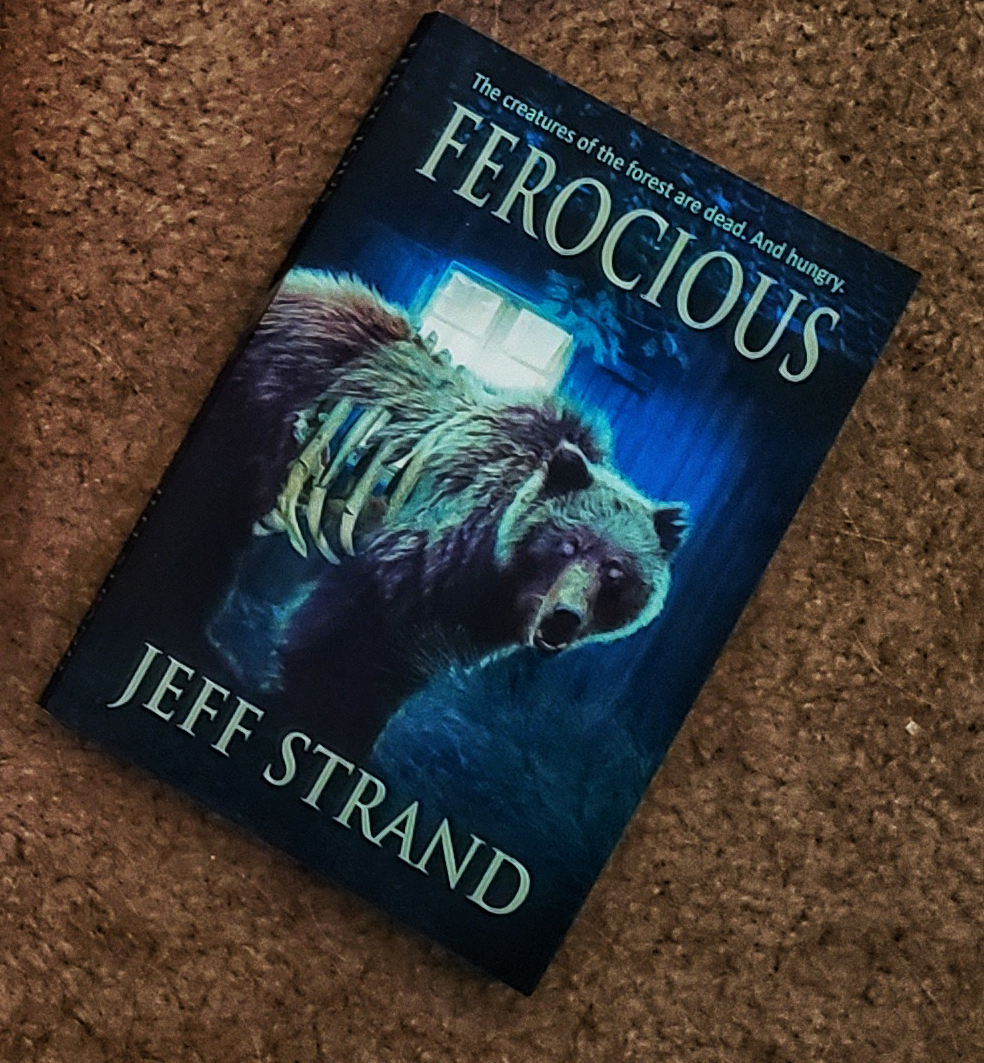

Ferocious by Jeff Strand, Narrated by Scott Thomas

Ferocious is a perfect blend of witty dialogue, quirky characters, and nightmarish horror. But what else could we expect from Jeff Strand?
When Mia’s parents die in an accident, it’s up to her reclusive, misanthropic uncle Rusty to step up and care for his baby niece. He’s in no way equipped to take on the role of parent, and it’s nothing he ever expected of his life, but he’s determined to do the best job he can.
Surprisingly enough, he manages to do a fine job, home-schooling Mia and teaching her his woodworking trade as they live a life of quiet solitude in the forest. He may not have believed it possible at first, but Rusty managed to raise her almost to adulthood, and he’s proud of how she’s grown up.
Just as Rusty begins to question whether he’s shortchanged Mia by raising her in such isolation, their world is shattered by wildlife gone mad. Squirrels, birds, deer, wolves, bears, and other creatures have become aggressive and determined to kill Rusty and Mia–but the aggression isn’t the hardest part to comprehend, it’s the fact that they’re all dead.
Strand drags us at breakneck speed through a sequence of events that would be horrible under the best of circumstances; but miles into the woods without any hope of salvation nearby, these are far from optimal conditions.
Scott Thomas’s narration captures the wry wit of the two protagonists even as they grow increasingly exhausted and violated as the narrative progresses. The quality of the narration never took away from this being a Jeff Strand story, and that’s something to be proud of.

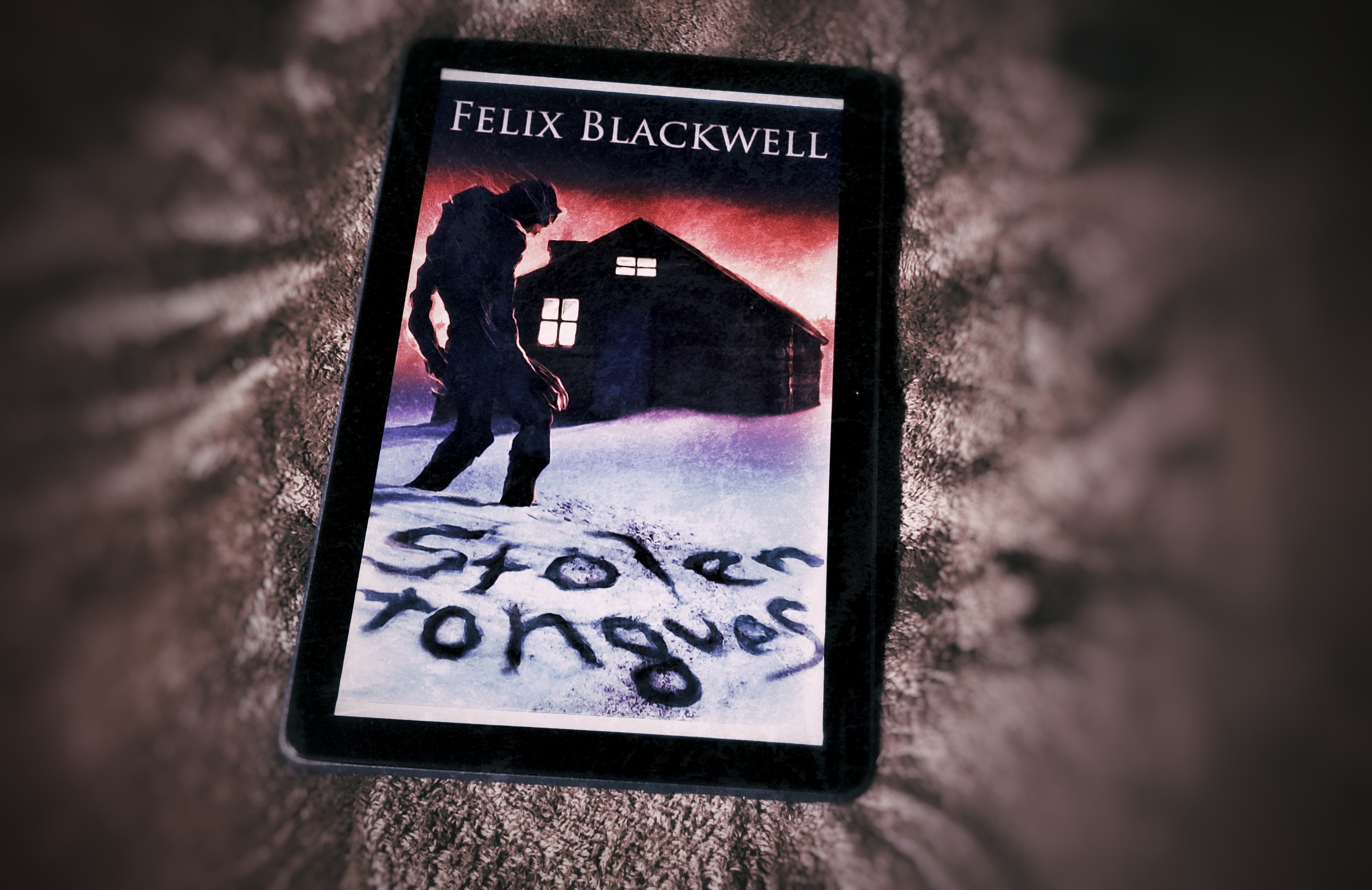
Stolen Tongues by Felix Blackwell

Felix Blackwell managed to craft a captivating and unsettling narrative that digs its way under the reader’s skin. Like many of the best horror stories, Stolen Tongues envelops the reader in an atmosphere that conveys a sense of both helplessness and fear. As the characters and their plight become more three-dimensional and fleshed out, the threatening force looming in the shadows becomes more unreal and difficult to comprehend. That alien and unfamiliar threat mingling with the all-too-real lives of the protagonists it imperils propels this story beyond the realm of casual, easily dismissed horror literature.
When Felix and his fiance, Faye, begin their romantic getaway at her parents’ cabin in the Colorado Rockies, there’s no way they could have anticipated the disquieting experience that would greet them. If they’d only known the sinister history of Pale Peak, the cabin that rested there in the dark forests, and the way that past resonated within Faye’s dreams and psychology, they certainly would not have stayed.
What unfolds from there is a feverish and unreal sequence of events that follows the couple from waking life into their dreams, influencing their relationships, and impacting everyone who seeks to help. And as the terror escalates, the reader can’t help but wonder if anyone will walk away without being led into the darkness by the creature speaking with stolen tongues.
Growing up in and near the Black Hills of South Dakota and having spent a good deal of my life in the Rocky Mountains of Montana, Wyoming, Colorado, and Idaho, I feel like Blackwell captured the beauty and isolation of the environment. Just as importantly, he captured the way these mountain forests can play tricks on people unaccustomed to such places.
As someone who has spent most of his life straddling the outskirts of Indigenous cultures, I appreciated Blackwell’s attempt to avoid exhausted and exhausting tropes while incorporating elements of those cultures in his story. My former step-mother and half-sister are Lakota, my ex-wife, multiple ex-girlfriends, numerous friends, and my teenage daughter as well. This book doesn’t treat the Indigenous characters as overly romanticized token characters, but it does treat them with respect and obvious appreciation for the history of North America before the arrival of European colonizers.