Christopher Golden’s All Hallows transports us back to the simpler times of the mid-1980s, a time without cellphones and internet. I’m not a Luddite, by any stretch of the imagination, but something about the world back then triggers a healthy dose of nostalgia for me. It works especially well regarding horror because there’s no need to factor in the ever-connected nature of the modern world and its limitations on what makes sense. The bulk of Golden’s novel transpires on Halloween night, isolated to one suburban neighborhood. The setting definitely helps to make the story feel more intimate.
As the children of Coventry venture out to collect their toll of candy and treats, strange new children are making their way into the crowd, behaving strangely and unsettling some of the locals while going largely unnoticed by others. It’s not until they begin communicating with some of the neighborhood kids that we discover just how disturbing the situation is. Children and parents alike are forced to wonder what’s really going on in their otherwise tranquil neighborhood. Who are these peculiar kids? What do they want? And who is The Cunning Man?
All the while, family drama and infidelity threaten to upset the peace, creating distractions and turmoil that turn attention away from the genuine threat in their midst. Friendships are strained to their limits, families are falling apart, and a monstrous unearthly horror sweeps through the darkened streets and homes of unsuspecting victims.
Golden’s tale is a heartbreaking one. When all is said and done, no one will be the same, and the survivors might not be the lucky ones as they’re forced to face the dual traumas of loss and guilt no one is prepared for.
Narrations by Ron Butler and January LaVoy bring the story to life in a wholly authentic way that draws you into the tale as effectively as Golden’s masterful writing already would.
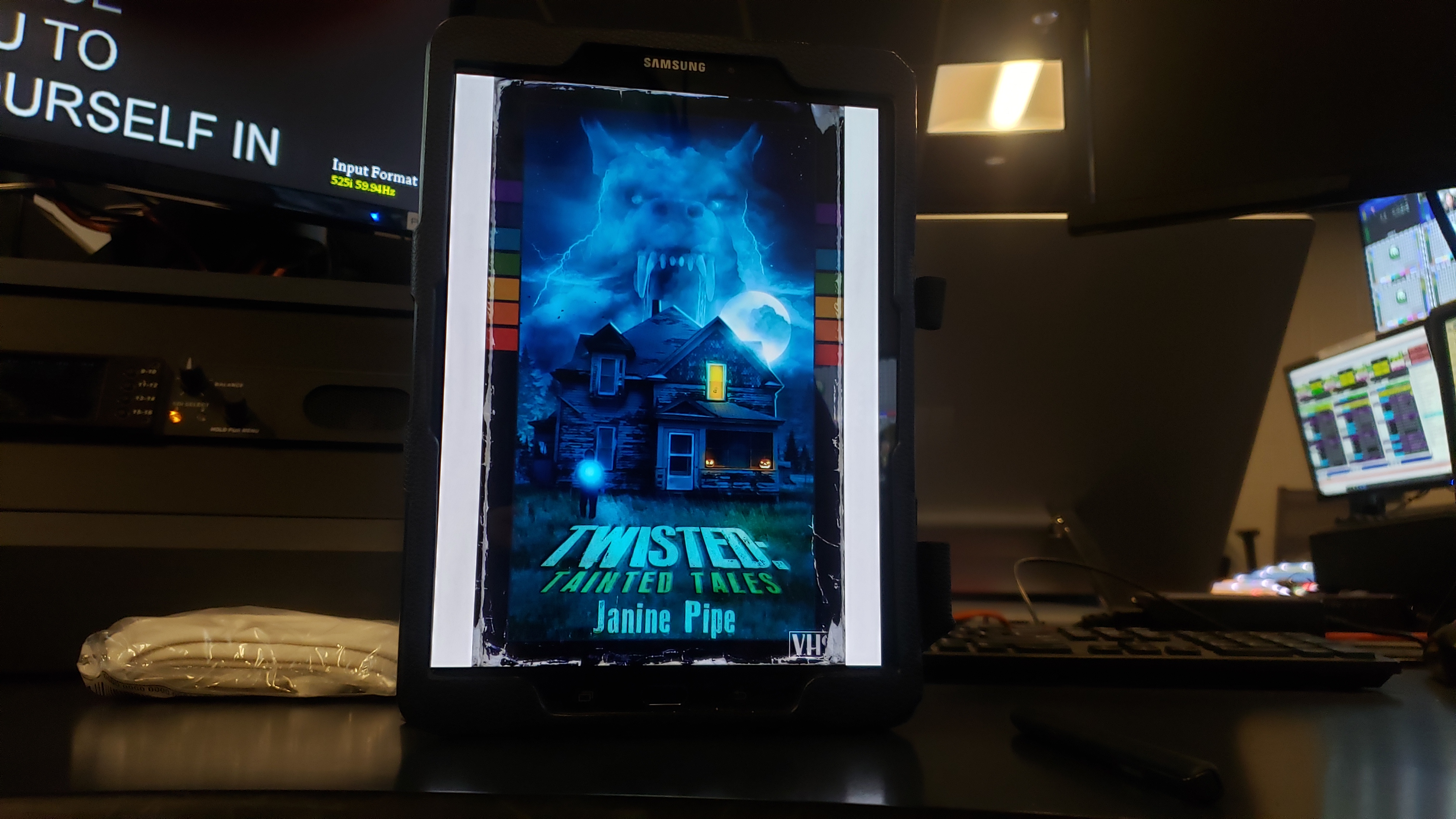
Janine Pipe delivers a diverse assortment of stories with Twisted: Tainted Tales, the only theme being that the bulk of the action takes place in the 1980s. This collection, framed as being stories from a missing author, as discovered by a woman tasked with sifting through the missing person’s household for anything of value, is packed full of nostalgia for those of us who recall the era. Unlike some nostalgia-heavy writing I’ve read recently, Pipe doesn’t lean on the nostalgia to do the heavy lifting and instead keeps the focus on her largely spectacular storytelling and captivating set pieces. Each of the stories contained within Twisted: Tainted Tales has been titled (or retitled) with that of a song from the music released in the 1980s. This is done with the explanation that there’s a mixtape accompanying the discovered manuscripts. The collection starts strong with Footsteps, a story of three women venturing into a section of wilderness where something sinister and bloodthirsty might be waiting for anyone unfortunate enough to stumble upon its hunting grounds. When Doves Cry is a period piece about a woman accepting the kindness of a stranger on a cold night from a man seeking the right woman to fulfill his peculiar needs. The third inclusion, I Want To Break Free, subverts our expectations as we experience the same event from a captured victim and her captor. But which one is the monster? Maneater introduces us to two detectives investigating a series of exsanguinated victims. The nature of the crimes themselves is perhaps less startling than the perpetrator when one of the detectives discovers the monster behind the killings. A night at the club turns into a bloody, violent act of intimacy in Addicted To Love. Sweet Child Of Mine delves into the topic of imaginary friends and the potential consequences if those friends aren’t as fanciful as we suppose. Tainted Love recounts a narrative of obsession, as an infatuation transforms into something far more unsettling, culminating in brutal violence and skilled craftsmanship. With Lost In the Shadows, we’re introduced to a town plagued by a rash of missing children, and a sinister discovery at the local drive-in theater. It’s a Sin is a ghost story about friendship, child abuse, and overprotective parents that ends unhappily. The post-apocalyptic tale, Love Is a Battlefield, acquaints us with a society where the rich and powerful have been stripped of their privilege. We follow one of the former upper crust as she believes she’ll be forced to face death as entertainment for those now in control. Running With the Devil is a story of urban legends and ghost stories, and the profoundly negative impact those things might have if we discover them to be true. Boys being gross, led by adolescent hormones, and burgeoning sexual discovery is the topic of Paradise City. Of course, things take an awful turn that is sure to make every man cringe. School’s Out Forever resonated well with me as someone who routinely ventured into condemned and abandoned buildings. A couple of friends decide to trespass in a haunted school where atrocities once took place, hoping to find the place haunted but ultimately terrified by what they discover. Two brothers on a camping trip with their father discover that a mother’s love transcends death, in Living On a Prayer, especially when there’s an ancient burial ground nearby and revenge to be taken. The fifteenth track, Thriller, delves into the fact that the topic of urban legends and ghost stories again, exploring the haunted houses we’re all sure exist within our hometowns as we’re growing up. Nobody’s Fool explores the possibility that one young boy’s night terrors might be rooted in something other than an overactive imagination and that there might be an important message embedded in the unconscious horror that he experiences. Stephen King’s not the only one who can tell a tale about the convergence of coming of age and sewer drains. Janine Pipe concludes her collection by introducing us to a different sort of monster that might be lurking in the storm drains the most daring children explore when there’s pride and a kiss on the line. The closest thing I have to a complaint is that I’d have preferred the author’s notes compiled at the end of the book rather than at the end of each story. It was more jarring, having those notes breaking up the framing story of discovered manuscripts rather than placing them at the end of the collection. I’m a fan of the author’s notes being included, so I’m pleased that Pipe included them, but I feel like they could’ve been in a better location.
My Best Friend’s Exorcism is a nostalgia-packed excursion into the life of adolescent girls in the 1980s. We meet Abby and Gretchen when the girls are in fourth grade, as Abby attempts to celebrate her birthday party at a roller-skating rink. Alone with her family, Abby fears no one will show up, but the strange new girl from school appears. What begins as an awful experience for the birthday girl develops into the best friendship either of them could hope for. We’re provided with snapshots of the friendship between these two girls throughout the narrative, the bulk of the story devoted to character development. The meat of the story picks up when the girls are in their Sophomore year of high school at the prestigious Albemarle private school. They’re near the top of the class, and they have bright futures ahead of them. That’s when everything changes. Abby finds herself helpless as she watches Gretchen changing into someone she no longer recognizes, and everything becomes a dizzying nightmare of lies and manipulation that she struggles to navigate while learning that there’s more going on than she can easily comprehend. As a story about friendship and coming-of-age, it’s pretty fantastic, really delving into what it means to be best friends from childhood. As a horror or thriller story, it falls well short of the mark. I have the same issue with this Hendrix novel as I had with The Final Girl Support Group, in that the story grows tedious before it truly begins to get to the point where anything is happening that propels the narrative forward. Much like that novel, when this story starts getting good, it gets great, but it takes an awfully long time getting there. There are points when it appears to be picking up speed, only to revert to a meandering, detail-filled exploration of Abby’s day-to-day life, and it was challenging to make it through those intervals. The narration provided by Emily Woo Zeller brings this story of youth and friendship to life in a way that it desperately required. Her performance of the various girls, notably Abby and Gretchen, was terrific. The voice provided for Christian (The Exorcist) was amusing and captured the absurd, muscle-bound character in such a way as to make him almost feel real. The audiobook edition of this novel made an otherwise unsatisfactory experience a much better one, and that is due entirely to the quality of the narration provided.


 Domus Necrophagous