I believe in the Fourth Estate. I’m passionate about that belief, and I’m passionate about the role the Press is intended to play in a Free Society. Journalists have to hold those in power accountable and provide for an informed electorate. My colleagues have heard my rant often enough that they probably want to slap me whenever they know it’s coming. I occasionally find myself struggling to remind the people I work with that our responsibility is to elevate the level of discourse. It doesn’t matter whether we’re reporting on Congressional Legislation, new medical procedures, or anything else. Our role isn’t dissimilar from that of educators. We have to inform the people who rely on us, whether they like or agree with the information we provide.
Somewhere along the line, we’ve forgotten how important we are in keeping corruption, abuse of power, and malfeasance at bay. Some of us have become puppets of the very figures we’re meant to guard against, some have grown complacent, and still others have pivoted from providing information to providing entertainment. I’m not saying that education can’t be entertaining, because I’m a fan of John Oliver, John Stewart, Samantha Bee, Michelle Wolf, Cody Johnston, and others like them. But it’s a fine line to walk, and few do it well.
I won’t place the blame squarely on the Journalists who have lost their way. It’s the audience that craves drama, conflict, turmoil, and childish or boorish behavior. It’s the audience that drives engagement. It’s the audience that ultimately determines where advertising dollars are spent.
But we do bear some of the blame.
I first started working in Broadcast Television (and specifically News) back in mid-2000, when I was 21 years old. I began with the basics of operating studio cameras, controlling the teleprompter, floor directing, designing/assembling graphics, and so on. I left the industry in 2010, not entirely of my own volition. Eleven years later, in 2021, I was back again, and here I am today. I’ve spent approximately one-third of my 46 years working in that industry, and roughly half of my adult life. I’ve witnessed several changes over the last 25 years, and not all of them have been positive. I’ve seen faith in the News Media eroded, sometimes with good cause and other times because the average person doesn’t understand what goes on behind the scenes and beneath the surface.
When I left the industry in 2010, it was close on the heels of the Station Manager passing along a mandate from himself and the ownership of the station (several wealthy and influential families in the region) that, if a story had a political angle to it, we were to lean right in our reporting. I wasn’t part of the Newsroom at that station, but I didn’t think that was at all acceptable. I admit my morale and overall attitude toward station operations deteriorated after that. Unfortunately, that trend of rightward deviation has only persisted. But if you ask people on the street, a substantial number of them will claim that the News Media are biased and promoting a Leftist Agenda.
Perhaps it’s the fault of American audiences that they’re unable to recognize that there’s no such thing as left-leaning Media in the United States unless we’re looking at publications like Mother Jones and The Nation. Since most people don’t know that those outlets even exist, it’s a fair bet that most Americans have no idea what they’re talking about when they insist on a Leftist Bias in the Media. At best, what they’re referring to is a Liberal Bias from Media Organizations like MSNBC or CNN. Of course, those same people are likely to refer to the Associated Press, Reuters, NPR, and other politically unbiased Media Organizations as being left-leaning. Ultimately, it comes down to either accepting Propaganda over Reality or having a deep misunderstanding of Political Theory.
At best, it can be argued that there are Democratic (Liberal) and Republican (Conservative) Media Outlets. But even the Liberal ones tend to dismiss and disparage any Leftist or Progressive policies proposed by Democratic Party members. They do as much harm to actual Progressive Ideals as the Conservative Media does. The Liberals and Conservatives have far more in common than they don’t, in that they’re both invested in maintaining the Status Quo and shutting down any attempts to question it. The problem is that the Politicians and the Media are controlled by the same interests, because they control the money.
Of course, money has always been the worst influence on the Media. The earliest Newspaper in America had an advertisement in the first issue. And Advertisements have followed News from periodicals to radio, and from radio to television. And now, advertisements have jumped from television to social media platforms and websites.
The first advertisement on TV was way back in 1941, and they’ve become increasingly prevalent since then. The growth of television as an industry, and Television News as a result, led to the Federal Communications Commission enforcing the Fairness Doctrine, starting in 1949. It was intended to keep the burgeoning Media Outlets from misusing their power and promoting biased agendas. The Fairness Doctrine required that Media Outlets examine controversial public issues and provide airtime to opposing viewpoints.
As with several major errors made in the United States, it was brought to an end with a poor decision made under President Ronald Reagan (and his FCC Chairman), who dissolved the Fairness Doctrine in 1987. Of course, the Fairness Doctrine wasn’t perfect, and it wasn’t perfectly implemented. But there’s no denying that the purpose was noble and good, to hold off the prevalence of echo chambers and purely partisan News coverage. Abolishing the Fairness Doctrine is seen by many experts as the biggest contributor to the fractured, partisan environment we have today.
Naturally, one of the other major contributors to the decline in quality of News coverage was the advent of the 24-Hour News Cycle, after Ted Turner founded CNN in 1980. Much like the Internet today, it fed a desire for immediate updates and instant gratification. People didn’t want to wait until scheduled times to learn what was happening, especially when major events were transpiring. This need to cater to an audience’s obsession with instant gratification promotes mistakes, the sharing of bad information, and a lack of proper vetting. The need to be “first on the scene” because the audience will tune in elsewhere has done so much harm.
We in the Media are at fault for much of the misunderstanding and misapprehension we witness in the world around us right now. As an industry, we need to both acknowledge that reality and actively work to compensate for the damage we’ve caused. Now, I’m not talking about the explicit Partisan Propaganda of organizations like Fox News and Newsmax or Huffpost and MSNBC, but the otherwise unbiased news sources that do their best to provide balanced coverage. It’s not entirely on our shoulders, but we do bear a substantial portion of the blame, if only because we’ve been too uncritical for altogether too long, and that willingness to avoid being openly critical of various subjects and stances has allowed us to be backed into a corner that we seem to be ill-equipped to escape.
Of course, the lion’s share of the blame falls on the increasing tendency of politicians to turn every social, medical, and cultural issue into a political one. The people who watch it happening, without questioning how or why these things are suddenly “political” topics when they never had been before, are also at fault. It has left even the most legitimate media outlets with no simple way to address any of these topics. Instead, we dance around the issues, struggling to find opposing sides and lending them credence by providing them with a platform that they don’t merit. We hold off on sharing critical information because we haven’t been able to obtain a statement from someone with a viewpoint opposing whatever it is we’re trying to share. If we neglect to do so, we get called out for being biased.
We risk losing advertisers.
We risk litigation.
But in failing to inform, we risk losing the credibility we have left.
Fringe perspectives should NOT be provided the same degree of coverage. That’s the simple truth of it. But when a topic becomes heavily politicized, it becomes more challenging to navigate what should otherwise be a straightforward assessment of data, statistics, and known facts. When people refuse to accept that what they already believe to be true is not, we have no easy way to address that flaw. The political figures who insist on turning everything into a political battlefield know precisely what they’re doing, and we know WHY they’re doing it.
They force a dialogue that shouldn’t be a dialogue at all.
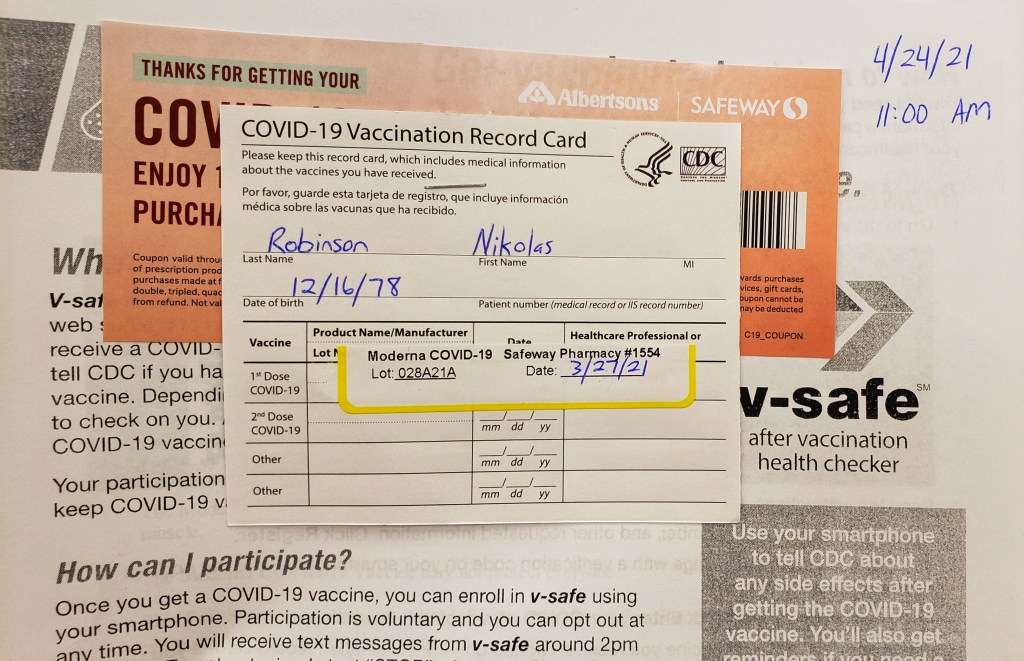
We saw it repeatedly during the COVID-19 Pandemic. It wasn’t exclusively the News Media at fault, because Social Media was a major source of much of the misinformation that was spread, and attempts to provide Fact Checks were perceived to be biased.
There are still people today who believe that the medical field was pretty evenly split on the topics of Vaccine Safety and Vaccine Effectiveness. Globally, based on a study of more than 40,000 nurses across 36 nations, fewer than 21% of nurses rejected the COVID-19 Vaccine. The most pronounced interval was between March and December of 2020, when Pharmaceutical Companies were initially testing the vaccines.
As early as June of 2021, according to the American Medical Association, 96% of practicing physicians were fully vaccinated against COVID-19, and an additional 1.8% of them were actively planning to receive vaccinations.
Unfortunately, the way the media reported on the topic gave people the sense that a large number of Medical Professionals were speaking out in opposition to the vaccine. This is a negative side-effect of the overcompensation involved in attempting to provide multiple sides of an argument with equal coverage. If we intended to provide balanced coverage, we should have given the anti-vaccine proponents roughly 5% of the coverage, compared to 95% of the coverage focusing on the medical consensus.
This is something we need to address.
It’s something we need to atone for.
What would previously have been simply a matter of focusing on medical consensus became a partisan issue, requiring more even-handed coverage of opposing sides when there are not equivalent claims made by both sides.
This is, of course, not isolated to the COVID-19 Vaccine. We’ve seen this happen with topics from Abortion to Gender Identity, none of which are inherently political topics. And they should not be.
These are subjects best left in the hands of the relevant professionals and experts, not politicians.
Abortion didn’t become a political issue until the 1970s, and Gender Identity started down that path in the UK in the 1970s as well. But didn’t become a major political issue in America until roughly a decade ago. Vaccination (as a whole) was a largely apolitical topic until more than 15 years ago. But, as these topics went from being personal and medical decisions to political ones, the News Media was forced to adjust how it covered them. The number of lies, discredited studies, and hate-based propaganda talking points we allowed to slip through has been disorientingly massive. We were supposed to be maintaining the public trust.
I’m sorry to say that we failed.
But we don’t have to continue failing.



 Domus Necrophagous