Transgender Transference…and Why You Should Know Better

Several aspects of the anti-trans stance are deeply upsetting and demonstrably harmful, while being based on a misunderstanding of biology, psychology, and sociology. I take exception with many of them, but perhaps what bothers me most in anti-trans arguments is when people bring up the fear of predatory men taking advantage of transgender access to their gender-appropriate restrooms. What they’re talking about in these scenarios isn’t even a transgender issue.

None of what they’re expressing a fear of is at all the responsibility of the transgender people in question. The people they’re talking about are predatory men taking advantage of social and legal systems to prey on the vulnerable. How do the people expressing these fears not recognize that they’re not describing a fear of trans-feminine people, but of cis-male rapists? It’s a poorly constructed argument in the first place, but it becomes even more so when we take a moment to think about what’s actually being protested.

But for a moment, let’s take the argument at face value and pretend that it is transgender people who are the basis for this fear. We’re going to make believe that they’re describing actual transgender people, because I would love to know why they aren’t equally vocal about protesting several other things that are certainly more common.

Do these same people want to bar individuals from becoming clergy, or to keep their children from attending church services, because there are so many documented members of the clergy who similarly take advantage of the social and legal structures in place to prey on vulnerable people? It’s a well-documented problem in the Catholic Church, where billions of dollars have been paid out in settlements to thousands of victims, in America alone. They might respond by telling us that they’re not Catholic, so it’s not relevant to them. Well, there were hundreds of Southern Baptist clergy, church leaders, and volunteers who faced accusations of sexual misconduct in just the last few decades. Tens of millions of dollars have been paid out to victims of sexual abuse within the Lutheran Church as well. Tens of thousands of victims all around the globe have come forward within the Jehovah’s Witnesses as well, though most get ignored within the church because of the “Two Witness Rule” in place. The same is true for essentially every other religious organization in the world. Yet I don’t hear the same vocal anti-clergy arguments to protect children who might venture into a church. Even as the Department of Justice insists that Priests can’t be compelled to violate the sanctity of confession to report people who are abusing children, there’s no swell of populist cries of injustice.

Where are the people demanding that no one be allowed to become a Scout Master? All the way back in 1994, nearly 2,000 child molesters were documented within the Boy Scouts. These were retrieved from files maintained by the organization itself. Why are these individuals who have used that organization’s hierarchy to prey on children not considered a threat? Is it perhaps because these are all boys who are being molested? If that’s the case, I sincerely question the morality of anyone taking that stance. But, that’s okay, there are documented instances of Girl Scouts being sexually assaulted as well.

What about all of the documented instances of law enforcement being caught up in child pornography and sexual assault cases? Where’s the outrage concerning those predators? There’s a fairly horrific study from 2022, delving into 669 cases of police sexual violence. Of course, being that it’s law enforcement perpetrating these crimes, it’s unlikely that we’ll ever have a suitable estimate of just how frequent those infractions are. Where are the demands that people be barred from pursuing careers in law enforcement because some people have taken advantage of those positions of authority?

According to the National Institutes of Health, transgender people are no more likely than the general population to commit acts of sexual violence; they may actually be less likely to do so. However, they are more likely than cisgender people to be VICTIMS of sexual assault.

So, if any of this is about protecting children, there should be far more coherent arguments leveled against those aforementioned occupational transgressions than against transgender people. Being allowed to live their lives and exist in the spaces that are comfortable and appropriate for them isn’t hurting anyone, and there has never been a shred of evidence that it has. But, again, the men sneaking into women’s restrooms aren’t transgender in the first place. They’re, as usual, cis-male predators who are exploiting whatever structures they can to prey on those they choose to prey on.

By that standard, should we be persecuting police because a man dressed as a police officer committed political assassinations in Minnesota just a short while ago? It’s precisely the same logic, and just as flawed.

But, assuming the worst, let’s say that transfeminine predators are hoping to use public restrooms as hunting grounds. They are a small fraction of a percentage of an already small percentage of the population. Even the most liberal estimates indicate a maximum of about 1% of the U.S. population identifies as transgender, and not all of them are transfemme. So, we’d be looking at a fraction of a single percent of the U.S. population that identifies as transfeminine, and then a fraction of that fraction that might also be inclined to perform acts of sexual violence. Statistically, you’re far more likely to have a cis-female predator in the same restroom.

Seriously, all one needs to do is think for a second before they let their biases and prejudices make them sound like more of a fool than they already do. Transgender men and women are not inherently predatory, violent, or perverse. We need to stop marginalizing them further.

Salt Of My Blood by Jae Mazer

Jae Mazer’s Salt Of My Blood is a tale of two vastly different characters, revealed through snapshot windows into their respective lives as we wait for what we’re sure will be a tumultuous meeting when the two come together. From childhood through the setbacks and disappointments of adult life, we witness the two characters grow and evolve along separate paths. Living in post-war Denmark, Lærke and Harald are deeply tied to the treacherous North Sea, but their relationships with the water are as distinctly different as their personalities.

Lærke’s lifelong love of the sea transforms into something far more peculiar–equally disturbing and beautiful in the way Mazer tackles a fascinating taboo–when she discovers her only true friend where the sand meets the sea. Harald’s love of the sea is deeply tethered to his cruel and predatory nature, and piracy becomes his sole passion. When their two worlds collide, it is truly captivating; a spectacle sure to feel like a reward to the reader.

Mazer addresses heavy topics in this modern-day fairy tale; sexual assault, mistreatment of women, the antiquated concept of the wife’s role within marriage, and the misogyny that underpins all of those things.

This story can be found on the Godless platform by clicking on the link below:

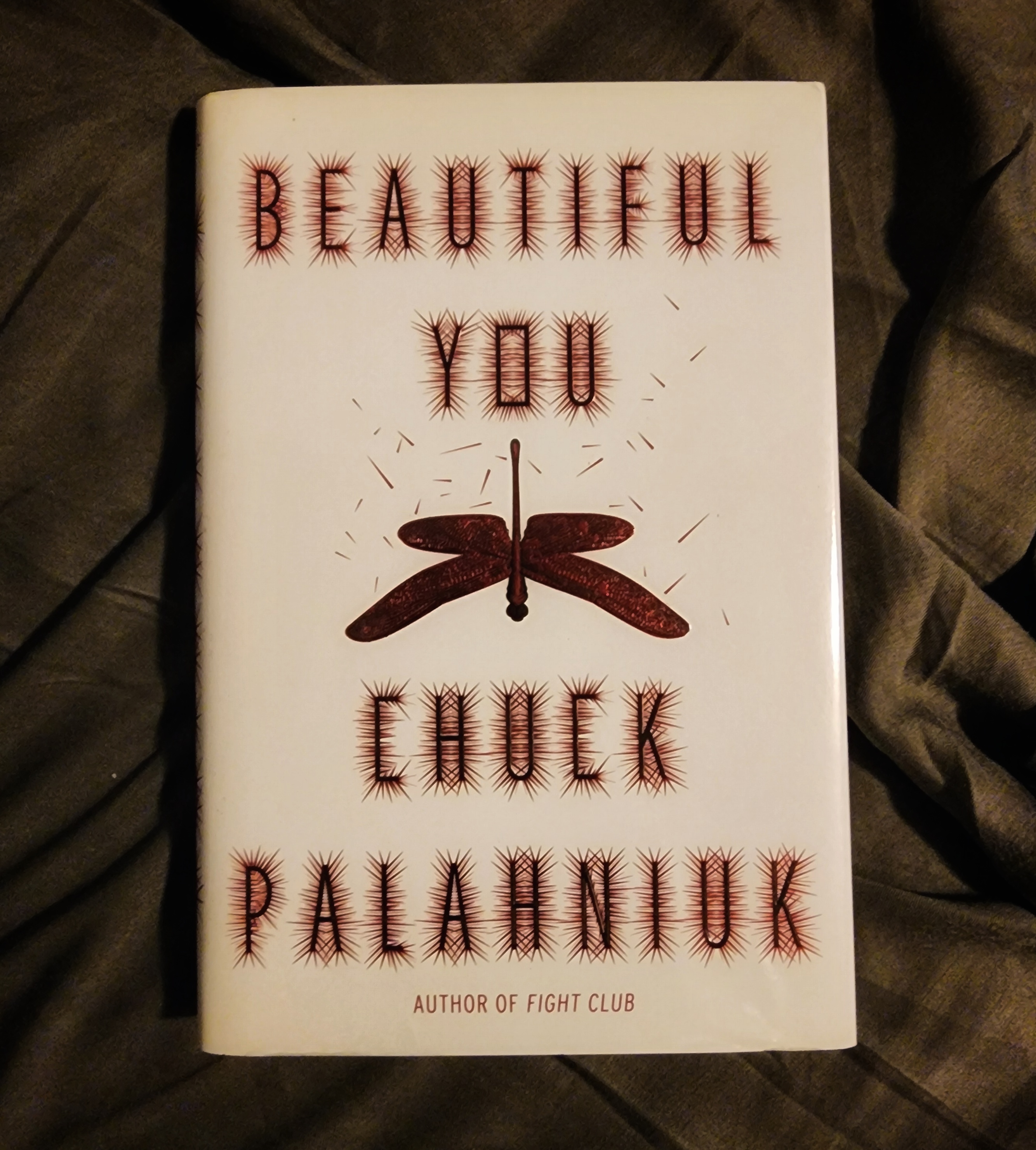
Beautiful You by Chuck Palahniuk

I’m a long-time reader of Palahniuk’s work, and I’ve rarely found anything disappointing in his writing. Beautiful You, I’m happy to say, was no exception. As always, his unique literary voice and cadence shine through, while still managing to avoid seeming repetitive or tired.

This novel introduces us to Penny Harrigan, a woman whose life seems to be an unending series of disappointments, whether it’s her career or her love life. All of that changes when tech billionaire C. Linus Maxwell takes an interest in her. She’s as surprised as everyone else, as she lives out a Cinderella fantasy that most girls would only dream of. Unfortunately, the dream is quickly revealed to be more of a nightmare, as she begins to feel less like a romantic partner and more like a guinea pig. Maxwell is not the man the tabloids make him out to be, perhaps because he secretly owns them.

As this intensely sexual tryst continues, Penny silently watches the clock ticking down to the inevitable conclusion that awaits all of Maxwell’s romantic partners. And when that end arrives, it’s as jarring and disorienting as the beginning was.

It’s soon revealed that Maxwell has his eyes set on an objective with global repercussions, and Penny has been ignorantly complicit in the horrors that await the women of the world. By the time she realizes what’s going on, is it too late to get anyone to hear her?

As she struggles to put a stop to the plan already in motion, she’s hammered with revelations that force her to question her life, her identity, and the extreme limits of human sexuality.

As sexually explicit as Beautiful You happens to be, there’s nothing remotely erotic about it. That’s the magic of Palahniuk’s writing. He was able to approach a topic so steeped in sexual content without making it feel smutty or even remotely sexy. He takes us right to the verge and then turns away…like literary edging. There’s a perversity in the clinical detachment of it all, and the sense of impending awfulness that the reader or listener is impossible to dismiss. In a sense, it makes us feel superior to the characters, because we see the trap that awaits and convince ourselves we could escape it. It forces you to wonder if we’d succumb to the same terrible outcome if this sequence of events played out in the real world.

The moral of the story, I suppose, is that men need to focus more on the pleasure their partners are experiencing…otherwise, the Beautiful You line of products might just take our place.

Carol Monda’s narration definitely captures the initially neurotic and out-of-her-depth qualities of Penny’s character as well as who she becomes as the events of the story transform her.

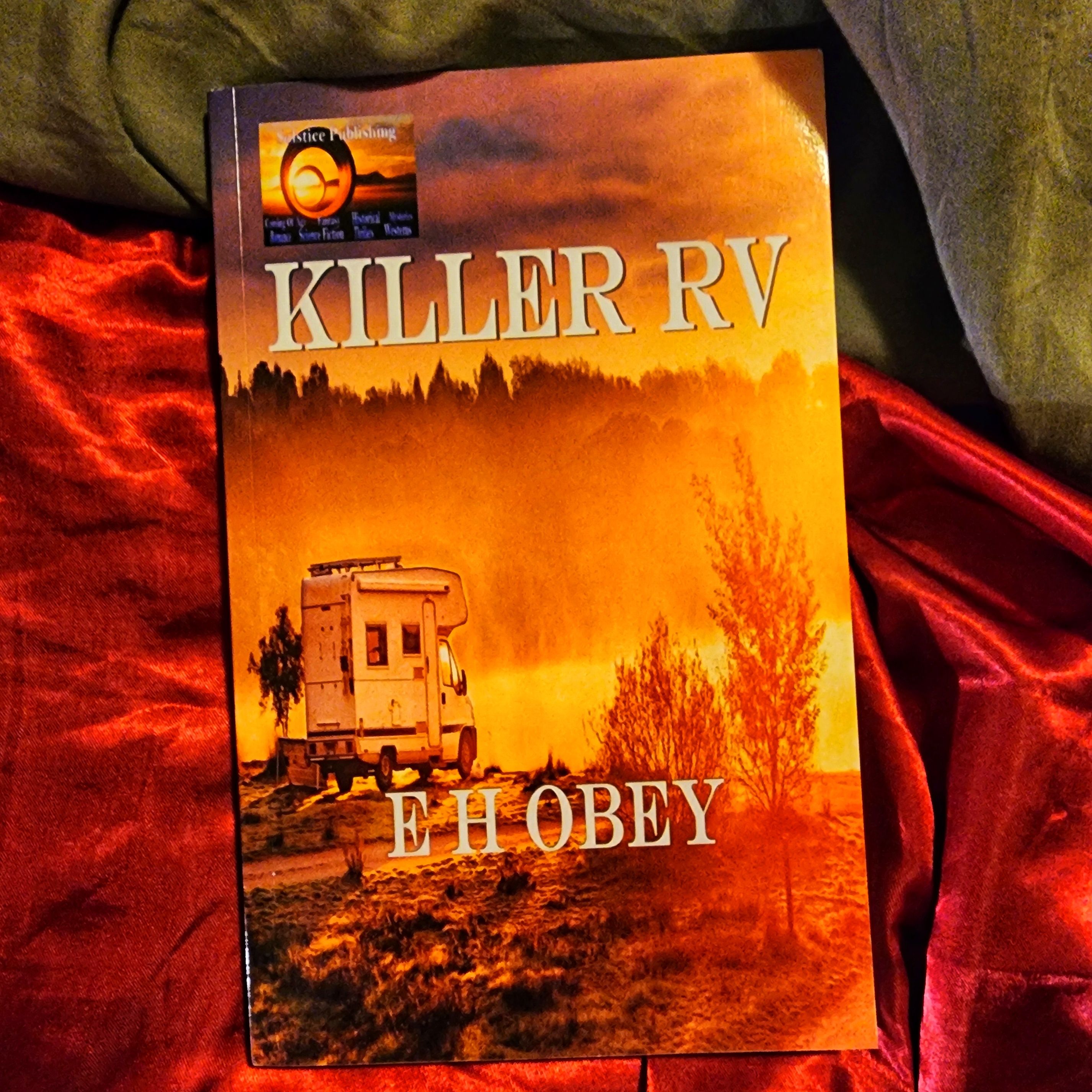
Killer RV by E. H. Obey

Killer RV is not the first book to tackle the subject matter at the core of this story, but it’s also not the worst. What would you do if you were diagnosed with terminal cancer and had only months to live? If you have at least a momentary urge to suggest that you might hunt down and torture and/or kill sex offenders–first of all, you’re not alone, but secondly, this book is for you. I suppose you’ve guessed what this one’s about.

Delilah is a bored housewife/music producer who happens to notice a new RV parked in her neighborhood, and she decides she wants to be a friendly neighbor. This is how she meets Peggy and also how her life takes a turn she couldn’t have anticipated. Peggy is dying, and she has a bucket list she wants to fulfill before the cancer takes her down…but we don’t learn what the items on that list happen to be until a little further into the story. Initially, it’s mostly focused on Delilah–her marriage and her burgeoning friendship with the mercurial Peggy. It isn’t until after Chekhov’s epilepsy makes an appearance, that Delilah becomes an integral component in Peggy’s mission. You’ll understand why I say that if you read the book.

Once things start going down the violent path, they never really stop until the book concludes. We’re introduced to a world where sexual predators of all stripes lurk wherever one chooses to look…and it’s a veritable buffet of monsters just waiting to be tossed into the bucket.

I have a certain sentimental connection with this story, in that a significant portion of it takes place in South Dakota, where I spent most of my life…and most of that portion of the narrative is in the Black Hills and Badlands region that I called home for most of my 45 years. The seemingly neverending path that I-90 carves across the state, through Wyoming, and into Montana is one I’m intimately familiar with–so I could visualize a lot of the surroundings into which the characters were placed.

It’s a short read and well-paced…so you don’t have much excuse to avoid it.

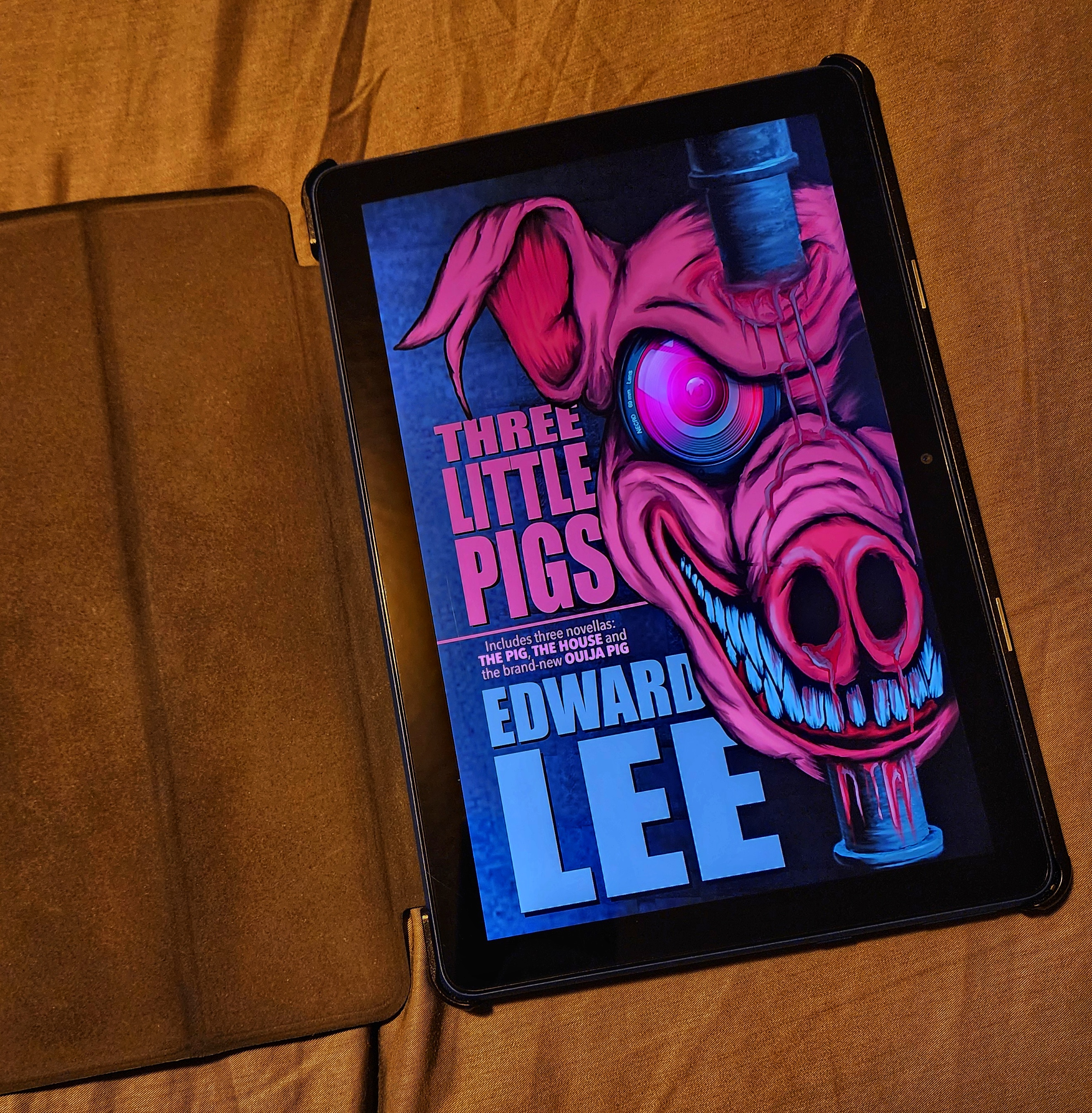
Three Little Pigs by Edward Lee

When you frequent literary circles you find yourself asked questions like, “What is the best opening line you’ve ever read?”

For many years now, my answer to that question has invariably been The Pig by Edward Lee. I won’t include the quote here, because it’s sure to force one algorithm or another to reject my review of this single-volume trilogy. Suffice it to say, it’s irreverent, humorous, captivating, and vile…all things that virtually insist that the reader keep on going. The discerning reader will be satisfied to discover that the rest of the tale is similarly irreverent, humorous, captivating, and vile. I had the pleasure of reading The Pig and The House in a single volume quite some time ago, but this new edition from Evil Cookie Press is a trifecta, in that it includes an additional installment, picking up the loose threads left behind and running with it until anything sane is unraveled. If there’s a trigger warning out there, this volume contains the associated trigger.

The meta commentaries from the perspective of the author are an excellent touch in this new installment, providing an amusing insight into the creative mind behind this perverse and sordid tale of an isolated house on an isolated tract of land where truly awful things have taken place over a handful of decades. If you had the pleasure of experiencing this unlikely vacation spot in the previous glimpses of the 1970s and the early 2000s, you won’t be disappointed. There’s a sense of coming home as Lee invites us to revisit the haunted house in the modern day–when everything comes full circle and we are truly introduced to the monstrous forces at work. If this is your first visit–well, then–I truly envy you the opportunity that awaits.

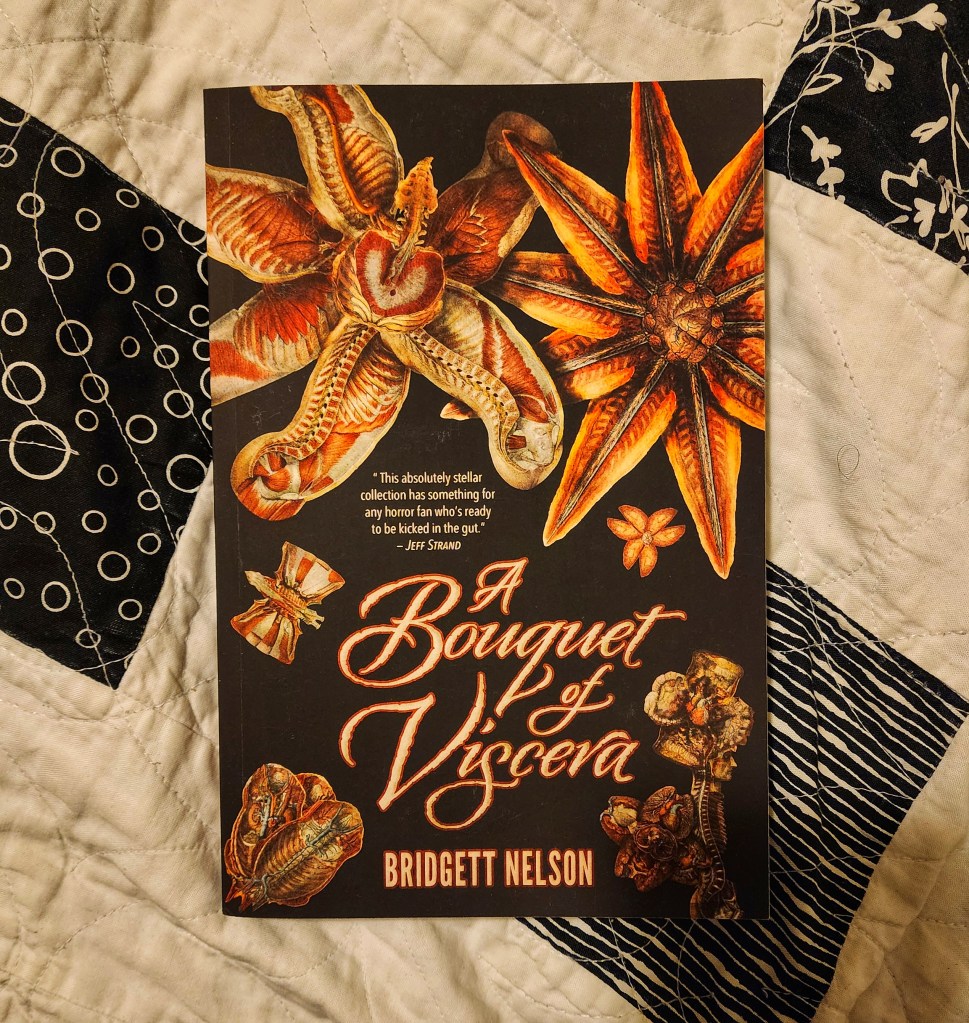
A Bouquet Of Viscera by Bridgett Nelson

The bouquet Bridgett Nelson presents us with is indeed as visceral as the title implies. Eight stories unfold like the petals of carnivorous flowers, a cruel beauty on display no matter where you happen to look. It’s no wonder this collection was the 2023 Splatterpunk Award winning single-author collection, nor is it any surprise that “Jinx” was the winning short story. Both the collection itself and that particular story have a certain feel about them that seeps under the skin of the reader and makes us feel discomfort that only arises from exposure to something heartbreaking and…well…visceral.

There’s something here for everyone, assuming you enjoy your horror to feel intensely personal. Even when there’s a sea monster involved, it’s difficult to distance yourself enough to remember that it’s fiction you’re reading and that no one was harmed in the making of this book…though the same can hardly be said about the reading of it. If it doesn’t hurt, you’re hardly human. These are stories meant to hurt you and leave behind scars that remind you of the all-too-real abuses that pepper these pages. These may not be real victims, but the things that happen to them are far too often quite real.

I found it was best to read each story with a period of digestion between, allowing myself to really think about what I’d read and how it made me feel. This collection, though only eight stories, is a marathon…not a sprint…and it’s a marathon through a gauntlet that will leave the reader forever impacted.

https://a.co/d/i2tr59C

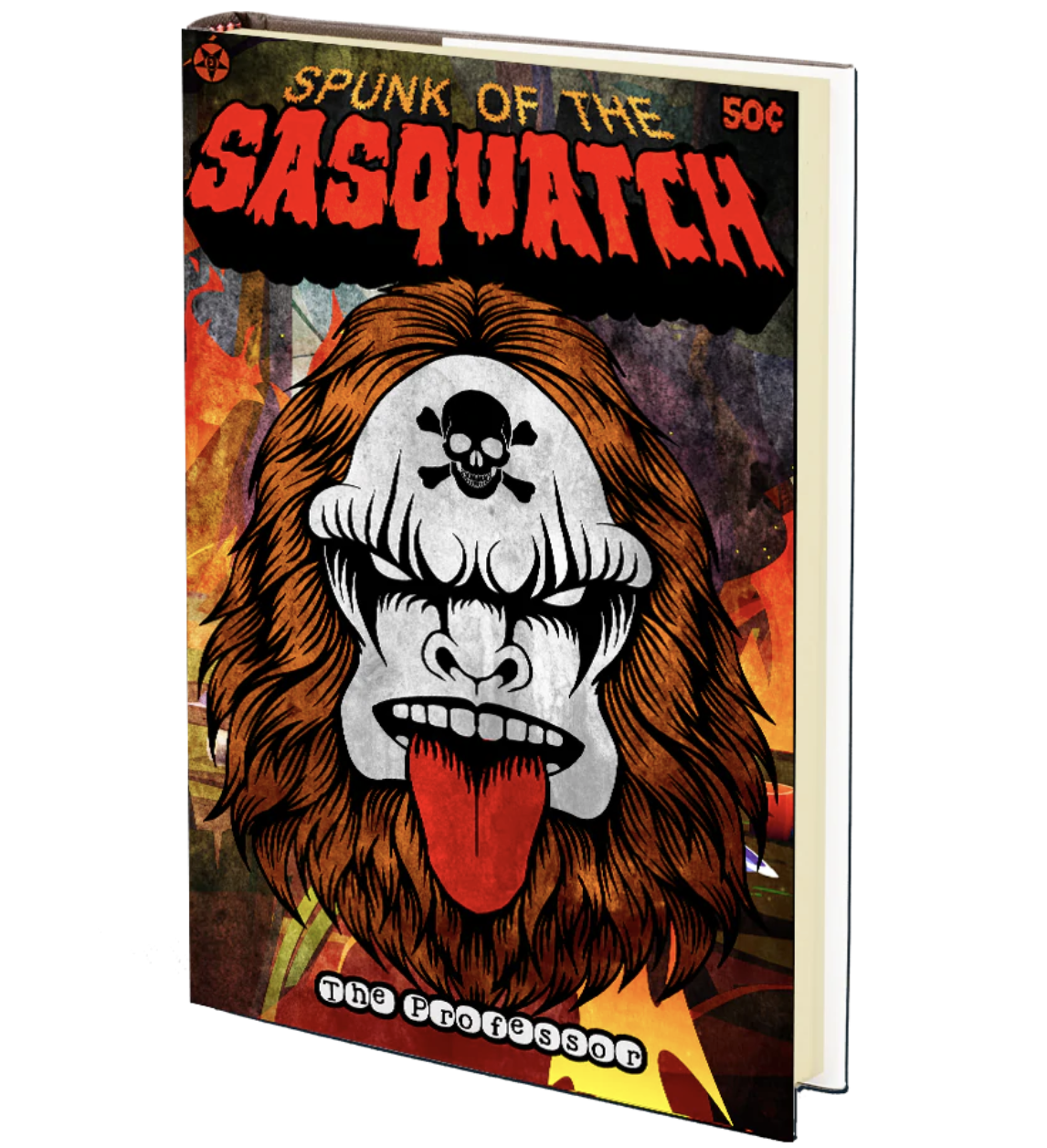
Spunk of the Sasquatch by The Professor

The Professor has previously deconstructed, distilled, and devastated classic literary prose with his magnificent and monstrous homages to some of the great writers of the late 19th and early 20th centuries. This time he’s set his sights on something far more primal…a well-loved fixture of North American cryptozoology…Bigfoot.
Two campers amid passionate playtime in their tent are interrupted by a startling roar that incapacitates them in preparation for the monster coming their way. Cruel and sadistic, the creature takes pleasure in torturing his prey as he builds up to a climax of cyclopean proportions, and The Professor keeps us right there, in the center of the action without relenting or taking any more pity than the beast itself does with its prey.
Envisioning the sasquatch as a carnal clamoring colossus, The Professor joins the ranks of those–like Lucas Milliron–who transform the beast from the friendly, secretive forest dweller of Harry and the Hendersons into a vile, sexually aggressive predator.
A cautionary tale about the risks associated with camping, and especially against having sex while doing so, Spunk of the Sasquatch paints a revolting portrait of the elusive beast. By the time his rumbling roar is resonating within your bones, it’s already too late.
Just remember, all he wants is a little head.
Naturally, The Professor includes an audio edition of this thrilling tale. I recommend settling in as the man himself caresses your ears with the vile and visceral details conveyed through his voice.

You can obtain this for yourself by going to http://www.godless.com or by downloading the Godless app to your mobile device of choice. The link is below:

Kherson by Regina Watts

Kherson is as poignant as it is painful to read, and it is a distressingly raw narrative. Regina Watts pulls no punches and provides the reader with no reprieve. The depths of human cruelty and depravity are on grim display without any consideration for the reader because that’s the point.
One Ukrainian woman’s search for food in a devastated city becomes a nightmare as a group of Russian soldiers decide that only Nazis would oppose them–and where Nazis are concerned, all bets are off.
Much like with her previous story, Cleared Away, Watts is showcasing the horrors of war that often get overlooked as body counts and large-scale atrocities steal our attention from the individual cruelties. Cultures around the world already victimize women under normal circumstances, but in war, anything goes.
The horrors in this story are all too common wherever there is war. If you think it’s something distant and perpetrated only by monsters from foreign lands, you’re missing a whole lot of what American forces did during World War II and Vietnam. Monstrous acts happen when people convince themselves that they’re the “good guys” no matter what they do. Of course, it doesn’t help that there are people who will eagerly place themselves in positions to be the “good guys” in situations like these.
What’s happening in this story isn’t unique to Ukraine, but it’s happening now, and that immediacy means we can do something about it. Regina Watts has graciously provided us with an opportunity to help, and buying a copy of Kherson–even if you don’t read it–will guarantee that money gets to outreach for the victims of the conflict.

The link to purchase Kherson is below:

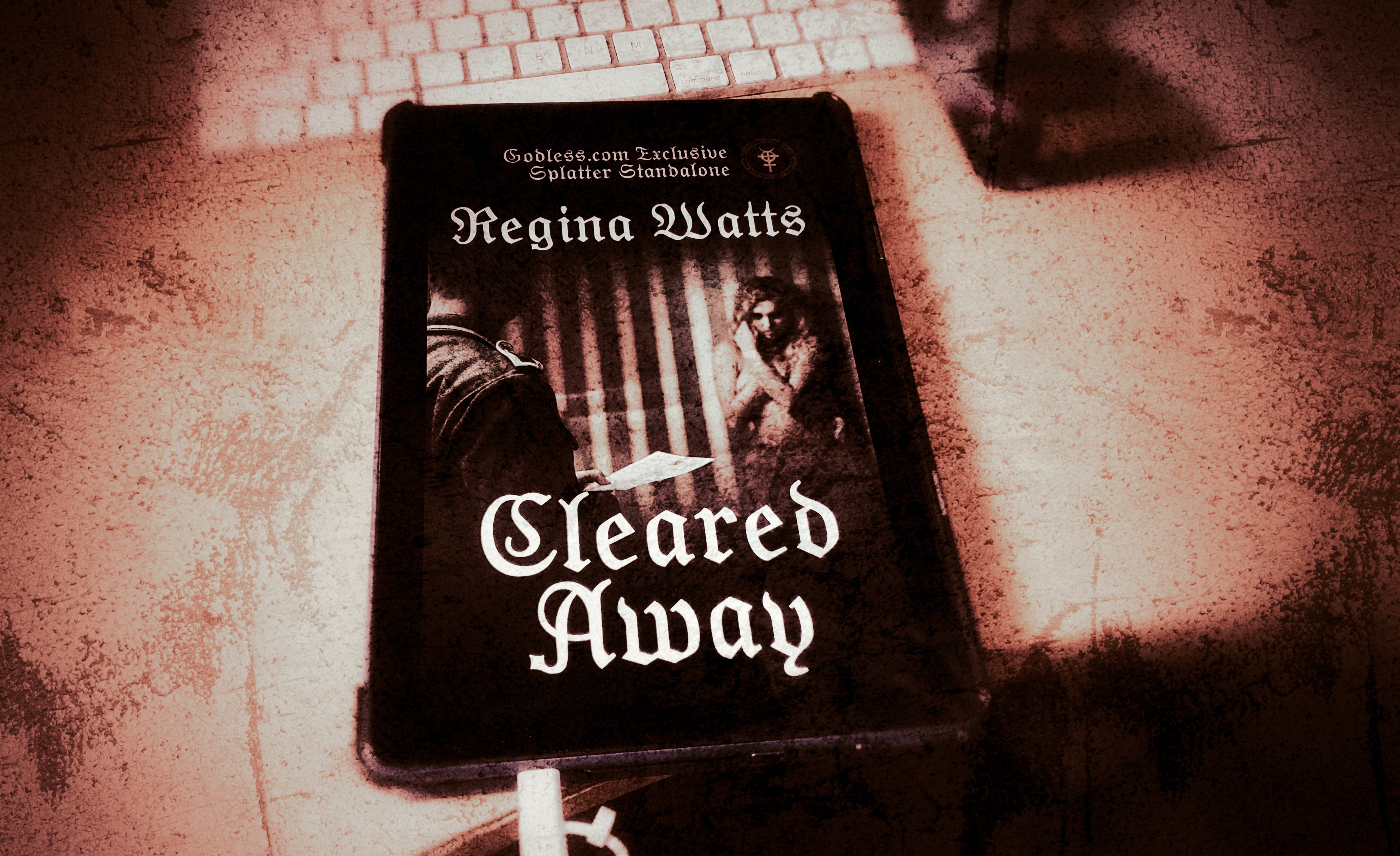
Cleared Away by Regina Watts

Cleared Away is a truly unpleasant story. Were it not for the quality of the writing, I’d suggest there wouldn’t be anything redeeming in these few pages. Unfortunately for all of us, this story was written by Regina Watts, which means there’s plenty of quality in the prose. It should come as little surprise that this story–taking place in Nazi Germany–contains elements of rape, extreme violence, and anti-semitism. The reader should be prepared.
We experience the predations of Major Basilius as he turns his attentions toward a young Jewish girl recently transported to the concentration camp. With Watts at the helm, one should know to expect that there is nothing but brutality and degradation to follow.
There is nothing erotic or arousing in this story. If you’re looking for something like that, you’re in the wrong place, and you’ve picked up the wrong story.
Avoid reading the following if you want to avoid spoilers:
Though we find ourselves continually hoping for something to happen, some vengeance to be enacted against Basilius, Watts tears that hope away with each passing sentence. While this may be less satisfying for the reader, it’s altogether too authentic as far as the outcome is concerned. For most women in the position our young victim finds herself in, there was no salvation to be found. This young woman could have been any of the hundreds–or perhaps thousands–of victims who found themselves raped, abused, and tortured by those in power at concentration camps throughout Europe. Cleared Away is heartbreaking in its brutality and unrelenting, unflinching depiction of the treatment of this poor girl. At the same time, it’s important to remember that this is nothing compared to what was done to so many people in real life.

You can check this out for yourself by going to http://www.godless.com or by downloading the Godless app to your mobile device of choice. The link is below:

Panic by Harold Schechter, Narrated by Steven Weber

Harold Schechter’s Panic showcases an early American example of moral panic, mass hysteria, and pattern recognition gone horribly awry.
This well-researched narrative begins with details of a tragic event, the result of the sort of irrational, hysterical panic arising in the 1930s surrounding the fear of child rapists and murderers surging across the American landscape. One father’s need to protect his daughters from a danger he perceived as being right around the corner erupts in a disastrous and heartbreaking conclusion.
From that awful event, Schechter traces backward to the small number of isolated incidents that had been blown up and made to seem like part of a growing trend. Each of these individual cases was certainly terrible, but they were hardly part of a nationwide surge in that sort of criminal activity.
Looking at the world we live in today, one can see that we haven’t grown beyond this sort of outrage-driven crusade where we perceive the boogeyman du jour in every shadow.
Steven Weber’s narration is perfectly suited to this gripping non-fiction essay. I’m pleased to see that he continues to narrate other short samples of Schechter’s larger body of work contained in Bloodlands.