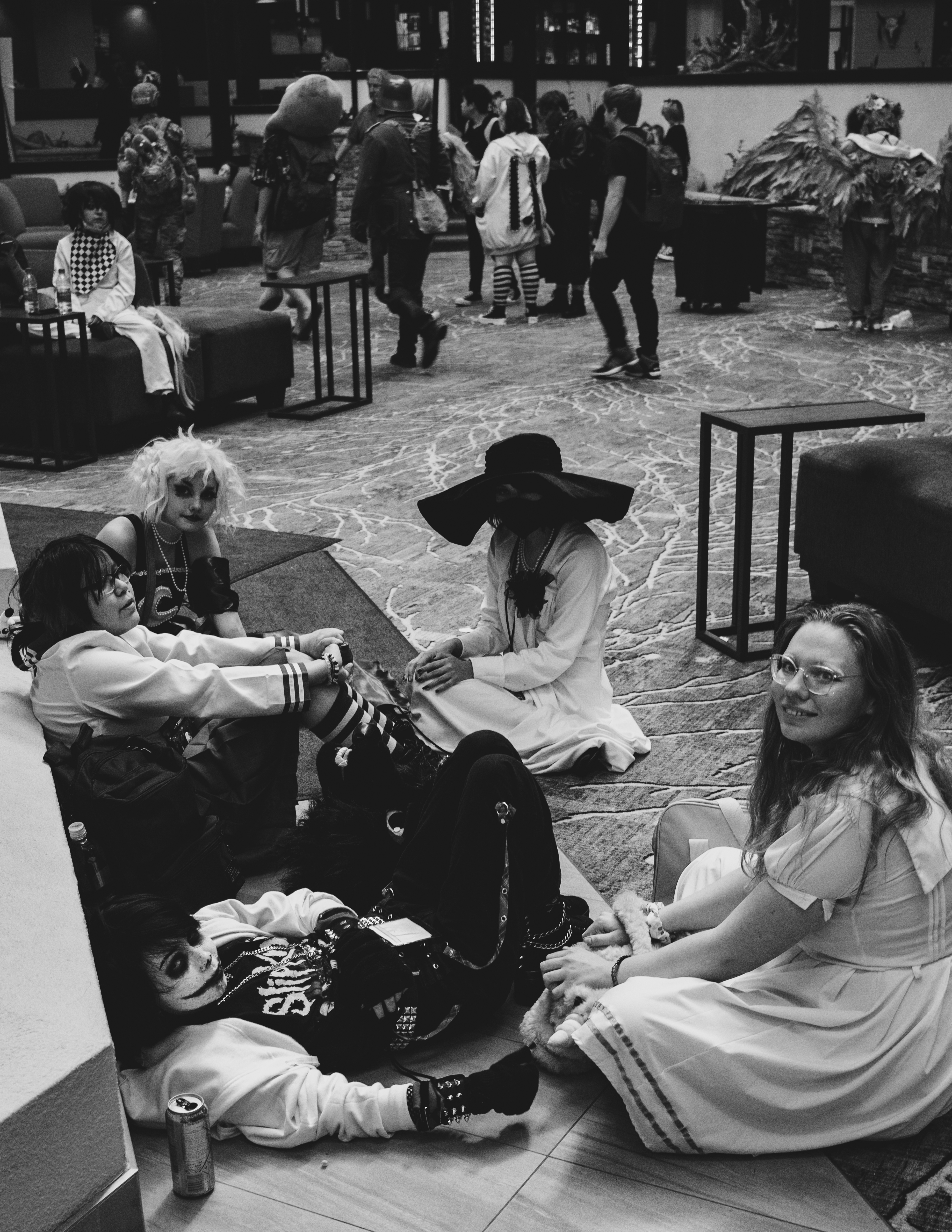
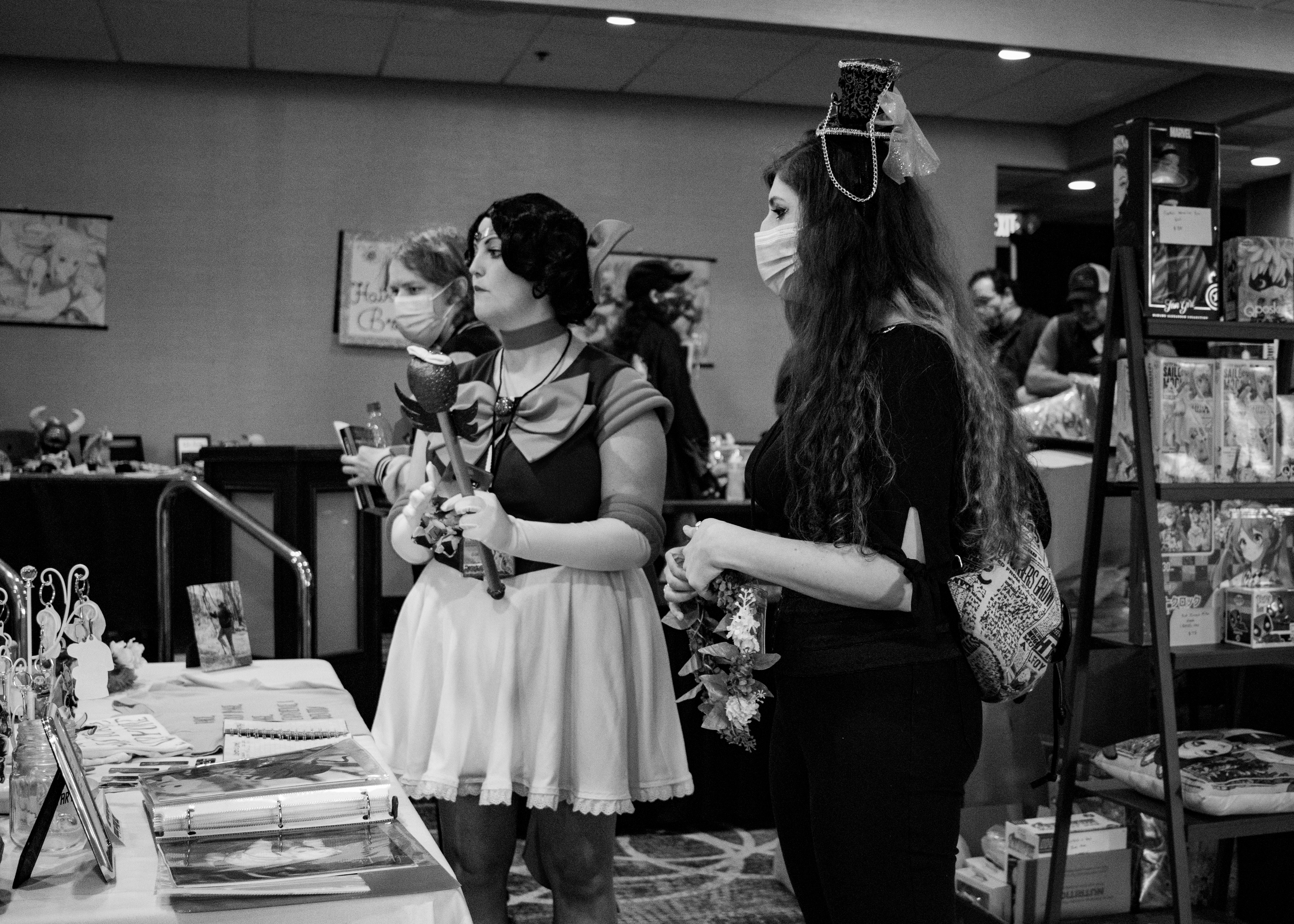
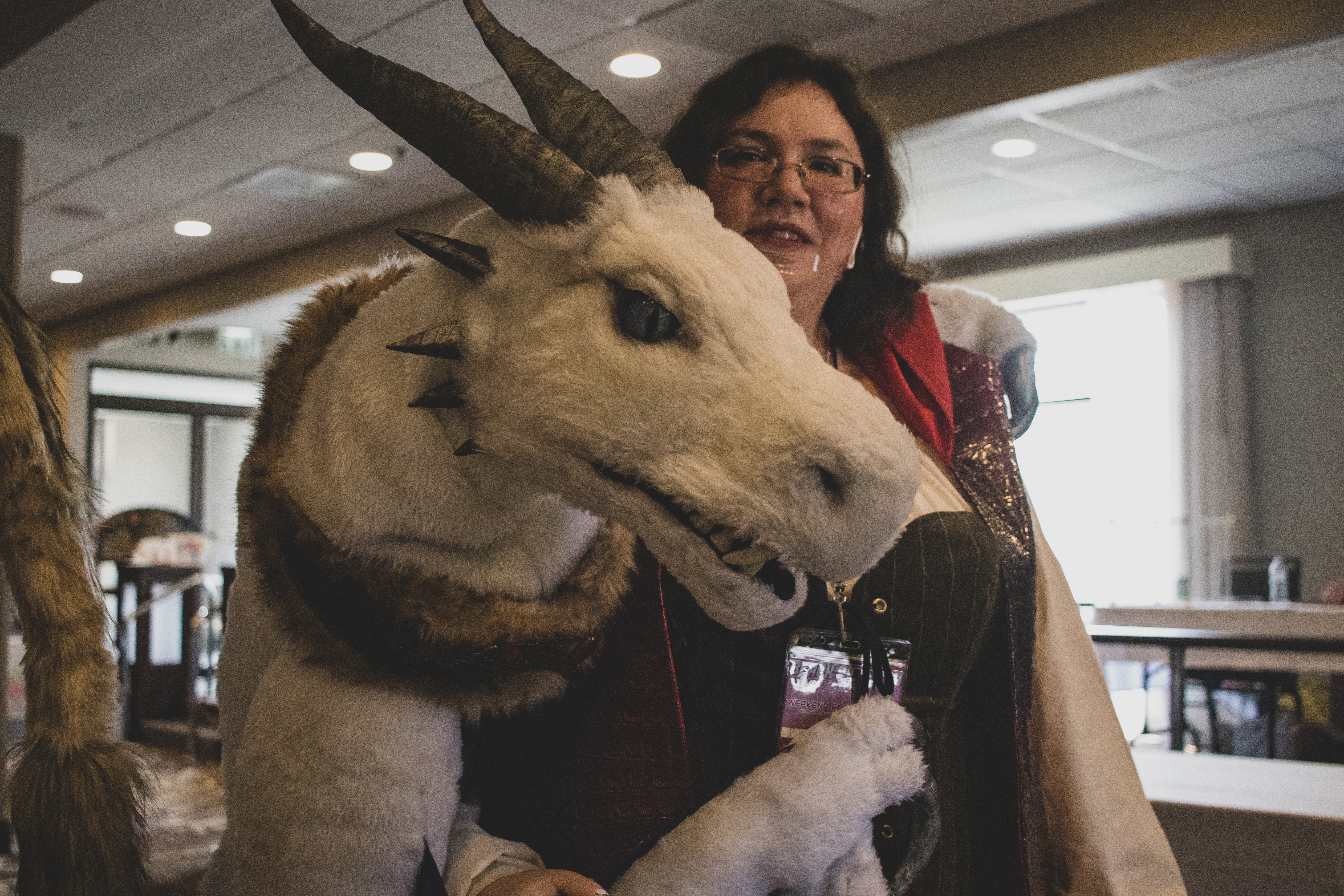
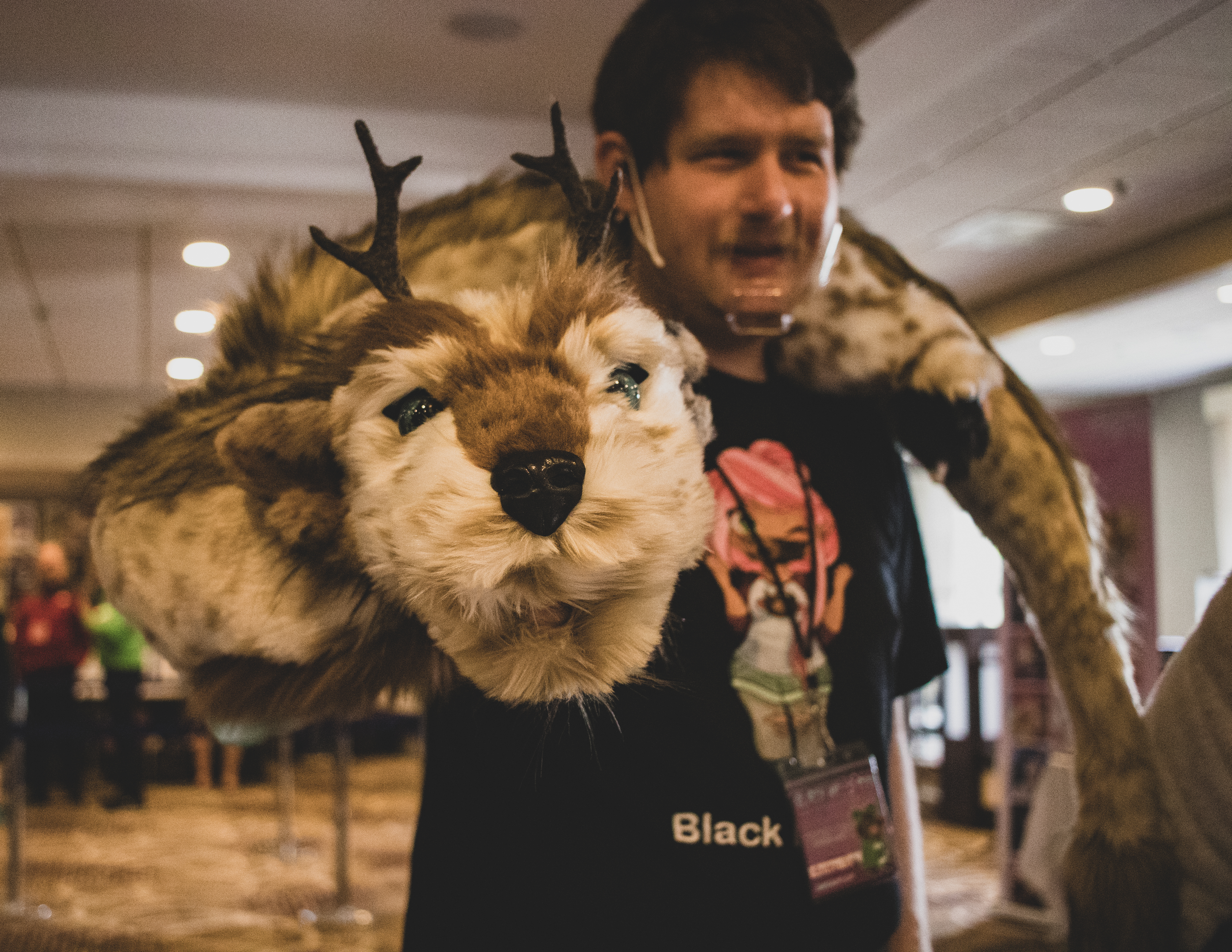
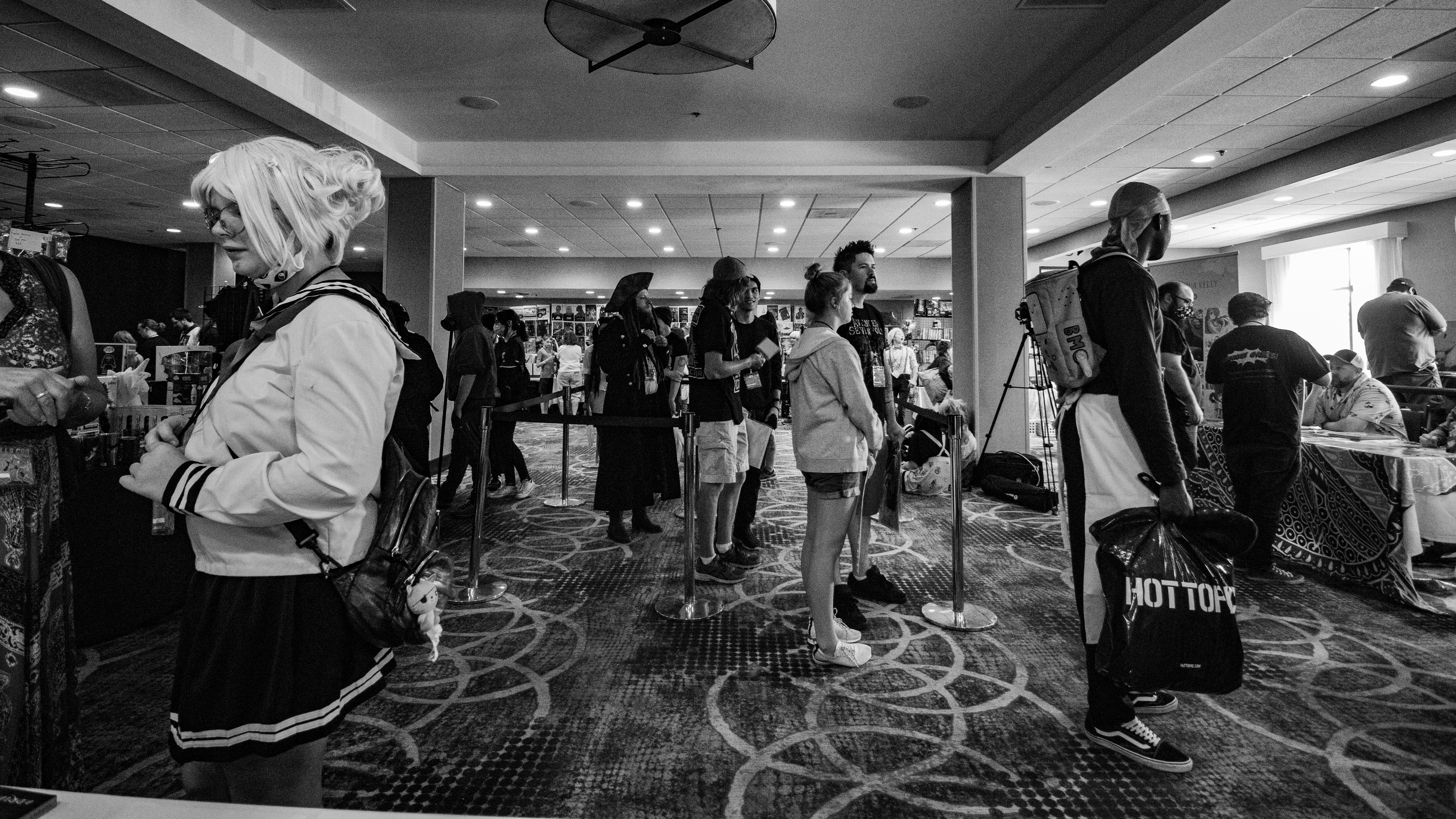
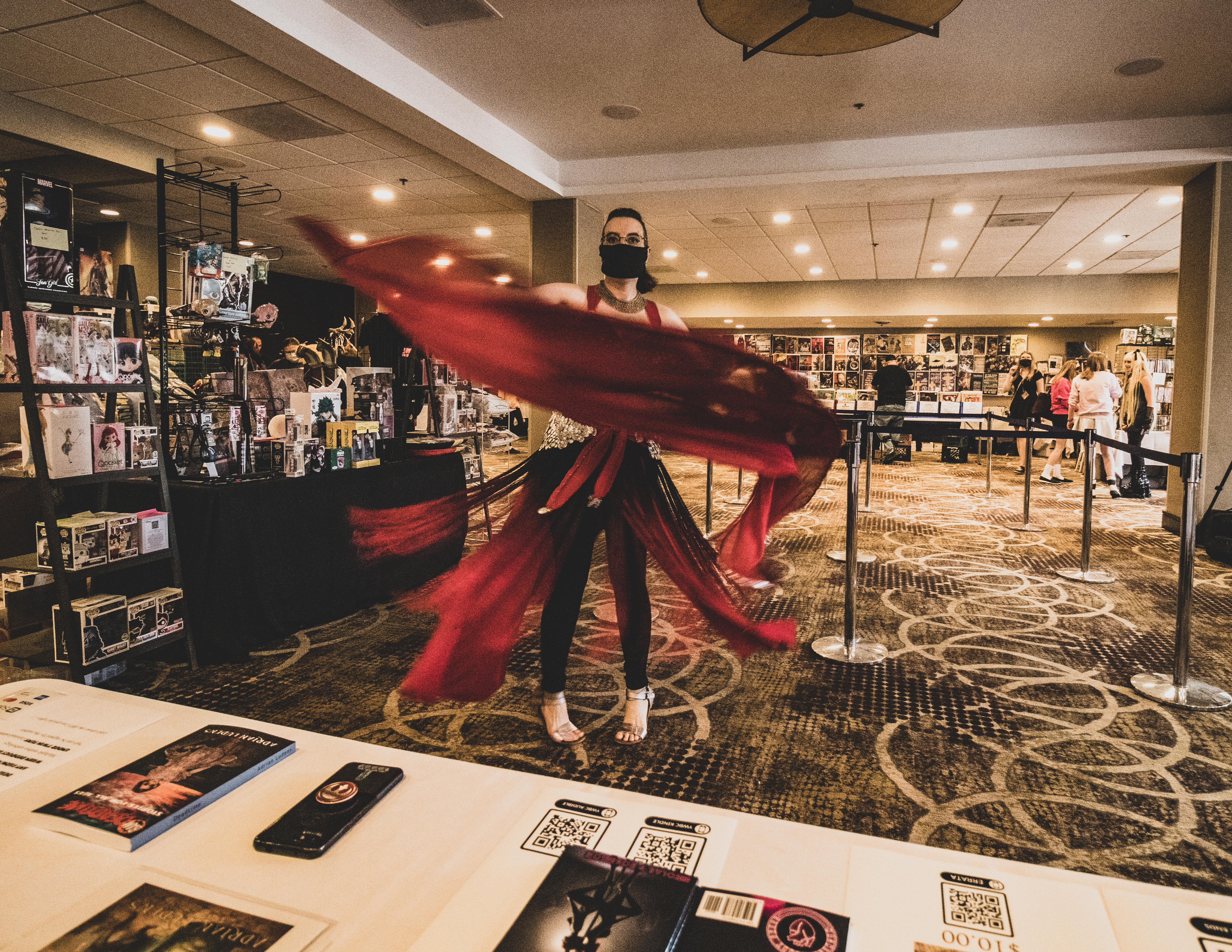
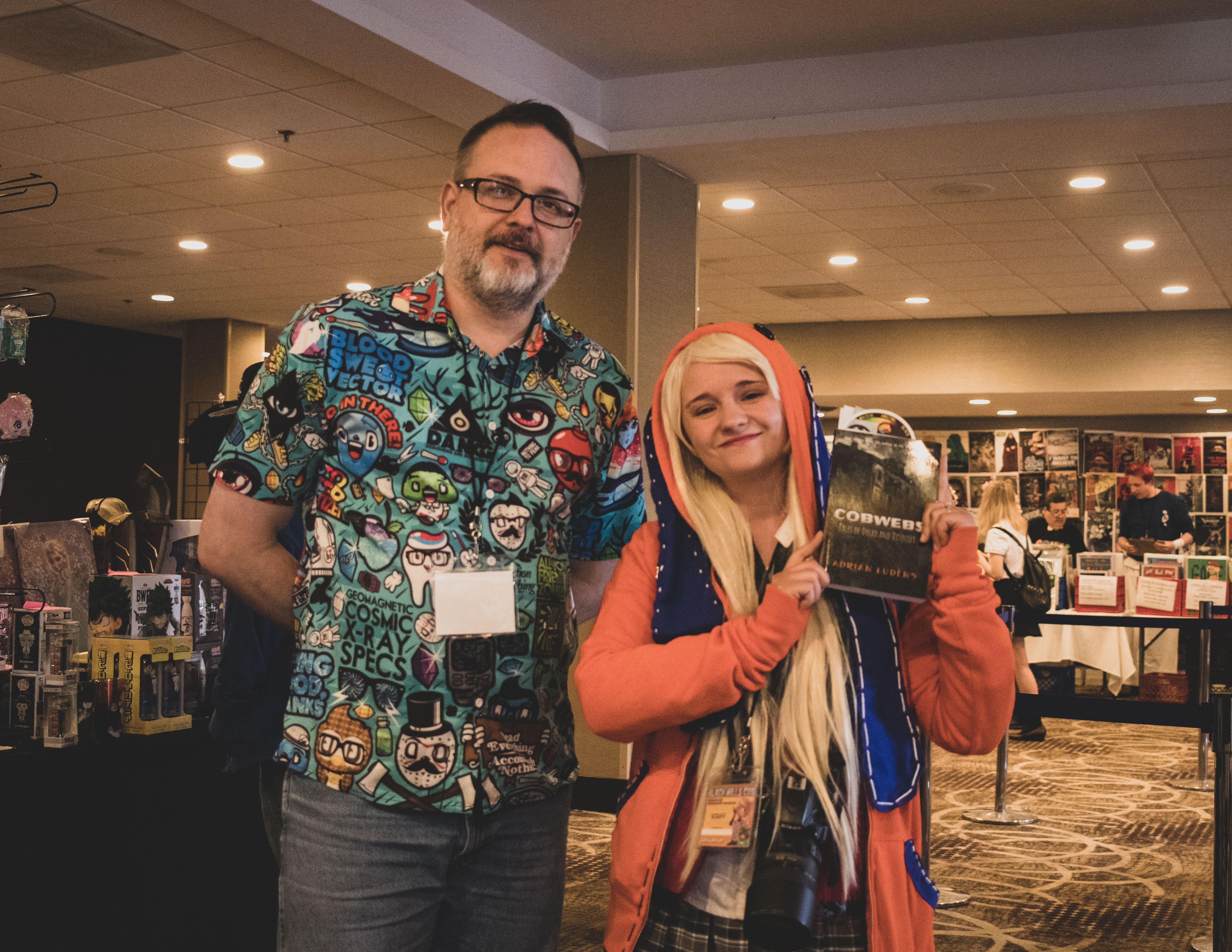
Black Hills Con 2021

This weekend has been a busy one for me.

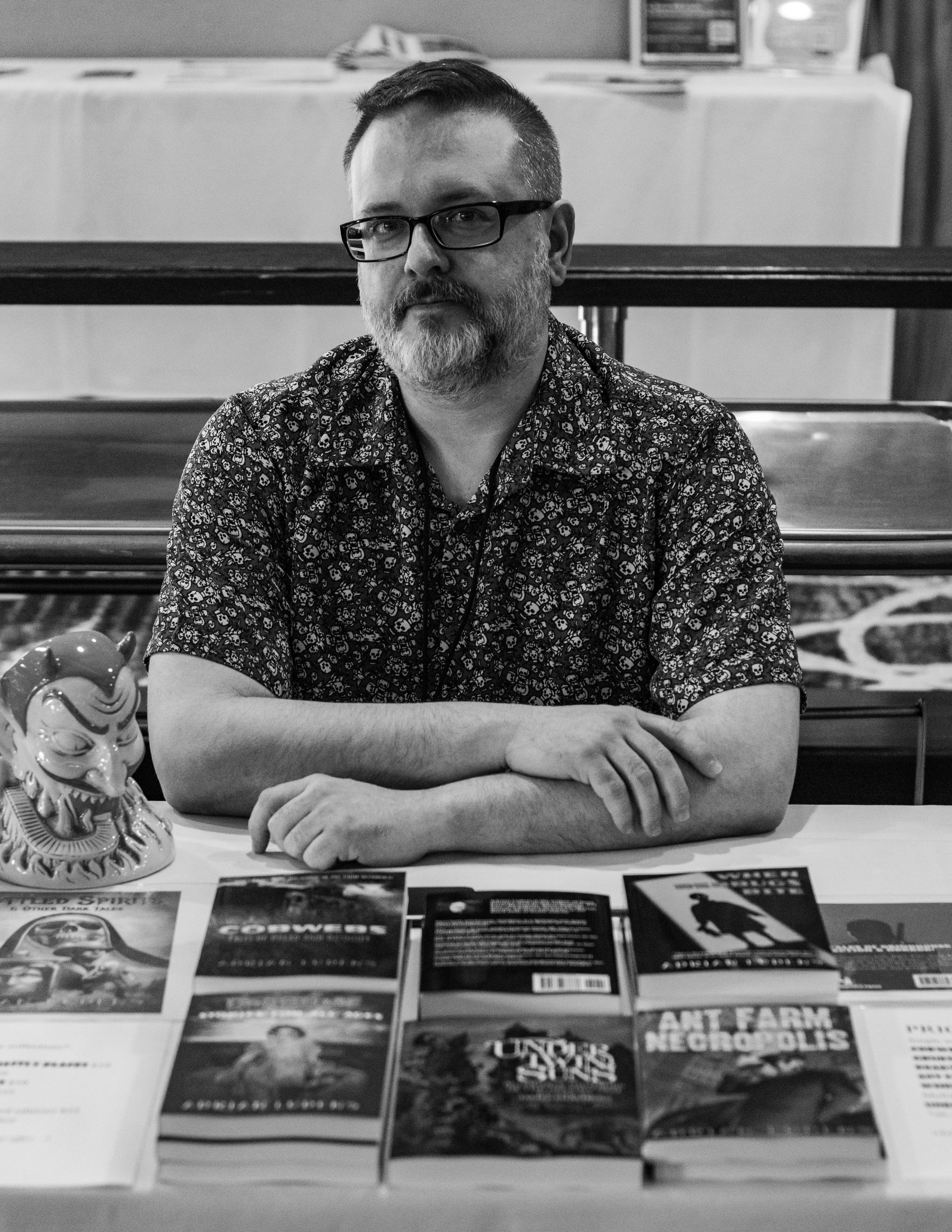
In 2017, my friend and fellow author, Adrian Ludens, had asked if I might be interested in sharing a table with him at the local anime, science fiction, and pop culture convention. At that point, the local convention was SoDak Con–previously SoDak Anime Convention. Unfortunately, due to a planned and scheduled vacation in the Pacific Northwest, I was unable to partner up with him.

I’m sad to say that I might not have done so even without those prior obligations. At that point in my writing career I had only the novel, Unspoken, and my collection of short fiction and poetry, Errata, available. Both titles had been self-published and neither had been particularly successful or generated much by way of buzz or interest beyond people who knew me to some extent. I would have felt like a fraud, sitting there next to him. Adrian had sold probably dozens of stories to various publications and anthologies at that point…and who the fuck was I?

Since then, I’ve come a long way in feeling more comfortable and secure in calling myself an author. My next self-published novel, Innocence Ends, was more successful than both of the previous titles combined–and then some. Thanks to the sales associated with Innocence Ends, I was able to join the HWA (Horror Writers Association) as an Affiliate Member. My new novella, You Will Be Consumed, was published by a small press I respect and appreciate–in addition to since being adapted into an audiobook with a fantastic narrator doing the heavy lifting.

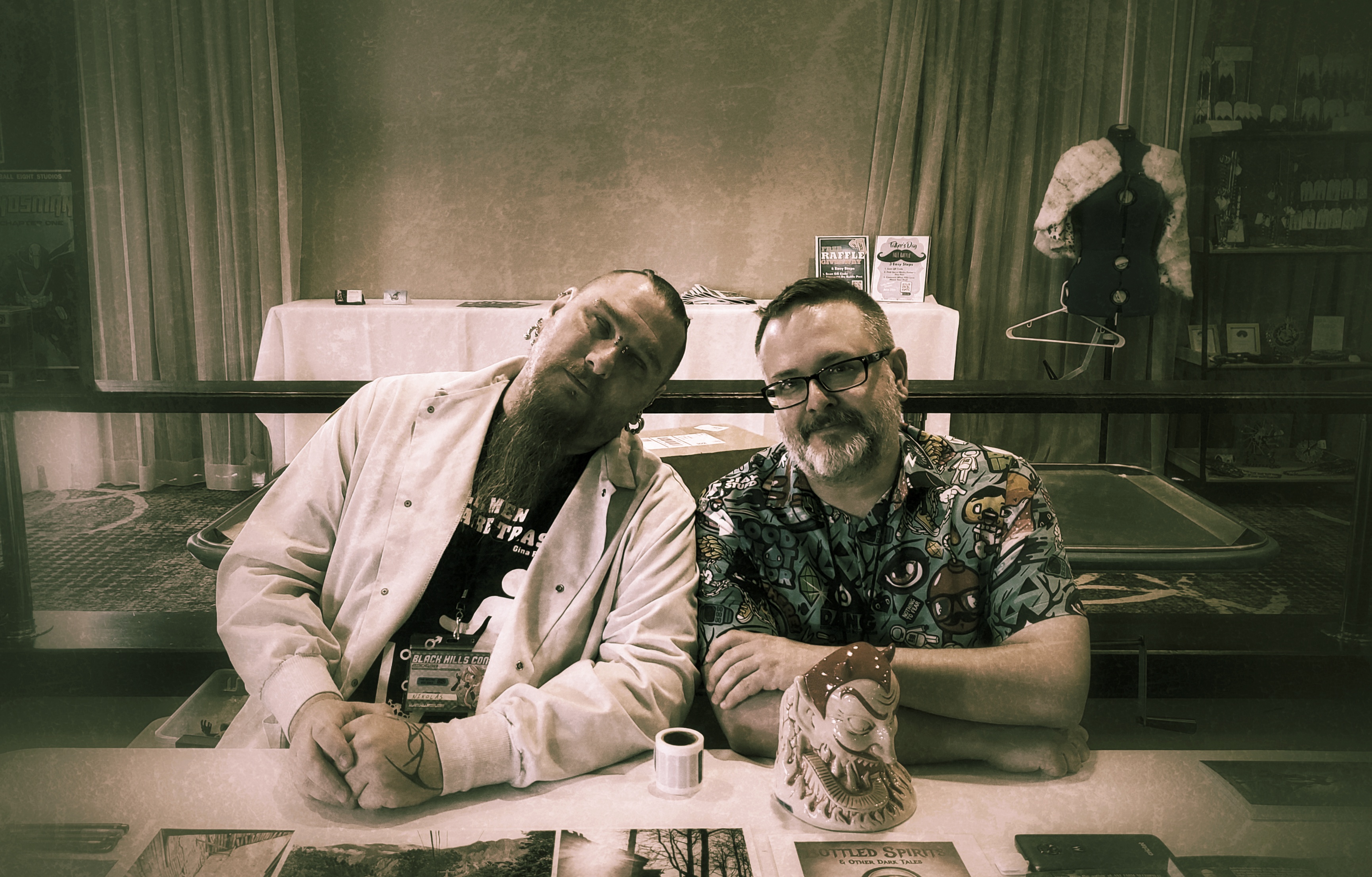
When the new convention–now Black Hills Con–was announced for June of this year, I reached out to Adrian and asked whether he might be interested in sharing a table with me. I was pleased to discover he was interested.

This would be my first time attending a convention of any kind as a guest and a vendor. I was never particularly big on attending conventions in the first place, being as anti-social and riddled with anxiety as I find myself to be when surrounded by crowds of any kind.

I neglected to request time off from work on Friday. Thus, I had to get up at 3:45 AM and begin my shift at the television station at 4:30 AM. I directed the hour and a half of Good Morning KOTA Territory from 5:30 to 7 AM and then KOTA Territory News at Noon from 12 to 12:30 PM. It had already been a long day, as you can probably imagine, before I pulled out of the parking lot and made my way to the hotel where the convention was being held.

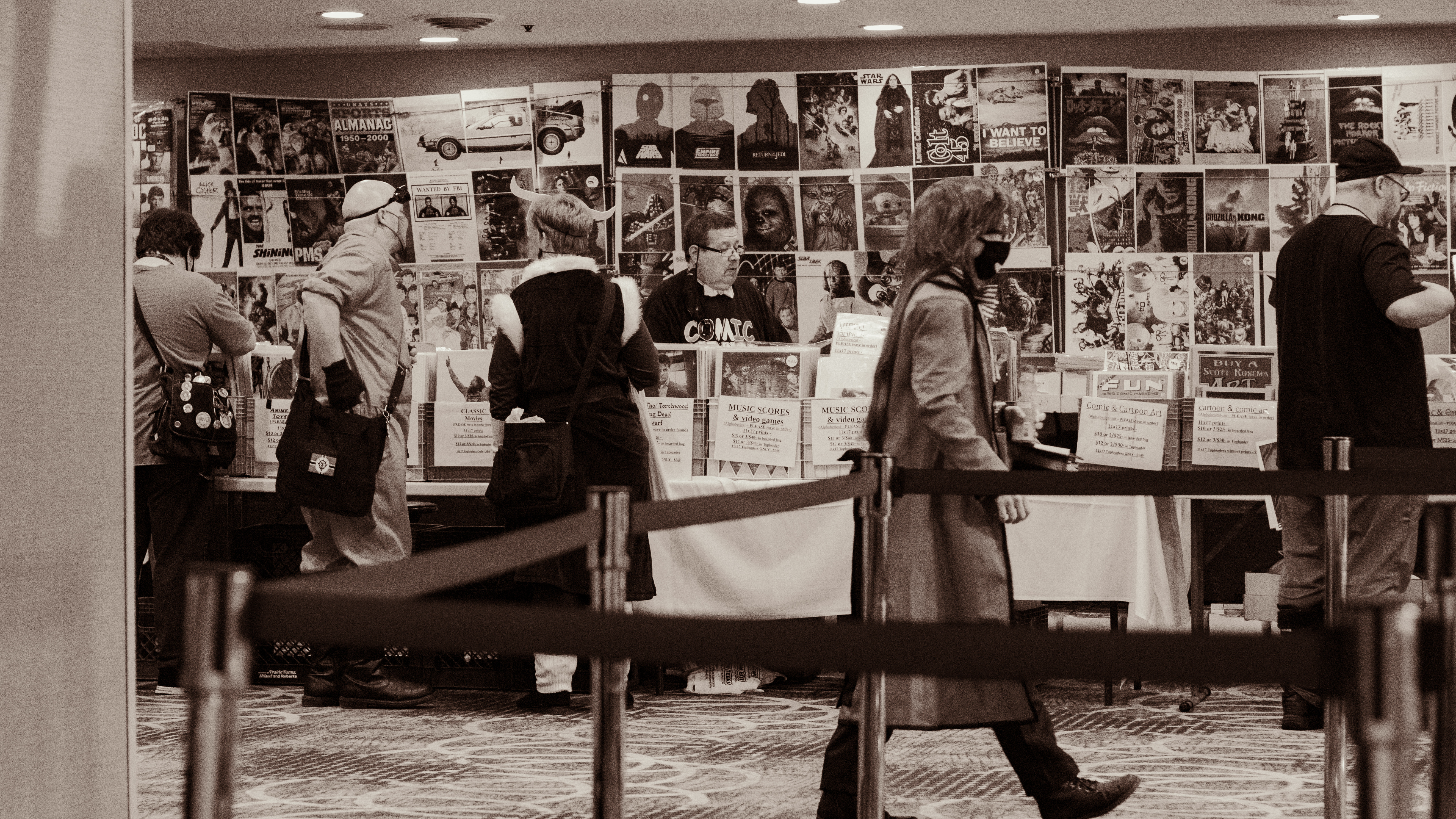
I arrived at the hotel and was directed to the vendor room where Adrian and I would be sharing our table. I was pleased to see that my old friend, Tom Rasch, was at the table right next to us. Tom is a comic book artist/creator who has been active in that industry for quite some time, in addition to having done a good deal of video game character design back in the day. He was there to promote his various independent comic properties, Black Alpha and Salem Tusk in particular, as well as a documentary film that is detailing his efforts to bring these properties to life in the way they deserve to be realized. At some point in the relatively near future, he’s likely to have a Kickstarter campaign going live, and I’ll be sure to share those details here.

Needless to say, I felt a wash of relief, knowing that I had familiar faces right there next to me.

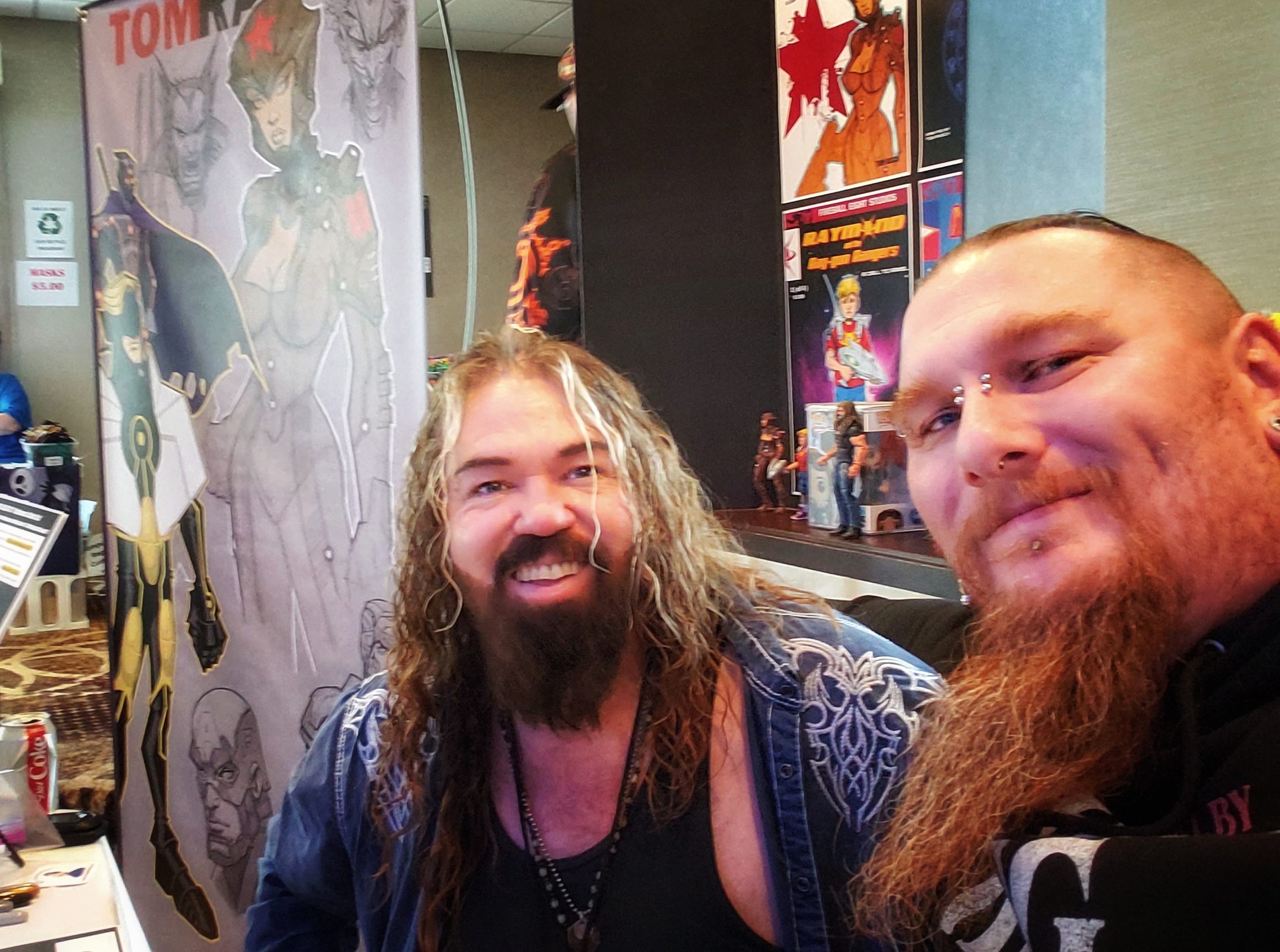
The next five hours turned out to be a great deal more fun than I suspected they might be…additionally, I managed to deplete a fair amount of the books I’d brought with me for the convention.

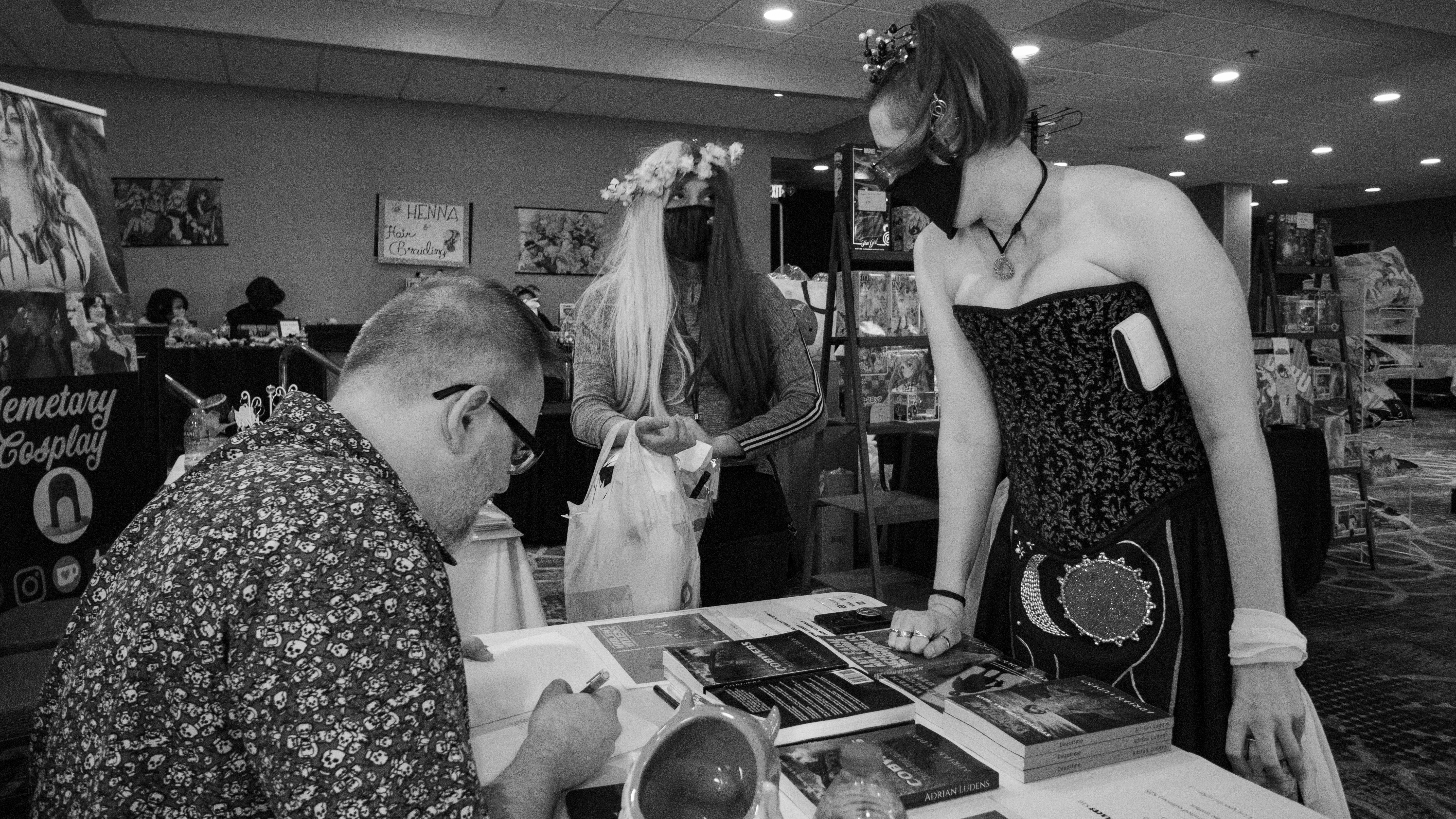
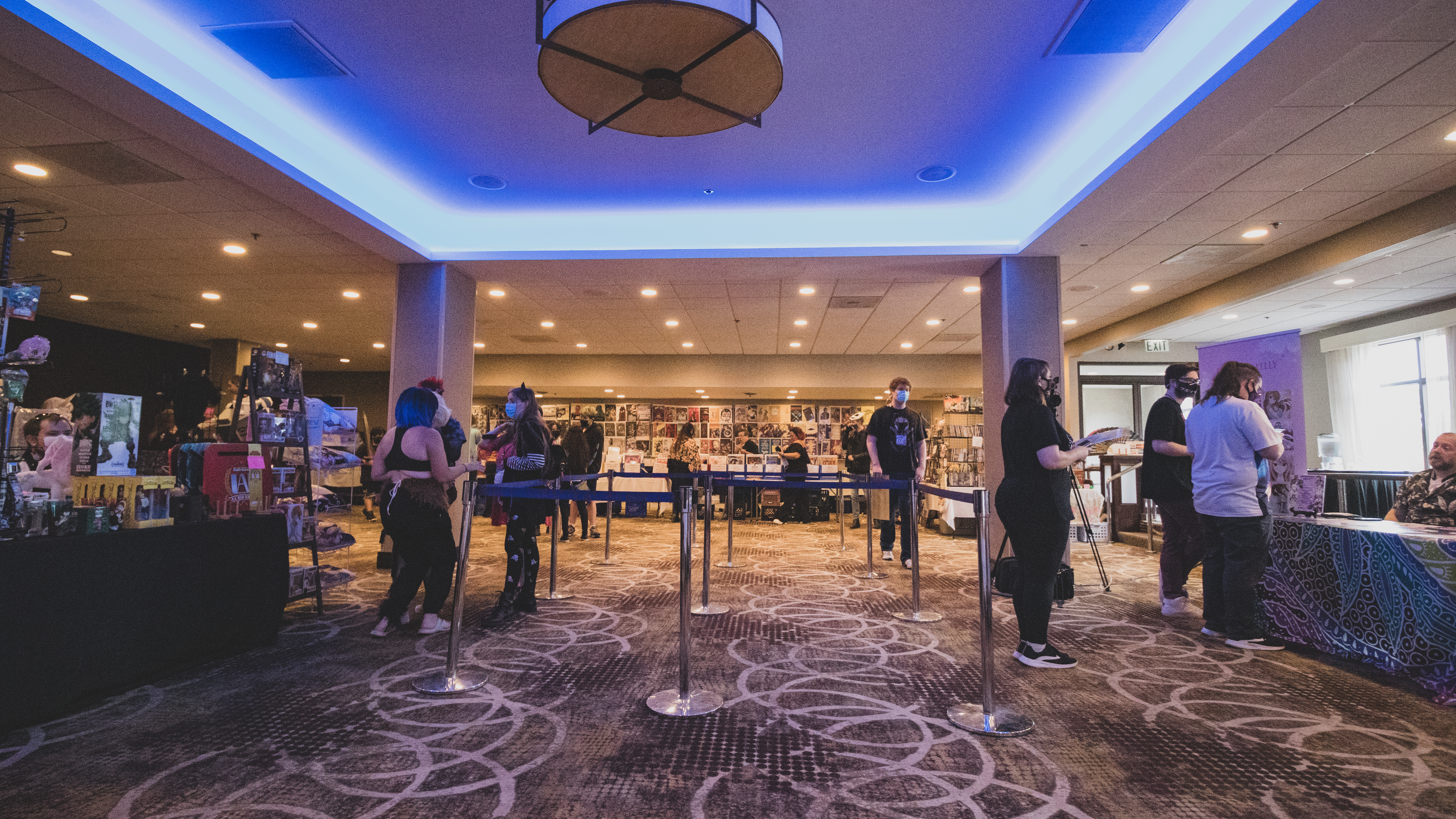
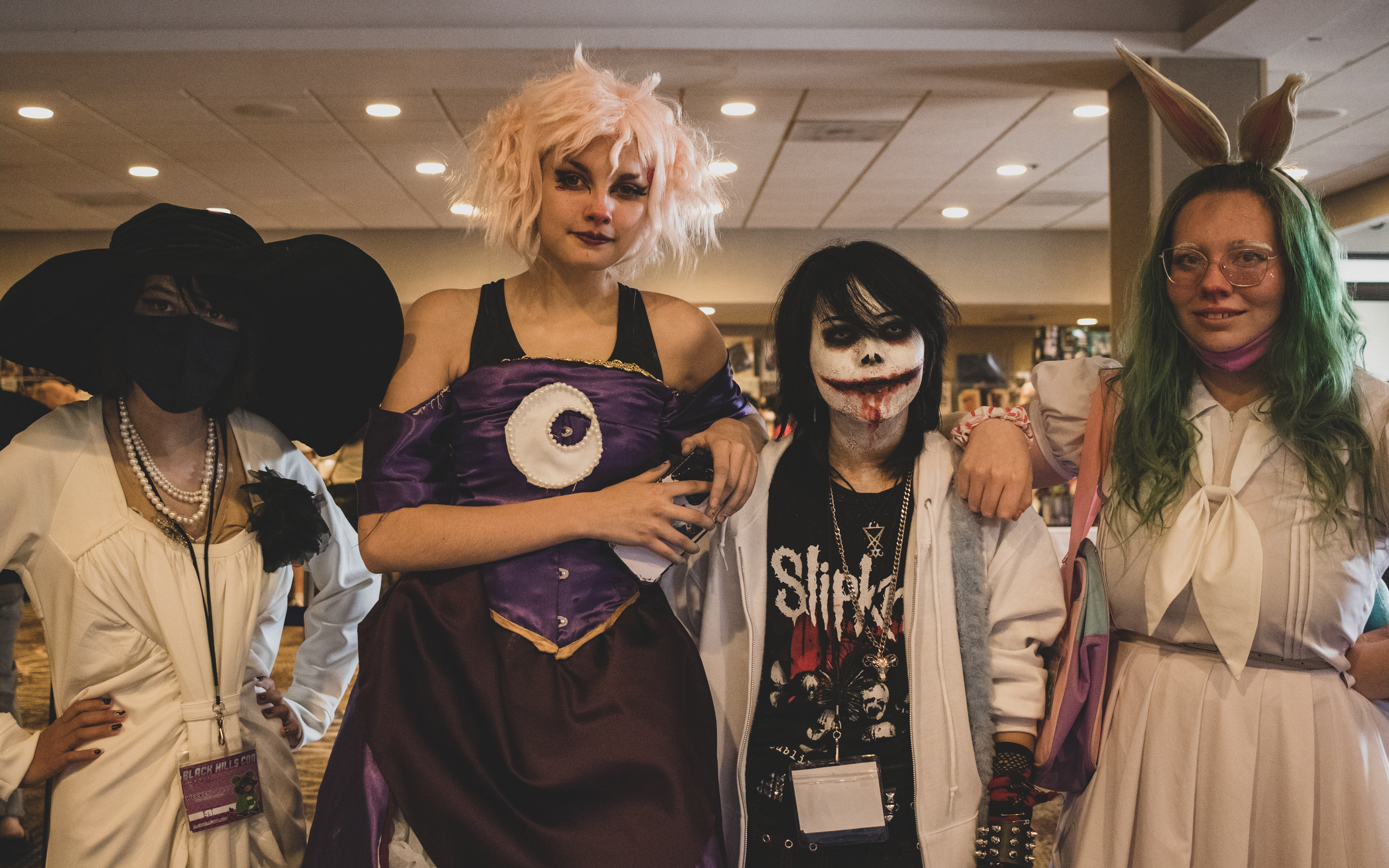
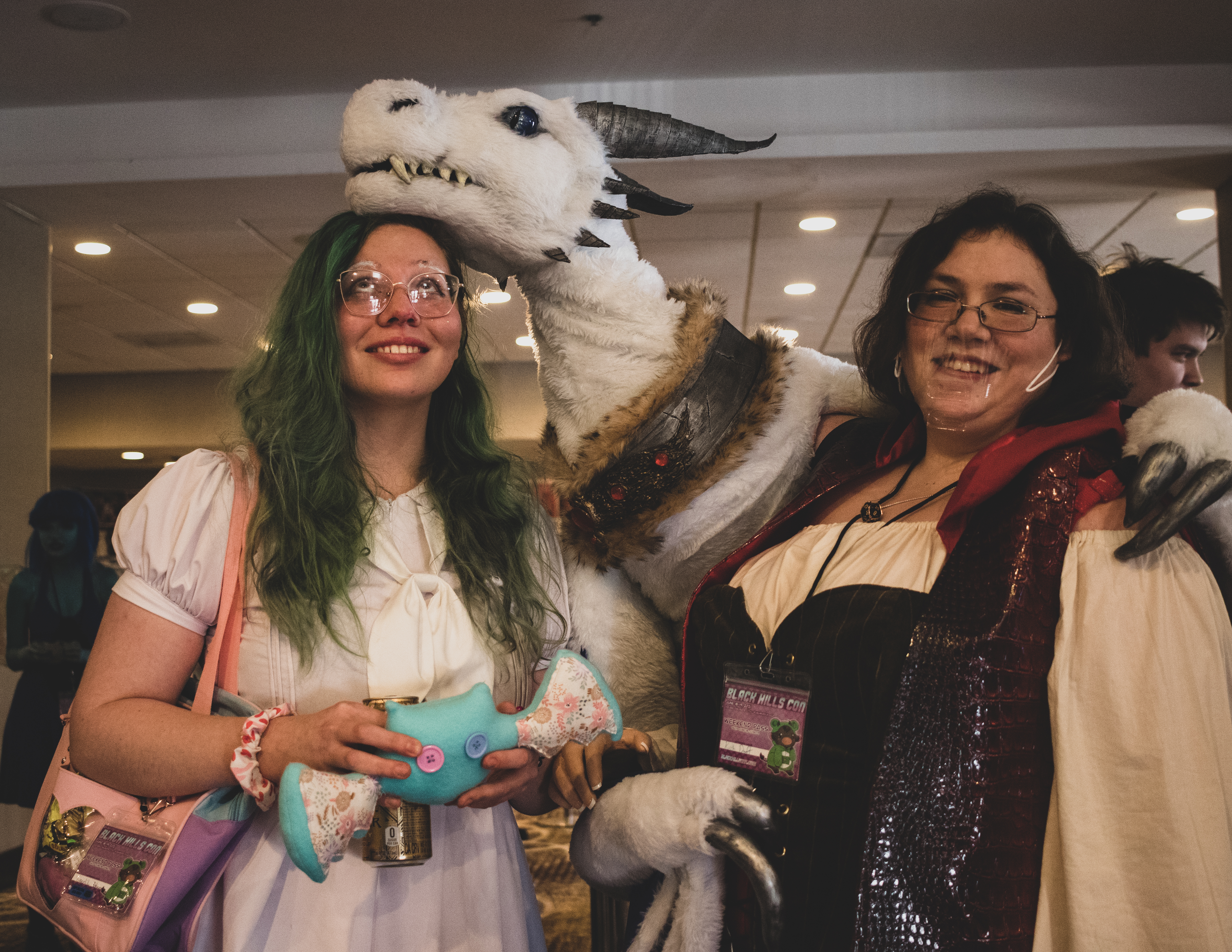
Using a trick I’d developed for coping with social anxiety, I carried my camera with me and captured photos of the events, separating myself from them by placing the lens in between myself and the rest of the world.

I was exhausted when I arrived home shortly before 7 PM on Friday. I ate dinner and took a nap before waking up and going to the gym around 10:30 PM. I have a difficult time breaking from routine, and I try to always go to the gym on Friday evenings, regardless of what my day consisted of.

On Saturday morning, I woke up at 6:30 AM and took a shower before taking the puppies outside and making sure my daughter was ready to go. We stopped for coffee and arrived at the convention location right at 8 AM as everything was getting started. I made my way to the vendor room–it was closed to all but the vendors until 10 AM–while my daughter went to watch Saturday morning cartoons that were being projected on the screen of the large conference room by the convention staff.

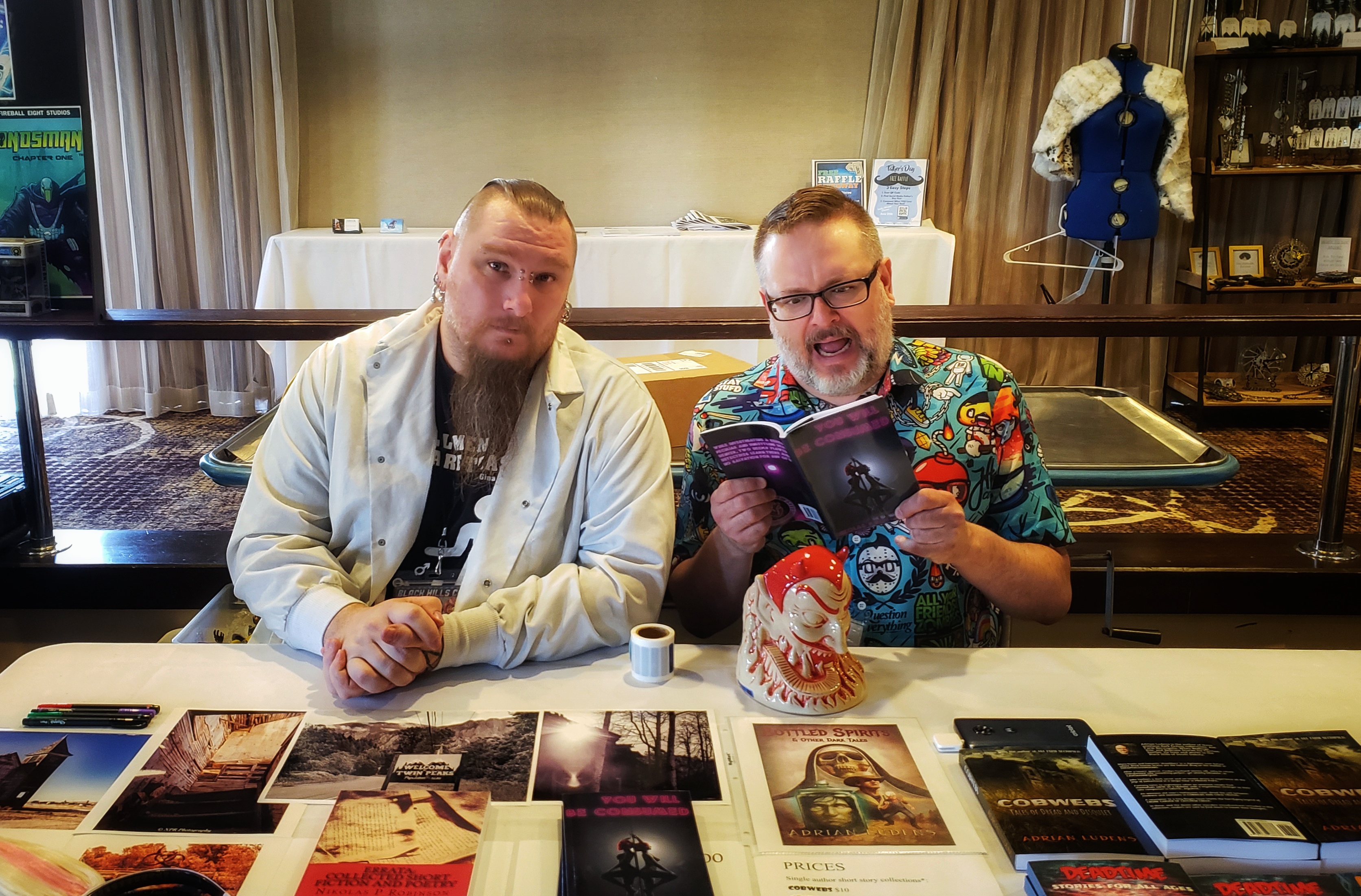
Most of the vendors weren’t there yet, so it was nice to just relax and chat with Tom while I put everything out on the table, including some creepy photo prints I’d brought with me to see if they might also sell. Adrian arrived not too long after.

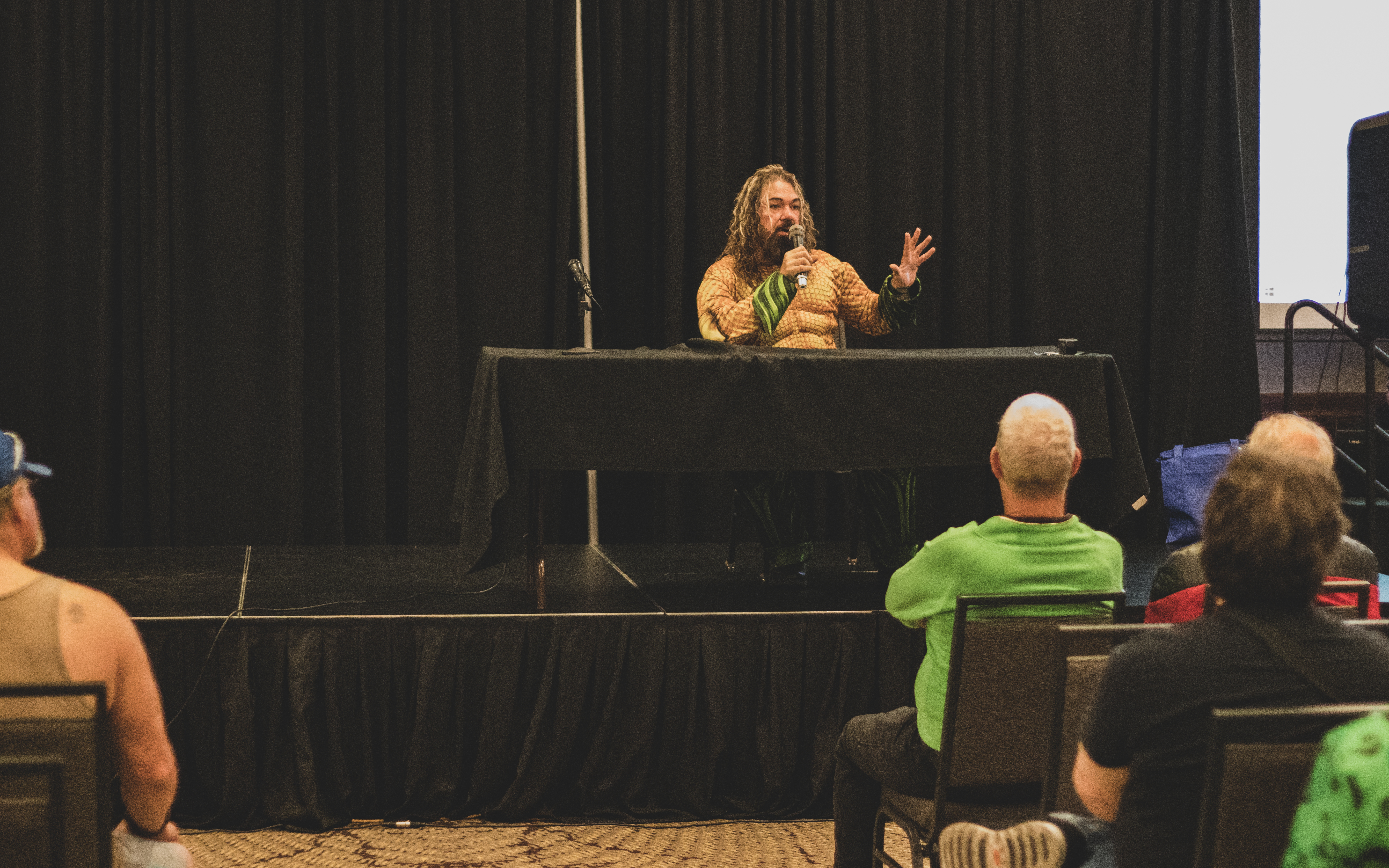
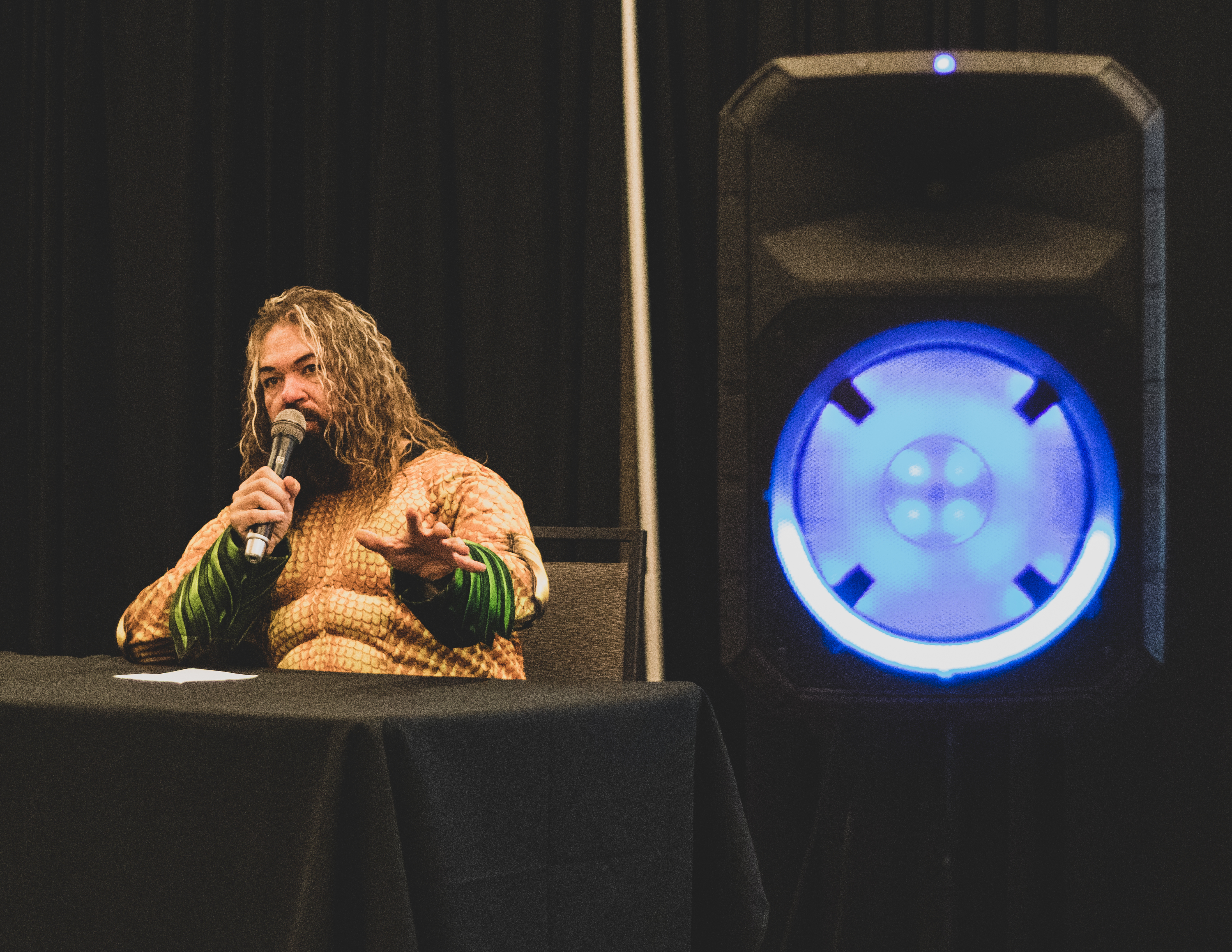
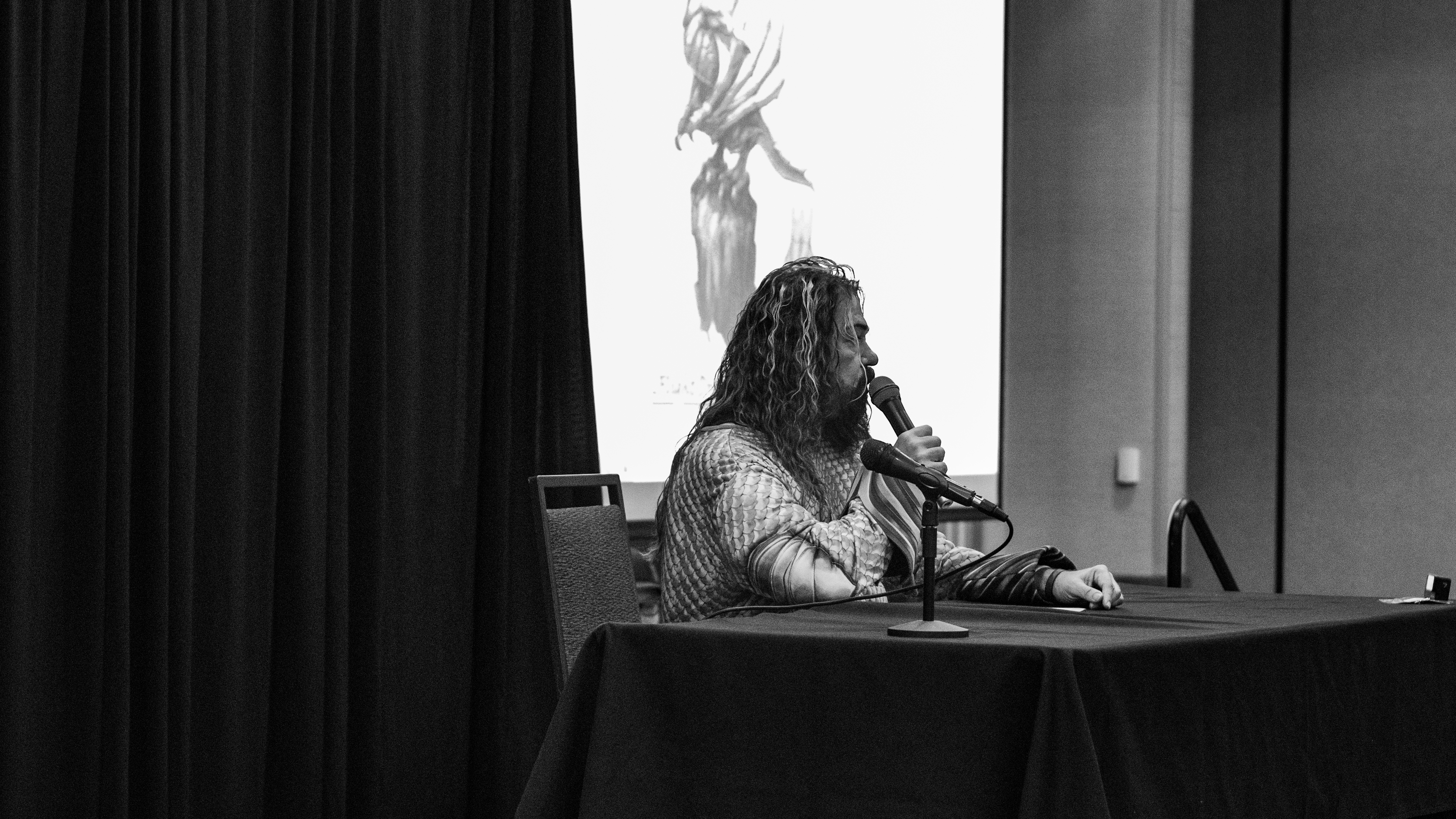
Tom was hosting a panel on Saturday morning, sharing his experiences in the comic book and video game design industries and talking about his current projects. I attended some of that panel because I wanted to see at least some of it instead of spending all of my time sitting at the table.
Throughout the day, my daughter sporadically returned to the vendor space with different friends in tow and it was fun to see the teenagers enjoying themselves so much. My daughter also took advantage of the fact that Adrian had brought the rolling, steel table from a morgue with him.
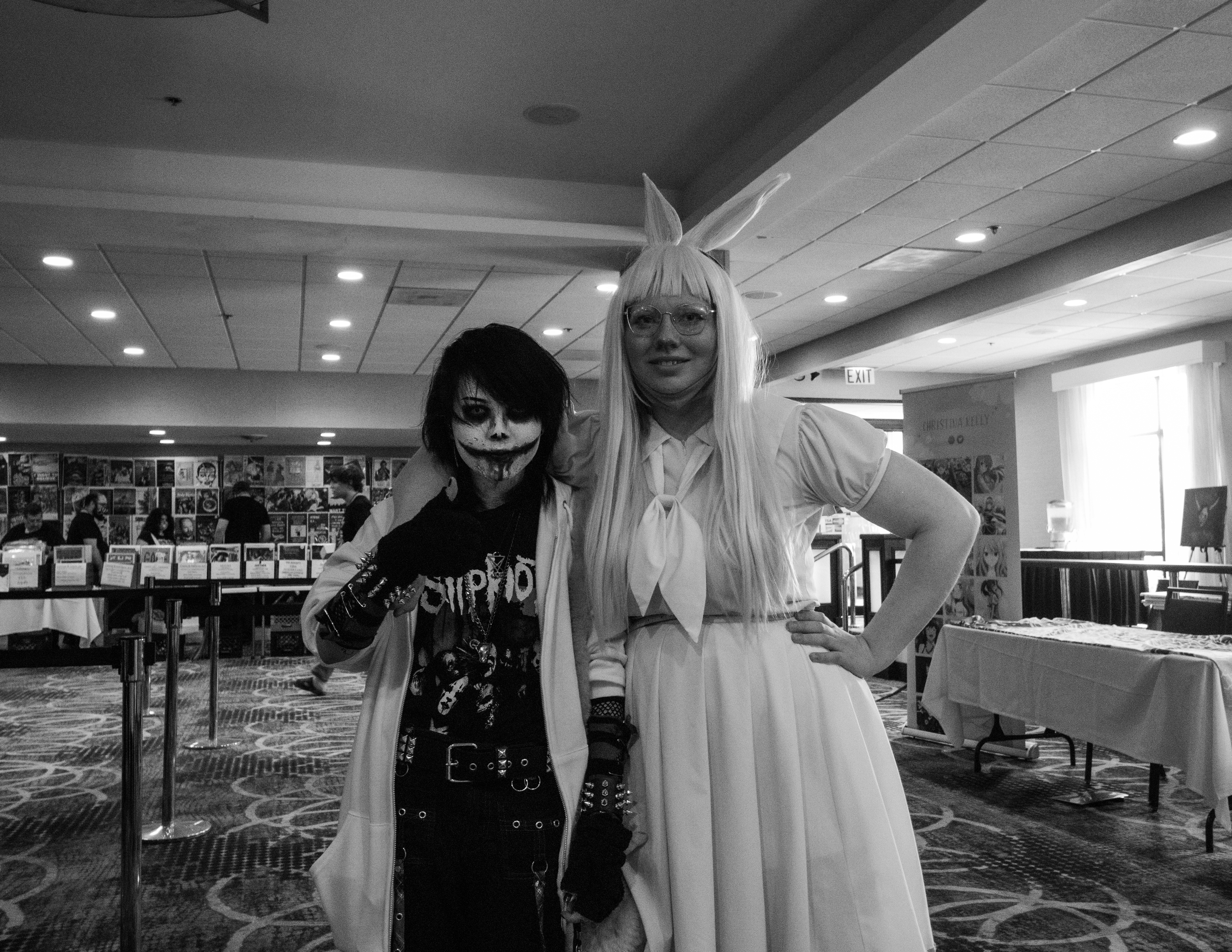
The second day of the convention was a marathon, though slightly less of a marathon than the first day had been for me. We held our post in the vendor room until just after 6 PM when it was time to pack it in and head home. I returned home with only four of the copies of You Will Be Consumed that I’d brought with me, and none of my other books. All in all, I’d say it wasn’t a bad day.

It was great being able to spend time with friends I don’t often see in real life and to meet new people.

Before leaving the hotel, I gifted two of my photo prints to the two special guests of the convention–voice actors in various anime films–because someone had mentioned it was their first time visiting South Dakota, and I thought they might like something a little less tourist-oriented as a memento. One of the two brought over a signed art print that made my daughter’s day, because she had considered getting one until she saw the prices they were charging.

The other remaining photo print, I gifted to another of the vendors who had been awesome to talk with here and there.

As tired as I was, I must admit I was sort of sad to see the convention ending.
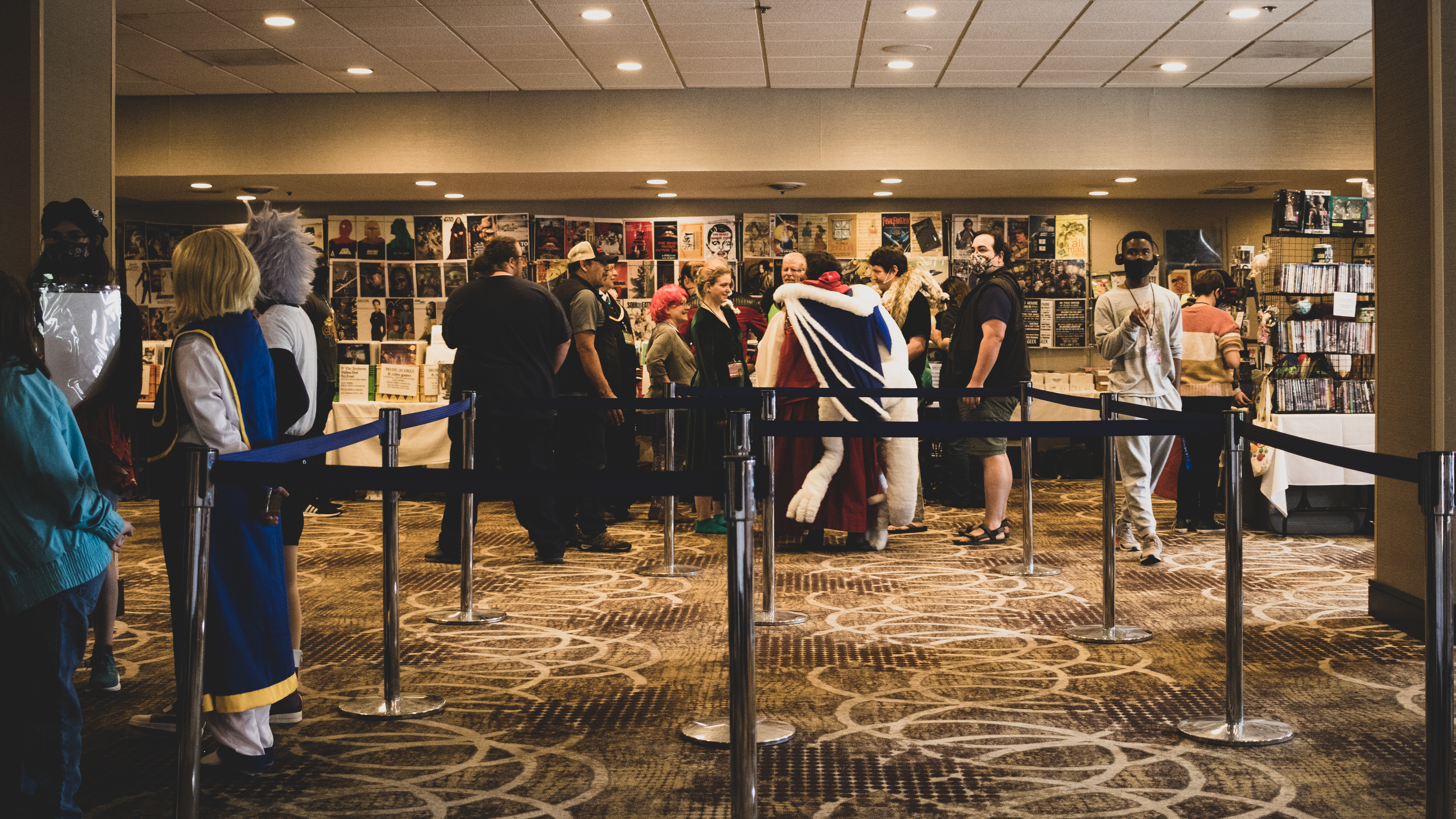
All things considered, I have to say I think my first experience as a guest of a convention was a success. I look forward to doing it again.

I have to thank the folks who organized Black Hills Con 2021, because they did an excellent job of making sure everything ran smoothly and that everyone was comfortable and taken care of. The atmosphere was a positive one and free of some of the toxicity and gatekeeping that I’ve heard about regarding similar conventions around the country.
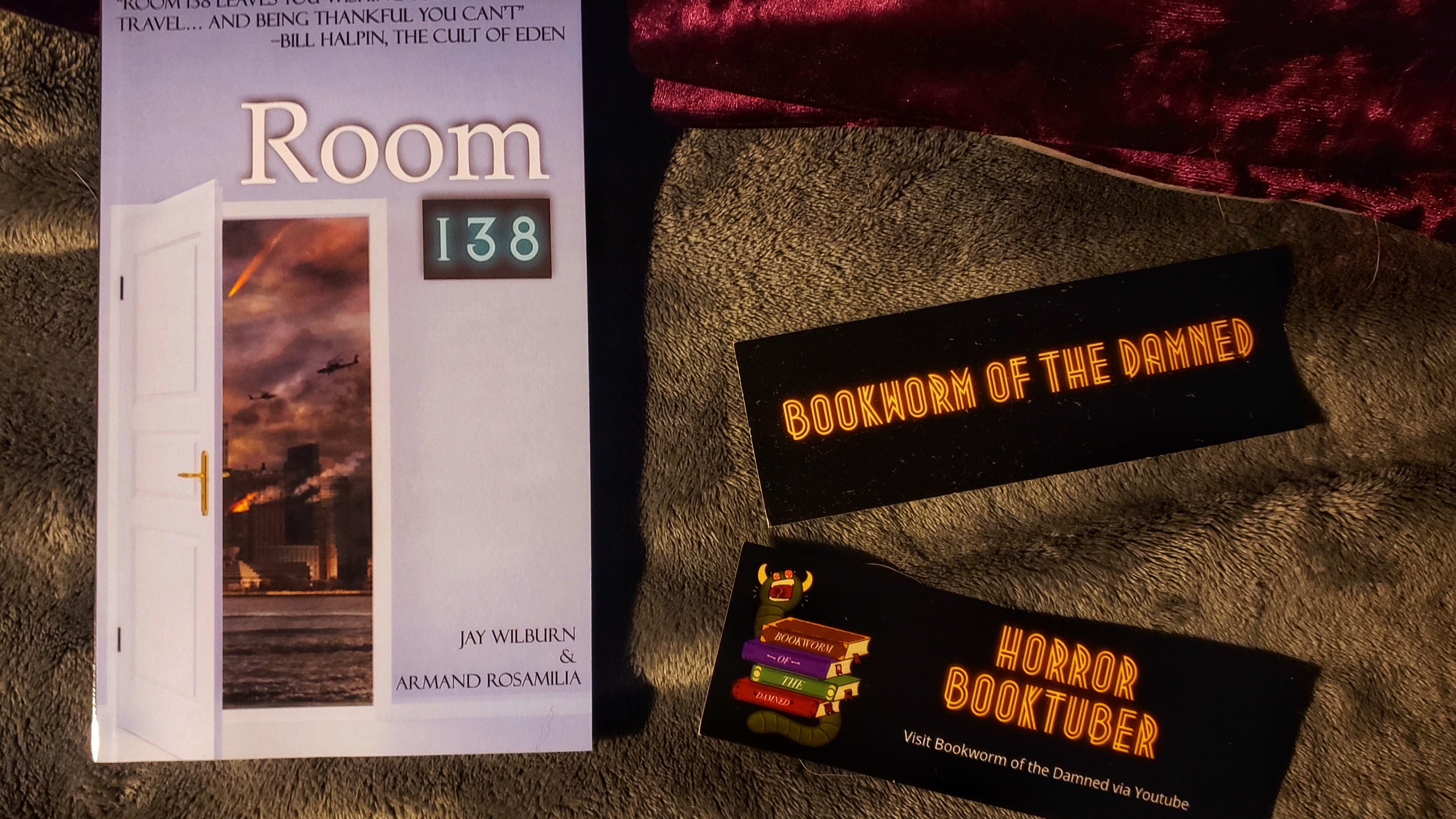
Room 138 by Jay Wilburn & Armand Rosamilia

Wilburn and Rosamilia together weave a disorienting tale. The individual narrative threads that make up Room 138 are as difficult to follow and keep straight for the reader as they are for our confused, terrified, and often paranoid protagonist, Hank Smith.
It’s hard to blame Hank for feeling paranoid, though. Waking up in a recently vacated hotel/motel room in a new year and a new city from where you’d gone to sleep would do that to a person. Just trying to imagine that life, where the month and date on the calendar keeps marching forward, while the year dances around to a tune you can’t quite hear…it’s enough to give someone a headache. With no recollection of who he really is, no concept of how long he’s been doing this same thing, and without the foggiest notion of why he’s even doing it…Hank keeps searching for abstract clues that he hopes will lead him to the next Room 138 and some illumination for the regions of his memory that remain in shadows.
If that sounds confusing to you, you’re in precisely the right state of mind to begin reading Room 138.
It’s a book that is equal parts a thriller, a science fiction fantasy, and a feverish, internalized mystery…but it’s so much more than those individual components.
It’s probably a good time to climb aboard and allow Mr. Train to guide you down the rails at breakneck speeds until the view beyond the window becomes nothing more than a peculiar blur of familiar objects twisted into alien shapes. Maybe you’ll be the next in line to join Hank and Savannah on their mission to save the world, one day at a time.

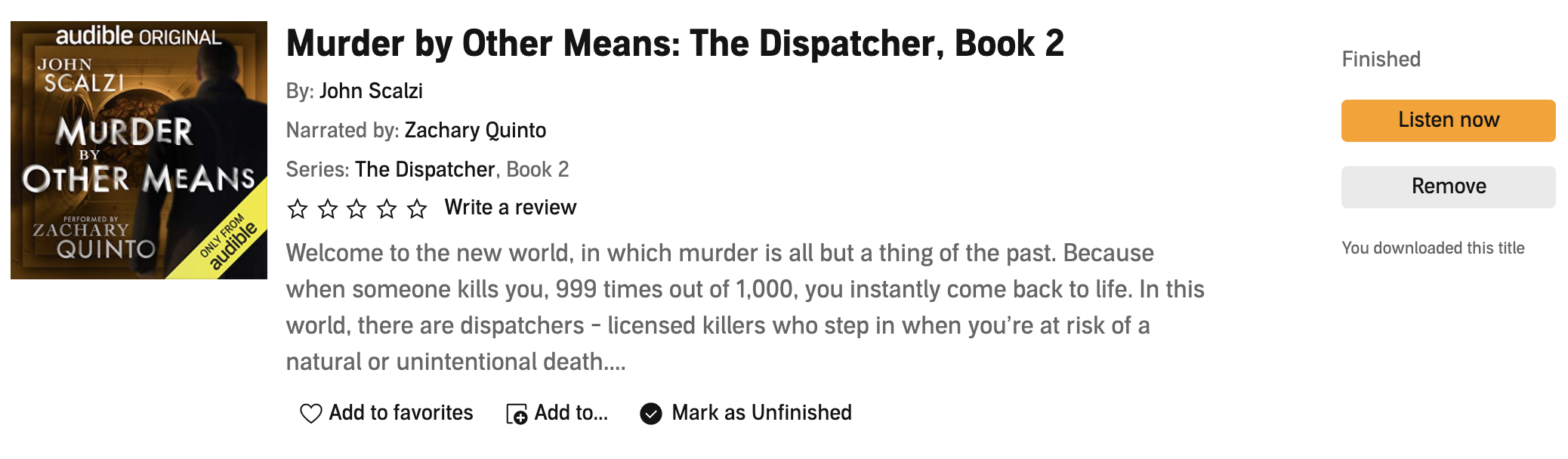
Murder By Other Means by John Scalzi: Narrated by Zachary Quinto

Few authors could successfully pack as much intrigue, mystery, and suspense into a novella as John Scalzi. Murder By Other Means is a prime example of Scalzi at his fast-paced best. At the heart of this story is a question, “How do you successfully assassinate people when 99.99% of murder victims reappear–unharmed–in their homes, only moments later?”
We return to the world of Tony Valdez, the titular Dispatcher of the previous story in this sequence, not too long after we left him at the end of The Dispatcher. Legitimate work has dried up for him and the city of Chicago is on an austerity budget that prohibits him from finding many side gigs on the up-and-up. This is where we meet up with him again, as he enters a law firm for a less than legal utilization of his skills.
From there it’s a dizzying spiral of international corporate intrigue, organized crime, suicide, and survival…with a healthy dose of police procedural and noir-ish detective story providing the framework. This is a better story than The Dispatcher, which was a pretty high bar to clear.
Zachary Quinto again provides narration for the story, and there’s probably no need for me to point out that he’s beyond excellent in all respects. I can’t imagine Tony with a different voice.

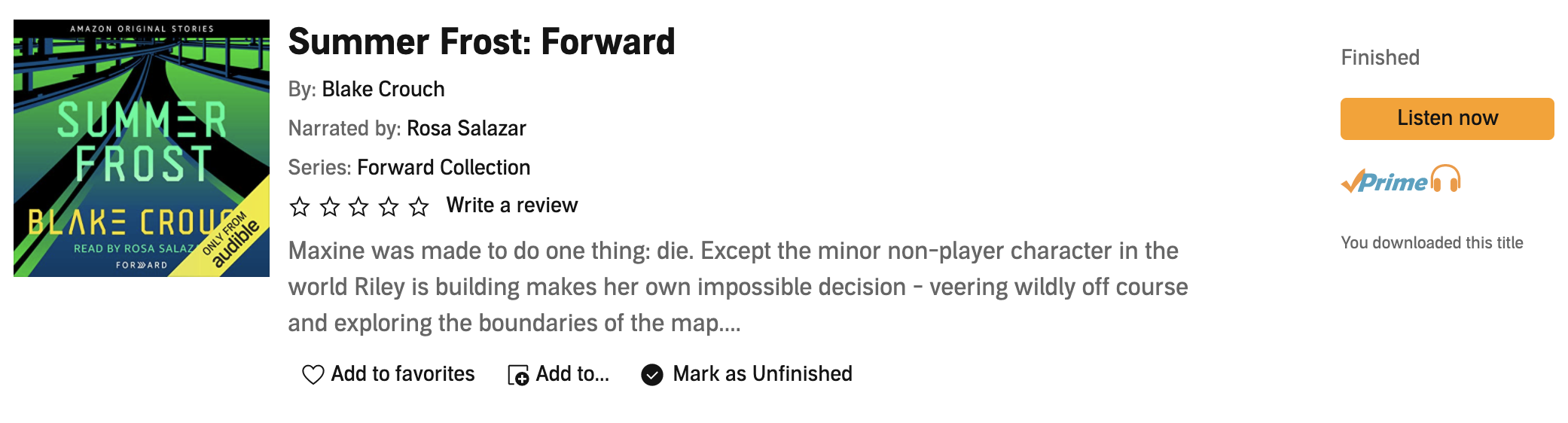
Summer Frost by Blake Crouch: Narrated by Rosa Salazar

Summer Frost is not treading entirely new ground, building up to a predictable outcome as it does…but it’s not the novelty of the tale that makes it worthy, it’s the quality of the storyteller. Blake Crouch is quite the storyteller.
Riley makes for a captivating protagonist as she works to assist the world’s first truly emergent intelligence reach and further maximize its potential. It’s appropriate, in a sense, that the AI’s name is Max (short for Maxine, the NPC within a VR game, the AI unexpectedly grew from).
It’s a sad tale of being too close to a problem to see that there’s a problem at all. In this case, the problem is that Riley has projected altogether too many human characteristics onto something that is far beyond human. Blinded by an affection that falls somewhere into a nebulous space of mother and child…or lover and object of obsession. We are helpless to do anything, hoping that we’re wrong, as the story races to the inevitable conclusion…but knowing, deep inside that there’s no other conclusion available.
The narration from Rosa Salazar is as spectacular as most of the narration has been for the installments of the Forward Collection. She lulls us into a sense of near-complacency that allows us to feel almost as taken off-guard as Riley ultimately is.

The Water Knife by Paolo Bacigalupi: Narrated by Almarie Guerra

Paolo Bacigalupi paints a grim portrait of America’s future in The Water Knife. It feels substantially grimmer when one considers just how plausible it might be.
We’re introduced to a global warming prediction come and gone, where the fertile regions for farming and ranching have shifted hundreds of miles to the North of where they are today, as the desert inexorably reclaims the land we’d believed we tamed. Water has become the most valued resource we have and is finally treated as being as precious and necessary as it has always been.
Southern states have sealed their borders against one another and the National Guard of those respective states have become the private military forces enforcing those border separations and the water rights of the territories they patrol.
Perhaps more horrifying than the abject human misery and exploitation we find within this narrative, there’s a bleak dystopia that’s taken hold. The separation between corporate interests and the interests of the state has become more blurred than they are in the world we see around us today.
The characters we meet and follow through this twisted tale of espionage, cruelty, and power struggles are well-developed and fully three-dimensional in a way that breathes a searing, dust-filled life into the story. As the Nevada water knife, the journalist, and the Texas refugee follow their separate threads throughout the story, those threads become a tangled web of intrigue, betrayal, and murder.
Bacigalupi displays a keen understanding of people, human nature, and the drastic toll we’ve taken on the world around us to an extent that is both depressing and almost awe-inspiring. It’s virtually impossible not to love this book even as the story itself leaves the reader/listener feeling hollowed out and helpless. Unlike so many dystopian glimpses of our future, this one lacks some magic solution to resolve the underlying failures of the society involved. The mystery is solved for the readers, but we’re left with no sense of satisfaction that resolution is just around the corner, and that makes this book more honest than many.
The narration of the audiobook is expertly performed by Almarie Guerra, tackling the characters well enough that they all feel as if they’re distinctly separate voices within the audio edition of this novel.

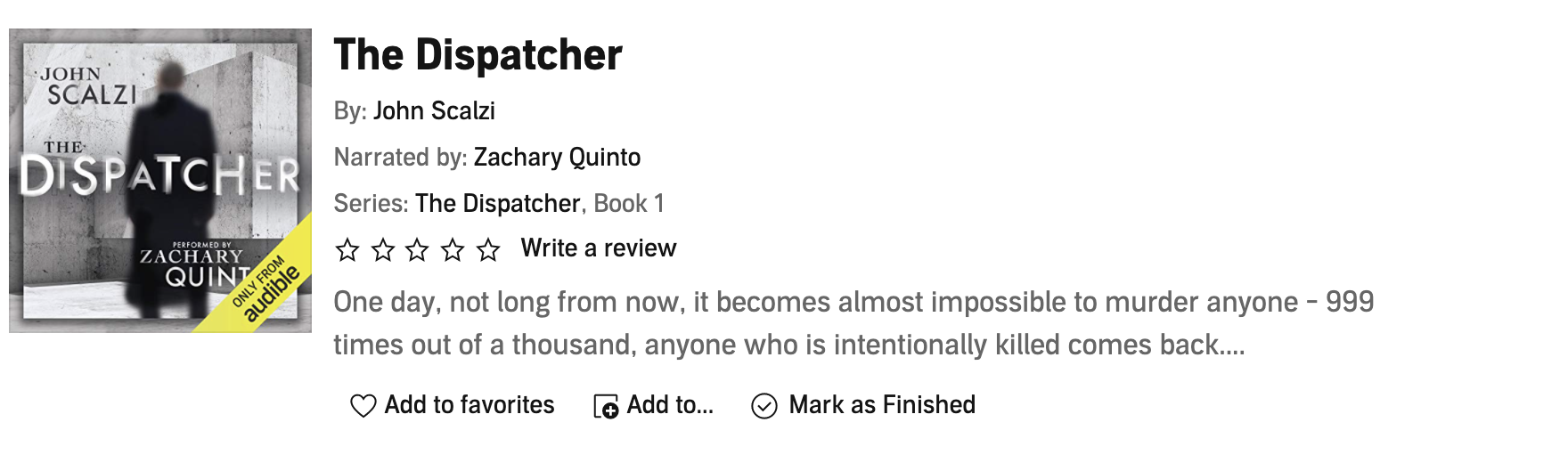
The Dispatcher by John Scalzi: Narrated by Zachary Quinto

The Dispatcher introduces us to John Scalzi’s exploration into a future where the dead don’t always stay dead…as long as the deceased happens to be murdered. If someone dies by accident or by their own hand, well, for whatever reason, they stay dead. If someone murders you, there’s only a chance of 1 in 1,000 that you’ll remain dead. Those other 999 times, you’ll wake up naked in your bed, uninjured, and with full recall of the event that led to your demise.
What might you do if you found yourself living in this future of inexplicable miracles?
Would you participate in vicious, violent bloodsports? Would you challenge those who anger you to duels? Would you perhaps accept a job as a Dispatcher, one who performs the killing for those who are soon to die in hospitals when surgical procedures go wrong?
That’s precisely the choice our protagonist made, to become a Dispatcher. Tony Valdez has a certain psychological makeup that allows him to perform the duties associated with his role without guilt or self-recrimination–without any real self-examination of any kind.
When one of his colleagues disappears, an intrepid detective thinks there’s something sinister going on, directly related to his occupation, and Tony finds himself caught up in a mystery that leads him into the expanding gray area surrounding underworld activities where a Dispatcher’s skills are required.
Zachary Quinto’s narration of this novella is spectacular. His voice is so distinct and perfectly suited for the cool detachment of Tony’s character. I’m pleased to see that he also narrates the sequel novella that came out last year.

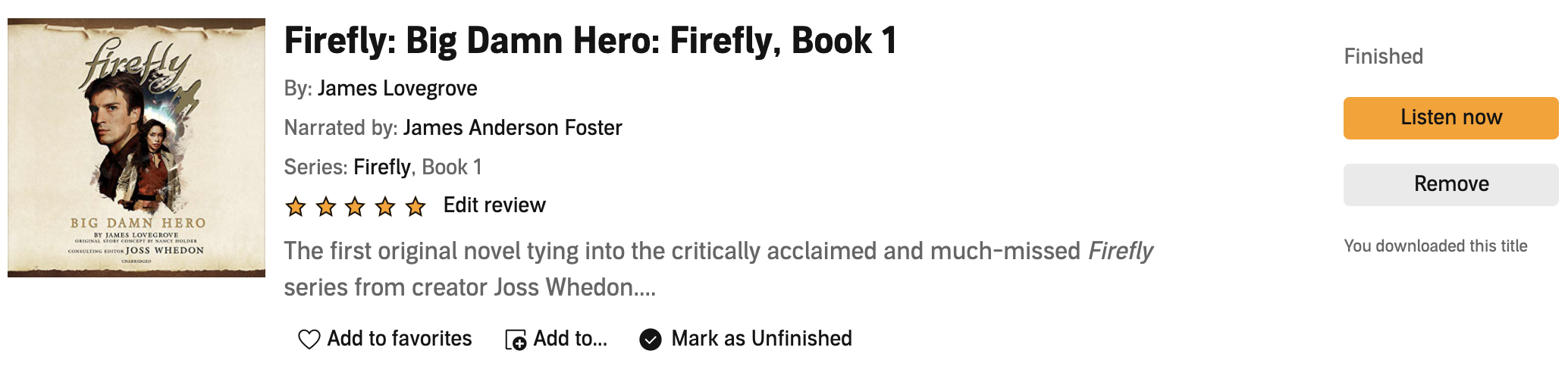
Firefly: Big Damn Hero by James Lovegrove: Narrated by James Anderson Foster

I wasn’t sure what to expect when I decided to pick up James Lovegrove’s Firefly: Big Damn Hero as an audiobook. That uncertainty and fear of disappointment directly led to the title sitting in my Audible library for an extended period before I chose to give it a listen.
The graphic novel mini-series hadn’t been a disappointment, but Joss Whedon was credited with at least co-author status on those titles, with other writers from the television series being his compatriots. In the case of this novel, Lovegrove was not affiliated with the television series, nor was Nancy Holder, the individual who developed the concept behind Big Damn Hero…though Holder had written media tie-in novels associated with other Whedon properties such as Buffy and Angel. So, naturally, I was a little bit iffy about diving into this title…concerned that it might be a letdown.
From the beginning of James Anderson Foster’s narration, I knew I’d made a mistake by letting the title sit for so long. This man thoroughly captures the tone and cadence of the characters in such a way that it’s obvious he’s watched Firefly and Serenity more than a time or two…or at least he comes across that way. Mal and Jayne are particularly well-narrated, with Badger, Wash, and Book coming in just a little bit behind those two. His narration of female characters leaves a bit to be desired, but that’s not at all uncommon, so I’m not going to worry altogether too much about it.
The story of Big Damn Hero falls somewhere in the timeline after Episode 12 of the Firefly series, The Message, wherein Mal and Zoe put to rest a former comrade-in-arms from the war. There are references to the absurd knit hat Jayne received from his mother, the experience with Tracey (the comrade-in-arms I’d previously mentioned), as well as other threads of the story from earlier in the series. I suspect this story falls not long after The Message and a little while before Heart of Gold, the 13th episode of the show. It definitely takes place before Objects In Space, the final episode.
Big Damn Hero centers around Mal and his life before and during the war. As such, it provides a good bit of backstory and character history we’d never encountered during the television show or subsequent movie.
The crew arrives on Persephone to take on a hazardous job from Badger, while Mal has arranged a secondary job contact to supplement their cash flow. Pursuit of this second job leads Mal, Zoe, and Jayne to a bar on Alliance Day. If you’ve watched the show, you know what sort of things happen when Mal finds himself in an Alliance-friendly bar on that day of celebration…and that he somehow always seems to find himself in that situation.
When Mal disappears, it initially looks like he’s been captured by Alliance loyalists seeking to root out any traitorous Browncoats foolish enough to be out and about on Alliance Day, but the truth is far more painful.
As the rest of the crew attempts to solve the mystery and locate their Captain, Mal finds himself confronted by ghosts of his past and the memories, both good and bad, associated with those not-so-friendly faces.
It could be that I’m biased by my love of all things Firefly, but this was an excellent way to spend close to ten hours. I recommend this for any fan of the show.

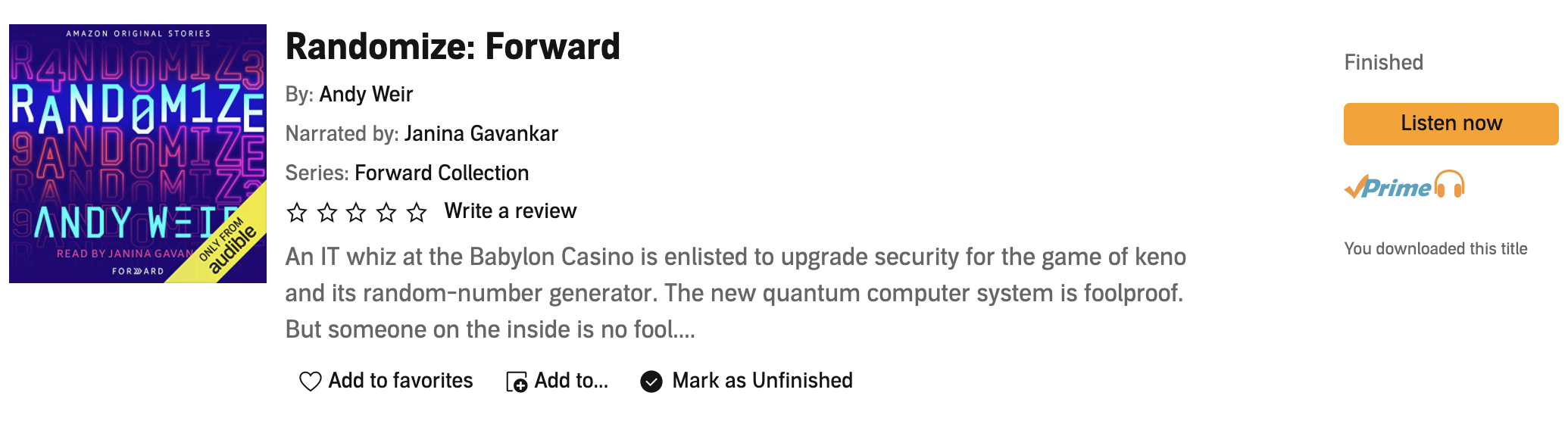
Randomize by Andy Weir: Narrated by Janina Gavankar

Andy Weir’s Randomize is a fascinating exploration of the superficial topics regarding advancements in and increasing availability of quantum computing devices as well as the impact those things could have on a world not yet prepared for those things. More than that–and the saving grace of the story–it’s a layered story about predictability vs. unpredictability and human nature. That human element is the important thing to focus on.
There’s a lot to unpack in this short story about the capacity to apply pattern recognition to things with seemingly no patterns.
The science behind the technology in this story is lacking in several ways, but that’s often going to be the case in fiction. I’ve grown accustomed to overlooking those elements to enjoy the stories I read regularly. It does sort of invalidate the premise underpinning the whole narrative if you pick away at it too much.
I rather like the final message I took away from the story, in that it wasn’t the highly advanced computational device that got the protagonists/antagonists what they wanted, but the computational abilities of a brilliant human mind. There’s a moral to this morally questionable tale, in that a great piece of advanced technology will never be half as useful without a similarly great mind behind the operation.
Janina Gavankar’s narration is effective, especially in her portrayal of Sumi Singh.

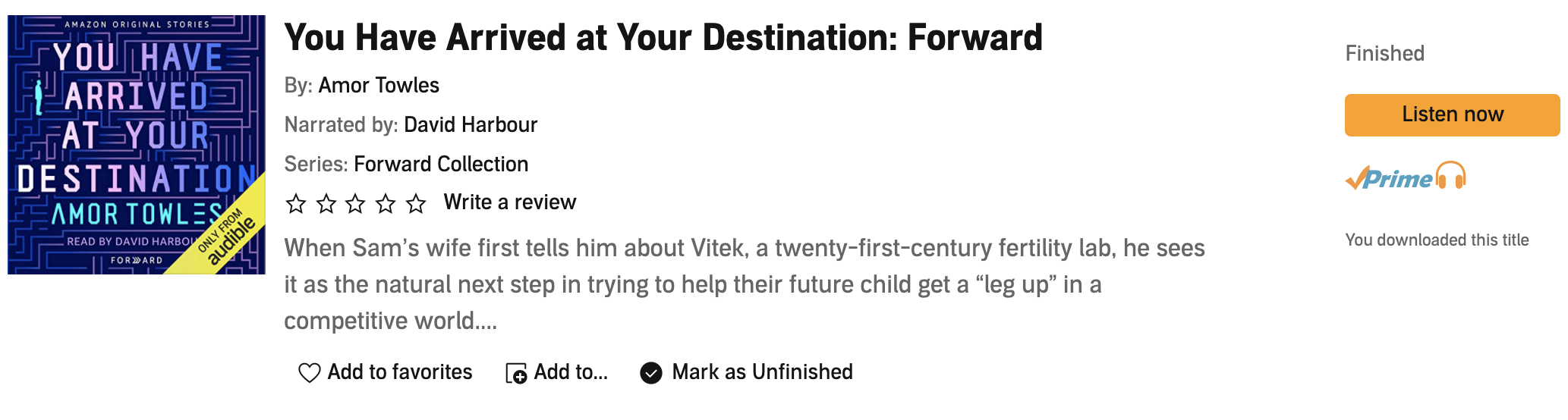
You Have Arrived At Your Destination by Amor Towles: Narrated by David Harbour

You Have Arrived At Your Destination by Amor Towles is, in my opinion, the weakest of the installments in the Forward collection assembled by Blake Crouch.
The story proposes an interesting premise regarding eugenics, the effects of combined nature and nurture on our offspring, evaluation of one’s life in retrospect, self-determination, and relationship dynamics. Sadly, that premise full of promise seems to peter out and go not too far at all.
It could be the author’s intention to have tossed several potential red herrings into the narrative for the purpose of making the reader/listener assume they know where it might be going from this point or that, but ultimately it led to a fairly disappointing overall experience. I’m not otherwise familiar with the author, beyond having heard that they’re quite well-respected for other material they’ve written…so I might have a greater appreciation for what they were attempting if I had a better handle on the author’s style as a whole.
We join our protagonist at a pivotal moment in his life, as he’s faced with one of the most important decisions of his life. He and his wife are considering an enhanced version of family planning, but it all appears to be too much for him. That’s it. That’s how one could sum up the story, and that’s precisely what I’m going to do.
The narration of the audiobook by David Harbour is great. His voice works particularly well for the middle-aged protagonist and the slick, salesman pitching the offerings from his company. That narration alone is the thing that makes the audiobook worthwhile…but that’s about all it had going for it.

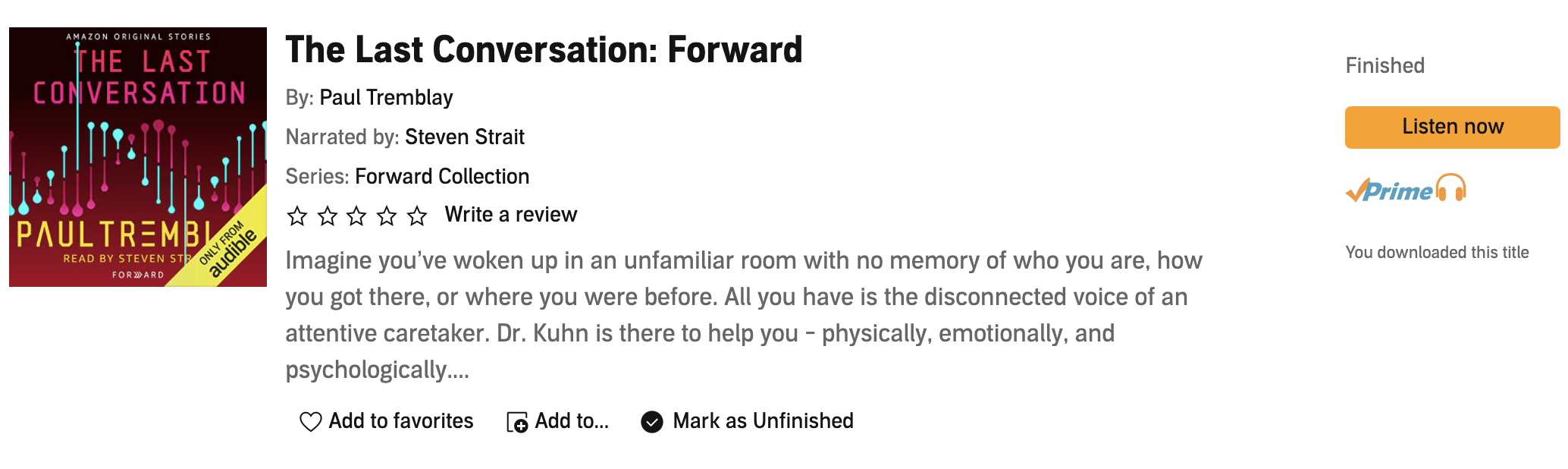
The Last Conversation by Paul Tremblay: Narrated by Steven Strait

The Last Conversation is the third of the six short stories in the Forward Collection assembled by Blake Crouch I’ve listened to. It is also the first time I’ve experienced Paul Tremblay as a science fiction author, and the experience was an interesting one.
I’m sure he’s written other stories or books that have crossed into the science fiction territory, or at least I’d be surprised if he hasn’t, but I’ve only been familiar with him as a horror author and occasionally as a dark fantasy author. This brief tale showcases his talent for wearing a variety of hats with efficacy.
It’s a solid second-person narrative detailing the awakening of the protagonist in isolation to protect him from a global pandemic, while the only other person–seemingly still alive–coaxes them through restoring memories and physical capabilities. The story was ultimately predictable, but no less satisfying for the very predictability of it. It wasn’t about telling us a new tale so much as providing a platform for the discussion of morality, humanity, the devastating combination of solitude and grief, and the ethics involved in cloning. In that sense, Tremblay packs a big punch into a small number of words. He utilizes and capitalizes on the elements of science fiction that have always been used by authors, the capacity to frame thought experiments in a fictional narrative that makes the philosophical subject matter more palatable and digestible for the readers (and sometimes the author).
The narration, performed by Steven Strait, is superb. Strait captures the stubborn resistance of the protagonist to being held captive–even if it is for his own good–as well as the sadness and pity that mingles with that oppositional nature as the truth of everything is revealed in the end.