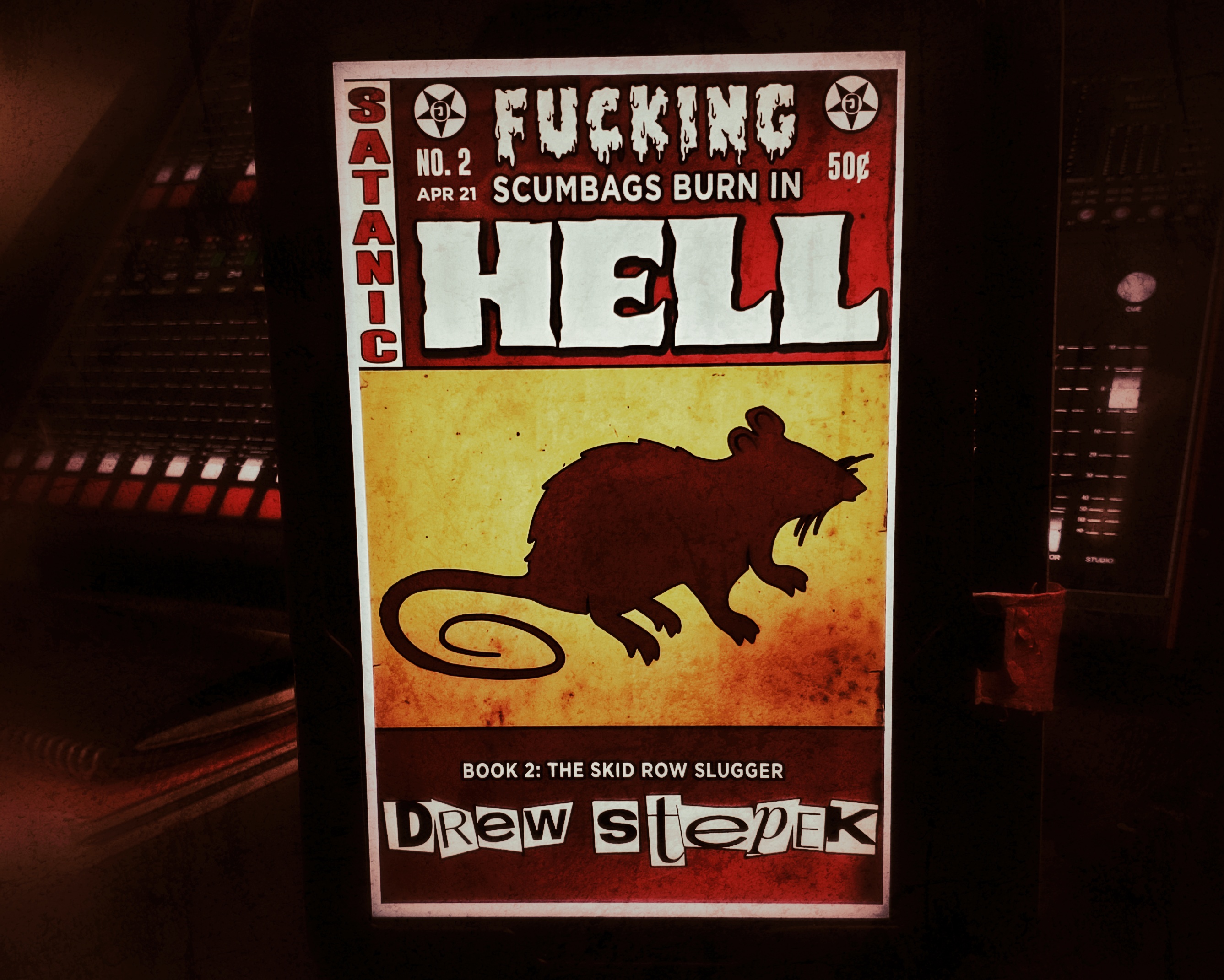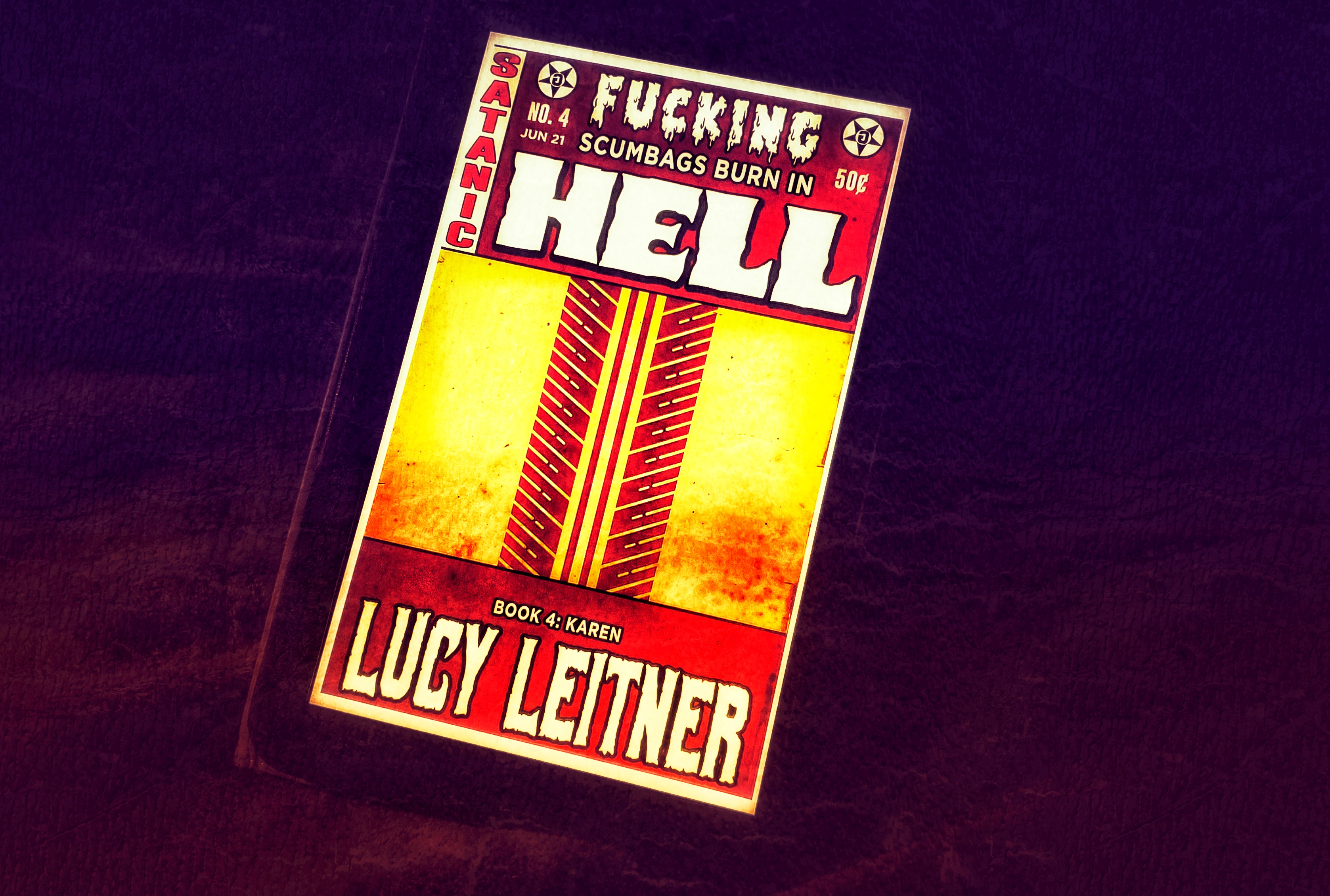
Fucking Scumbags Burn In Hell: Book 4 by Lucy Leitner

Karen is the fourth installment of the Fucking Scumbags Burn In Hell series, initiated by Drew Stepek. This volume was thrust upon us by Lucy Leitner. She was perhaps the perfect writer for him to next incorporate into his Hoopiverse. It’s plain to see that, as soon as Stepek allowed Leitner to take the wheel, she proceeded to plow her BMW through no less than half a dozen overweight men, women, and children in a rampage from which the reader can’t turn away.
Karen is…well…a Karen in every conceivable sense. If you don’t know what that means, I’m curious about how you’re reading this review from your space beneath the rock under which you’ve clearly been residing. Karen’s not someone you’d want to follow on Instagram, for sure, unless you’re looking for tone-deaf comparisons with concentration camps. That particular gag reminded me a great deal of Marjorie Taylor Greene, and I subsequently pictured Greene in the role of Karen for the rest of the story.
By the time Hooper comes along, you’re practically begging to see this monster receive the comeuppance you know she’s got coming. Leitner does not disappoint!

You can find this title, as well as the other amazing contributions to the Hoopiverse, by going to http://www.godless.com or by downloading the Godless app to your Android or Apple device of choice. I’ve included the link to the Hoopiverse titles below:
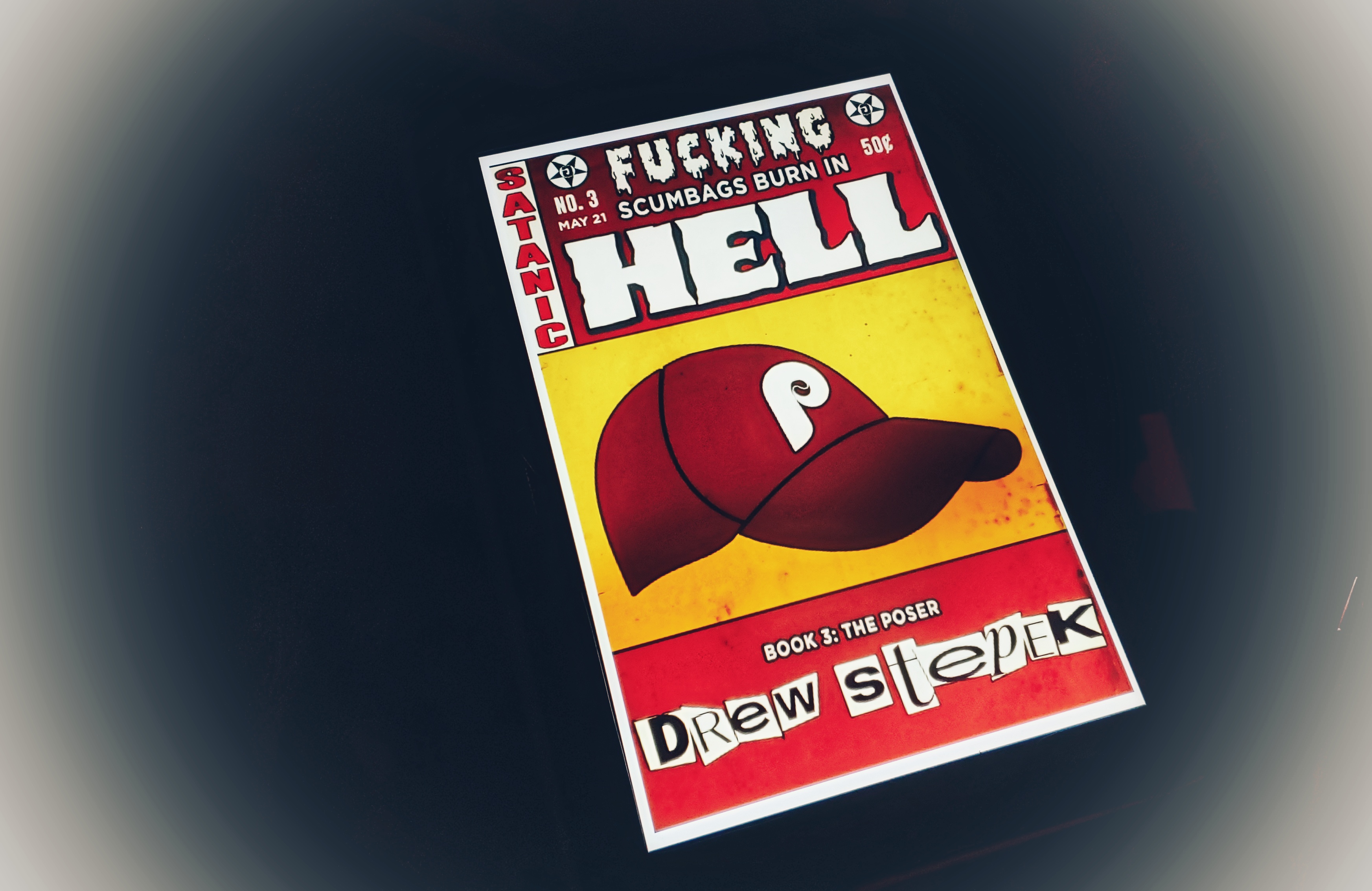
Fucking Scumbags Burn In Hell: Book 3 by Drew Stepek

The third installment of Stepek’s Fucking Scumbags Burn In Hell introduces us to the titular Poser, Sully. Through a combination of bleeding-edge technology and innate talent, Sully can hijack the bodies of the people who become his victims. Of course, he does this for a profit.
We begin by witnessing as Sully thoroughly demolishes both the fortunes and the future of a pop star with a flourish that takes Britney Spears’s apparent breakdown from 2008 and amplifies it. It seems that Sully has a knack for going above and beyond the wishes of his clients, relishing in the fact that he feels no guilt nor shame for the awful things he does while he pulls the strings from within his victims.
It’s with a grim sense of satisfaction that we see Hooper enter the scene, promising a whole new experience that Sully can’t refuse. Lulled into a false sense of security, Sully greedily marches into the trap as the reader smiles and waits for the other shoe to drop.
As with the previous two volumes in the Fucking Scumbags Burn In Hell series, Stepek provides us with a glimpse of extreme comeuppance for another of the worst of the worst.

You can obtain your own copy of The Poser by going to http://www.godless.com or by downloading the Godless app for your preferred mobile device. The link to the series of shorts is below:

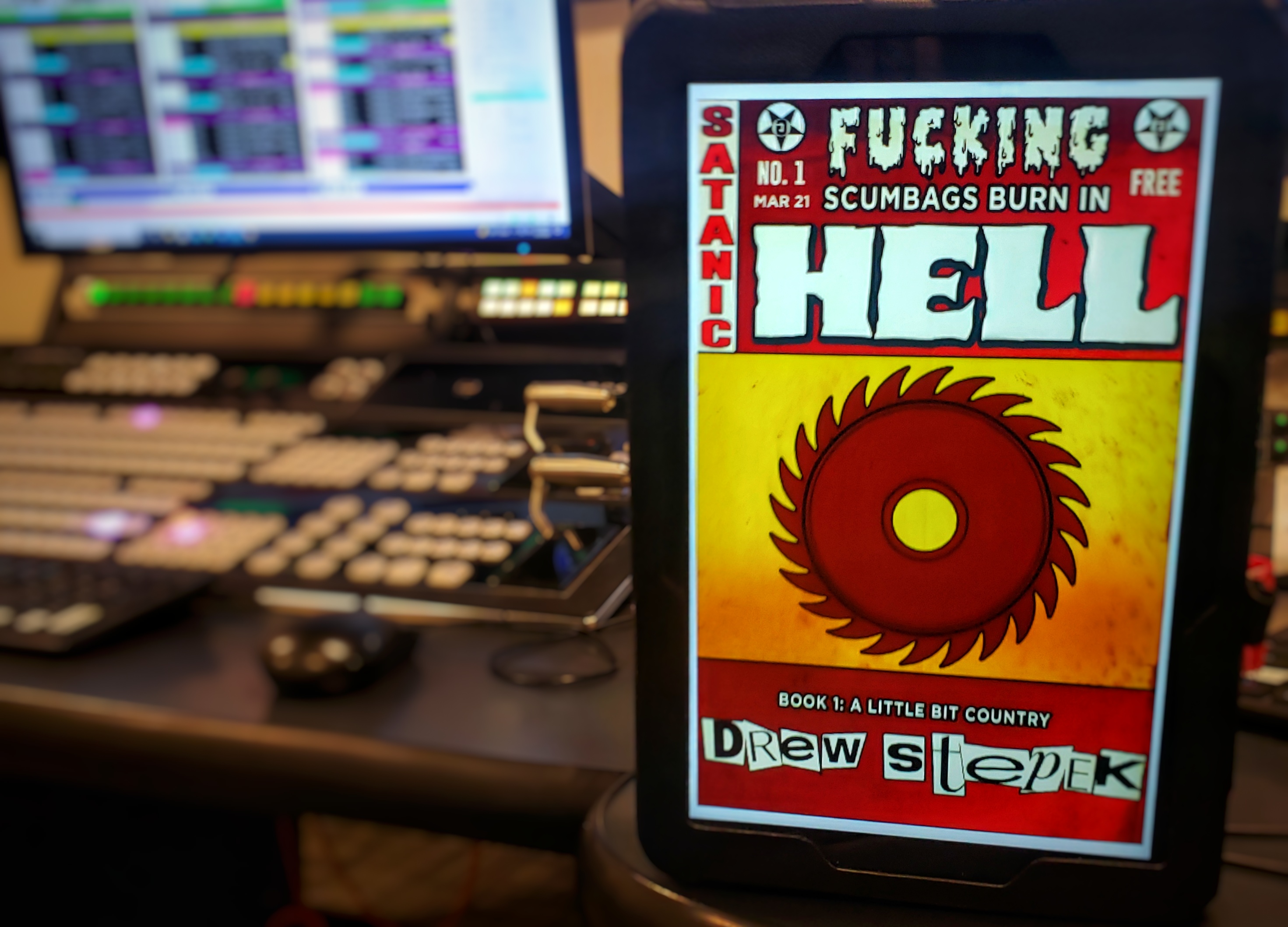
Fucking Scumbags Burn In Hell: Books 1 & 2 by Drew Stepek

A Little Bit Country, the introduction to the terrific Fucking Scumbags Burn In Hell series, sets the bar high and showcases a uniquely cruel and sardonic portrait of Hell. It’s not supposed to be a fun place, after all. The important thing to remember is that these people belong there, and the torment awaiting them is one that would make Dante proud.
Reading about the experience of “Country” as he finds his place in the realm of the damned, I’m forced to reconsider Jean-Paul Sartre’s assertion that “Hell is other people,” and suspect that perhaps Hell is more appropriately ourselves. There is something of No Exit in this brief, humorous tale, in that Hell is not the place we expect it to be, and it’s that subverted expectation that contains the trap waiting to spring closed and provide the torture we’ve earned.
Country seems almost sympathetic at first, but I think there’s a little bit of Hooper in all of us, and the satisfaction at seeing how everything comes back around can’t be understated.

The Skid Row Slugger is an amazing follow-up to A Little Bit Country, taking more time to flesh out the newest victim than we had with Country.
While the first installment reminded me of C. S. Lewis and Chuck Palahniuk, with the portrayal of Hell as a dead-end job filled with bureaucracy and confusing rules, the follow-up feels more like a Clive Barker experience. This second tale also provides a tantalizing glimpse of how devious Hooper can be.
There’s nothing sympathetic or redeeming in the character of our protagonist. A racist, violent, and sexist LA cop isn’t exactly the sort of person I imagine anyone cheering for–but supporters were speaking up in favor of the former officers involved in the Rodney King case and every major incident since then. The Skid Row Slugger isn’t a story for those assholes, though. This is a tale written for those of us who feel that thrilling chill running up our spines when we witness a neo-Nazi punched on camera. It’s the fictional catharsis we need when we try to live our lives as civilized people who won’t resort to violence.
Again, there’s a sense of delight in reading this story, and we owe Drew Stepek a favor for giving us this cherished sense of satisfaction.

You can find both stories, along with additional installments of the Fucking Scumbags Burn In Hell series at http://www.godless.com

Links to these two stories are below:

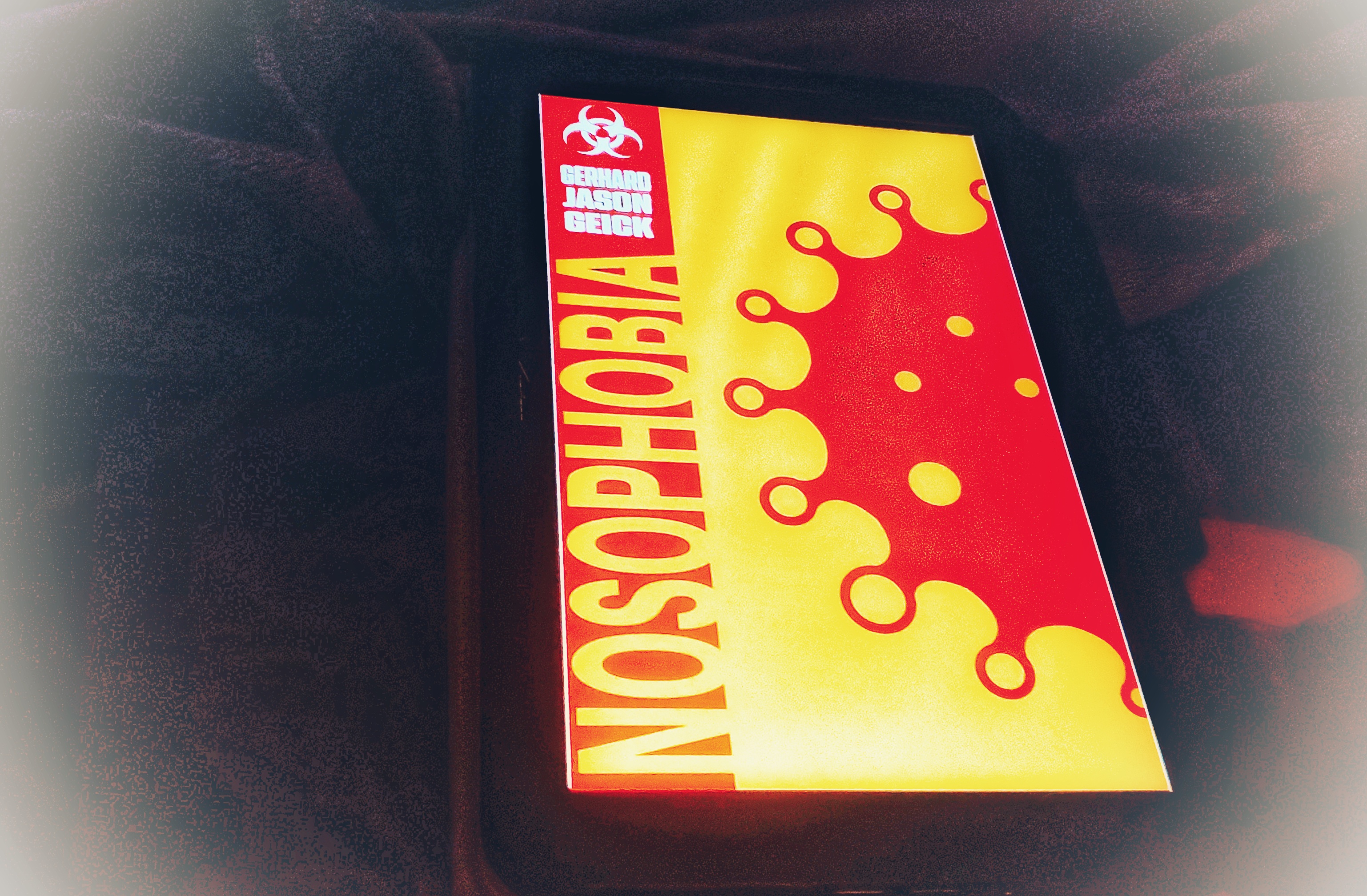
Nosophobia by Gerhard Jason Geick

What do you do when your life is falling apart around you because your kinks and perversions are too shameful for loved ones to accept? What if you also have neither the motivation nor the courage to sort things out? In the case of our protagonist, you pack your bags and head for China to teach English as a second language, evading your problems while hoping to return someday with unearned closure in tow.
While unsympathetic, our protagonist is relatable in more ways than is probably comfortable to admit. Geick dips into the well of our shared experiences of insecurity, loneliness, shame, and isolation to craft a character that reflects some of our least appealing traits.
A night of drugs and exotic dining, characterized by increasing haziness and disorientation, leads us to a conclusion that the reader sees coming just a short while before the revelation hits home.
Nosophobia should rank among the best works of short fiction to arise from the pandemic conditions of 2020/2021.

You can obtain your own copy of this fantastic short story through http://www.godless.com at the link below:

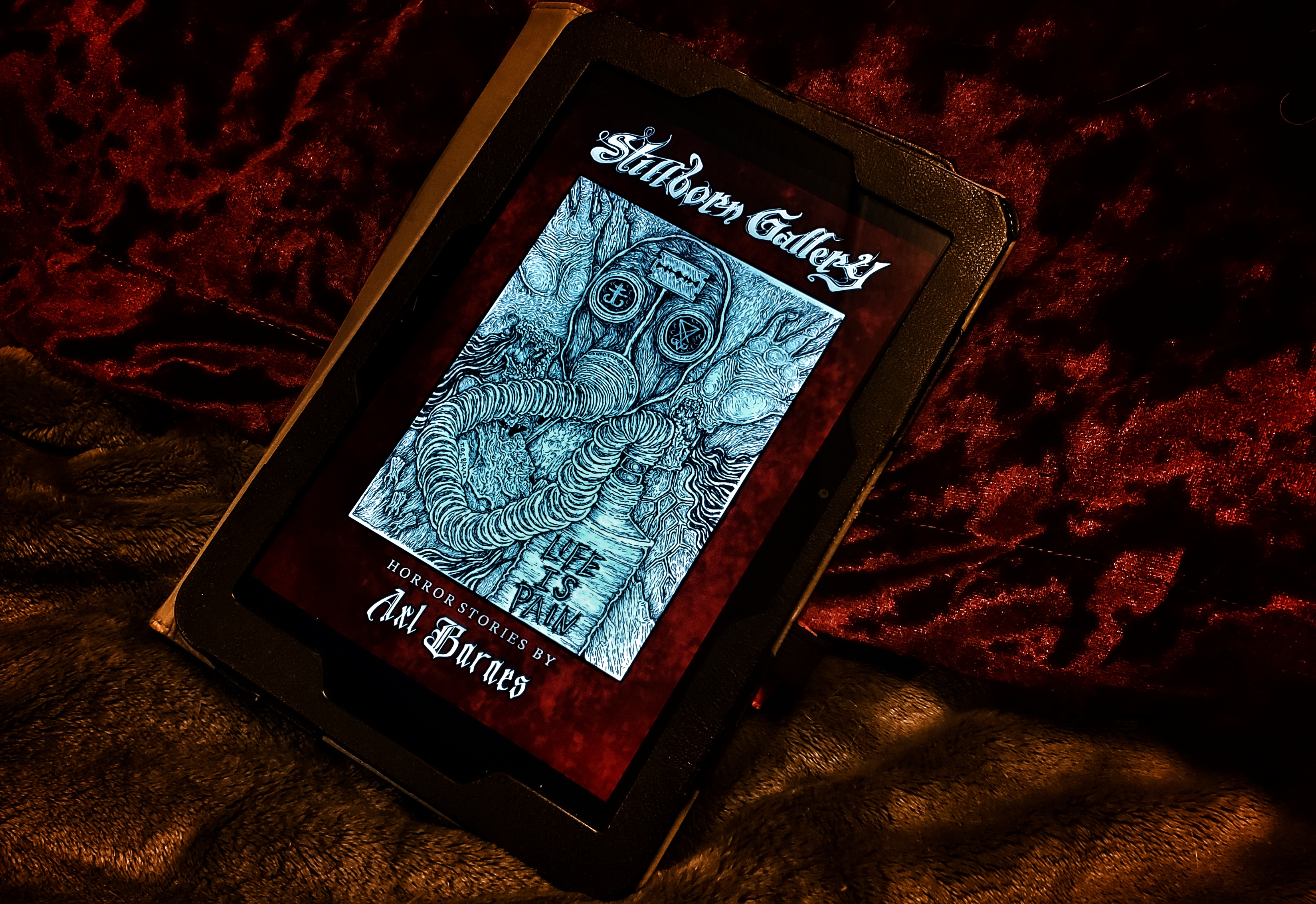
Stillborn Gallery by Axl Barnes

The nine stories collected in Barnes’s Stillborn Gallery make for an almost uniformly bleak, nihilistic deep dive into the horrors of banality, the depths of depression, heavy metal, and suicide. If you’re familiar with Axl Barnes, you shouldn’t be altogether surprised by any of that.
Barnes utilizes almost poetic prose at times, almost exclusively when applied to the most awful of things. He has a knack for painting vivid and breathtaking pictures of things the reader might not want to see, and it makes for a fantastic experience.
There’s a great deal to look forward to, for the discerning reader, from the almost Kafka-esque “Numbskull” to the morbidly romantic “Sunday Exit” in these pages.
For me, “A Perfect Day” sort of sums up the whole experience. We get to witness a day that is going smoothly for our protagonist, a man who has a vacation on the near horizon that he’ll be sharing with a clearly devoted lover. Suddenly he begins fixating on an experience from his childhood, wherein a doctor had to lance an infected wound. This fixation does nothing to spoil his mood–the way I’m about to spoil this single story–but he proceeds to kill himself in a graphic, single-minded act…perhaps because it’s best to leave on a high note.
The illustrations provided by Thomas Stetson are captivating, bringing to life a certain grimy, filthy element that flows naturally with the stories provided by Barnes.

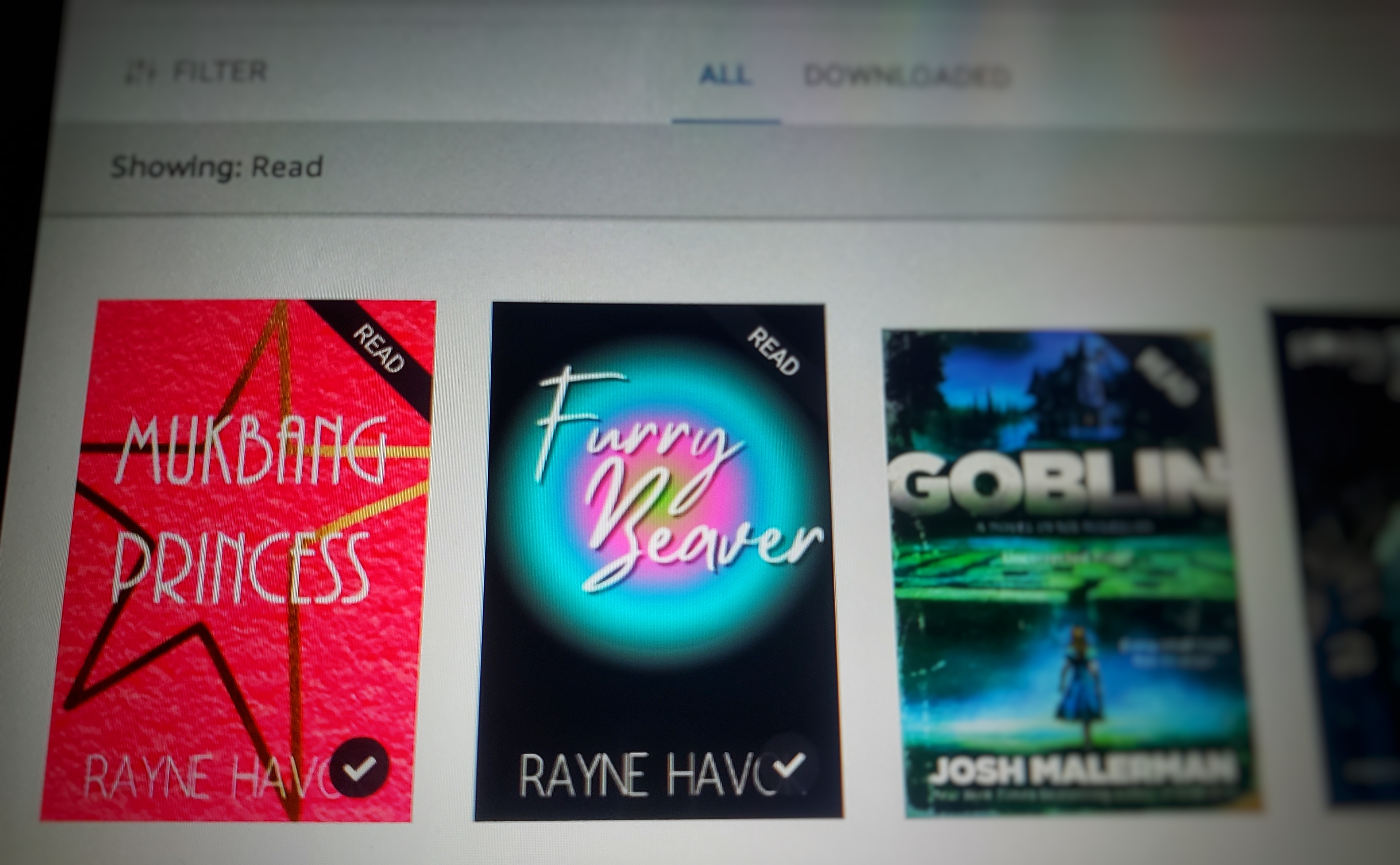
Mukbang Princess & Furry Beaver by Rayne Havok

I typically dedicate a single blog post to a single story, but most of those stories are novella-length or longer…with the occasional novelette slipping through. These two stories from Rayne Havok are definitely in the short story range. It seemed appropriate, under the circumstances, to review them both in one post.


I’ll start with Mukbang Princess:
This is a story about two teenage girls looking for a quick way to make money online. Neither of the characters is innocent or chaste, but neither of them is particularly looking forward to making their money from amateur pornography.
The world of mukbang initially has a sort of strange appeal, if only they can find the right thing to eat. Stumbling across what might be their ultimate meal ticket ultimately crosses the line for both of them, and the thought of working a regular job suddenly doesn’t seem so awful.
This story is hilarious.
It’s essentially what would result from certain conversations with friends, getting darker and more perverse…but coherently written out and captured. There’s as much perverse humor to the tale as there is sheer, awful grotesquerie…and it’s amazing.


Furry Beaver is up next:
This one is just filled to the brim with furry sex and slaughter.
I doubt most people attend a furry house party with any concern for their own safety…in this case, that is a fatal mistake.
Once the party gets going, there’s hardly a line of this story not dedicated to graphic sexual encounters and equally graphic violence. Havok wastes no time diving into the sweaty, fetid, sexually charged bloodbath…and she doesn’t come back up for air until it’s all over. Much like the titular beaver, whisking the blood from oily fur like it was water.

I recommend checking them both out at your earliest convenience. Links to the stories on http://www.godless.com are below.

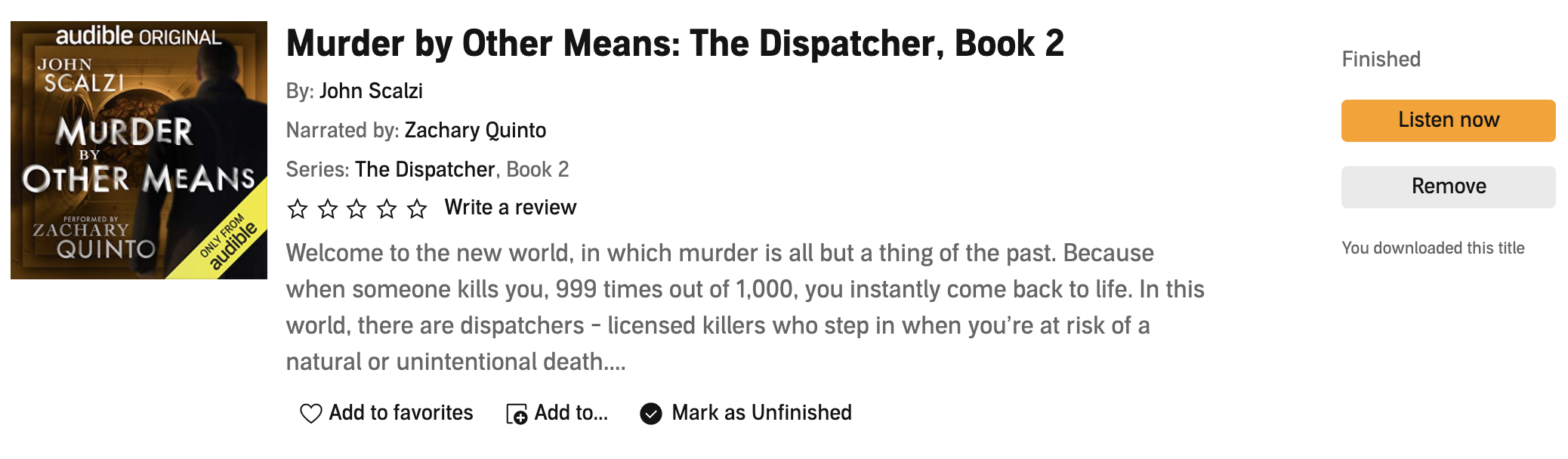
Murder By Other Means by John Scalzi: Narrated by Zachary Quinto

Few authors could successfully pack as much intrigue, mystery, and suspense into a novella as John Scalzi. Murder By Other Means is a prime example of Scalzi at his fast-paced best. At the heart of this story is a question, “How do you successfully assassinate people when 99.99% of murder victims reappear–unharmed–in their homes, only moments later?”
We return to the world of Tony Valdez, the titular Dispatcher of the previous story in this sequence, not too long after we left him at the end of The Dispatcher. Legitimate work has dried up for him and the city of Chicago is on an austerity budget that prohibits him from finding many side gigs on the up-and-up. This is where we meet up with him again, as he enters a law firm for a less than legal utilization of his skills.
From there it’s a dizzying spiral of international corporate intrigue, organized crime, suicide, and survival…with a healthy dose of police procedural and noir-ish detective story providing the framework. This is a better story than The Dispatcher, which was a pretty high bar to clear.
Zachary Quinto again provides narration for the story, and there’s probably no need for me to point out that he’s beyond excellent in all respects. I can’t imagine Tony with a different voice.

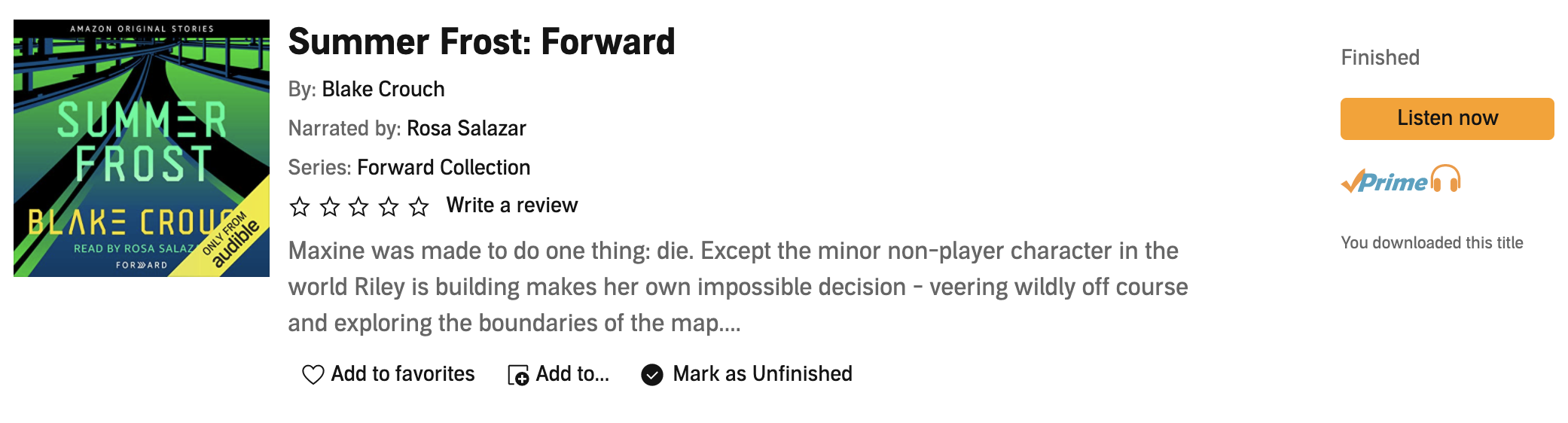
Summer Frost by Blake Crouch: Narrated by Rosa Salazar

Summer Frost is not treading entirely new ground, building up to a predictable outcome as it does…but it’s not the novelty of the tale that makes it worthy, it’s the quality of the storyteller. Blake Crouch is quite the storyteller.
Riley makes for a captivating protagonist as she works to assist the world’s first truly emergent intelligence reach and further maximize its potential. It’s appropriate, in a sense, that the AI’s name is Max (short for Maxine, the NPC within a VR game, the AI unexpectedly grew from).
It’s a sad tale of being too close to a problem to see that there’s a problem at all. In this case, the problem is that Riley has projected altogether too many human characteristics onto something that is far beyond human. Blinded by an affection that falls somewhere into a nebulous space of mother and child…or lover and object of obsession. We are helpless to do anything, hoping that we’re wrong, as the story races to the inevitable conclusion…but knowing, deep inside that there’s no other conclusion available.
The narration from Rosa Salazar is as spectacular as most of the narration has been for the installments of the Forward Collection. She lulls us into a sense of near-complacency that allows us to feel almost as taken off-guard as Riley ultimately is.

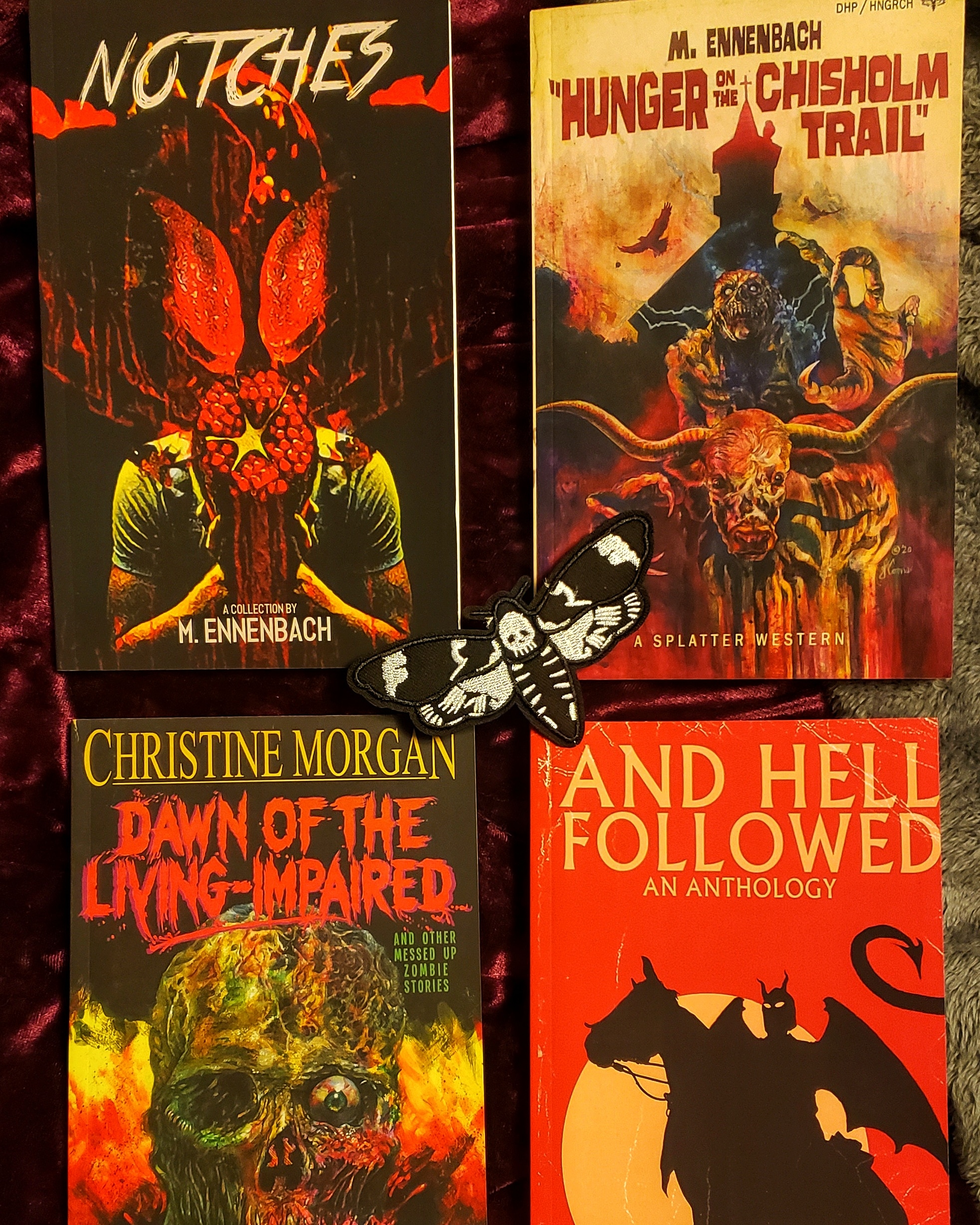
And Hell Followed: An Anthology

I hate trying to review anthologies.

Most of the time, I’ll rate them and leave it at that, but it also means I’m left with a lot of my reading material never receiving the review it deserves. I’m going to try to get better about that.

Death’s Head Press decided the Christian apocalypse–as popularized by The Book of Revelation, that hallucinatory bit of end times fan fiction John the Revelator got included in the Bible–would make for a fitting topic. They weren’t wrong.

It’s an uneven anthology, but it’s challenging to find one that maintains a certain tone throughout, so that’s not a fault. It’s not a bug, it’s a feature…so to speak. Whatever sort of horror you might be in the mood for, there’s something in this book for you.

We’ve got stories that are heartbreaking and strangely touching like Chris Miller’s Behind Blue Eyes and Godless World by Michelle Garza & Melissa Lason (The Sisters of Slaughter).

There’s sacrilegious, irreverent humor in Christine Morgan’s Censered, K. Trap Jones’s Ham and Pudge, and Hell Paso by C. Derick Miller.

There are unique, takes on the apocalypse or the interpretation of Revelations like those found in Apocalypse…Meh by John Wayne Comunale and Wrath James White’s Horse.

That’s not even half the contents of this anthology. As I said, there’s a little something for everyone. If you’re not opposed to a little bit of heresy and a whole lot of hell on Earth, I absolutely recommend this anthology.

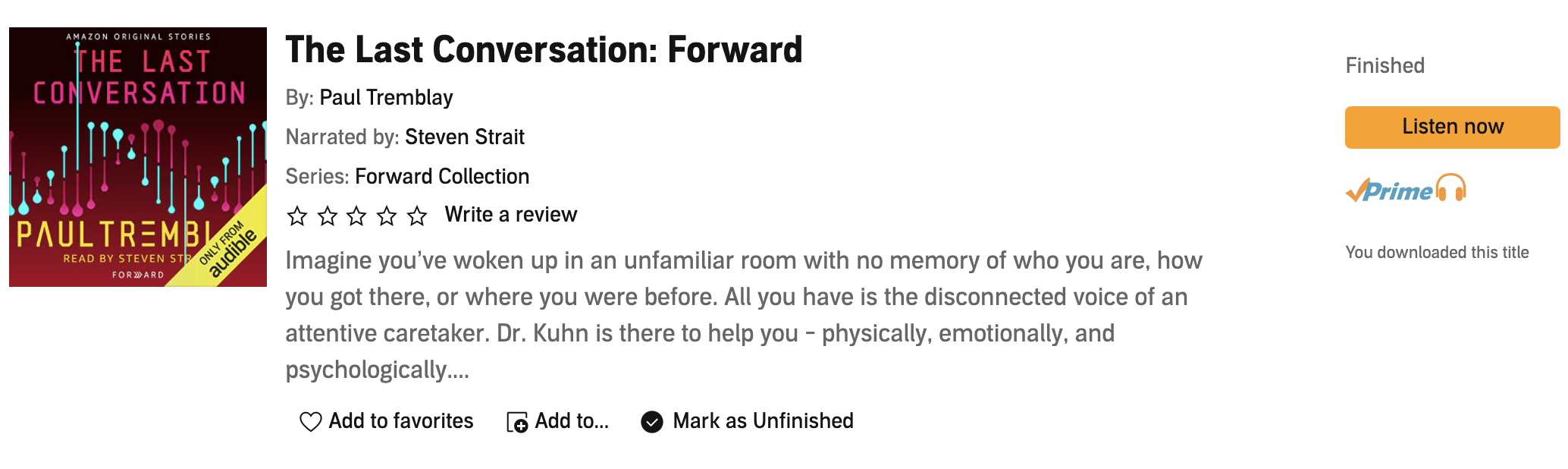
The Last Conversation by Paul Tremblay: Narrated by Steven Strait

The Last Conversation is the third of the six short stories in the Forward Collection assembled by Blake Crouch I’ve listened to. It is also the first time I’ve experienced Paul Tremblay as a science fiction author, and the experience was an interesting one.
I’m sure he’s written other stories or books that have crossed into the science fiction territory, or at least I’d be surprised if he hasn’t, but I’ve only been familiar with him as a horror author and occasionally as a dark fantasy author. This brief tale showcases his talent for wearing a variety of hats with efficacy.
It’s a solid second-person narrative detailing the awakening of the protagonist in isolation to protect him from a global pandemic, while the only other person–seemingly still alive–coaxes them through restoring memories and physical capabilities. The story was ultimately predictable, but no less satisfying for the very predictability of it. It wasn’t about telling us a new tale so much as providing a platform for the discussion of morality, humanity, the devastating combination of solitude and grief, and the ethics involved in cloning. In that sense, Tremblay packs a big punch into a small number of words. He utilizes and capitalizes on the elements of science fiction that have always been used by authors, the capacity to frame thought experiments in a fictional narrative that makes the philosophical subject matter more palatable and digestible for the readers (and sometimes the author).
The narration, performed by Steven Strait, is superb. Strait captures the stubborn resistance of the protagonist to being held captive–even if it is for his own good–as well as the sadness and pity that mingles with that oppositional nature as the truth of everything is revealed in the end.