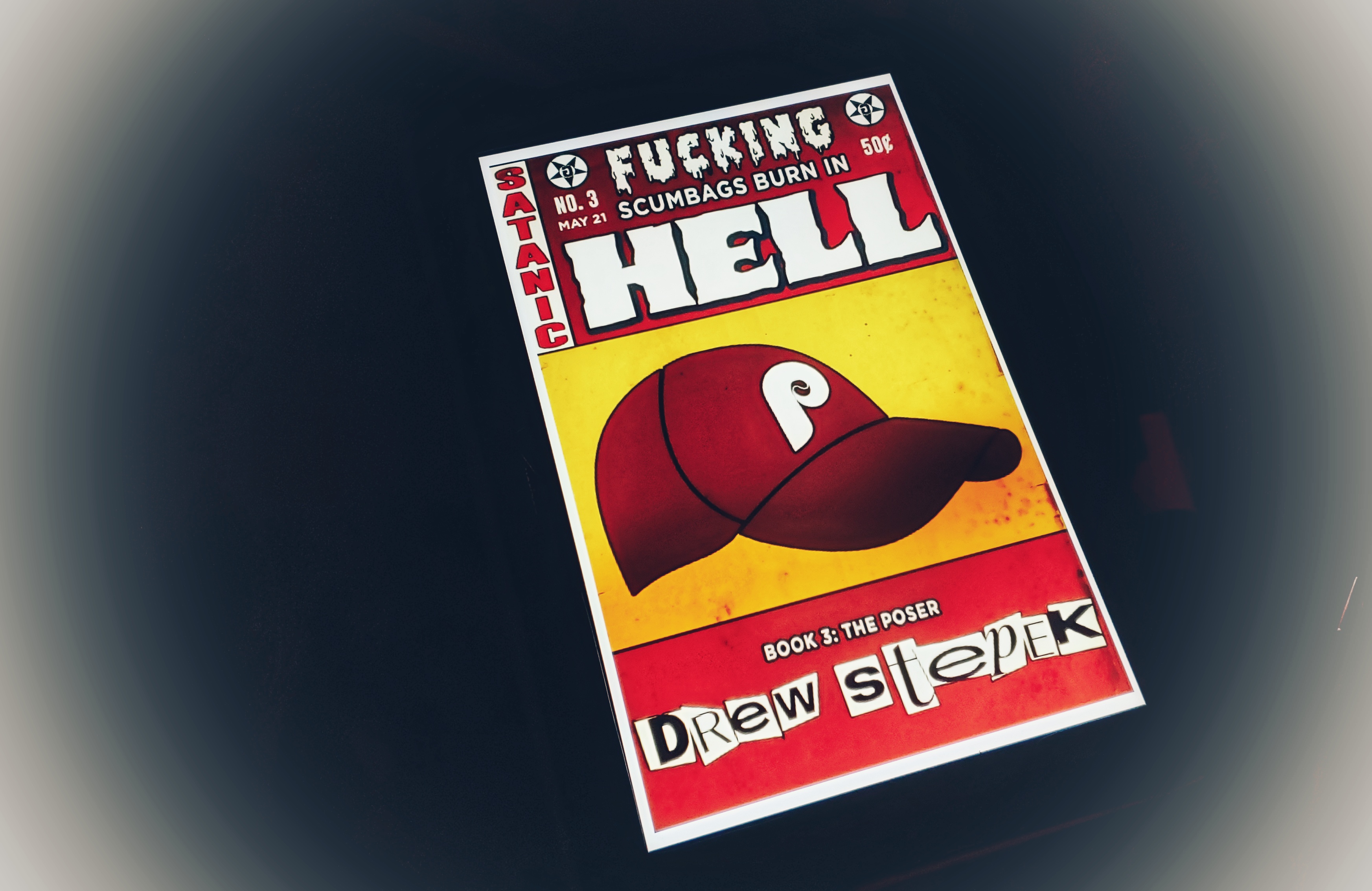
Fucking Scumbags Burn In Hell: Book 3 by Drew Stepek

The third installment of Stepek’s Fucking Scumbags Burn In Hell introduces us to the titular Poser, Sully. Through a combination of bleeding-edge technology and innate talent, Sully can hijack the bodies of the people who become his victims. Of course, he does this for a profit.
We begin by witnessing as Sully thoroughly demolishes both the fortunes and the future of a pop star with a flourish that takes Britney Spears’s apparent breakdown from 2008 and amplifies it. It seems that Sully has a knack for going above and beyond the wishes of his clients, relishing in the fact that he feels no guilt nor shame for the awful things he does while he pulls the strings from within his victims.
It’s with a grim sense of satisfaction that we see Hooper enter the scene, promising a whole new experience that Sully can’t refuse. Lulled into a false sense of security, Sully greedily marches into the trap as the reader smiles and waits for the other shoe to drop.
As with the previous two volumes in the Fucking Scumbags Burn In Hell series, Stepek provides us with a glimpse of extreme comeuppance for another of the worst of the worst.

You can obtain your own copy of The Poser by going to http://www.godless.com or by downloading the Godless app for your preferred mobile device. The link to the series of shorts is below:

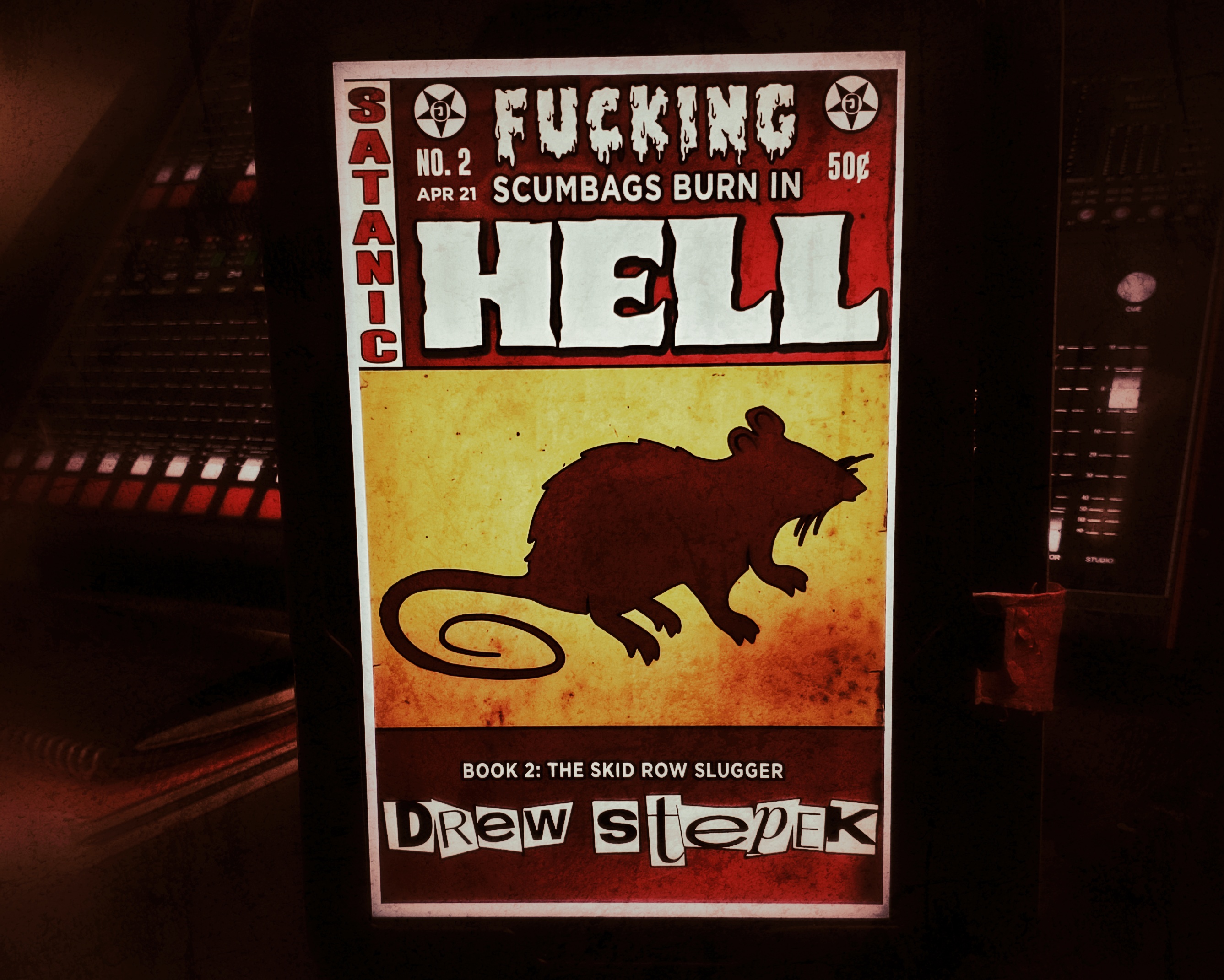
Fucking Scumbags Burn In Hell: Books 1 & 2 by Drew Stepek

A Little Bit Country, the introduction to the terrific Fucking Scumbags Burn In Hell series, sets the bar high and showcases a uniquely cruel and sardonic portrait of Hell. It’s not supposed to be a fun place, after all. The important thing to remember is that these people belong there, and the torment awaiting them is one that would make Dante proud.
Reading about the experience of “Country” as he finds his place in the realm of the damned, I’m forced to reconsider Jean-Paul Sartre’s assertion that “Hell is other people,” and suspect that perhaps Hell is more appropriately ourselves. There is something of No Exit in this brief, humorous tale, in that Hell is not the place we expect it to be, and it’s that subverted expectation that contains the trap waiting to spring closed and provide the torture we’ve earned.
Country seems almost sympathetic at first, but I think there’s a little bit of Hooper in all of us, and the satisfaction at seeing how everything comes back around can’t be understated.

The Skid Row Slugger is an amazing follow-up to A Little Bit Country, taking more time to flesh out the newest victim than we had with Country.
While the first installment reminded me of C. S. Lewis and Chuck Palahniuk, with the portrayal of Hell as a dead-end job filled with bureaucracy and confusing rules, the follow-up feels more like a Clive Barker experience. This second tale also provides a tantalizing glimpse of how devious Hooper can be.
There’s nothing sympathetic or redeeming in the character of our protagonist. A racist, violent, and sexist LA cop isn’t exactly the sort of person I imagine anyone cheering for–but supporters were speaking up in favor of the former officers involved in the Rodney King case and every major incident since then. The Skid Row Slugger isn’t a story for those assholes, though. This is a tale written for those of us who feel that thrilling chill running up our spines when we witness a neo-Nazi punched on camera. It’s the fictional catharsis we need when we try to live our lives as civilized people who won’t resort to violence.
Again, there’s a sense of delight in reading this story, and we owe Drew Stepek a favor for giving us this cherished sense of satisfaction.

You can find both stories, along with additional installments of the Fucking Scumbags Burn In Hell series at http://www.godless.com

Links to these two stories are below:

Midnight Horror Show by Ben Lathrop: Narrated by Tee Quillin

A little backstory might be in order for this review.
This story is built around the old Screen Gems release of Universal horror pictures in syndication to television stations in the late 1950s. With the encouragement that the stations bring in a host to introduce the “Shock” and later “Son of Shock” pictures, Screen Gems helped to platform an industry, first popularized by Vampira, the original horror host on television. There have been many others along the way, including notable icons such as Vincent Price, Joe Bob Briggs, and Elvira. Midnight Horror Show captures a nostalgic snapshot of a time that’s lost in memory, turning it into something truly sinister, and telling a fantastic tale along the way.
With a series of unusual killings in the sleepy Iowa town of Dubois in 1985, Detective David Carlson finds himself thrust into the midst of an all-too-real horror show. Investigating the seemingly unrelated crimes, he encounters James West, a strange young man with a fixation on horror and heavy metal, soon to host his own horror show at a local drive-in with a dark history.
James’s obsession with a former television and drive-in host, Boris Orlof, brings Detective Carlson face-to-face with secrets and terrifying truths previously buried in the past. Confronting his own forgotten memories, a file of missing person cases from twenty years before, and the very real possibility that there’s more than simple movie magic taking place behind the scenes, Detective West finds himself fighting a ticking clock to solve the unbelievable mystery and save the young man he’s grudgingly befriended before Halloween night.
Midnight Horror Show is a captivating story that leaves you guessing what’s going to happen right up until the end. When you think you have a handle on what’s next, Lathrop manages to dodge your assumptions and veer off in a different direction.
The narration provided by Tee Quillin is fantastic and believable as he voices the assorted characters populating the tale with seeming ease.

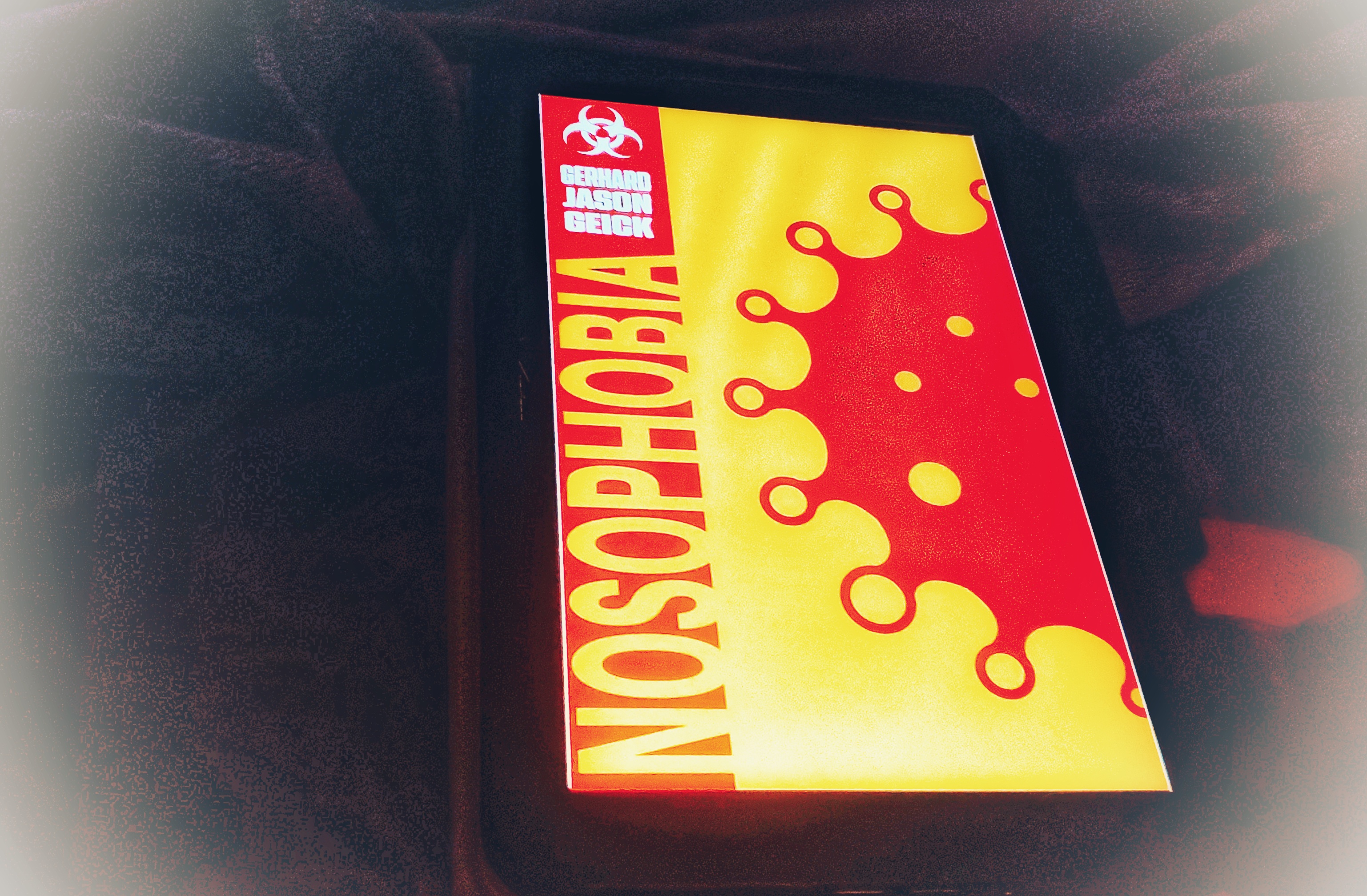
Nosophobia by Gerhard Jason Geick

What do you do when your life is falling apart around you because your kinks and perversions are too shameful for loved ones to accept? What if you also have neither the motivation nor the courage to sort things out? In the case of our protagonist, you pack your bags and head for China to teach English as a second language, evading your problems while hoping to return someday with unearned closure in tow.
While unsympathetic, our protagonist is relatable in more ways than is probably comfortable to admit. Geick dips into the well of our shared experiences of insecurity, loneliness, shame, and isolation to craft a character that reflects some of our least appealing traits.
A night of drugs and exotic dining, characterized by increasing haziness and disorientation, leads us to a conclusion that the reader sees coming just a short while before the revelation hits home.
Nosophobia should rank among the best works of short fiction to arise from the pandemic conditions of 2020/2021.

You can obtain your own copy of this fantastic short story through http://www.godless.com at the link below:

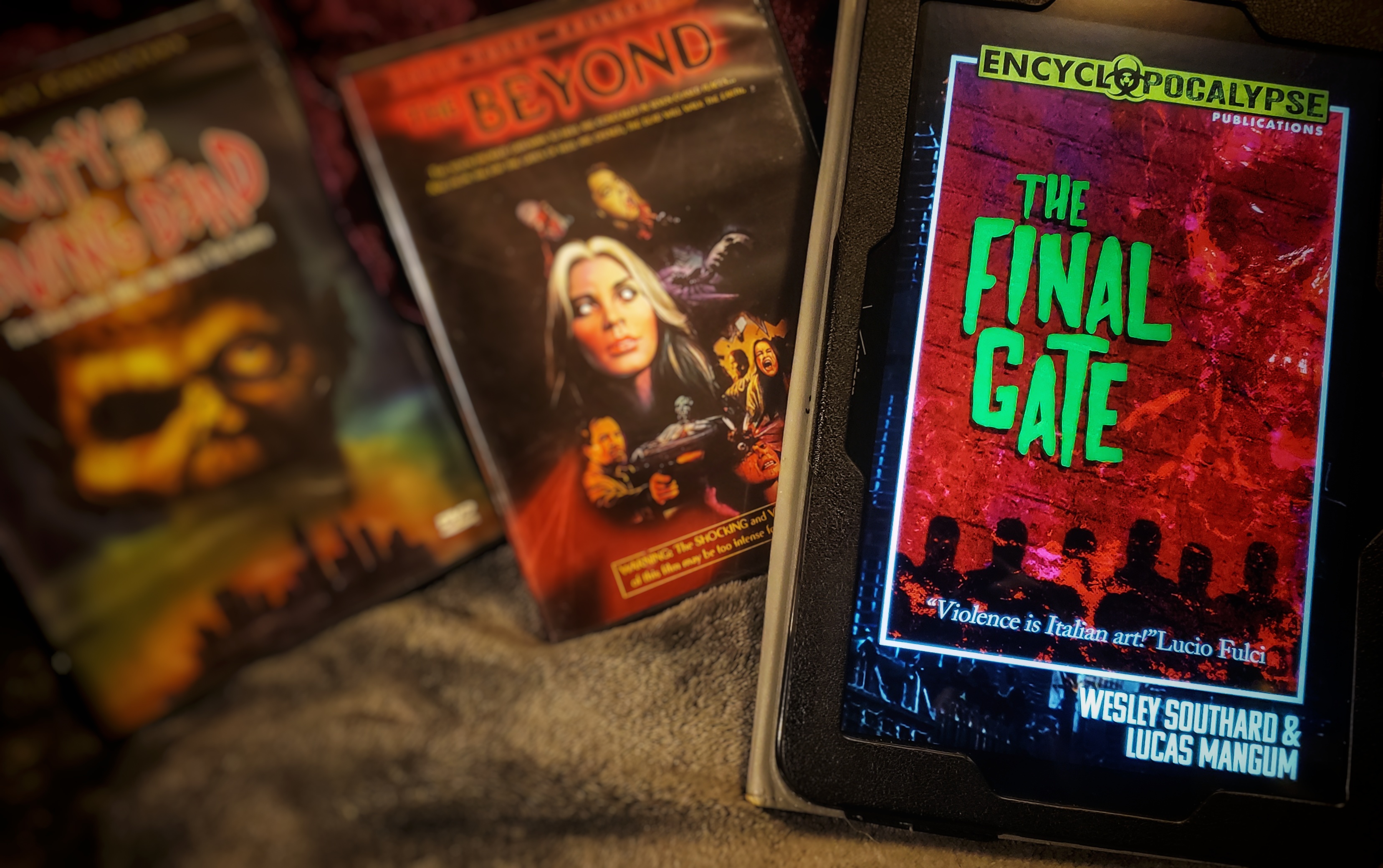
The Final Gate by Wesley Southard & Lucas Mangum

If Italian director Lucio Fulci were alive today, creating movies at 94-years-old like those he’d filmed four decades ago, this novella could be the novelization of his newest masterpiece. Southard and Mangum display a sincere and passionate love for the atmosphere, over-the-top gore, and idiosyncratically disjointed flow of Fulci’s oeuvre. That deep and abiding adoration is necessary to so accurately capture the feel of a Fulci movie with The Final Gate.
The more dedicated fans will perhaps experience a sort of wavering, rippling effect in their imaginations, seeing the face of Bob from House By the Cemetery transitioning into the much older face of Robert, the caretaker of St. Luke’s Orphanage. As pleased as we are to make his acquaintance again–and to see that he’s grown into a man who found a way to help children who were orphaned just as he was–it would seem that Bob’s encounters with supernatural horrors aren’t over. After racing into the orphanage in response to a young boy’s desperate cries for help, Robert’s story comes to an end when he enters Bryce’s darkened bedroom.
The rest of the book follows Brandon, Bryce’s older brother, and various other characters as Brandon desperately tries to make up for the mistakes of his earlier years. He hopes that by locating his younger brother and rescuing him from an orphanage that seems increasingly sinister, the deeper he digs into it, he’ll find a sense of fulfillment and redemption.
With the assistance of Jillian, his girlfriend, and Jillian’s ex-boyfriend, Dan, Brandon faces something far more mysterious and awful than he could have anticipated.
In true homage to Fulci, the authors leave you wondering who–if anyone–will survive and whether there’s any chance of a happy ending when the gates of hell are involved.
Any fans of Lucio Fulci, Dario Argento, Mario and Lamberto Bava, Ruggero Deodato, Umberto Lenzi, Bruno Mattei, and the other Italian greats should immediately pick up a copy of this book in August when it releases. No other book I’ve read has so perfectly demonstrated the Italian exploitation cinema tone the way this one has.

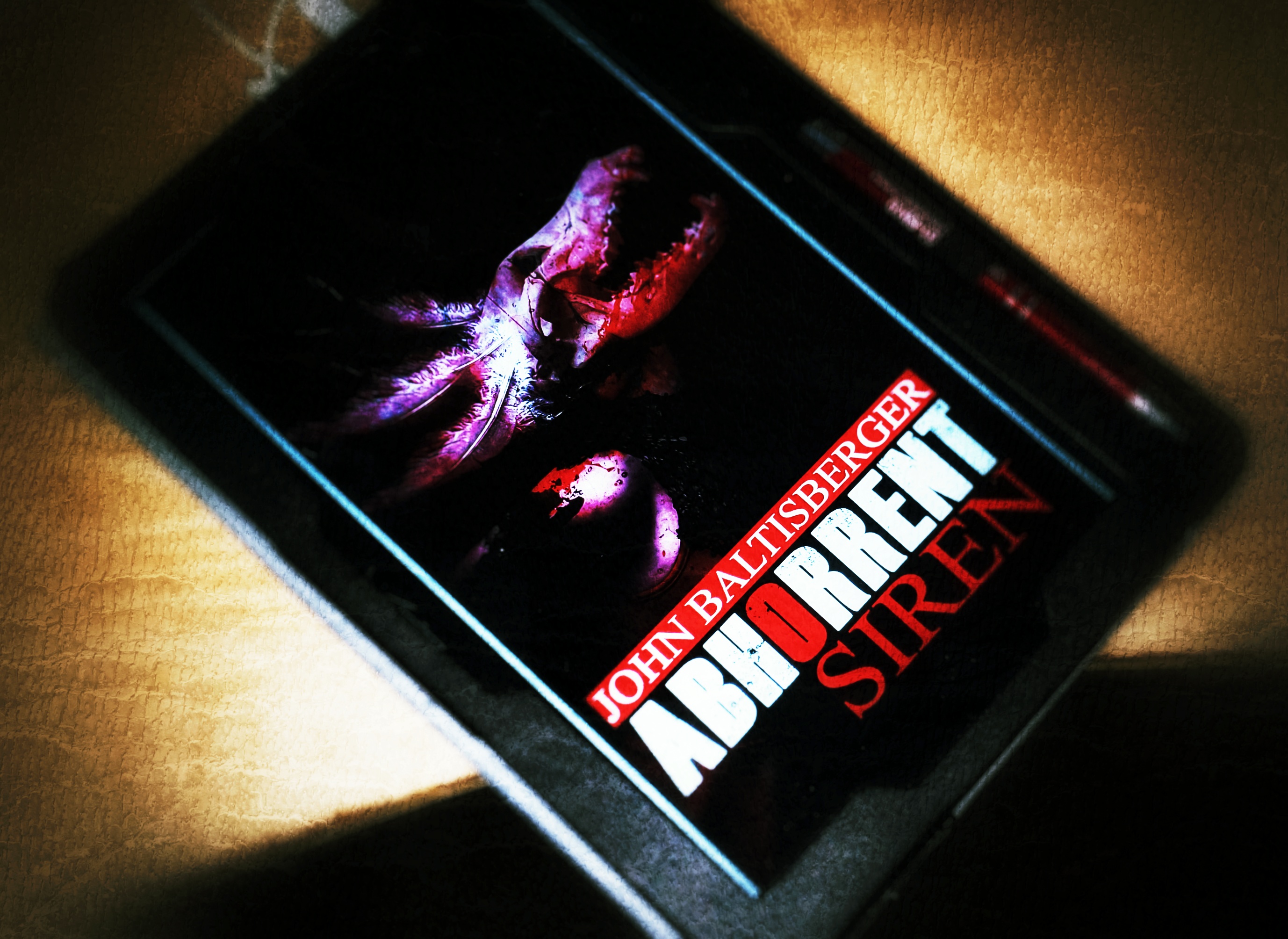
Abhorrent Siren by John Baltisberger

I had the extreme pleasure of reading this book a few months ago. I immediately procured a copy once it was available on sale through http://www.godless.com because I sincerely believe that Baltisberger deserves all the support the indie horror community is able to provide.

Abhorrent Siren takes Baltisberger’s love of kaiju and elevates it to a new level beyond what readers had witnessed from previous titles like Blood & Mud and the epic poem, War of Dictates. This book is truly the love letter to the body horror and giant monster genres readers didn’t even know they needed.
It’s all too easy to get excited watching kaiju movies while never conceiving of the desperation and terror of those in the path of whatever horrifying monstrosity is lumbering their way. All too often, we witness those tales from the perspectives of individuals at a safe distance or the larger-scale perspective of the monsters themselves. Abhorrent Siren is not one of those stories. This book is Cloverfield rather than Pacific Rim. We are not on even footing with the creature slithering its slimy way North across Texas. We are not at any sort of remove from the horrific events taking place, at least not for long.
This is not to say that we aren’t provided with some perspective from those analyzing the situation and struggling to find both an explanation and a solution. Following the scientists, as they race against both the clock and the toxic mist exuded from the monstrous axolotl, to share their findings with those who might be able to do something is fascinating and rife with harrowing experiences along the way.
As we receive intimate, first-hand experiences of the body horror happening at ground level in advance of the creature’s arrival, we find ourselves equally horrified and disgusted by the transformations taking place both in mind and body. As readers, we are never allowed to forget the afflicted–while malformed and misshapen in every conceivable way–were once human beings. That constant reminder that these were once people serves to make the events all the more awful.
The author wasn’t satisfied simply to write a violent, breakneck-paced monster story. As with other material from Baltisberger, there are layers of subtext and social commentary laced within his viscerally poetic imagery. Embedded within what is a captivating–sometimes alarming–tale of grotesque, splattery horror, one will find a scathing meta-commentary on the opioid epidemic plaguing America. As we witness Barbara’s inability to escape the nightmare unfolding around her in her attempts to distance herself from the clinic, the commentary becomes all the more poignant.
Just wait until you reach the point in the story when Barbara comes home to Owen. It’s all downhill from there in the most gloriously, gratuitously disgusting way–especially after she brings another partner back with her.

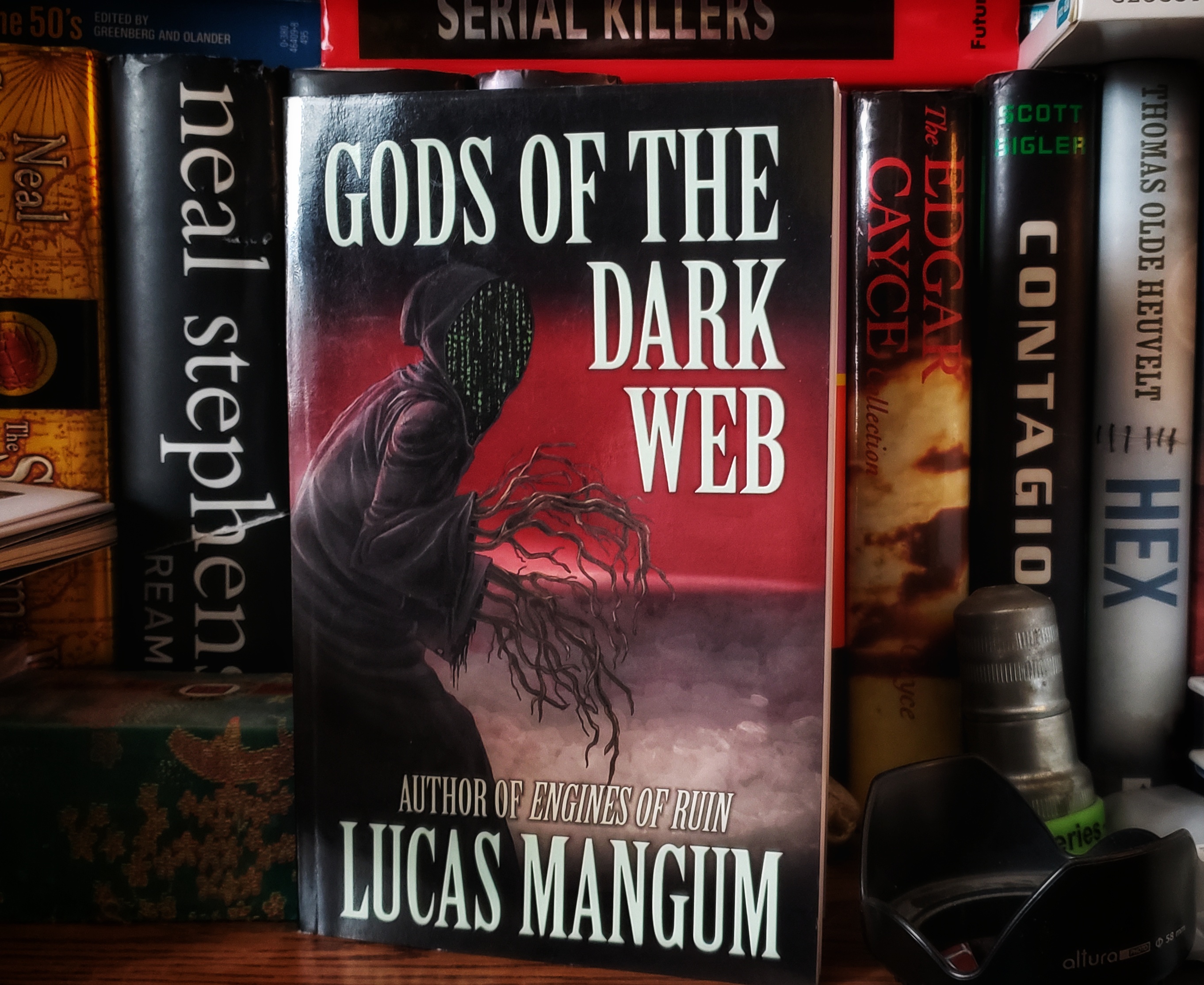
Gods of the Dark Web by Lucas Mangum

This one is a fast-paced and frenetic descent into horrors that lurk just below the surface of our reality, much as the dark web lurks just below the surface of the conventional, everyday internet of Google, Facebook, Twitter, and such. There are some fascinating parallels to be discovered in this story because of that mirroring aspect.
Most of the novella focuses on true-crime novelist Niles Highsmith and his search for a missing younger brother, Leon. Through Leon’s friends, Niles soon learns that his brother had recently been searching the dark web in hopes of obtaining a firearm for protection–only to be diverted along the way–witnessing perversions and unsettling horrors instead, just before he disappeared.
With no other avenues of inquiry available to him, Niles dives into the dark web as well, unaware of the attention he’s drawing to himself. Fans of the author will be pleased to find references to other works within the story as Niles explores the dark web for himself.
The story, while captivating, takes a backseat to the intense, graphic visuals that Mangum conjures in his writing. If one were to toss the paintings of Zdzislaw Beksinski, Salvador Dali, and H.R. Giger into a blender, they might come up with something approximating what Mangum describes in parts of this narrative.

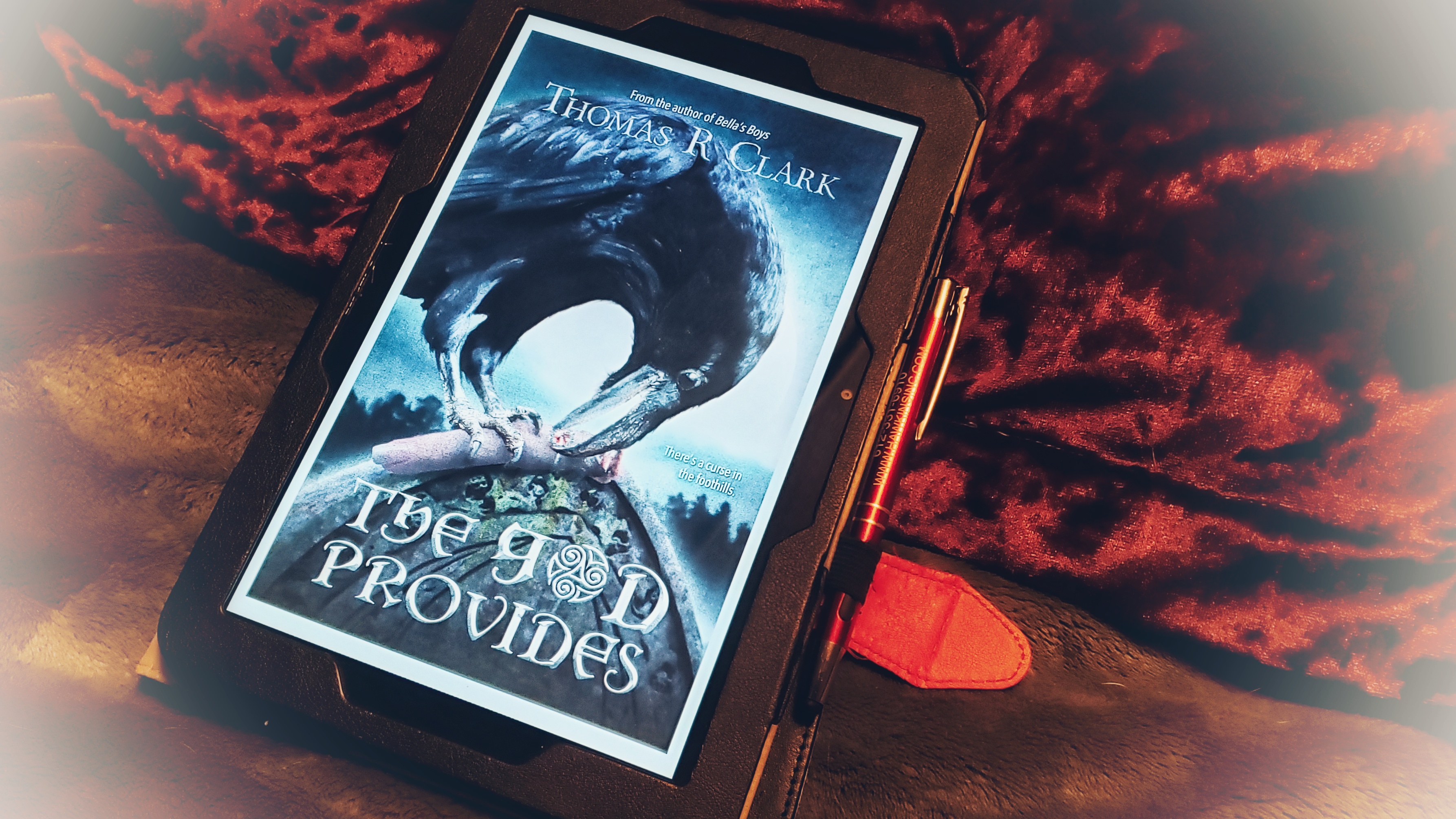
The God Provides by Thomas R. Clark

The newest book from Thomas R. Clark hits the ground running and never lets up.
Beginning with a series of gruesome murders, The God Provides spins the reader a grimly beautiful tale rooted in old-world folklore and modern monster mythology. The blend of fantasy and horror is so perfectly combined as to produce something that transcends both categorizations. What you end up with is a narrative that feels like the modern-day retelling of a forgotten epic masterpiece. At the same time, Clark manages to craft a thrilling tale that feels like something fresh and new that only now sees the light of day.
Delving into the McEntire family’s history–which isn’t at all what it might initially seem–we discover a community in rural upstate New York where ancient gods, witches, werewolves, fae, and other supernatural creatures thrive. All of this in plain view of any who might pass through the region…assuming they aren’t the sacrifices provided by the titular god.
Take one part The Wicker Man (the original, not the god awful remake) and Midsommar, another part The Howling, and toss in some Macbeth and Beowulf for flavor, and you’ll have a recipe that might bring you within spitting distance of this story. You’ll also want to borrow a smidge of the considerable literary prowess Clark brings to the table.
If splatter-folk is a genre…this is the introduction to that world.

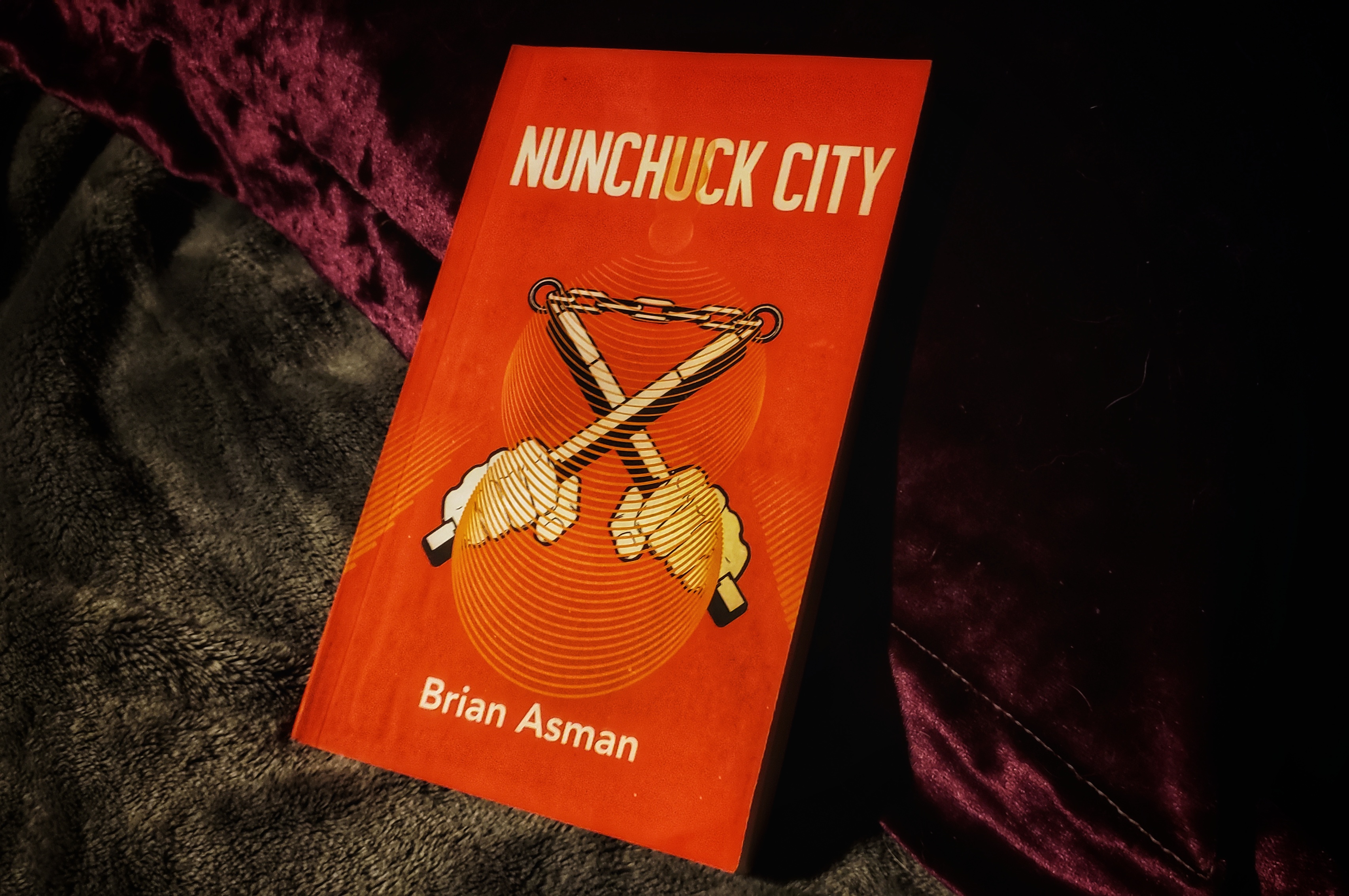
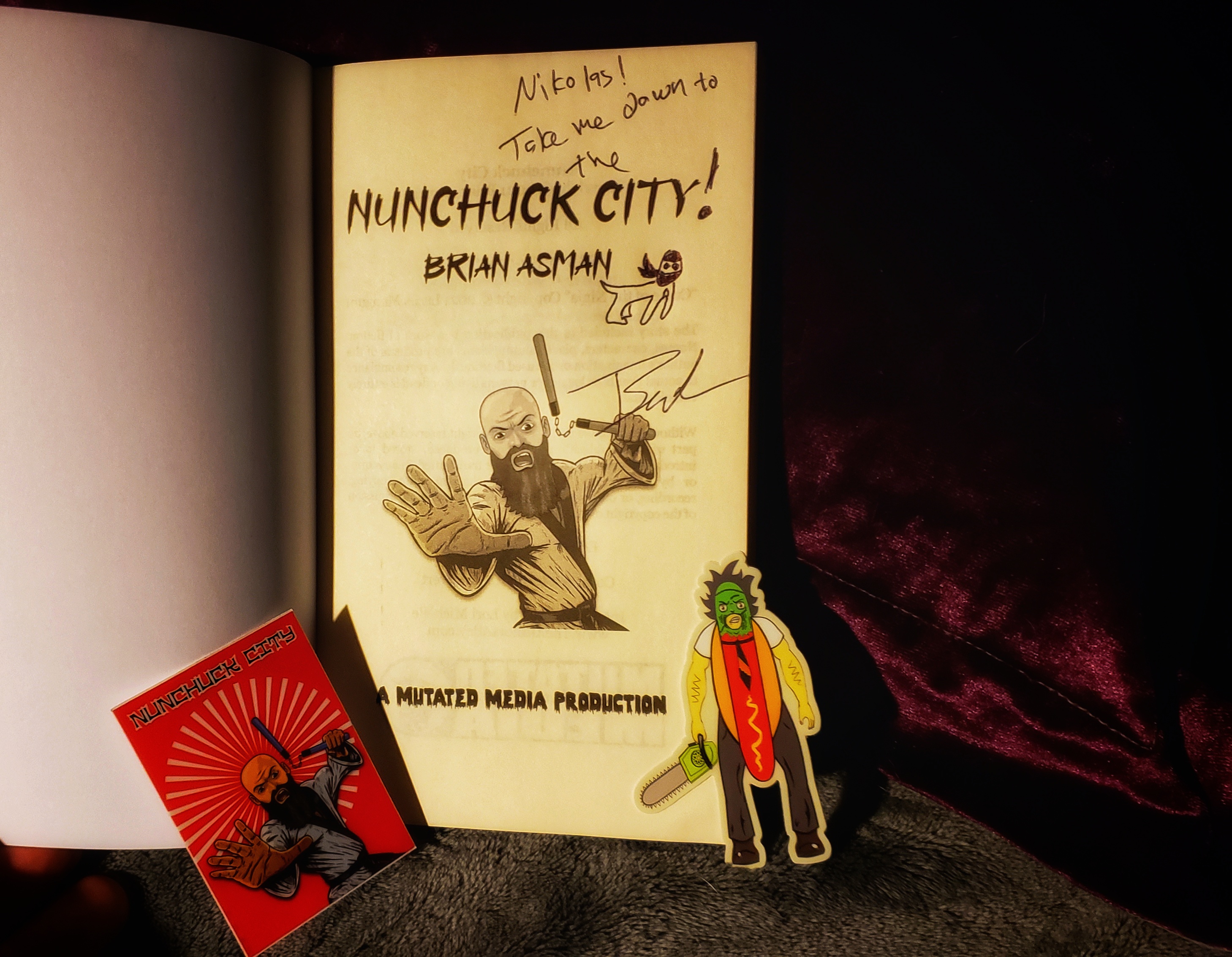
Nunchuck City by Brian Asman

Certainly, someone out there found themselves wondering what it might be like if Terry Pratchett had taken the time to focus his considerable talents toward writing an action-packed, ultraviolent ninja story.
Or maybe not?
Either way, Brian Asman’s Nunchuck City provides us with a glimpse of what that story might have been. This book is imbued with the same irreverent wit and hilariously meandering narrative elements one might have hoped for from just such a tale.
If you’ve ever wondered what could have been, if only David Wong (Jason Pargin) had written the screenplay for American Ninja…you need look no further because this would surely be the novelization of that magnificent piece of absurd cinema.
The story begins with Skip Baxter, a middle-aged, delusional sensei who proclaims himself to be The Most Dangerous Man In Turbo City. Imagine that kid from middle school, the one who bragged about being a black belt and how his hands were deadly weapons…now age him a solid 30 years or so, and you have Skip Baxter.
Now, imagine Skip Baxter beaten senseless and hospitalized without even putting up a feeble effort to defend himself.
That’s ok.
This story isn’t really about him. You’ll see him again, though.
This story is about Nunchuck “Nick” Nikolopoulis, a former ninja with a dark past. Nick is a man who studied under two masters, first, to become a formidable ninja and second, to become a stunningly proficient master of fondue.
All he needs to do is get a signature from the Mayor of Turbo City, and his dreams of establishing a fondue restaurant, Fond Dudes, with Rondell (his only friend in Turbo City) will come true.
Nunchuck City would be a painfully short book if it was that simple.
Suddenly, a specter from Nick’s past throws the city into turmoil, unleashing devastation and kidnapping the Mayor for the express purpose of beating him in combat and usurping the title for himself.
With another unexpected visitor from his past, Nick must find a way to save the Mayor–and the city–or admit that he failed to get the business license for Fond Dudes filed…and Nick isn’t one to accept failure.
Stay tuned after your feature presentation for Lucas Mangum’s Curse of the Ninja, a terrific short story about Catholics, ninjas, and exorcism…something you probably don’t know you need just yet, but I assure you that you do.

Bobcats by Matthew Weber

Matthew Weber’s Bobcats succeeds as a coming-of-age horror tale not altogether unlike Ketchum’s Hide and Seek and King’s IT. In fact, if one were to mix those two books together with a dash of the King novella, The Body, and just a smidge of Deliverance for flavor–as well as a touch of Friday the 13th–one might have a good starting point for the story that Weber’s put together.
Joey and his four compatriots in the Bobcats–a small fraternal outdoors troop not altogether unlike BSA–plan to hike The Gauntlet, a trail that weaves through the wilderness of Black Oak Mountain. The adventure is the boys’ plan to honor the legacy of Joey’s father, the foundation of The Bobcats, who recently died of cancer. More than that, it’s a rite of passage into manhood for the five adolescent boys.
As a powerful thunderstorm rolls into the area, the expedition becomes true to its name, becoming more a gauntlet than it already might have been. Sadly, nature is only the beginning of the challenges the boys face.
Black Oak Mountain is home to more than the expected wildlife, and for the Bobcats, it’s one of the inhabitants of that dark forest that changes their lives forever. The Cleaver soon has the five boys in his sights, and no amount of preparation and survival training could have adequately qualified the Bobcats to deal with an inhuman monster who makes his living slaughtering people for money with his cruel, handcrafted blades.
Weber does not shy away from the harsh reality of precisely how an encounter like this would turn out. Bobcats is not a feel-good story with a tidy, cheerful ending replete with plot armor and reliance on suspension of disbelief. To learn how it ends–or whom it ends–you’ll have to read it for yourself.
Matthew Weber deserves additional points for hinting at a history of mysterious occurrences on and near Black Oak Mountain without delving into them and erasing the mystery. It seems like a sequel could be in order, as there’s plenty more to fear in the night than solely The Cleaver.