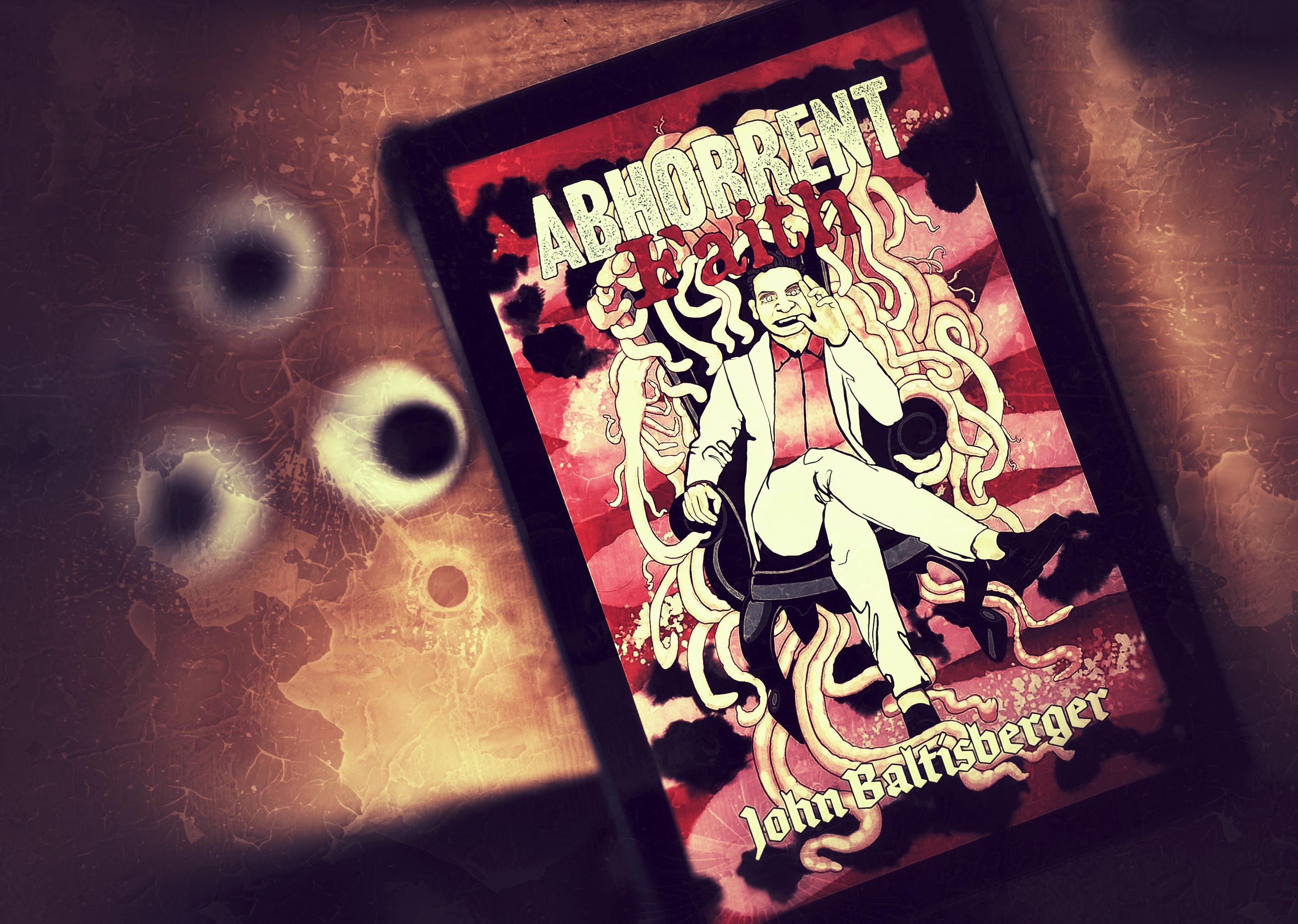
Just as the nightmarish and unfathomable events of Abhorrent Siren are reaching their feverish conclusion in San Antonio, the events of Abhorrent Faith begin. An inclusive, interfaith potluck hosted by a local Rabbi is interrupted by a hideously transformed–and transforming–monstrosity and the rabidly bigoted evangelical preacher seemingly controlling it. As the world outside the synagogue devolves into chaos and madness, a different sort of madness is on display in the defiled sanctuary.
Baltisberger packs this follow-up to his previous novella with just as much perversity and horror but a different brand of social commentary. The scathing indictment of the opioid epidemic is still present, but that takes the backseat as he focuses his ire on bigotry, nationalism, and the anti-semitism embedded in altogether too much of society–and human history as a whole. Calling out the inherent hypocrisy, scriptural ignorance, and mental gymnastics embedded within right-wing Christianity, one can’t help but feel a thrill each time Ari stands up to Adrian King. At the same time, one can’t help but feel the almost tearful frustration and anger at Ari–or anyone–having to contend with the level of ignorance and hate given unworthy life in the story’s antagonist. It doesn’t take long for the reader to recognize that the monsters aren’t all outside, and I’m not talking about the infected, mutating members of Ari’s interfaith circle.
Altogether too much of this narrative is non-fiction, in the sense that these abhorrent acolytes of intolerance and acrimony are everywhere one looks, and the anti-semitic sentiments are alive and thriving wherever people like that are platformed and given attention. Baltisberger is angry over this, and that anger seethes beneath the surface of his spectacular storytelling in this follow-up to Abhorrent Siren.
The discerning eye might recognize a certain similarity between the cover art and a certain evangelical nut known for unhinged rants and barely suppressed bigotry. This is not an accident.
This title is available through multiple avenues, but you can pick it up for yourself by going to http://www.godless.com or by downloading the Godless app to your mobile device. The link is below:
 Domus Necrophagous