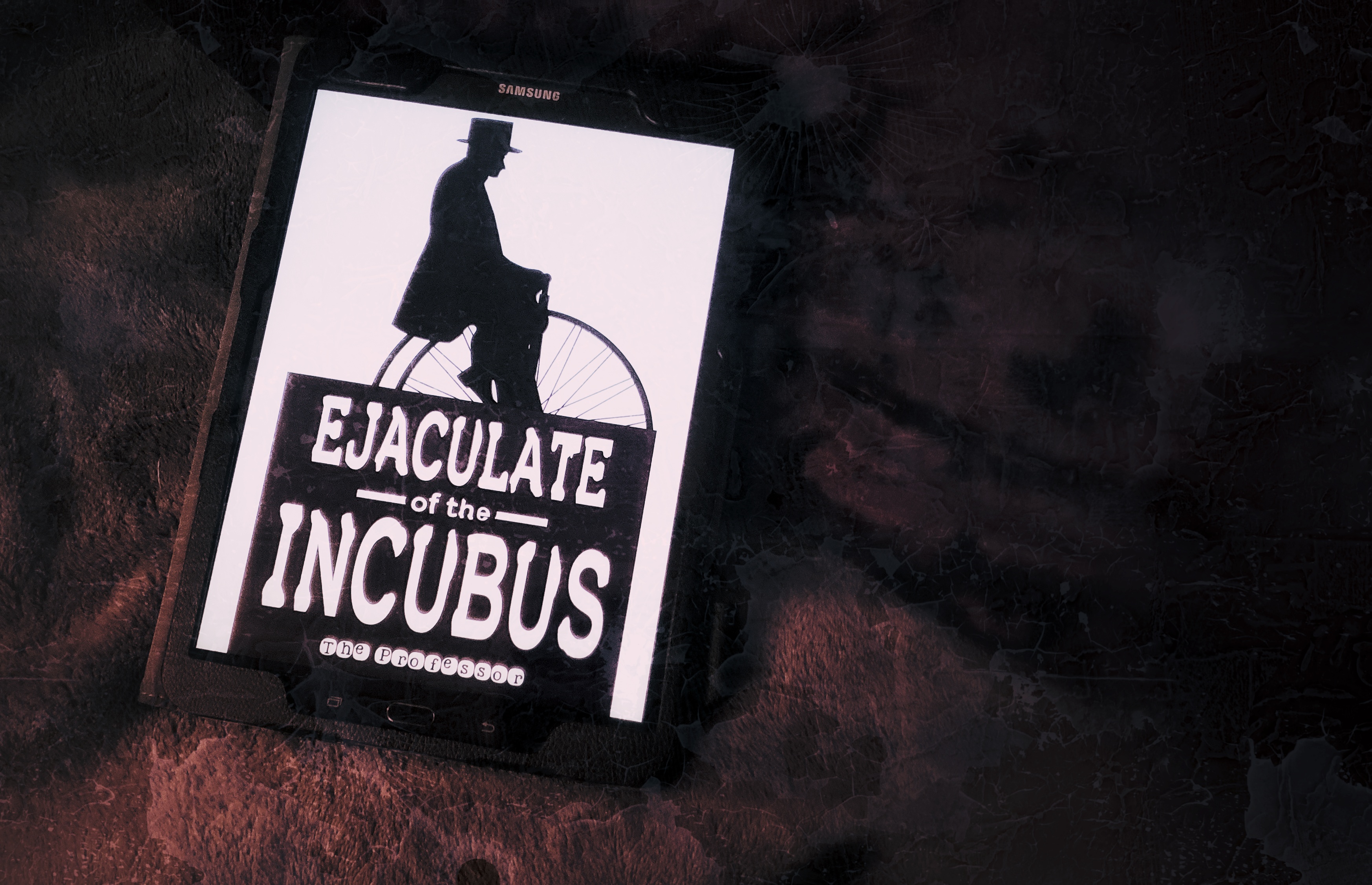
Ejaculate Of the Incubus by The Professor

Oh dear me, Professor, dear me.
I began Ejaculate of the Incubus with high expectations brought on by the, quite frankly, stellar performance during KillerCon 2021 of a separate, though no less graphic and revolting tale. As you can probably ascertain, I was most assuredly not disappointed.
This lovely tale starts as an unnamed narrator meets with an old friend, Professor Roberts, for tea. Anticipating some minor transformation resulting from Roberts returning from his recent honeymoon, our narrator is taken aback by a far more startling and peculiar metamorphosis having taken place. A prim and proper, detached and naive gentleman no more, Roberts displays a wild-eyed intensity and disheveled condition as he begins to recount recent events.
It was the honeymoon between Roberts and his bride, Lily, at an old monastery on the Sussex coast, that led them to discover a peculiar metallic object buried in the sand. Returning to their lodging, they caught a glimpse of a strangely proportioned man emerging from the surf, and they hurried to the security of human habitation. Upon inspection of their discovered object, Roberts discerned graphic depictions etched onto the surface that shocked his puritanical sensibilities.
This is where the story truly blossoms into something altogether peculiar, blending eroticism and revulsion into a dizzying melange of fluids both human and infernal.
The author, publishing under the nom de plume of The Professor, provides us with a deliciously vile story that lends sophisticated use of language and eloquence to acts of sexual depravity one typically finds when perusing the Urban Dictionary or Reddit forums. To say that I was impressed would be an understatement. I knew to expect something magnificent from this author, and I was still blown away.
The audio narration of the same work, provided by the author, is a fantastic experience that adds a different nuance and enjoyment to the experience. I’ll be eagerly awaiting any new material from The Professor.

This title is available as part of the 31 Days of Godless event at http://www.godless.com for October of 2021. You can obtain this for yourself by going to the website or downloading the app for your mobile device. The link is below:
Poisoning the Well by Todd Love

Poisoning the Well begins with a short, shocking tale of Trevor Wolf defying authorities and braving a life-threatening storm to get home to his wife, only to receive a startling homecoming the reader shouldn’t see coming. With this auspicious start, Todd Love invites us on a journey through thirteen brief tales that will leave you wishing he’d given you more.
Spiders deposit clutches of eggs in horrible places.
Irish myths and legends are examined.
The reader will experience equal parts nostalgia, amusement, and horror as Halloween of 1988 is brought to life in a way any child of the 80s will appreciate.
And that is only a small sample of the stories you’ll have to look forward to.
You will be satisfied.
You will be entertained.

This title was released as part of the http://www.godless.com 31 Days of Godless event to celebrate October of 2021. You can snag it for yourself by going to the website or by downloading the app on your mobile device. The link is below:
Poisoning the Well by Todd Love

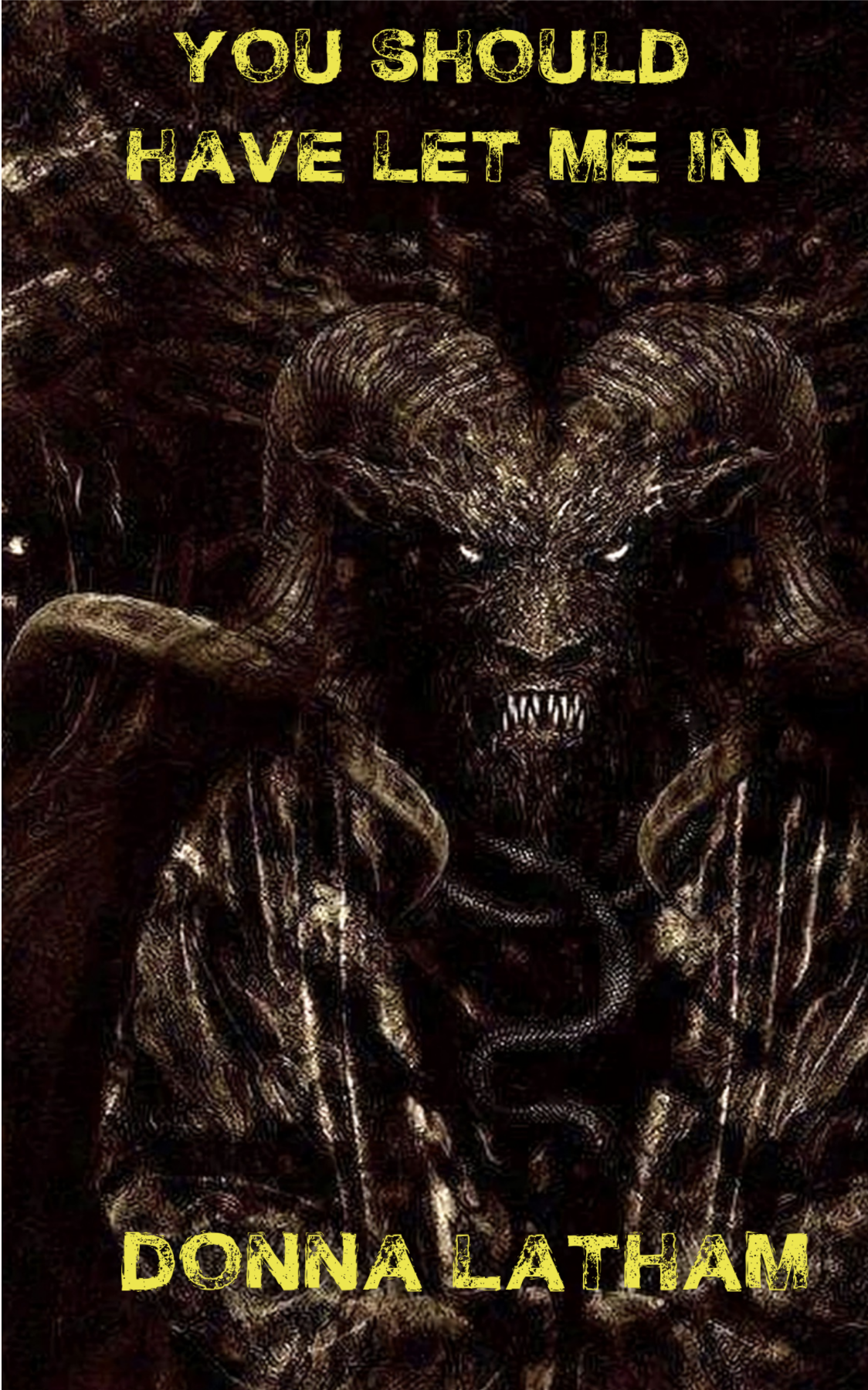
You Should Have Let Me In by Donna Latham

Donna Latham’s You Should Have Let Me In is a short flash fiction piece, so I’ll keep my review short as well.
It starts with a knocking at the door and a sinister presence demanding entry, but it’s not the front door the stranger is seeking to access.
Taking a page from I Know What You Did Last Summer, Latham provides her cruel, gruesome take on when an accident becomes something worse.

This short fiction title was only available by signing up for the D&T Publishing newsletter. You can do so by going to the following site, Since then, the title was released as part of the 31 Days of Godless event at http://www.godless.com for October of 2021. The link for that will be below as well:

https://www.dandtpublishing.com/

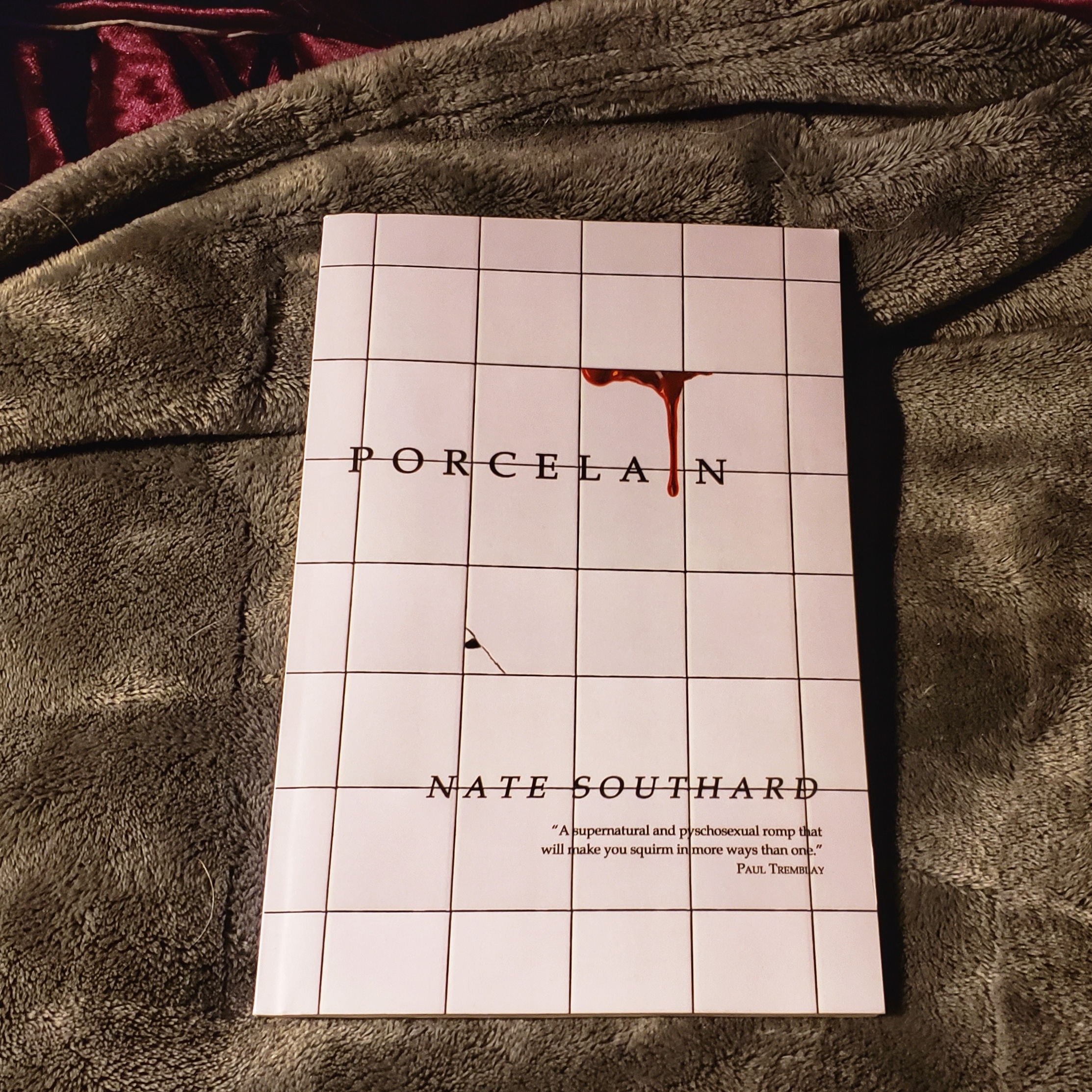
Porcelain by Nate Southard

Jason Hawks puts his career as a professional comedian on hold to return home to Cincinnati after learning his high school sweetheart, Andrea, stripping under the name Porcelain, publicly murdered multiple patrons before shooting herself. Reconnecting with old friends he similarly hadn’t spoken with in 12 years, Jason struggles to discover an explanation for the horrific act Andrea committed. Haunted by disjointed memories and terrifying hallucinations, Jason forces himself and two of his old friends to relive the events of the final night they’d all been together more than a decade before. Piecing together the pieces of what happened when six freshly graduated young adults had lost control and experienced something both carnal and terrifying, a mystery begins to unravel that threatens both sanity and the world as they know it.
Nate Southard shares a compelling and disquieting tale with this title. Friendships are rekindled and snuffed out on the page as the author drags us through a tangled mess of erotica and supernatural horror that tiptoes the line separating us from unstoppable, madness-inducing cosmic horror.
Fans of Stephen King’s IT will feel a certain sense of familiarity with this narrative of adults coming together and unhappily reliving a hardly self-aware sexual awakening they experienced at a much younger age. Unlike the uncomfortable scene described in King’s novel, in Porcelain, at least these characters were adults–though barely–when they intimately came together in a dark, terrifying place.
More terrifying than anything else for me, the core horror of this story is derived from the loss of control. Propelled by an insatiable desire for gratification, characters fight to restrain themselves and to fend off the debasement as increasingly louder voices within are urging them to give in. The almost vampiric presence at the heart of the horror is unsettling in its ability to overwhelm the individual’s better judgment and will to fight. The corrupting nature of the evil as its influence appears to spread from the original location in the abandoned factory makes for a truly disturbing concept, executed superbly by Southard.

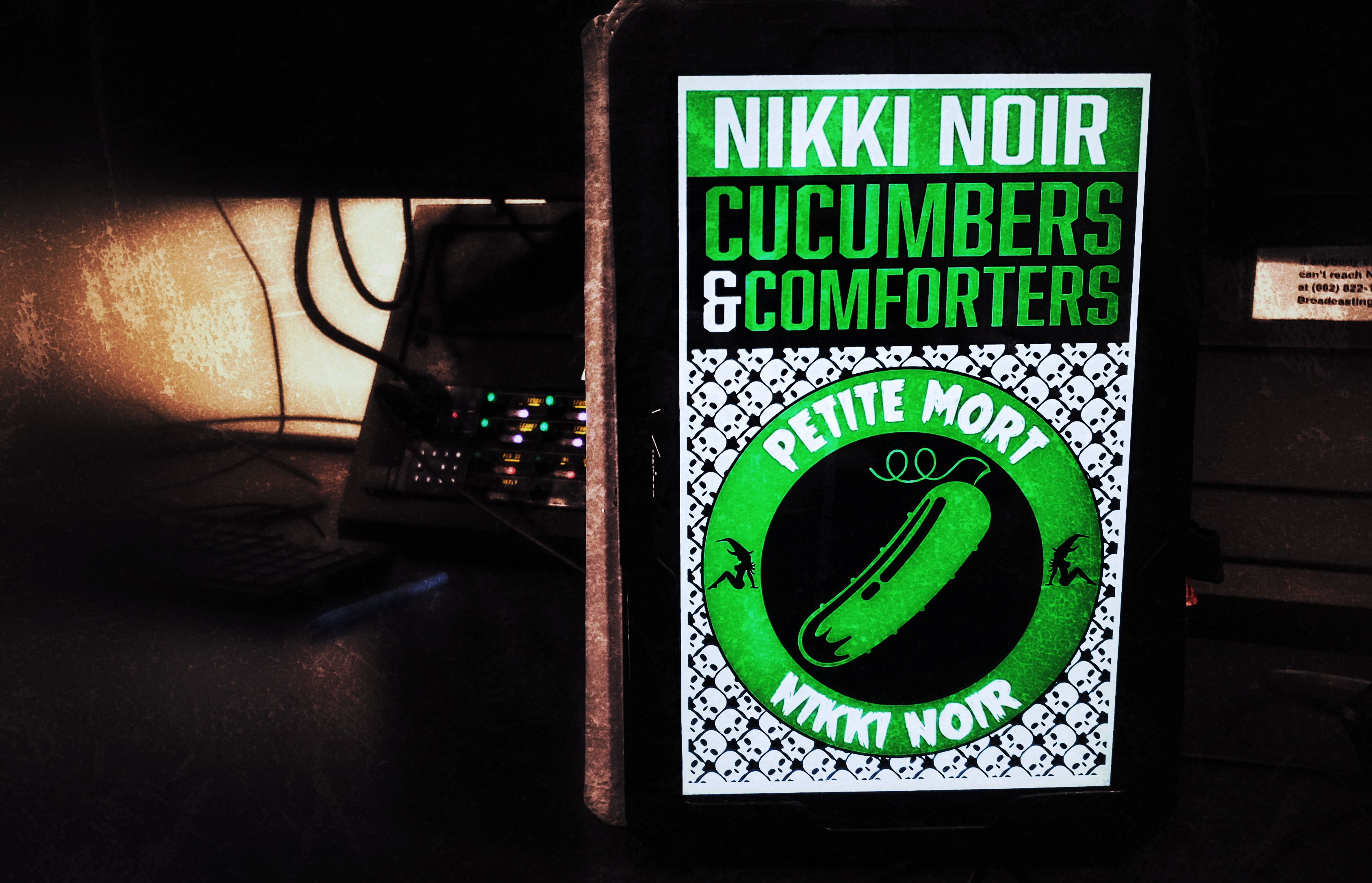
Cucumbers & Comforters by Nikki Noir

Nikki Noir has an exceptional talent for blending supernatural elements with splatterpunk sensibilities. If you haven’t read the Black Planet installments–or the collection of the first four–you are seriously missing out on a writer who is easily one of the best emerging voices of indie horror. If, however, you want to avoid diving into a series, you’re in luck. Nikki has several stand-alone short stories like this fantastic tale.
Jen is still an outsider at school, even after spending a year in the new town where her family moved. One of her only friends is a young boy named Dale, a special boy from an unhappy home. Jen met Dale hanging out near the river, and she began telling him stories. One of those stories Jen shared concerns the Japanese myth of the Kappa. Dale internalized that particular myth and began playacting as a Kappa near the water. But Dale has been missing for a couple of weeks.
Heading home after a party where she’d gotten into an unpleasant verbal exchange with one of the popular girls, Jen is startled and pleased to discover Dale hanging out on one of the rocks near the river. She attempts to take him home, but he resists, insistent on playing a Kappa. Leaving him with the cucumber she’d carried with her–the favorite treat of one of those supernatural creatures–Jen races off to bring attention to Dale’s presence near the river.
From there, Cucumbers & Comforters becomes a barrage of sex, sexual violence, unraveling mysteries, sinister family drama, and myths seemingly come to life. There may be no amount of childlike security found in carrying cucumbers or hiding beneath comforters that will save Jen from the awful repercussions of the events set in motion the night of the party…but you’ll have to read the story to find out for yourself.
If you’re in the mood to read about glowing orbs brutally extracted from human anuses, taboo sexual trysts, and murder, you are in the right place. This is a voyage Nikki Noir is the perfect host to guide you on.

You can obtain your own copy of Cucumbers & Comforters from http://www.godless.com or by downloading the Godless app on the mobile device of your choice. The link is below:

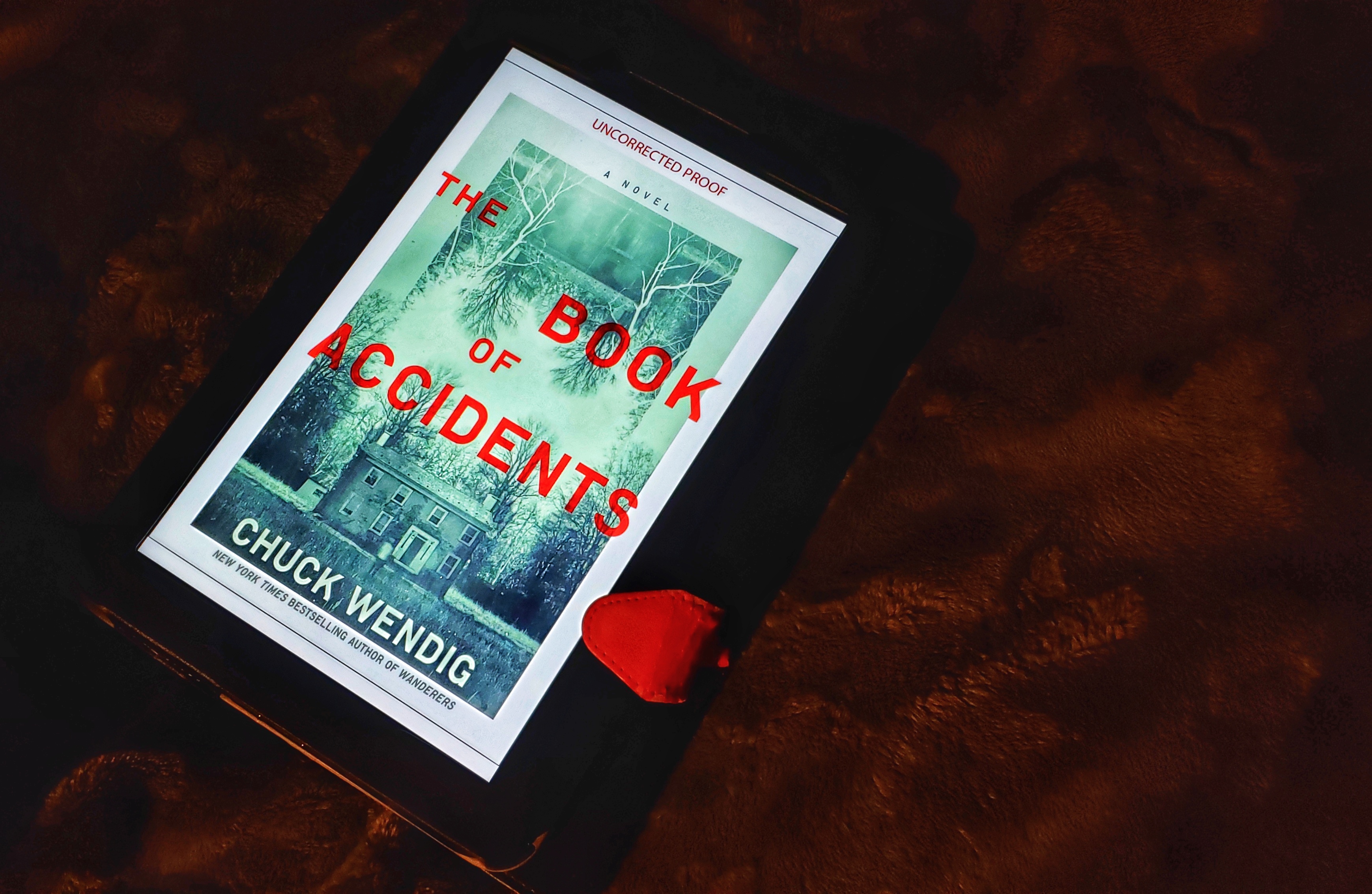
The Book of Accidents by Chuck Wendig

The Book of Accidents may superficially appear to be less epic than Wendig’s previous novel, Wanderers, but there’s so much more beneath the surface. When we first meet Oliver and his family, the story seems to be focused on a family under strain, moving into what could potentially be a haunted house. It doesn’t take Wendig long to dispel those assumptions as he takes the reader on a multiverse-spanning adventure of magic and terror.
While the story is filled with interesting characters, Oliver is at the core of it all, in more ways than one. He’s a special boy, empathetic and sensitive, but there’s so much more to him than that. Oliver can see the pain in others in a literal, visceral sense, and the world we’re living in today gives him more than enough pain to witness. Hoping to find some peace for their son, Nate and Maddie move into Nate’s childhood home in rural Pennsylvania after his abusive father passes away. Nate transitions from his life as a Philadelphia police officer to a Pennsylvania Fish & Game warden, and Maddie decides she wants to try a different sort of sculpture from what she’d been creating in the city. Oliver successfully makes new friends on his first day at the new school. Unfortunately, he makes a couple of new enemies as well.
If only things could level out at that point, it would be a typical family drama, and the story would be over. Thankfully, for the reader–though not for the family–Wendig is at the helm. The very enemies Oliver makes at school are instrumental in putting him in Jake’s path, and everything begins to fall apart from there. Wherever Jake goes, the collapse is soon to follow.
You’ll need to be prepared for anything to happen because there’s no way to go into this one predicting the outcome.
It’s masterful the way Wendig brings the disparate threads of narrative together. It astounded me when I was reading Wanderers, and it’s no less astonishing when reading The Book of Accidents.

Midnight Horror Show by Ben Lathrop: Narrated by Tee Quillin

A little backstory might be in order for this review.
This story is built around the old Screen Gems release of Universal horror pictures in syndication to television stations in the late 1950s. With the encouragement that the stations bring in a host to introduce the “Shock” and later “Son of Shock” pictures, Screen Gems helped to platform an industry, first popularized by Vampira, the original horror host on television. There have been many others along the way, including notable icons such as Vincent Price, Joe Bob Briggs, and Elvira. Midnight Horror Show captures a nostalgic snapshot of a time that’s lost in memory, turning it into something truly sinister, and telling a fantastic tale along the way.
With a series of unusual killings in the sleepy Iowa town of Dubois in 1985, Detective David Carlson finds himself thrust into the midst of an all-too-real horror show. Investigating the seemingly unrelated crimes, he encounters James West, a strange young man with a fixation on horror and heavy metal, soon to host his own horror show at a local drive-in with a dark history.
James’s obsession with a former television and drive-in host, Boris Orlof, brings Detective Carlson face-to-face with secrets and terrifying truths previously buried in the past. Confronting his own forgotten memories, a file of missing person cases from twenty years before, and the very real possibility that there’s more than simple movie magic taking place behind the scenes, Detective West finds himself fighting a ticking clock to solve the unbelievable mystery and save the young man he’s grudgingly befriended before Halloween night.
Midnight Horror Show is a captivating story that leaves you guessing what’s going to happen right up until the end. When you think you have a handle on what’s next, Lathrop manages to dodge your assumptions and veer off in a different direction.
The narration provided by Tee Quillin is fantastic and believable as he voices the assorted characters populating the tale with seeming ease.

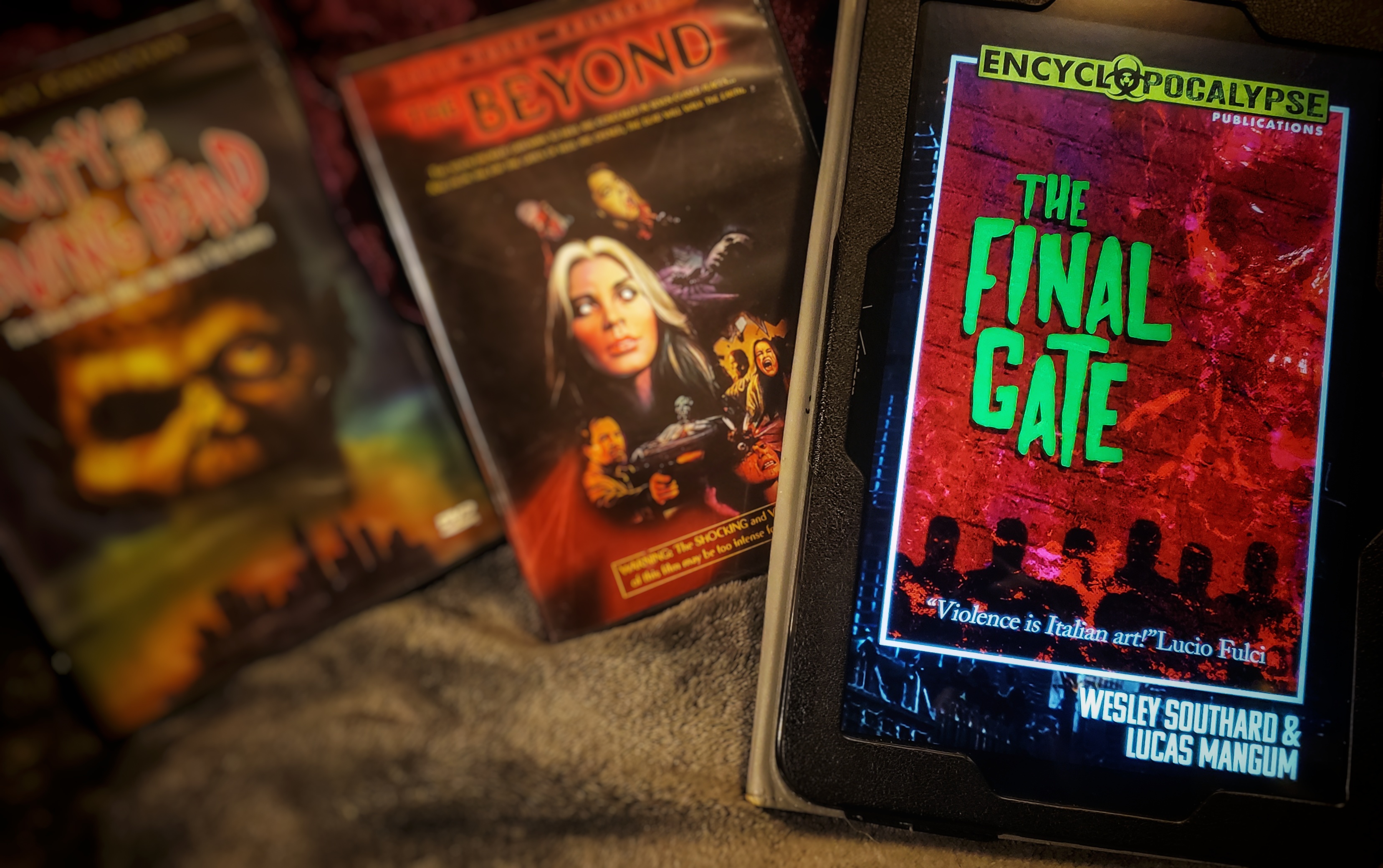
The Final Gate by Wesley Southard & Lucas Mangum

If Italian director Lucio Fulci were alive today, creating movies at 94-years-old like those he’d filmed four decades ago, this novella could be the novelization of his newest masterpiece. Southard and Mangum display a sincere and passionate love for the atmosphere, over-the-top gore, and idiosyncratically disjointed flow of Fulci’s oeuvre. That deep and abiding adoration is necessary to so accurately capture the feel of a Fulci movie with The Final Gate.
The more dedicated fans will perhaps experience a sort of wavering, rippling effect in their imaginations, seeing the face of Bob from House By the Cemetery transitioning into the much older face of Robert, the caretaker of St. Luke’s Orphanage. As pleased as we are to make his acquaintance again–and to see that he’s grown into a man who found a way to help children who were orphaned just as he was–it would seem that Bob’s encounters with supernatural horrors aren’t over. After racing into the orphanage in response to a young boy’s desperate cries for help, Robert’s story comes to an end when he enters Bryce’s darkened bedroom.
The rest of the book follows Brandon, Bryce’s older brother, and various other characters as Brandon desperately tries to make up for the mistakes of his earlier years. He hopes that by locating his younger brother and rescuing him from an orphanage that seems increasingly sinister, the deeper he digs into it, he’ll find a sense of fulfillment and redemption.
With the assistance of Jillian, his girlfriend, and Jillian’s ex-boyfriend, Dan, Brandon faces something far more mysterious and awful than he could have anticipated.
In true homage to Fulci, the authors leave you wondering who–if anyone–will survive and whether there’s any chance of a happy ending when the gates of hell are involved.
Any fans of Lucio Fulci, Dario Argento, Mario and Lamberto Bava, Ruggero Deodato, Umberto Lenzi, Bruno Mattei, and the other Italian greats should immediately pick up a copy of this book in August when it releases. No other book I’ve read has so perfectly demonstrated the Italian exploitation cinema tone the way this one has.

Fear Street Part Three: 1666

The final installment of the Fear Street trilogy from Netflix had some weaknesses, but it was an overall satisfying conclusion to the story. In a sense, it was like two movies in one.
As Deena restores the skeleton of the witch, Sarah Fier, she finds herself transported back in time to the colonial community of Union, where she experiences the final days of Sarah Fier’s life through her own eyes. We discover that the history everyone had taken for granted throughout the previous two installments is not the reality of what happened during those fateful days in 1666.
Sarah and Hannah Miller–much like Deena and Sam in 1994–are lovers in a time when it was most certainly less socially acceptable than it is today. Jealous men of the village spurned in their advances, use this forbidden love as justification for cries of witchcraft and devilry. It just so happens that there is witchcraft afoot, but Sarah and Hannah are, of course, innocent.
There was a satisfying moment in the story when Sarah determines that she will bring the devil down on the citizens of Union in a sort of self-fulfilling prophecy. Already condemned for practicing witchcraft, she feels there’s nothing to lose. Instead, she discovers the truth of who is behind the apparent curse afflicting the village before she is captured and hanged by the overzealous Union residents. It’s this discovery that brings us back to the present of 1994–and the latter half of the movie.
Deena, Josh, and Ziggy–along with the custodian, Martin–craft a desperate plan to bring down the real witch and end the curse that’s afflicted Shadyside for more than 300 years…hopefully, saving Sam in the process.

Fear Street Part Two: 1978

Where the first installment of the Fear Street trilogy paid homage to the pivotal slasher flicks of the 1990s, Fear Street: 1978 devotes itself to crafting a tale reminiscent of classic films like Friday the 13th, The Burning, and Sleepaway Camp.
Desperate to save Sam’s life–and perhaps her soul–Deena and Josh turn to one of the only survivors of the massacre at Camp Nightwing, hoping to discover any clues that might assist them. To discover what–if anything–can be done, they experience the tale of that horrible July as shared by the traumatized sister of one of the victims.
The filmmakers did an excellent job of capturing the summer camp slasher aesthetic throughout this installment of the Fear Street series. It felt both authentic and immersive. I was impressed.
We discover more of the mythology associated with the witch and the curse afflicting Shadyside, and there is some fantastic creepiness in the caves beneath the camp itself.
Young campers and camp staff are slaughtered left and right, and there’s no skimping on the violence except where the killing of some of the younger children is concerned. I don’t know if I can claim to be disappointed by that, as it was sort of expected that Netflix wouldn’t go the whole hog on slaughtering children.
It sets the stage nicely for the final installment of the trilogy, and I certainly can’t pretend I wasn’t immediately interested in seeing Fear Street: 1666 and discovering just how this tale will end.