Fuzzy Nation by John Scalzi, Narrated by Wil Wheaton

I’ve never had the pleasure of reading Little Fuzzy by H. Beam Piper, the 1962 science fiction novel that John Scalzi’s reimagined with Fuzzy Nation. Knowing Scalzi’s work and that the Piper estate approved of this reinterpretation of the material, I suspect he managed to capture the most important elements of the original novel while making it definitively his own by adding his particular brand of irreverent wit and snappy dialogue.
Jack Holloway, disbarred lawyer and independent surveyor for the ZaraCorp, is an antagonistic, impulsive, and peculiarly funny protagonist. When he stumbles upon what might be the largest seam of valuable sunstone on the planet when he allows his dog to detonate explosives yet again, Holloway maneuvers himself into a position to become far more wealthy than he’d ever imagined. Of course, everything changes when Holloway discovers an intruder in his remote cabin.
Appearing to be something in between a cat and a monkey, the intruder quickly ingratiates itself with Holloway, and it’s not alone. Encountering the previously unknown animals he decides to call Fuzzys, Holloway has no way of knowing how much upheaval he’s about to create when he shares the discovery with his ex-girlfriend, a biologist working for ZaraCorp.
Entertaining, heartwarming, and heartbreaking at different points, Scalzi’s reimagining of the introduction to the Fuzzys is a scathing commentary on capitalist predation, an evaluation of our humanity, and an exploration of the nature and presentation of sentience.
Wil Wheaton was the perfect choice for the narrator of this audiobook edition of the story. He captures the sarcasm and wit better than anyone else likely would have. His narration is captivating, articulate, and all-around fantastic.
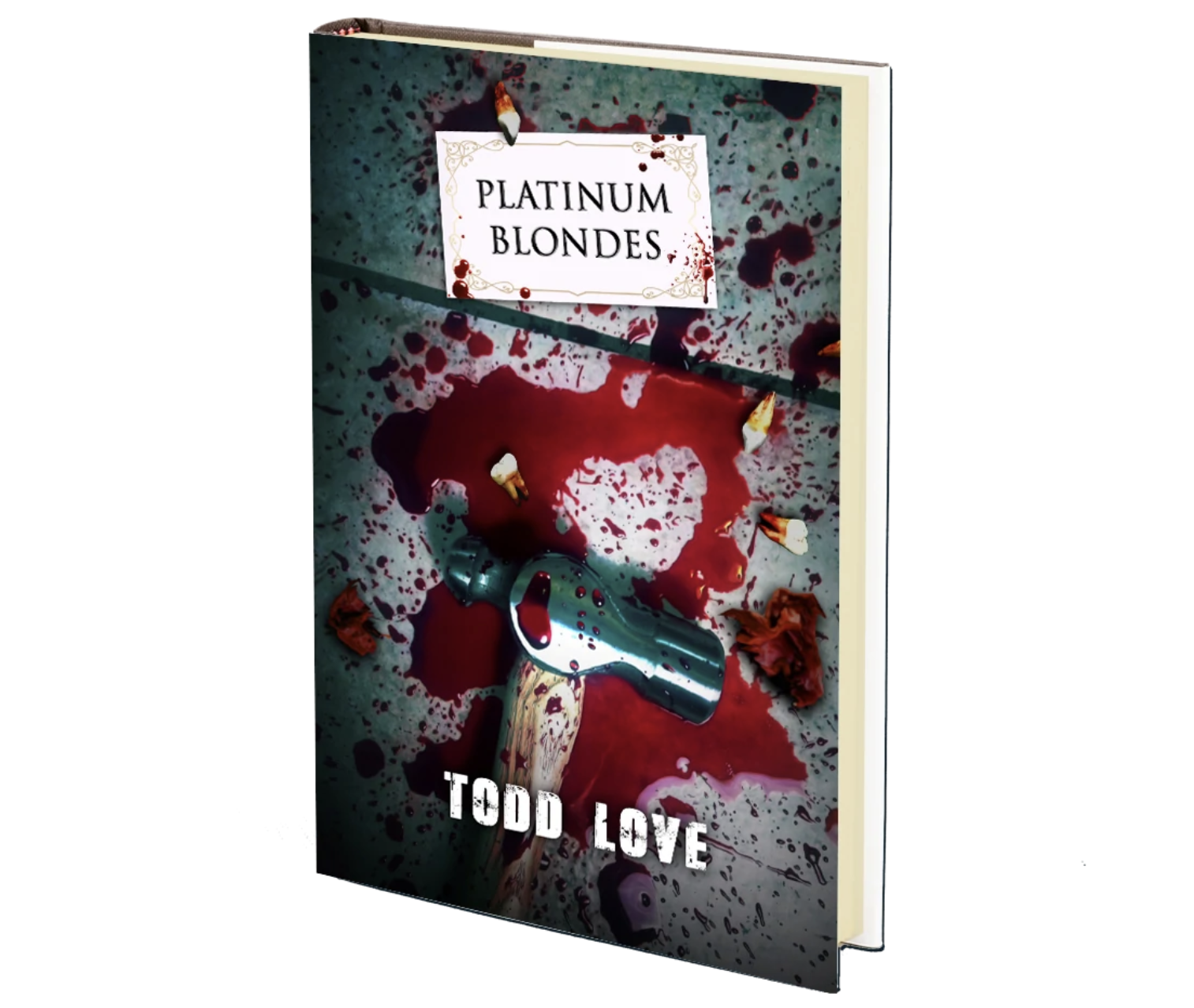
Platinum Blondes by Todd Love

Tina lost everything in one careless, stupid action of a drunk driver. Her husband, her two children, and their chocolate lab all lost their lives in a spectacularly awful fashion. As if she didn’t have enough indignity to suffer through with all of that, she also has a fat, leering pastor to deal with when setting up the funeral arrangements.
When the stranger with platinum blonde hair approaches Tina at the funeral, offering closure and peace, she takes the nondescript business card and forgets about it for a little while. Closure, in the world of Todd Love’s Platinum Blondes, has a way of hammering its way into one’s imagination and searing itself in the reader’s memory.
Love dedicates a significant portion of this narrative to the cruel task of ripping the reader’s heart out and stomping on it as if it were an offending cockroach scurrying across his kitchen floor. He also spends a fair amount of time shoring up our disgust for the drunk driver who stole everything from Tina with his carelessness and disgusting behavior. Then, when we think he’s done screwing with us, Todd Love delivers a twist that Holmes wouldn’t have seen coming.
This first installment of Love’s Platinum Blondes series of shorts is at turns gripping, heart-wrenching, perversely satisfying, and shocking. Platinum Blondes is a short story the reader wishes to continue reading beyond the final sentence, and thankfully there’s more.

This short story is available through http://www.godless.com and you can obtain it for yourself by going to the website or by downloading the Godless app to your mobile device of choice. The link is below:

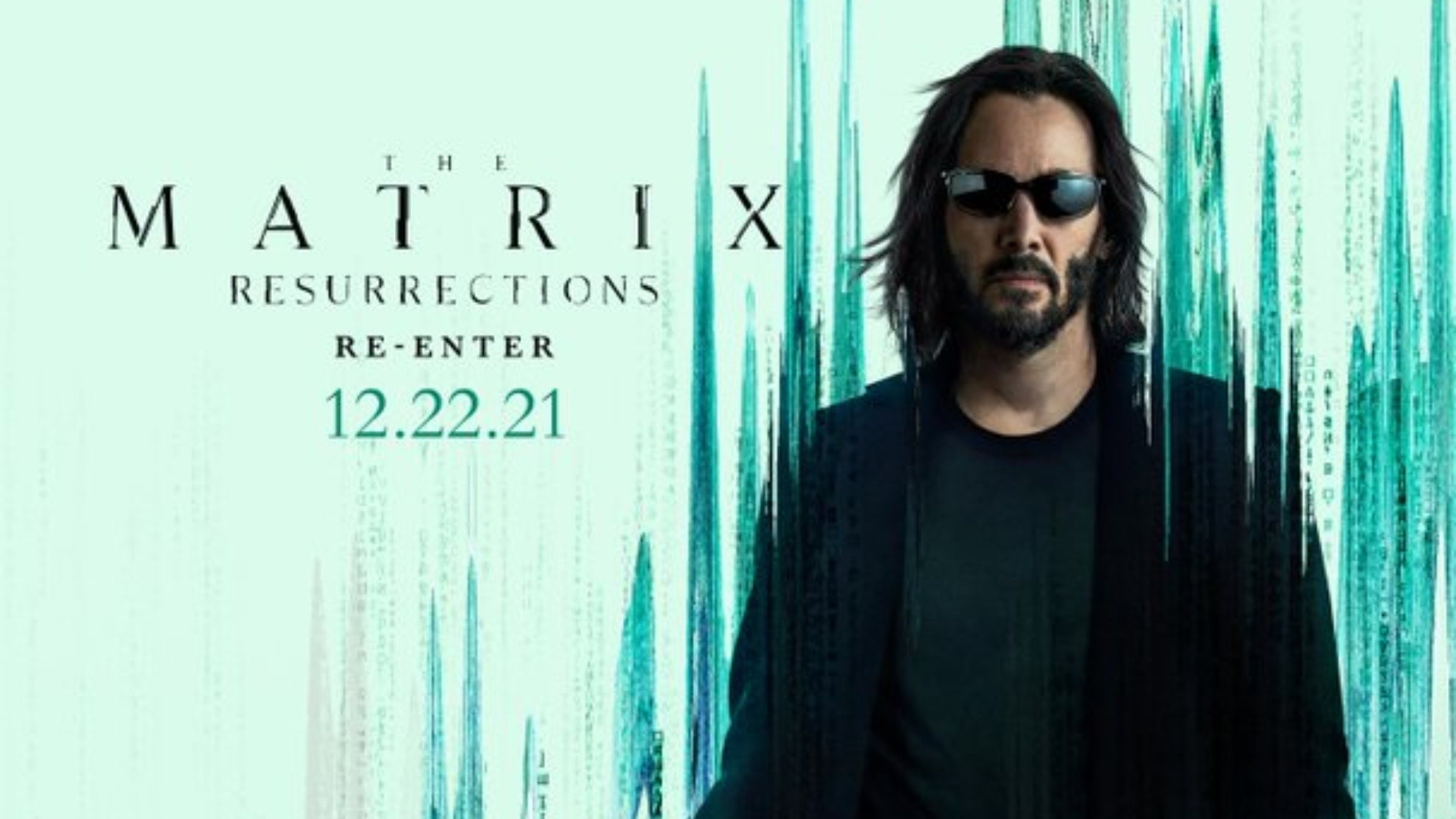
The Matrix: Resurrections (2021)

There will be some spoilers in this review, but I will attempt to keep them to a minimum. It’s virtually impossible to review this movie without incorporating some spoilers.
The movie begins as a meta-commentary on itself and the impact of the franchise on the culture following the release of the original trilogy–as well as the video games and other media associated with it, including the animated shorts. The filmmakers don’t shy away from some self-mockery as well as some lighthearted jabs at the fans and in particular the fans who seemed to miss the point the first time around. It’s a strange tone to set things off with, but it certainly works in the sense that it serves as a far better tool to keep Thomas Anderson meek and under control. There’s perhaps no better method of gaslighting than to make the object of the manipulation feel like they’re being ridiculous, childish, or absurd in clinging to things they believe to be true. By transforming Neo’s memories into something trivial like a video game, regardless of how exceptionally well-crafted or profound, The Analyst erodes the will to latch onto those memories as such.
The unconsciously manufactured amalgam of Agent Smith and Morpheus–developed by the enslaved and subdued Thomas Anderson–was an interesting touch, as was the obvious cry for help represented by the modal in which the character was evolving. In the context of the narrative, it worked surprisingly well. It helped that the performance by Yahya Abdul-Mateen II was spectacular, displaying both remnants of the character previously performed by Laurence Fishburne and wry humor derived from self-awareness that he wasn’t the character.
There were several things to enjoy about Resurrections, but it sometimes felt like a bit of a rushed mess, like too much story was crammed into altogether too little time. It could have benefitted, I think, from expanding on certain elements that seemed to have been glossed over, and making it into a longer movie or a two-part release. The only alternative would have been to skip over pieces of the narrative that weren’t provided with adequate exploration for my tastes. The presence of The Exiles, the takeover of The Matrix by The Analyst from The Architect and the subsequent purge, the war in the machine cities, the post-Revolutions history of Zion, and various other components felt like they were given short shrift. Getting right to the action was probably necessary, though, and the filmmakers still managed to squeeze as much exposition as they could into the time they had available.
Overall, like the original Matrix film, it successfully tackled social commentary with the same aspect of nuance embedded within a superficial lack of subtlety. I appreciated that about the original and appreciated it again in this fourth installment. I particularly enjoyed the pointed reference to self-image vs. the image other people see, concerning Neo and Trinity hidden behind vastly different outward appearances. I also appreciated the allegorical aspects Wachowski incorporated regarding processing grief and dealing with loss.
All in all, there’s enough of the old to provide those sparks of nostalgia, and there’s enough of the new to make it feel like it isn’t simply a rehash of what was already done. Unfortunately, taken as a whole, the old and the new don’t mesh together as well as they could. While some of that was an obvious storytelling flourish by the filmmakers, I can’t help but feel like some of it was a failure.

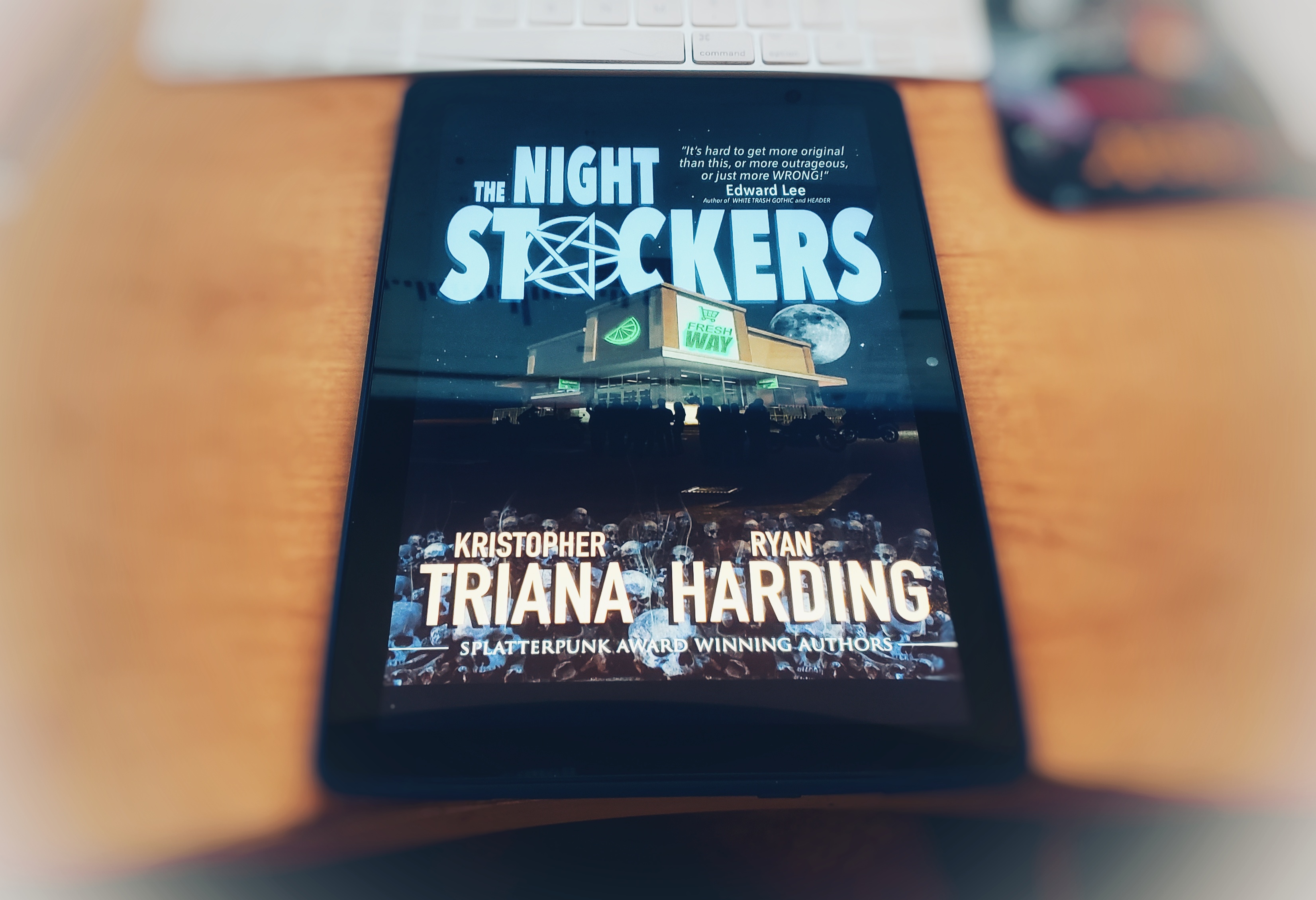
The Night Stockers by Kristopher Triana and Ryan Harding

It’s Clerks meets Assault On Precinct 13.
It’s Intruder meets The Warriors.
It’s Dawn of the Dead meets Rosemary’s Baby.
It’s none of those things because it’s altogether too original to be classified that easily.
I’m talking about The Night Stockers by Triana and Harding, a true masterpiece of absurdity and gore.
Freshway is struggling now that Devil’s Food has opened up across the road, stealing customers as well as some of the staff. In a desperate, albeit transparently futile, attempt to combat the erosion of the bottom line, Todd demands that most of this Freshway staff work an unexpected overnight shift for deep cleaning and stocking. A miserable night is soon to become altogether worse as the Freshway staff learns that competition between grocery stores can not only be fierce, it can be deadly.
It stands to reason something like that would have to happen when the Devil’s Food chain is owned and operated by Satan. Fueled by a desire to live up to the expectation of his dark lord–and his petty impulse to seek vengeance against the Freshway manager who helped drive him to the dark embrace of Devil’s Food–Desmond decides he and his staff will be destroying the competition. Of course, even with Satan on his side, Desmond and his crew of miscreants might have a bit more on their plate than he could anticipate.
Equal parts an homage to death metal of the late 80s and early 90s and the early days of splatterpunk horror, the authors create a world that feels entirely real so that they can do the most unreal and unspeakable things to the people populating that world. Drawing from their own experiences working in retail during that period as well as their lasting appreciation for the music that finds itself repeatedly referenced throughout the narrative, Triana and Harding successfully bring the world of Freshway to life–for the express purpose of converting it into a funhouse of death and dismemberment.
Filled to the brim with graphic sex and violence, often in tandem, The Night Stockers becomes a barrage of viscera and perverse humor that remains constant from the first to the final page.

A Contest For the Ages

Because my blog receives traffic that doesn’t necessarily overlap with my other social media accounts, I would be remiss if I didn’t share this here.
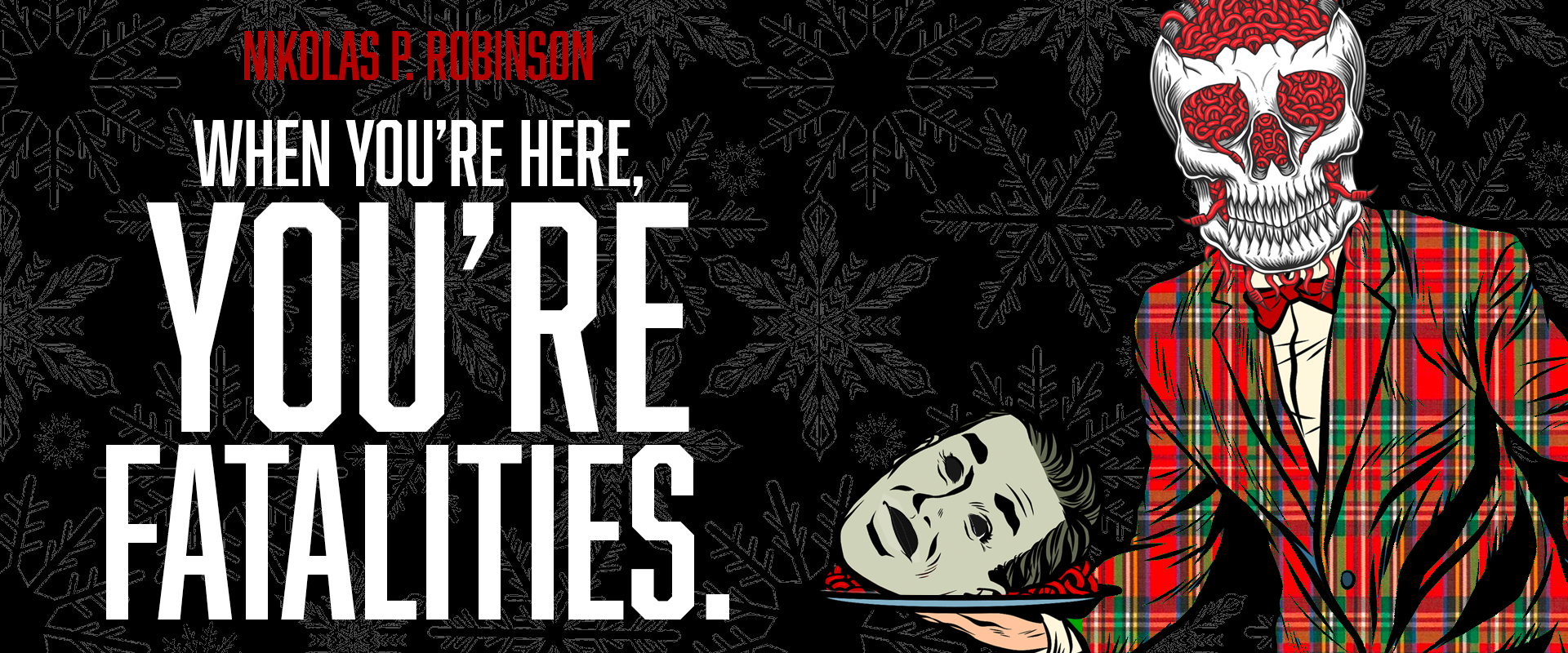
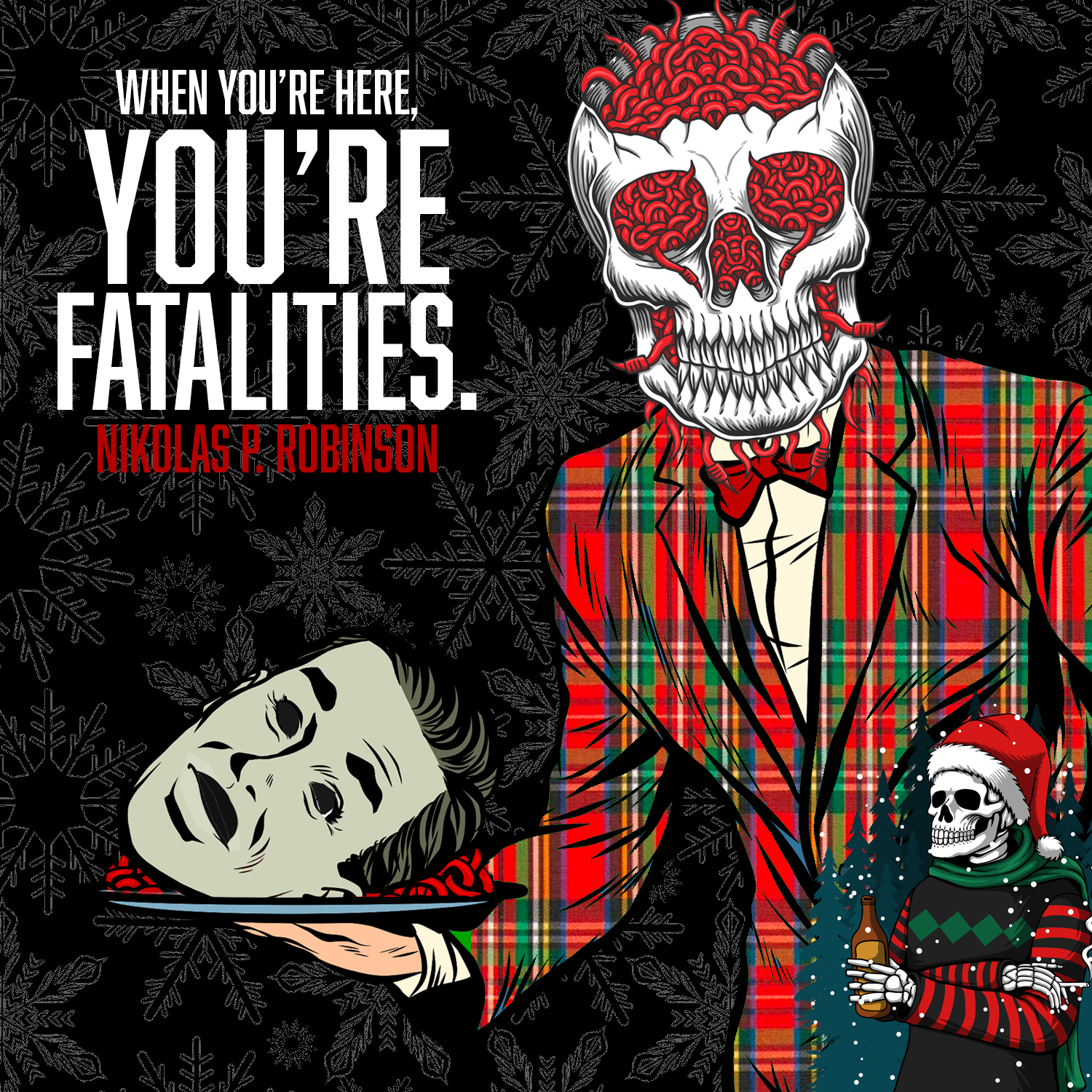
Because I’m an absurd human being, I’ve decided that I want to reward readers/reviewers of my December 2021 short story, When You’re Here, You’re Fatalities, available exclusively through http://www.godless.com
You’ll want to pay attention to this!

Sadly, this is only valid for individuals located in the United States. If I could extend this to other countries, I would gladly do so, but the logistics involved are just too much of an issue.

Initially, the plan was that if I could sell 250,000 copies of the story, I would randomly select five winners from those who have reviewed the title at Godless. Those five individuals would need to provide me with their contact information–including the physical address–as well as a time frame that would work best for them. I would then plan a road trip with my girlfriend (and possibly my teenage daughter) to travel to that reviewer’s location. We could spend the day hanging out, doing touristy things, or whatever. To conclude the evening, I would take the winner and their immediate family (or significant other and whatnot) to dinner at the nearest Olive Garden location.
I have modified the plan slightly since the original goal is altogether ludicrous. Of course, the adjusted step goals are also ridiculous, but you shouldn’t expect anything different from me.
Upon selling 100,000 copies of the story through Godless, I will select two winners who have posted reviews of the story, to Godless and/or Goodreads.
After another 100,000 sales, I will select another two winners from the remaining reviewers who had not won.
And, if I happen to sell another 50,000 copies of When You’re Here, You’re Fatalities after that, I will select one more lucky winner from those who have not already won.
Assuming every buyer leaves a review, that’s a 1 in 50,000 chance of winning a family dinner at Olive Garden with a horror author who wrote a short story that takes place in a fictionalized version of an Olive Garden restaurant. For only fifty cents to get your name in the drawing, it’s probably a better deal than many raffles and drawings in which one might participate. But there’s always the fact that many people still won’t leave reviews, and that improves the odds in your favor.

The title can be obtained by going to the following link at Godless:

You would also post your review there.

Additionally, I will accept reviews posted to Goodreads at the following location:

https://www.goodreads.com/book/show/59777373-when-you-re-here-you-re-fatalities

You have nothing to lose beyond fifty cents and a little bit of time.

Spread the word far and wide!

The sooner we reach those sales numbers, the sooner you’ll have a chance to sit down for dinner with me.

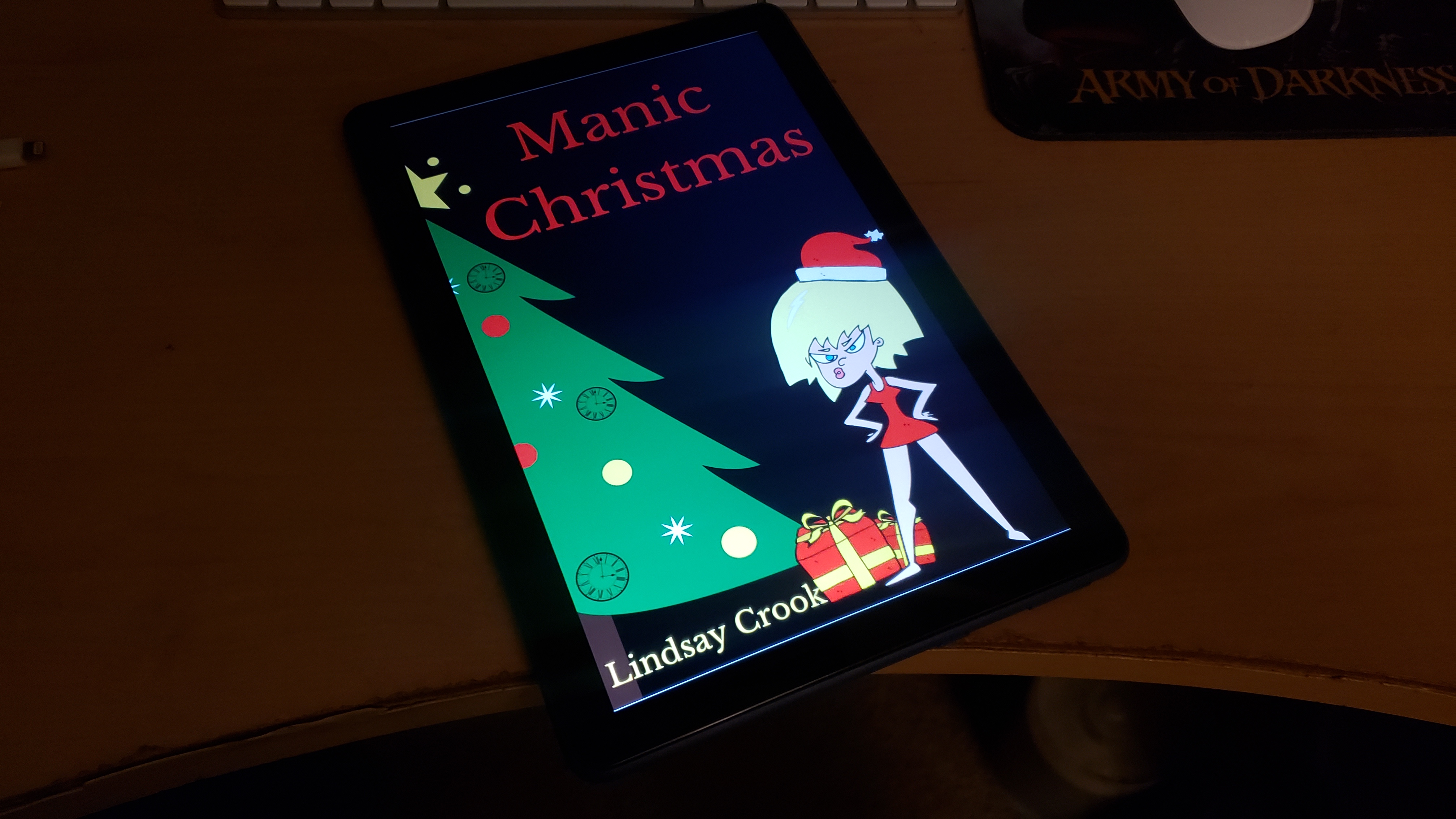
Manic Christmas by Lindsay Crook

For “Snowflake,” there’s perhaps no greater torture than performing as a Christmas elf at the mall. Understandably, she’d feel that way, from the pedophile Santa to the grimy, screaming children. It doesn’t get much worse than that. Except for maybe being subjected to a hot box apartment with no air conditioning, a bare trickle of water pressure, and an elderly neighbor who listens to her television far too loud for anyone not hard of hearing. She’s got problems, but it’s about to get more interesting. She’s about to make them your problems instead.
With irreverence and humor, Lindsay Crook assaults the hyper-commercialized Christmas holiday. She also sets her sights on inconsiderate neighbors, annoying coworkers, perverts, and Karens through the proxy of her protagonist, exhibiting knee-jerk reactions of violence that every reader is sure to relate to.
How much chaos can one Christmas elf cause in the week before Christmas? You might be surprised.
As with the previous Manic story, Crook manages to hit on topics from misogyny to miserable workplace conditions, while also attacking the seeming ubiquitousness of perverse male behavior, from the security guard to the mall Santa. Sure, it’s a fun romp as well, but there’s a whole lot of uncomfortable truth in this story as well.

This story was released as part of the AntiChristmas event at http://www.godless.com for December of 2021. You can pick it up for yourself by going to the website or by downloading the app to your mobile device. The link is below:

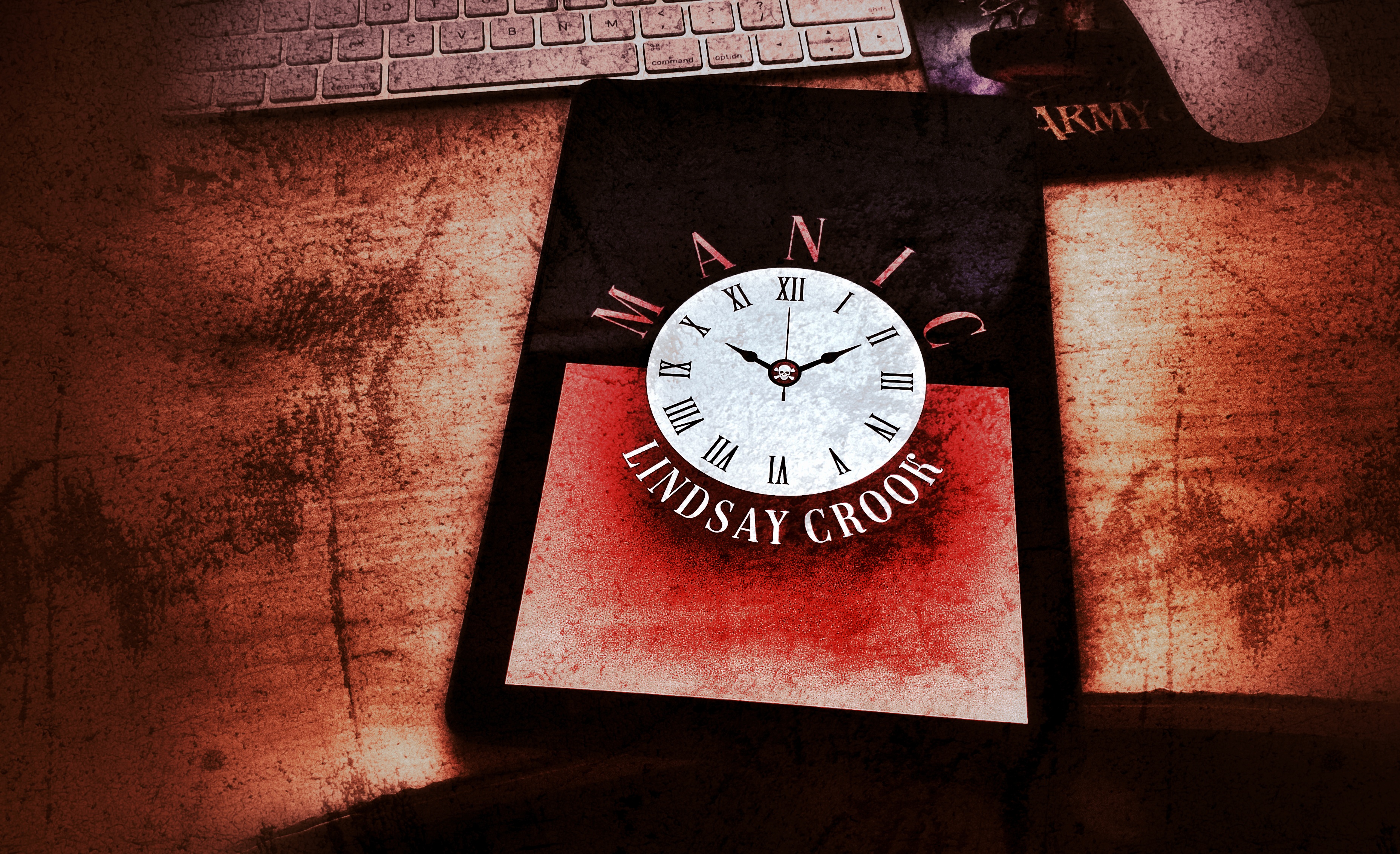
Manic by Lindsay Crook

Is there a more horrible occupational combination of thankless and stressful than working in fast food? Probably not. For the protagonist of Lindsay Crook’s Manic, life at Bill’s Burger Barn is one endless flow of disrespectful customers, sleazy bosses, and revolting working conditions. It’s enough to drive anyone mad. But maybe, if her personal life weren’t also in shambles, she could hold herself together past Wednesday. That’s a big maybe, though.
It’s going to be a long week, but she’s going to make it everyone else’s problem if she has her way. One can hardly blame her when the universe seems to set things up just right.
Crook is making poverty and impulse control issues sexy again.
Wait, were those things ever sexy in the first place?
I’m sure they were.
I’m going to let it ride. Crook is bringing sexy back in a big way!
Lindsay Crook fills these few pages with plenty of violence, biological warfare in the form of toxic food treatment, and even more violence. There’s more than that, though. At the core, this is a story that showcases how unutterably awful life can be for women because, as much a caricature as Manic might be, it’s probably not far off from the average week for altogether too many women. The world might be a better place if those women finally had enough, just like this protagonist did. Of course, it would be a better place if people just behaved better in the first place, but that might be asking a bit too much. Crook also manages to capture the stress and hopelessness that goes hand-in-hand with poverty-level existence and working demeaning, demoralizing jobs, only to barely make ends meet.

You can pick up a copy of Manic by going to http://www.godless.com or by downloading the Godless app to your mobile device of choice. The link is below:

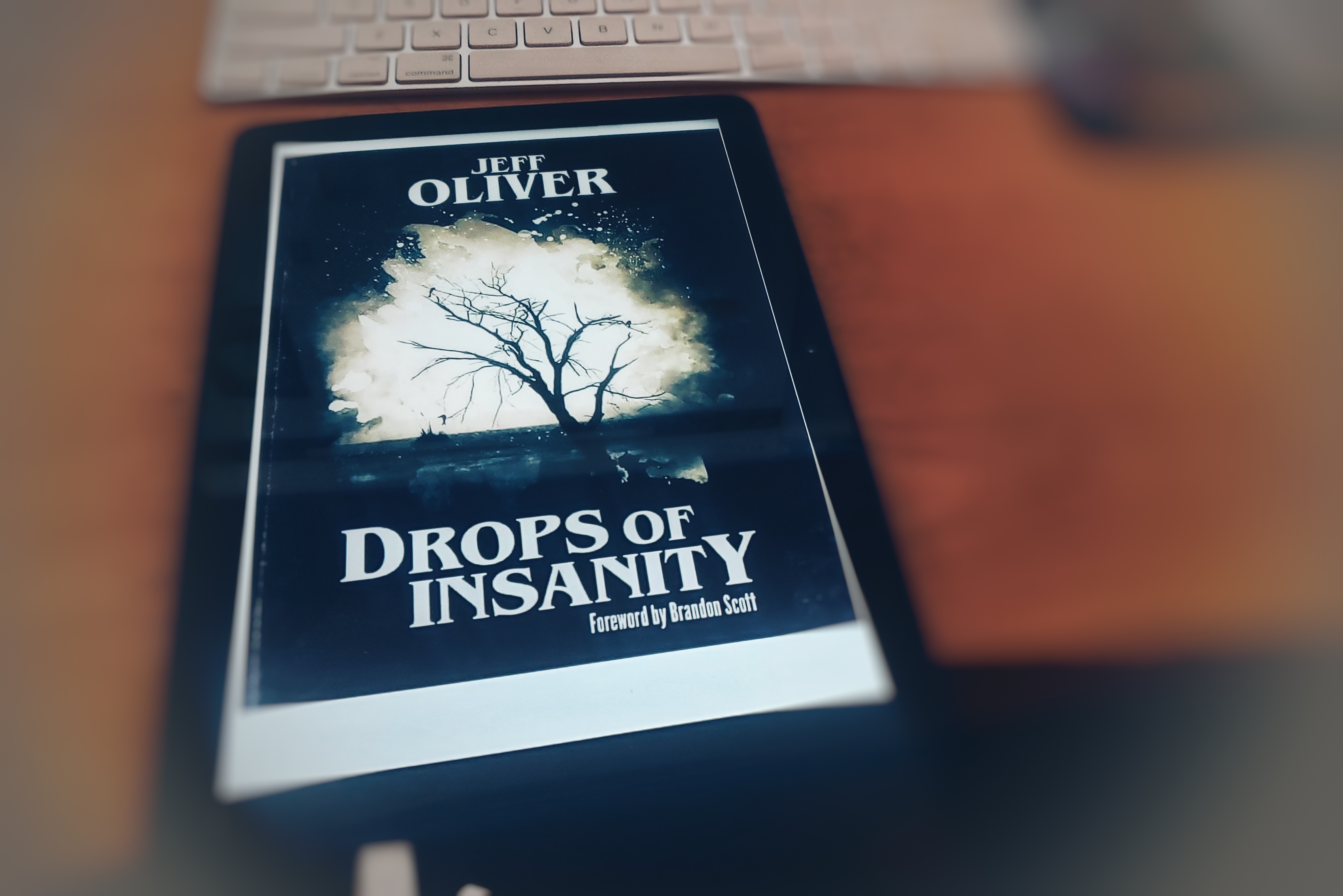
Drops of Insanity by Jeff Oliver

Jeff Oliver’s Drops of Insanity is a solid collection of poetry consisting primarily of short poems dealing with a variety of topics. Though largely focused on musings associated with identity and mental illness while navigating society and relationships with those factors involved, there are a great many poems that deviate into assorted horror-themed allegories and expressions of pain and suffering. It’s worth taking one’s time, reflecting on the word choice and symbolism implicit in many of the verses, especially since the vast majority are no more than ten lines in length.
It’s when we reach the longer form poem of “Her Soul To Keep” that the collection stands out at its strongest. A narrative expressed through the verse; this particular inclusion is a fascinating transition from the previous material collected in Drops of Insanity. At the core, it’s a breakdown of family, disappointment, revenge, and choices with consequences we’d not anticipated. It’s also a poem about demonic possession, murder, and the dissolution of the soul in the searing flames of Hell. What could be wrong with that?
While it may feel like this collection suffers from some repetition where content is concerned, I’m inclined to believe this was an intentional flourish from Oliver. Occasionally this repetition appears in the form of epimone, but more often it appears to be a method of creating a sort of cyclic flow to the material contained within Drops of Insanity. Hell is repetition, as we learned from the Stephen King screenplay, Storm of the Century, and mental illness is an exceptionally personal sort of Hell. Looking at it that way, it becomes difficult to imagine Oliver wasn’t attempting to immerse the reader in the overarching theme of this collection of poetry.

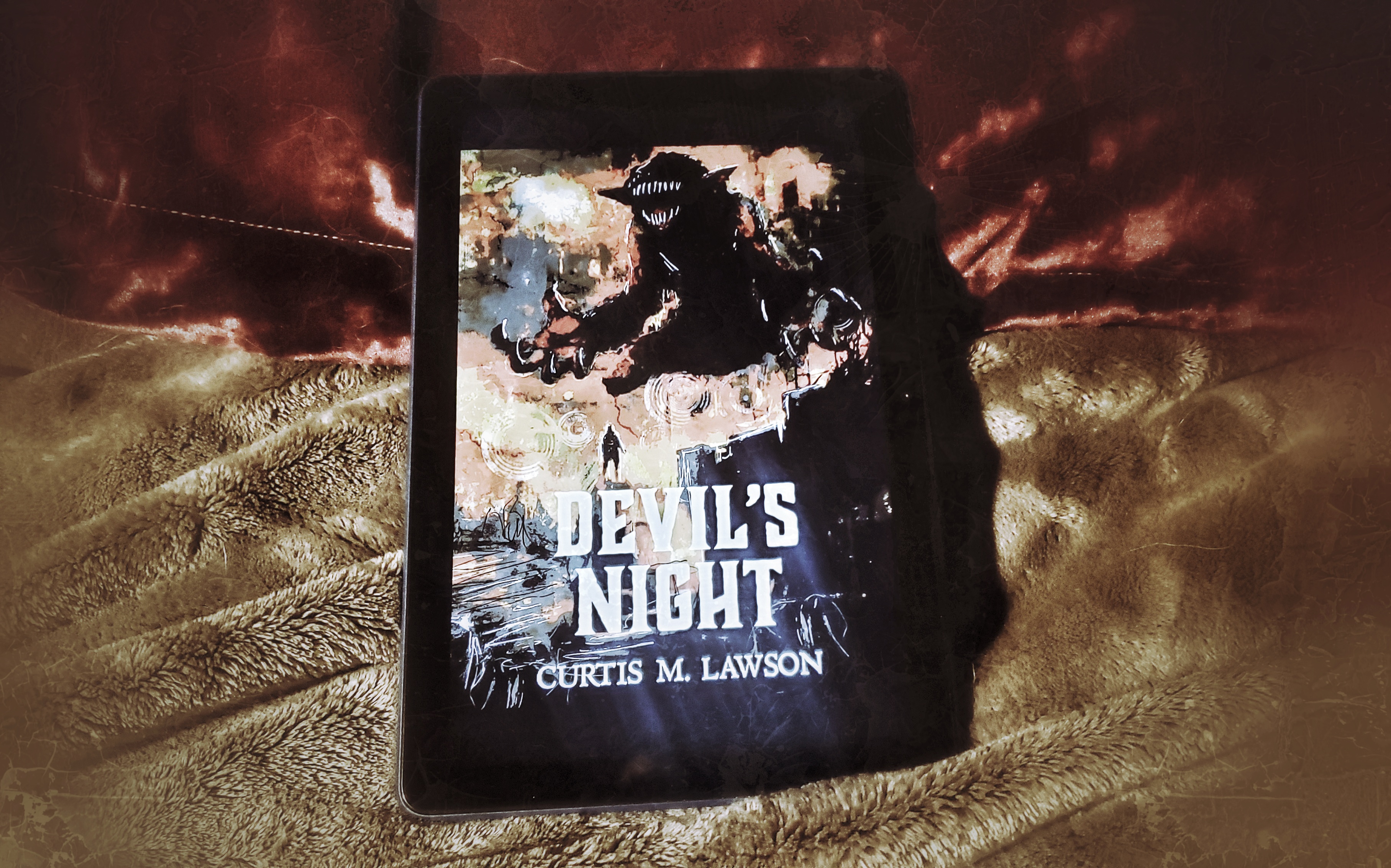
Devil’s Night by Curtis M. Lawson

Devil’s Night is a collection focusing primarily on the myths and urban legends emerging from the darkness and the destructive tendencies of people during the Devil’s Night eruptions of violence and arson in Detroit. It would be easy to write off Curtis M. Lawson’s short story collection as an outlet for bleak and cynical tales of horror lurking below the surface of those actions, but it would only be telling a fraction of the story. There is a deep and abiding love for Detroit embedded within these tales. Lawson’s is a love that doesn’t cling with shallow superficiality to the glory days of the motor city or Motown but embraces the painful and often ugly reality that coincides with those things that once set Detroit apart from the rest of America.
In these pages, you’ll certainly find stories of the Nain Rouge, The Pig Lady, and other urban legends that are specific to that region, but you’ll also find the far more sinister forces at work, racism, predatory capitalism, and addiction. In Lawson’s Devil’s Night, you’ll meet a city that has a nebulous mind and spirit of its own, one poisoned by generations of residents and the corruption they brought with them. You’ll discover a Detroit where toxic, venomous plantlife flourishes beneath the surface, ready to flay alive any who stumble across it, poisoning those who survive with unquenchable hate and anger.
In Trash-Fire Stories and The Work of the Devil, we meet children who have experienced every tragedy life can throw at them, each event preceded by the appearance of the Nain Rouge, presaging the bad things soon to come.
In D20, we learn that two brothers attempting to escape the cruel reality of their lives through a role-playing game might be awakening a force to affect the real changes they so desperately need.
Devil’s Tongue and The Exorcism of Detroit, Michigan both take us to a place where we catch glimpses of the underlying evil that poisons the city and turns the residents into the monsters they’ve become as Devil’s Night arrives. The latter tale providing the reader with a certain sense of hope and faith that things can be better.
Through Hell for One Kiss shares a haunting love story that proves to be a quite literal haunting for those caught up in the annual remembrance of the ghosts involved.
A Night of Art and Excess showcases the awfulness and depravity of human nature and greed, without any supernatural scapegoat to assuage the guilt.
No One Leaves the Butcher Shop tells the story of a pair of arsonists who stumble across something far worse than homeless people encamped within the building they’ve been hired to burn.
The Graveyard of Charles Robert Swede takes us on a journey with a monstrous serial killer who learns–as the line between our world and another are blurred–the truth behind why he’s chosen the burial site he’s utilized for the disposal of his victims.
We discover that even the devil has standards and sometimes a more stringent moral code than the clergy in This City Needs Jesus.
There’s more within this collection than solely the stories I’ve referenced, but these are the ones that stood out the most for me. Interspersed through the book are numerous illustrations that are positively magnificent. It was these illustrations that first brought this collection by Lawson to my attention, and as awesome as they might be, they’re no more spectacular than the stories they reference.
I wish I had read this collection in the final days of October because this book is so perfect for reading at that time of year. If you have a chance to read this for the first time, I recommend doing so at that time. You will not regret the decision.

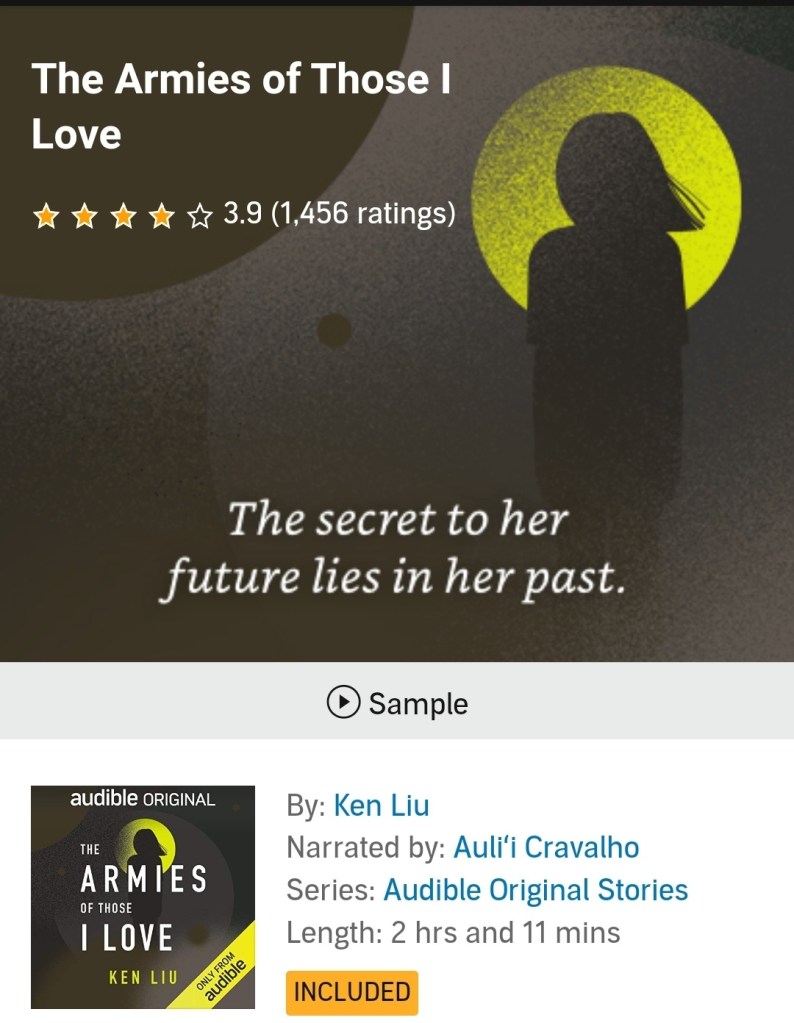
The Armies of Those I Love by Ken Liu, Narrated by Auli’i Cravalho

My first exposure to Ken Liu was through his superbly readable translation of Liu Cixin’s The Three Body Problem and the third novel of the Remembrance of Earth’s Past trilogy, Death’s End. To have translated those information dense and character rich narratives from Chinese to English required an impressive literary skill on the part of the translator. When The Grace of Kings, the first novel of Ken Liu’s The Dandelion Dynasty series was released, it was a given that I had to pick that massive book up for myself.
The Armies of Those I Love is definitely a smaller story than the books Liu has been releasing, though only in page count. The size of the story packed into this relatively brief tale is a huge one, taking us to a post apocalyptic Earth that is both familiar and impressively original. On the surface, one can see similarities to stories like Mortal Engines and The Matrix as the narrative unfolds, but Liu molds those familiar elements into something thoroughly his own.
Franny lives on BOS, a massive roaming city that prowls the war torn and ravaged landscape of what was once North America. An orphan, she exists on the outskirts of the rigid society most BOS residents fall into, and this is fine for her. Franny has an unwelcome fascination with old world artifacts and remnants of the world before the Pilots set the major cities adrift to wander.
When a stranger, escaped from LAX, stumbles upon her home and sends her world spiraling out of control, Franny embraces the opportunity to learn more about the world in which she lives as she and the fugitive struggle to escape the BOS citizens hunting them while evading the biomechanical Guardians who protect the city from internal and external threats.
Though it may be best not to seek answers to the questions Franny has been dying to resolve, there’s something magnificent and beautiful in the hope and faith the young woman exhibits even in the face of nightmarish truths.
Auli’i Cravalho’s narration seems perfectly suited for Franny and the story of her adventure. She captures the innocence and desperate hunger for knowledge quite expertly.

https://www.amazon.com/dp/B08S75Z8CR/ref=cm_sw_r_apan_glt_1FW4M2880WEDVBVSJDTT