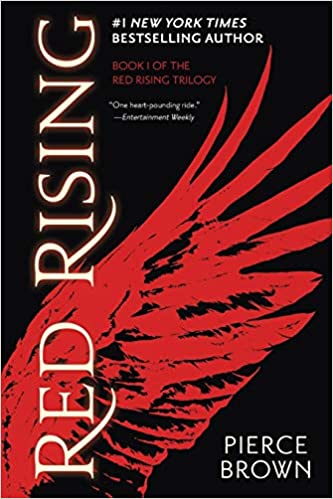
Red Rising by Pierce Brown

This review was originally written in April of 2016.

Pierce Brown’s Red Rising was a surprisingly good book, not necessarily because of the quality of the writing (which was good, just nothing outstanding) but because the story was compelling and original enough to feel like fresh ground.
It’s a fairly distant future science fiction novel, taking place on Mars, but with a solar system that has been thoroughly populated by the time the novel begins. The human population of Red Rising has been divided into very distinct castes, defined by biological and neurological differences that are both technological and evolutionary in nature…and that is at the root of the story.
Our protagonist is a “red” who works in deep tunnels below Mars, drilling and harvesting materials in exceedingly hazardous conditions for the noble purpose of terraforming the planet above. It’s only after his wife is hanged and he goes proudly to his own death that he finds nothing generations of his people had believed was true. The surface of Mars had been long terraformed and civilized as had essentially every planet or moon in our solar system.
He undergoes painful and extensive alterations of all sorts in order to pass for one of the ruling class for the purpose of exacting vengeance and righting the wrong that had been done to his people from within that upper class.
I’ve seen a number of people comparing this trilogy to The Hunger Games, which was one of the reasons I hadn’t bothered to read it until now. I didn’t care to read what I suspected to be a low-rent clone of a wildly successful series. Upon reading this book, I suspect any of those people comparing it to The Hunger Games haven’t read many other books, since the only similarities have to do with a corrupt and decadent ruling culture and a good deal of violence. There is more resemblance to Lord of the Flies and Ender’s Game than anything else, with a healthy dose of Roman (and a bit of Greek) mythology to set the stage.
I enjoyed this book enough that I plan to read the next two, and I think it’s got a fantastic degree of character development that makes it feel more three-dimensional than a lot of young adult fiction.
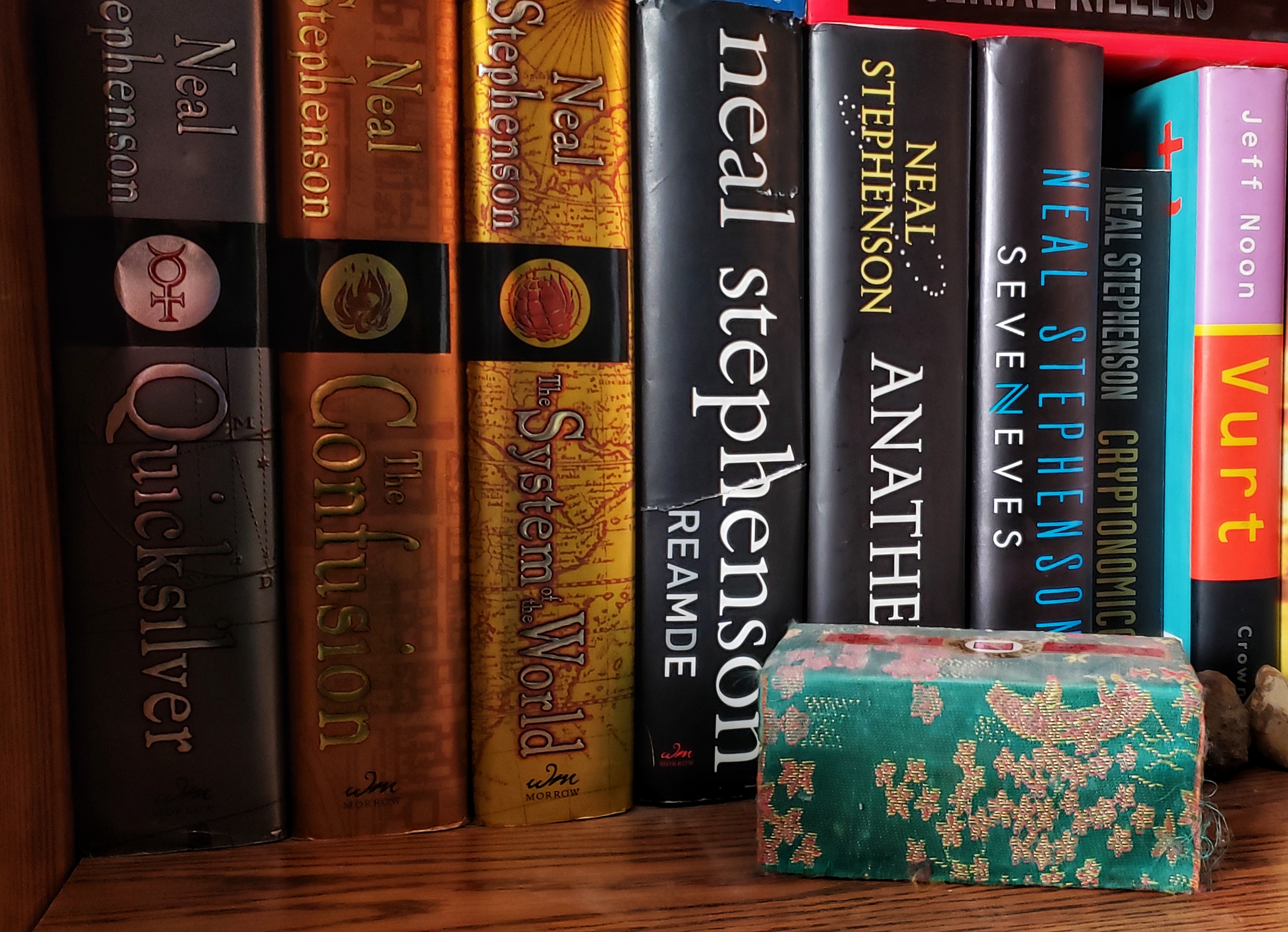
Seveneves by Neal Stephenson

This review was originally written in 2015.

I felt like I might need a little bit of time to digest Seveneves by Neal Stephenson before giving it a proper review. I loved Anathem and Reamde, but I think that Seveneves is my favorite of his novels aside from The Baroque Cycle trilogy and Snowcrash.
The first two sections of the novel, which constituted approximately 3/4 of the narrative, were some of the most depressing and devastating segments of literature I’ve read.
Beginning with the destruction of our moon, detailing the desperate worldwide push to establish an orbital colony wherein a very small percentage of the human species could weather the thousands of years during which Earth itself would be uninhabitable, and painting a painfully accurate portrait of just how badly we would mess everything up to the point where that small percentage was whittled down to only a handful of women (the “eves” referred to in the title)…the first two sections of the book tease the reader with hope and glimpses of ingenuity and adaptability that we all know human beings are capable of, only to taint that with our propensity for paranoia, infighting, and self-aggrandizement.
The novel jumps forward 5,000 years between the second and third sections and that final quarter of the book is jaw dropping in so many ways. I won’t give anything away, but though there is still ample evidence of a lot of those less desirable human traits that led to the attrition earlier in the book, what we experience as readers is something magnificent, something that would be awe inspiring to see us achieve.
I don’t know if Stephenson had intended it, but I saw the big twist coming from well before the jump forward in time…the surprise awaiting the characters we follow during the final part of the book wasn’t any surprise at all to me, beyond the finer details at least.
I hope that Stephenson expands on this world he’s created in Seveneves; I would love to see where things go from the conclusion of this book, because there is really so much more to be explored.
Having finished the novel, I want even more to see this adapted into a movie or (better yet) a miniseries on one of the cable networks that could provide the budget necessary to do the story justice…and I still want to see Neil deGrasse Tyson and Elon Musk play the characters that were so obviously modeled after them.

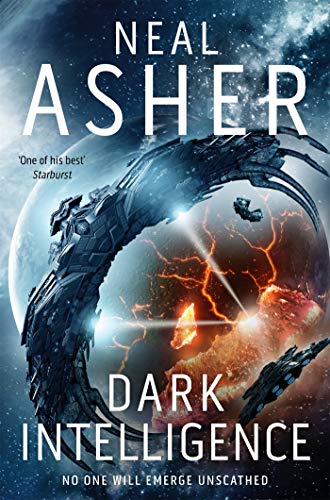
Dark Intelligence: Transformation Book One by Neal Asher

This review was originally posted in the summer of 2015.

Having finished Dark Intelligence: Transformation Book One by Neal Asher I am in the unfortunate position of having to patiently wait for the next book to come out.
I recall that feeling well, from the times (not altogether so long ago) when I was impatiently waiting for each of the Ian Cormac novels to be released.
There are exceedingly few authors, maybe a dozen I can think of, who never disappoint me…and Asher is absolutely near the top of that list. He’s right there with Jonathan Maberry, Alastair Reynolds, Peter Watts, Richard K. Morgan, and Neal Stephenson as far as the authors I would list as being the best currently writing material that in any way would be associated with the science fiction genre…though both Maberry and Stephenson tend to cross over a number of genres in the process.
Dark Intelligence, like many of Asher’s novels, weaves together a convoluted plot with a frenetic pace that few could contain in words with the skill that Asher pulls off.
The characters, even relatively minor ones, end up feeling like fully realized individuals…more impressive in the cases of those who are suffering from pretty severe identity crises, and there are a few of those included in this narrative.
I was happy to see both Amistad and Penny Royal back again, having found their previous presences in Asher’s novels to be fascinating. I was also pleased to get more of an introduction to the Atheter; after reading The Technician and some short fiction, I was very interested in delving further into what was going to happen on the planet Masada.
I suspected that I was going to end up loving this book before I had placed it on preorder, but it exceeded my expectations.

The Mind Is a Razor Blade by Max Booth III

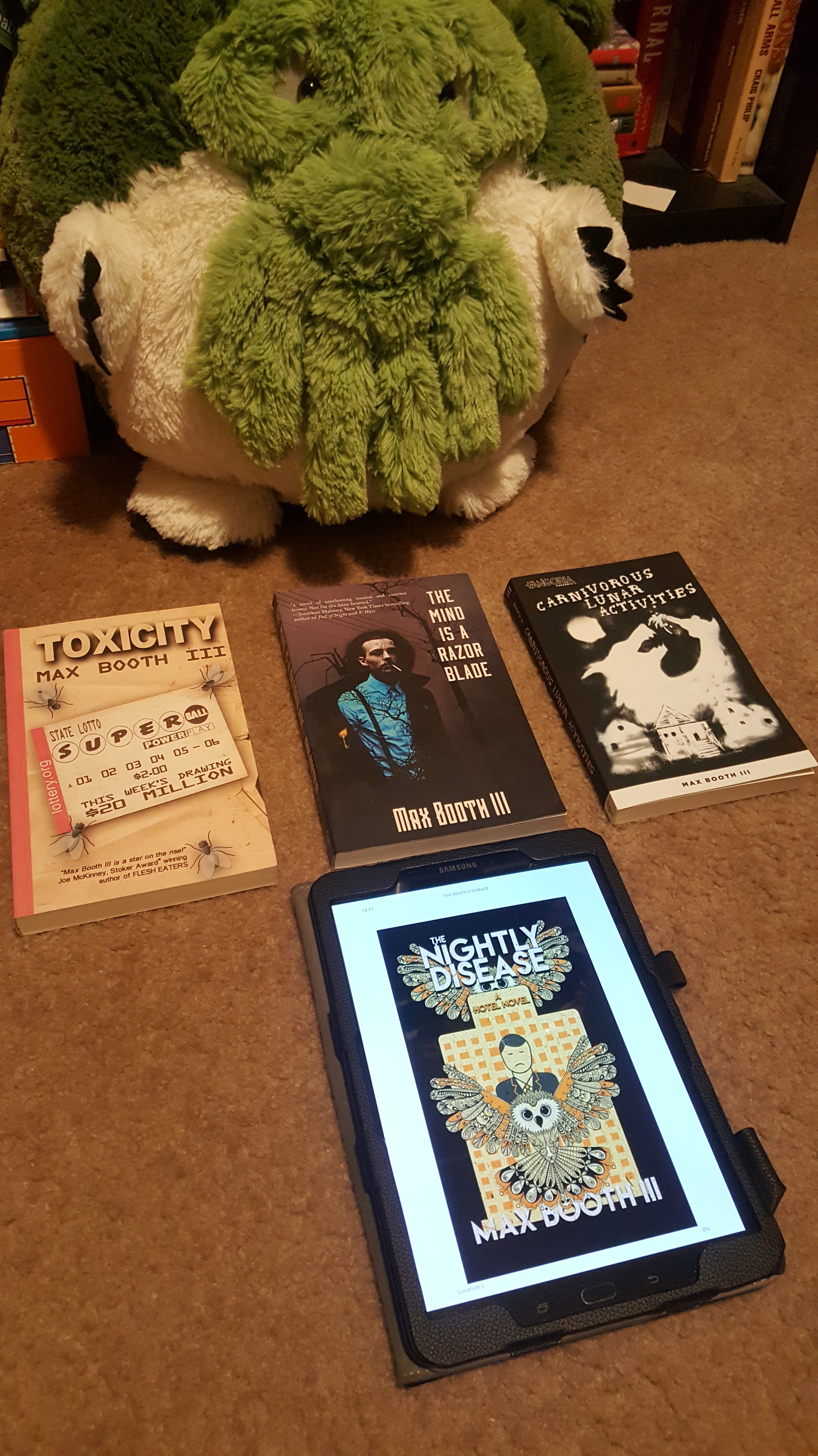
This review was originally written in the summer of 2015. As you can probably tell from the picture above–as well as other, more recent reviews–I’m a bit of a fan of this particular author.

I went into The Mind Is a Razor Blade by Max Booth III without any expectations and no knowledge of the plot beyond what the back cover provided.
It starts off sporadic and disorienting, perfectly conveying the state of mind of our protagonist, the very definition of an unreliable narrator.
A man wakes up naked in a river with a corpse nearby and no idea who he is, who the corpse is, or how either of them got there. In the first few minutes of reading the book our protagonist has stolen a coat from a corpse, shot a man numerous times, and made a stumbling but successful escape from the police.
Believe it or not, the story gets crazier from there on out. As our protagonist begins getting a marginally better grasp on who he is and what is going on the narrative simply becomes more bizarre and disturbing along the way, keeping the narrator on his toes (and, by extension, the reader as well).
Through the protagonist, we become unwilling tourists through a city driven mad by drug use, organized crime that crosses into the supernatural while exhibiting the hallmarks of a cult, and inhuman creatures that hunt for organs from the populace…also, there are spiders, lots of spiders. In the midst of all of this, there is also redemption and at the core a sense that love can transcend even the most horrific experiences.
This book contained all of the best elements of noir, horror, a sort of perverse humor, and surrealism. If you’re a fan of the movie Dark City or the book John Dies At the End, this is definitely something you might want to check out.

Futuristic Violence and Fancy Suits by David Wong

This review was originally written in January of 2016. Since I reviewed the sequel on here, I figured I should copy over my review of this novel as well.

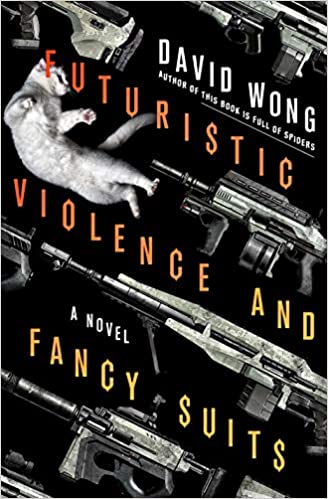
Futuristic Violence and Fancy Suits by David Wong (aka Jason Pargin) is a John Scalzi novel that Scalzi hadn’t gotten the chance to write, or at least that’s what it feels like while reading it.
The only thing anyone could use to distinguish this novel from one written by the author of The Android’s Dream and Redshirts would be the requisite dick jokes that certify it as being a David Wong book. It isn’t meant to be derogatory when I compare Wong’s writing and narrative in this novel to John Scalzi, because I consider Scalzi to be one of the most imaginative and versatile authors in the science fiction genre…though he seems to have some competition in Wong.
Wry humor, ridiculous action sequences, satire and absurdity, and implausible science in equal measure are combined to create a fascinating and entertaining story…which should come as no surprise for anyone who read John Dies At the End and This Book Is Full of Spiders.

Leviathan Wakes by James S.A. Corey (Daniel Abraham & Ty Franck)

This review was originally written in early 2016

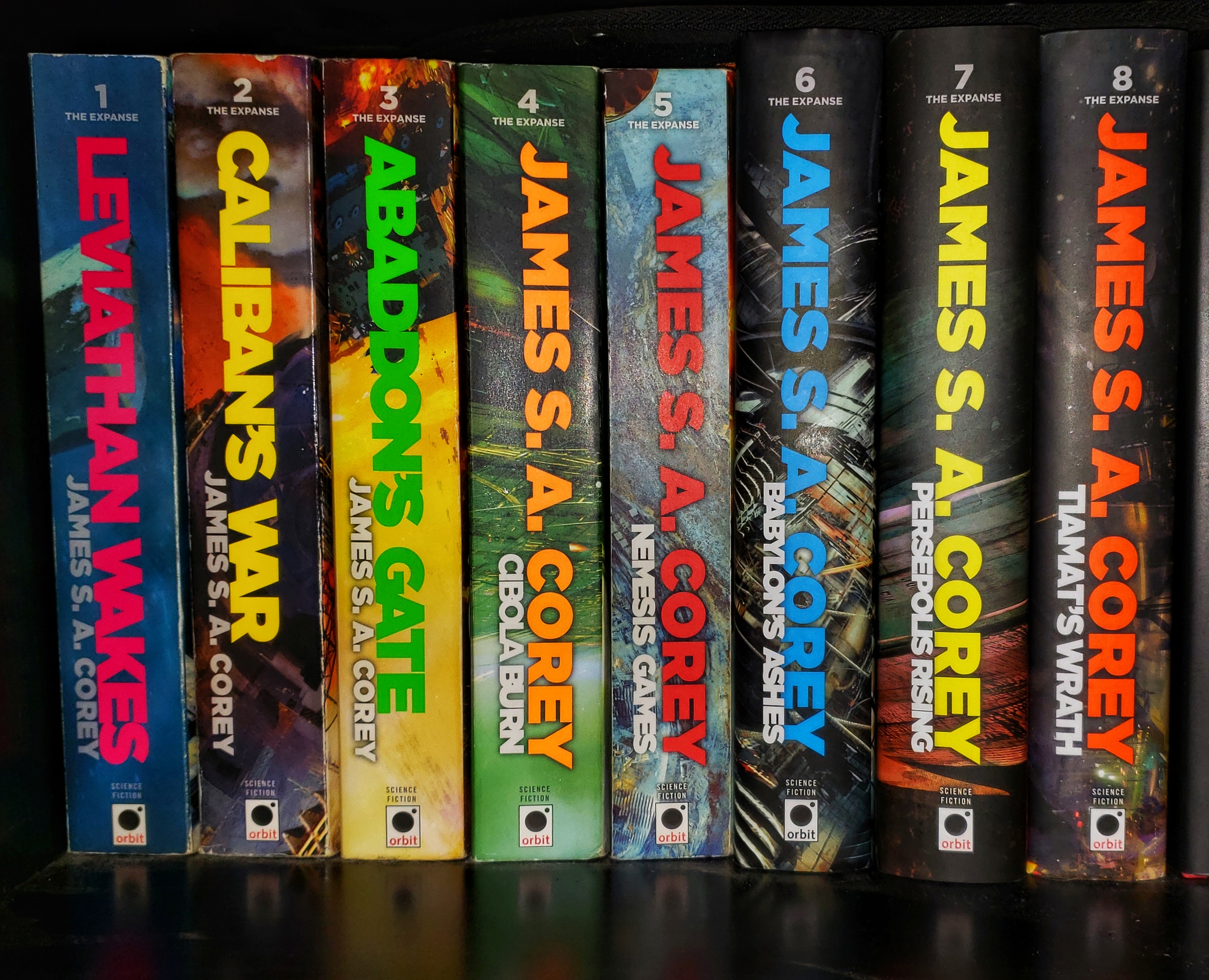
Leviathan Wakes is, without a doubt, the beginning of something amazing. I have the next two books in the series and I am looking forward to reading those as well as the additional novels I don’t own yet.
I owned this book for about three years without ever picking it up from my book shelf (I had pretty much forgotten about it) and I may have continued to neglect it were it not for The Expanse being produced by SyFy. Sadly, I watched the first season of the series before reading this novel and I don’t like doing that…but I don’t feel like it was detrimental in any way. I’d like to discuss a couple of the differences for those who have only either read the book or seen the television show before I do anything else.
There are some pretty dramatic differences between the book and the series, the biggest being that the first season ends about 3/5 of the way through the narrative of the first novel, which is something I truly hope SyFy addresses with the second season since there is a lot going on in that third act of the story.
The other major difference between the book and the television series is that we aren’t introduced to the political environment and maneuvering taking place on Earth in the novel, though I appreciate that additional subplot from the show and actually kind of wish it had been part of the book.
Beyond that, the differences are really quite minimal, some characters who don’t quite line up between the two mediums (either because of descriptions that don’t match up with the casting for the series or because the personalities/interactions are just a little bit off) and a couple of plot points that play out a touch differently or occasionally in different sequence…but those aren’t as troubling as they could be.
Written by James S.A. Corey (a fictional person, really the collaboration between Daniel Abraham and Ty Franck), this is one hell of an ambitious novel, successfully weaving space opera, militaristic science fiction, and noir mystery into an exciting, intense, and sometimes even scary tapestry.
The stated goal of the authors was to fill in the gap that is almost always present where science fiction is concerned. Typically we either end up with near-future cyberpunk or dystopian stories or distant future space operas and the like taking place after we have spread throughout the galaxy or even the universe itself. This book (and presumably the whole series) provides the reader with a suitably rich and detailed vision of what we have between those intervals, during the time when we are still colonizing our own solar system and only just considering setting our sights further into what we have beyond our galactic neighborhood.
The interactions between Miller and Holden (as well as their separate storylines) are fantastic and well-written enough that the two protagonists really do provide vastly different lenses through which the same events are being experienced. We see a lot of that in The Expanse, but there is a lot of subtext that gets lost in translation between the two mediums.
After reading this book I am determined to pick up some of Daniel Abraham’s fantasy novels, which I might have ended up doing anyhow. The man is an excellent author and Ty Franck clearly learned a thing or two while working for George R.R. Martin where grand, sweeping narratives and visceral (almost punishing) inevitability in narratives are concerned.
Whether you have already seen The Expanse or simply want to read an excellent science fiction novel, I have to recommend reading Leviathan Wakes.

Strangers by David Moody

This review was originally written in 2015, but I thought it merited being shared here…now that I’m actively putting my blog to use.

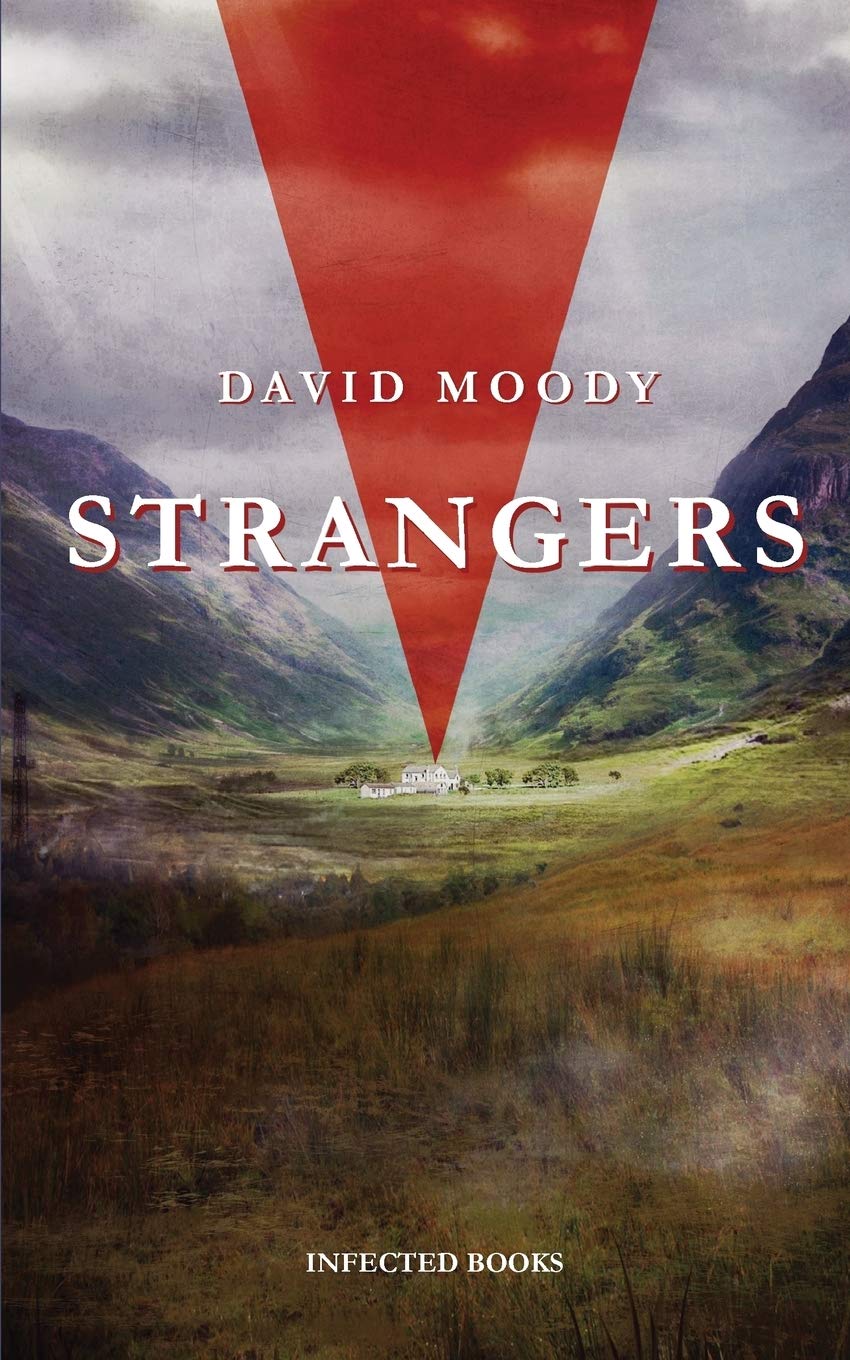
I have been a long time fan of David Moody as an author, intensely enjoying his novels and short fiction to an extent that I can’t seem to experience with most writers.
Strangers, like many of his stories, is a desolate thing with some highly unpleasant subject matter and narrative twists. If you’re familiar with his work you will discover the elements of paranoia and division that arise in most of his stories to varying extents…but developed and explored quite differently.
The subject matter here is definitely adult and frequently more graphic than in his previous novels…running the gamut from domestic violence and the dangers associated with sex to the more eerie aspects of being uprooted and moving to a strange location surrounded by unfamiliar faces.
If you enjoyed the story Who Goes There? by John W. Campbell (the basis for John Carpenter’s The Thing, which was a truer adaptation of the story than the earlier film The Thing From Another World) and David Cronenberg’s Shivers, you will love this novel. I was thinking about the similarities between this book and the movies The Thing and Shivers not altogether too long before the same correlation is drawn by characters within the narrative, which was a nice touch by the author, outright paying homage to some of the clear influences.
This was an uncomfortable, spooky book, and I can’t recommend it strongly enough.

Full Brutal by Kristopher Triana, narrated by Dani George

If you’ve ever asked yourself what American Psycho’s Patrick Bateman would be like if he were a teenage girl living in the current age as opposed to Wall Street of the 1980s, Full Brutal by Kristopher Triana is the book for you. I’m only joking a little bit with that introduction because–much like Ellis’s most popular character–Kim is pretty, popular, and superficially passing as being not only normal but successful and even a role model of sorts. This is, of course, a facade.
As the story unfolds, Kim goes from being a calculating, manipulative sociopath dwelling on suicide–as much out of boredom and a desire to shock/stun the people who believe they’re close to her as very real depression over the fact that nothing brings her any sort of pleasure in life–to a cold-blooded monster. The turning point seems to be that pivotal decision in many teenager’s lives, whether they should have sex and with whom.
Developing a fixation on serial killers as well as torture-porn movies (and actual pornography featuring torture) and finding a spark of pleasure in these things, it’s no real surprise that everything goes dark and brutal from there. She determines her first time should be with someone she has to break down and degrade to get there, and she sets her sights on her sex-ed teacher. When sex itself turns out to be less than the life-changing experience she was hoping for, instead of letting it depress her further, she finds entirely new ways to get herself off.
Destroying lives, creating turmoil that spreads everywhere around her, and always seeking an even greater thrill, Kim finally discovers that catharsis she was desperately searching for. As she decides to go “full brutal” everything continues getting worse for those surrounding her.
Dani George provides fantastic narration that captures the coldness and cruelty of Kim as well as breathing life into the vapid superficiality of her peers and friends–if one could consider these people to be either of those things.
I’m torn, because I appreciate the way this book turns the psychopathic killer trope on its head in a sense, transitioning the usual victim of these sorts of stories into the perpetrator. The skillful storytelling is the same as I’ve come to expect from Triana, along with the depravity and attention to gritty, unsettling details. Those things are fantastic elements.
On the other hand, I feel like Kim is sort of an exaggerated, almost sexist caricature of the sort of girls all rape-culture assholes like to pretend are all over the place. You surely know what I mean if you’ve bothered to torture yourself by reading incel screeds and the like. To a certain sort of guy, the world is populated by girls/women who will manipulate, dominate, and take what they want at any cost. For that sort of person, all girls are a stone’s throw from threatening to cry rape if they aren’t getting everything they want, or just because it’s funny to ruin someone’s life. To guys like that, most (if not all) girls are secretly very much like Kim…excepting the murderous streak. In that sense, I find the character and the story to be a bit problematic in the same way I would if the protagonist were a caricature of the mythical “welfare queen” from the Reagan era…as it sort of breathes life into an ignominious stereotype that should be allowed to die the off-screen death it deserves.
Taking the good with the bad, I still can’t help but recommend this book to anyone who enjoys extreme horror. The best sort of horror is the kind that makes you uncomfortable and forces you to examine things you’d rather ignore, and that’s precisely what you get with Full Brutal.

Eight Cylinders by Jason Parent, narrated by Joe Hempel

Jason Parent’s Eight Cylinders captures a sort of grindhouse action/horror vibe that I appreciated a great deal. We’ve got a story about crime, cars, creatures, confusion, and condemnation in the middle of the desert…and if that doesn’t appeal to you at least a little bit, there’s probably something wrong with you.
Comparing it to movies and other visual mediums, as I usually do, it’s a little bit Tremors, a touch of From Dusk Till Dawn, a good bit The Road Warrior, and a dash of the old show The Prisoner (or maybe, for those who never watched that one, Lost). If you were to toss all of that into a blender and add a splash of cosmic horror, you’d end up with something along the lines of Eight Cylinders.
This story had me invested as soon as Seb began using a novelty Magic Eight Ball glass eye to make his decisions for him as he sped away from Vegas after a deal gone exceedingly bad. Criminal and “bad guy” that he might be, Seb is particularly relatable as a protagonist, and you can’t help but cheer him on as he races through the desert multiple times throughout this short tale. The attention to detail concerning cars, trucks, and ATVs through the narrative gives one the impression that Parent is a bit of a gearhead at heart, or certainly one who spent some quality time researching this tale with gearheads…and that comes through clearly with Seb’s absolute love for his Dodge Charger and his appreciation of other vehicles in the narrative.
Joe Hempel’s narration is excellent, and I’ll surely be watching for other titles he’s provided his voice talents to.
My sole complaint about this story is that it felt a little rushed at times like we were racing from one point to another without getting enough time to really experience where we were.

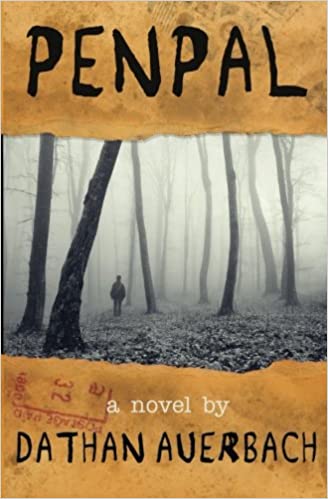
Penpal by Dathan Auerbach

This is a review I’d originally written in January of 2016. I wanted to post it here because this happens to be one of my favorite books.

Dathan Auerbach created one of the most disturbing novels I think I will ever read with Penpal.
I don’t know that I will be able to shake the feeling left behind from reading this book for a while to come.
Perhaps some of the feeling of being unsettled is due to the fact that I relate a great deal to the protagonist laying out the story. As a child I had few friends, when I had any, and a great deal of that youth was spent wandering aimlessly through the woods here in the Black Hills of South Dakota…either by myself or with one or another of the small number of friends I was somehow fortunate enough to make. Much like the child in Penpal, I filled the forest with sinister things in my own imagination, especially in the darkness as night approached. Needless to say, I felt a sort of kinship with the young boy in this book, and that made the events of the narrative that much more difficult to shake.
Even without that sort of association, the story would be a spooky one though for anyone, I think.
During Kindergarten, the boy’s class has a project. They were to write a brief letter to accompany a helium-filled balloon requesting a letter and a photo. As the letters begin coming back as response, our protagonist finally receives a single Polaroid photo without any explanation. More letters come in and are ultimately ignored until months later when it is discovered that he is in many of the pictures that his new penpal is sending…and that is really just the beginning.
As a parent and as a former boy who spent his days and nights exploring the woods near home, this is without a doubt one of the most uncomfortable books I have had the pleasure of reading. I am torn between hoping that Dathan Auerbach has more books to come and half-heartedly wanting him to call it quits after a novel that would be challenging to top.