I’ve never had the pleasure of reading Little Fuzzy by H. Beam Piper, the 1962 science fiction novel that John Scalzi’s reimagined with Fuzzy Nation. Knowing Scalzi’s work and that the Piper estate approved of this reinterpretation of the material, I suspect he managed to capture the most important elements of the original novel while making it definitively his own by adding his particular brand of irreverent wit and snappy dialogue. Jack Holloway, disbarred lawyer and independent surveyor for the ZaraCorp, is an antagonistic, impulsive, and peculiarly funny protagonist. When he stumbles upon what might be the largest seam of valuable sunstone on the planet when he allows his dog to detonate explosives yet again, Holloway maneuvers himself into a position to become far more wealthy than he’d ever imagined. Of course, everything changes when Holloway discovers an intruder in his remote cabin. Appearing to be something in between a cat and a monkey, the intruder quickly ingratiates itself with Holloway, and it’s not alone. Encountering the previously unknown animals he decides to call Fuzzys, Holloway has no way of knowing how much upheaval he’s about to create when he shares the discovery with his ex-girlfriend, a biologist working for ZaraCorp. Entertaining, heartwarming, and heartbreaking at different points, Scalzi’s reimagining of the introduction to the Fuzzys is a scathing commentary on capitalist predation, an evaluation of our humanity, and an exploration of the nature and presentation of sentience. Wil Wheaton was the perfect choice for the narrator of this audiobook edition of the story. He captures the sarcasm and wit better than anyone else likely would have. His narration is captivating, articulate, and all-around fantastic.
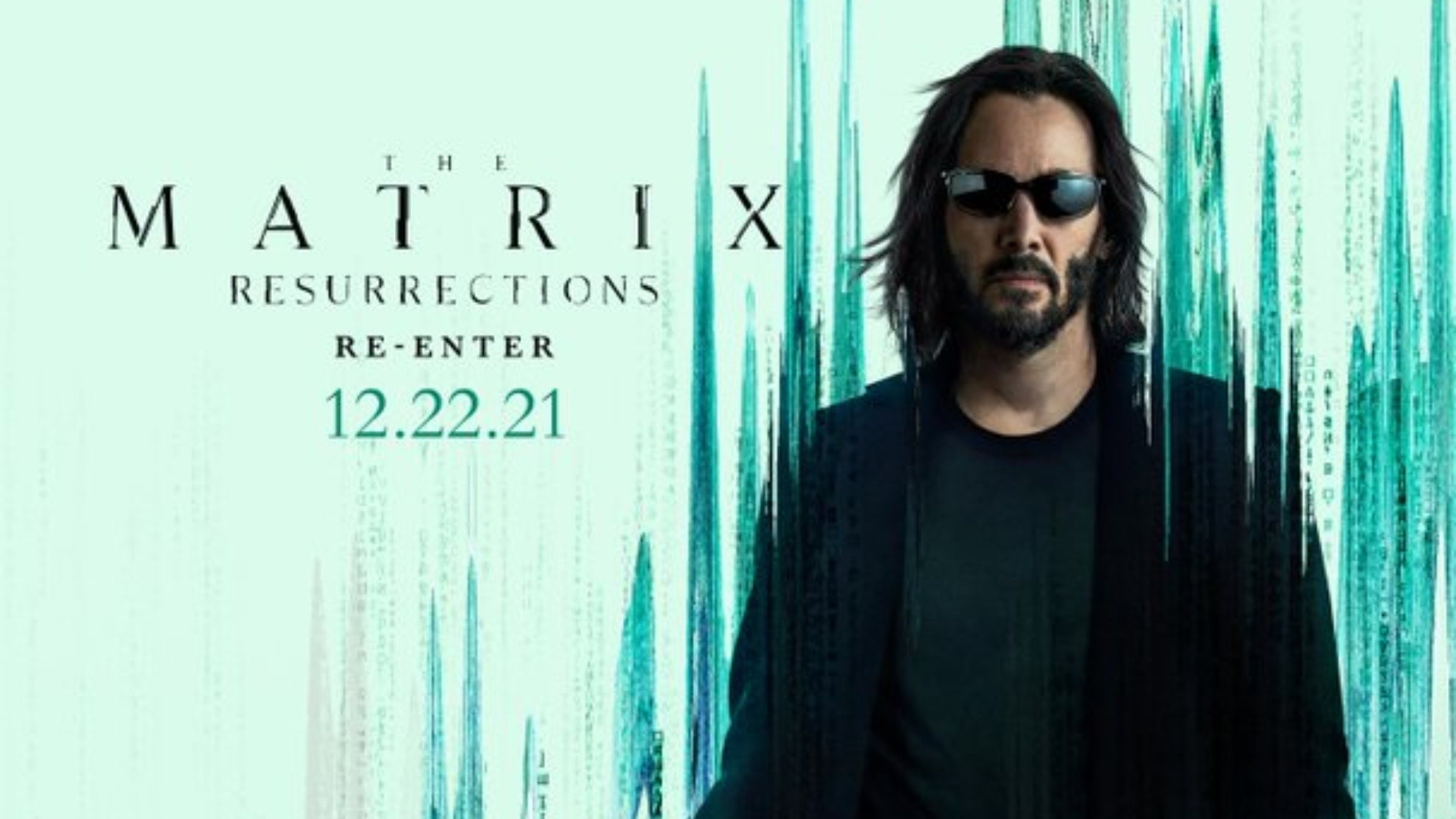
There will be some spoilers in this review, but I will attempt to keep them to a minimum. It’s virtually impossible to review this movie without incorporating some spoilers. The movie begins as a meta-commentary on itself and the impact of the franchise on the culture following the release of the original trilogy–as well as the video games and other media associated with it, including the animated shorts. The filmmakers don’t shy away from some self-mockery as well as some lighthearted jabs at the fans and in particular the fans who seemed to miss the point the first time around. It’s a strange tone to set things off with, but it certainly works in the sense that it serves as a far better tool to keep Thomas Anderson meek and under control. There’s perhaps no better method of gaslighting than to make the object of the manipulation feel like they’re being ridiculous, childish, or absurd in clinging to things they believe to be true. By transforming Neo’s memories into something trivial like a video game, regardless of how exceptionally well-crafted or profound, The Analyst erodes the will to latch onto those memories as such. The unconsciously manufactured amalgam of Agent Smith and Morpheus–developed by the enslaved and subdued Thomas Anderson–was an interesting touch, as was the obvious cry for help represented by the modal in which the character was evolving. In the context of the narrative, it worked surprisingly well. It helped that the performance by Yahya Abdul-Mateen II was spectacular, displaying both remnants of the character previously performed by Laurence Fishburne and wry humor derived from self-awareness that he wasn’t the character. There were several things to enjoy about Resurrections, but it sometimes felt like a bit of a rushed mess, like too much story was crammed into altogether too little time. It could have benefitted, I think, from expanding on certain elements that seemed to have been glossed over, and making it into a longer movie or a two-part release. The only alternative would have been to skip over pieces of the narrative that weren’t provided with adequate exploration for my tastes. The presence of The Exiles, the takeover of The Matrix by The Analyst from The Architect and the subsequent purge, the war in the machine cities, the post-Revolutions history of Zion, and various other components felt like they were given short shrift. Getting right to the action was probably necessary, though, and the filmmakers still managed to squeeze as much exposition as they could into the time they had available. Overall, like the original Matrix film, it successfully tackled social commentary with the same aspect of nuance embedded within a superficial lack of subtlety. I appreciated that about the original and appreciated it again in this fourth installment. I particularly enjoyed the pointed reference to self-image vs. the image other people see, concerning Neo and Trinity hidden behind vastly different outward appearances. I also appreciated the allegorical aspects Wachowski incorporated regarding processing grief and dealing with loss. All in all, there’s enough of the old to provide those sparks of nostalgia, and there’s enough of the new to make it feel like it isn’t simply a rehash of what was already done. Unfortunately, taken as a whole, the old and the new don’t mesh together as well as they could. While some of that was an obvious storytelling flourish by the filmmakers, I can’t help but feel like some of it was a failure.
My first exposure to Ken Liu was through his superbly readable translation of Liu Cixin’s The Three Body Problem and the third novel of the Remembrance of Earth’s Past trilogy, Death’s End. To have translated those information dense and character rich narratives from Chinese to English required an impressive literary skill on the part of the translator. When The Grace of Kings, the first novel of Ken Liu’s The Dandelion Dynasty series was released, it was a given that I had to pick that massive book up for myself. The Armies of Those I Love is definitely a smaller story than the books Liu has been releasing, though only in page count. The size of the story packed into this relatively brief tale is a huge one, taking us to a post apocalyptic Earth that is both familiar and impressively original. On the surface, one can see similarities to stories like Mortal Engines and The Matrix as the narrative unfolds, but Liu molds those familiar elements into something thoroughly his own. Franny lives on BOS, a massive roaming city that prowls the war torn and ravaged landscape of what was once North America. An orphan, she exists on the outskirts of the rigid society most BOS residents fall into, and this is fine for her. Franny has an unwelcome fascination with old world artifacts and remnants of the world before the Pilots set the major cities adrift to wander. When a stranger, escaped from LAX, stumbles upon her home and sends her world spiraling out of control, Franny embraces the opportunity to learn more about the world in which she lives as she and the fugitive struggle to escape the BOS citizens hunting them while evading the biomechanical Guardians who protect the city from internal and external threats. Though it may be best not to seek answers to the questions Franny has been dying to resolve, there’s something magnificent and beautiful in the hope and faith the young woman exhibits even in the face of nightmarish truths. Auli’i Cravalho’s narration seems perfectly suited for Franny and the story of her adventure. She captures the innocence and desperate hunger for knowledge quite expertly.
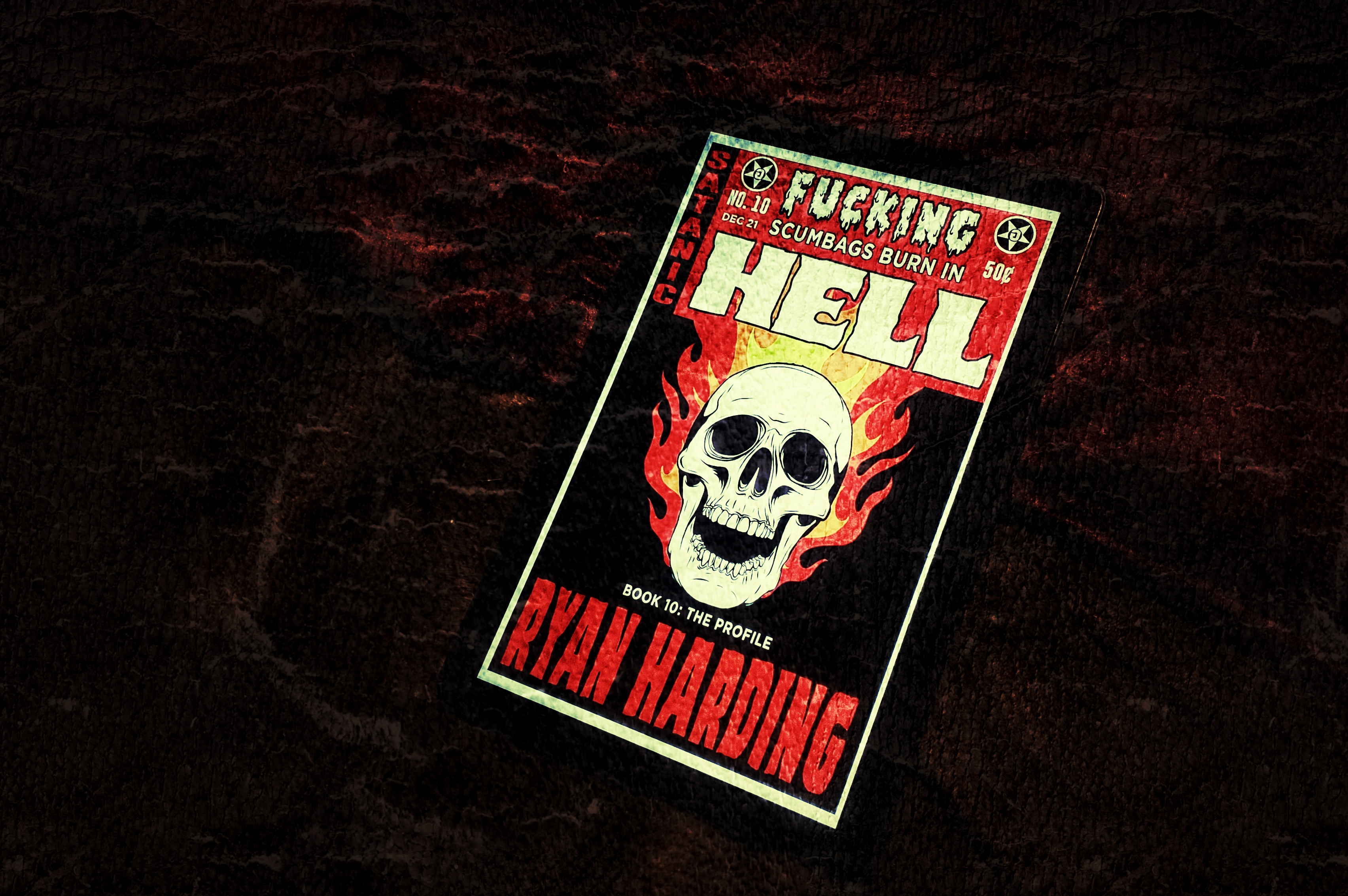
There was no doubt that Ryan Harding would bring the first Fucking Scumbags Burn In Hell season to one Hell of a conclusion. But the way Harding expertly ties it all together, bringing us around full circle, defies even the most liberal expectations. The story of Agent John Kessler, celebrity FBI profiler, is a fascinating and convoluted one. The Profile isn’t solely a story about Kessler, though. It’s the tale of an insidious serial murderer we’ll refer to as The Usurper. Of course, it’s also a story about Sonny Hooper. It would hardly be the Hoopiverse without Hoop making an appearance. I can’t say anything more. As much as I’d love to dive into this and provide a more detailed description of the things I loved about this installment–and there is an awful lot–I have to keep my mouth shut because I don’t want to ruin the fun for anyone else. I will say that the conclusion of this story is one Hell of a captivating, edge-of-the-seat sequence that will leave the reader breathless and dizzy–desperate for more. Thankfully, we have season two to look forward to, and the paperback collecting the whole of season one–including an additional bit of icing on the cake from Drew Stepek himself and an introduction from the always spectacular Rayne Havok. It’s worth mentioning, of course, that Harding didn’t create this in isolation. None of these phenomenal authors contributing to the Hoopiverse did so without the guidance and tutelage of the maestro, Drew Stepek. As outstanding members of the orchestra, they each brought their own flair and their distinct characters to the page, telling us the stories they developed. Like Hooper himself, Drew worked behind the scenes to help everyone bring the individual scumbags to their fitting conclusions, setting the stage for everything that was to come. I suppose, in the end, we should all just call him Hoop.
This final volume of the first season was released as part of the AntiChristmas event at http://www.godless.com and you can pick it up for yourself by going to the website or by downloading the app to your mobile device of choice. The link is below:
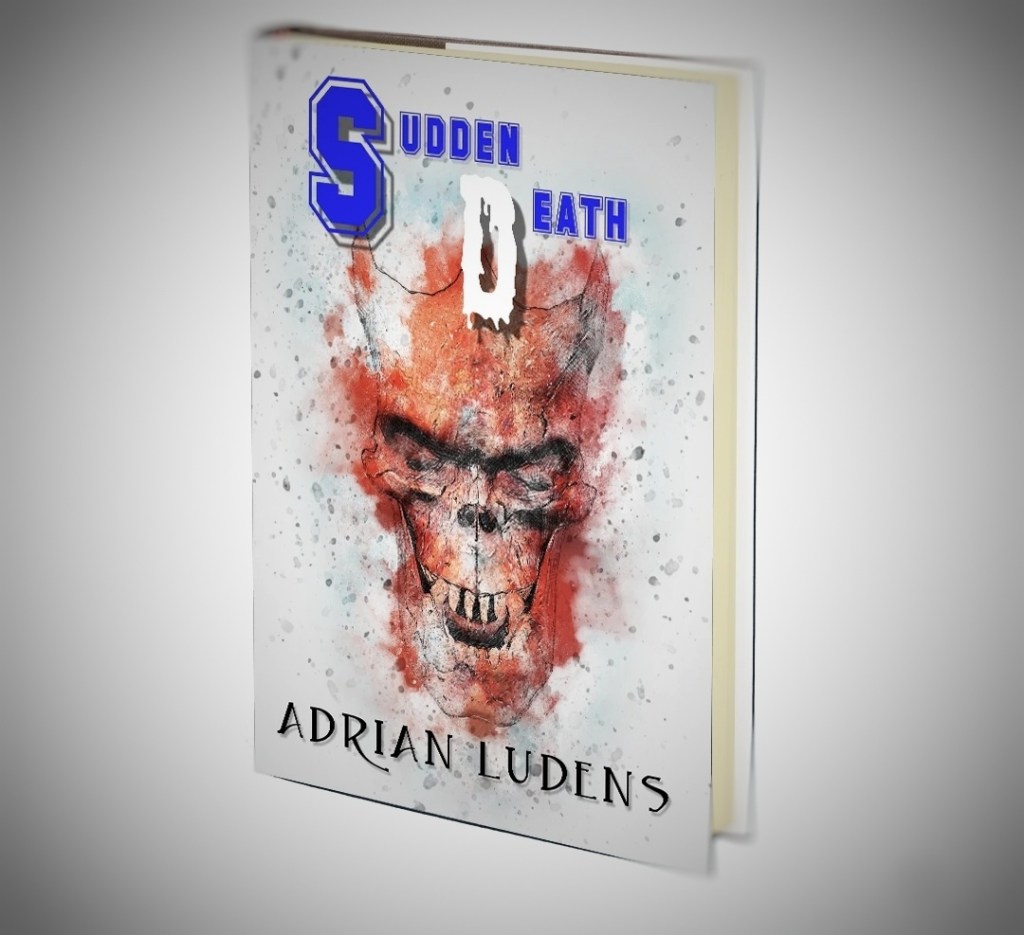
Wayne expected a normal evening of hockey, announcing the penalties and the scores just like any other day at the arena. When he started feeling ill, he thought it might just be a cold, until he saw the tiny figure he’d coughed up. Unfortunately, for Wayne, that little person is only the first of many. As the announcer’s body is pushed past its limits, and what starts off a curious–albeit revolting–spectacle for the fans becomes a nightmare of body horror as an unstoppable surge of humanoid figures continues to erupt into the arena. Ludens blends body horror and science fiction in an entertainingly vile fashion with Sudden Death. Sadly, death doesn’t arrive suddenly enough for our poor, besieged protagonist, as his suffering continues beyond what anyone should experience.
Sudden Death was released as a Godless exclusive short at http://www.godless.com and you can pick it up for yourself by going to the website or by downloading the Godless app to your mobile device. The link is below:
When Jonathan Maberry assembles an anthology, a discerning reader should expect a certain degree of excellence from the final product; that is doubly so when that anthology includes material from authors like Christopher Golden, Weston Ochse, Brian Keene, Scott Sigler, and Maberry himself. Aliens: Bug Hunt is certainly no exception. Pitched by Maberry to the decision-makers handling the literary universe that’s evolved from Ridley Scott’s Alien universe as a series of vignettes, deep-diving into the lives and experiences of the men and women of the Colonial Marines, it’s a magnificent thing to behold. The collection is kicked off with Paul Kupperberg’s Chance Encounter. He takes us to a far-off planet where low gravity provides a lattice for massive trees to spear the sky and equally impressive jellyfish-like creatures to float amid the highest branches. Unfortunately, for the expedition on-site to collect samples, there’s another lifeform preying on those Floaters and happy to prey on any other lifeforms making themselves available. Like many of these stories, this one focuses on greed and selfishness, and the disastrous consequences when we allow those traits to guide our actions, much as James Cameron’s Aliens did. Reaper by Dan Abnett introduces us to a world where the corporation’s attempt to grow and harvest grain awakens a swarming colony of organisms with no objective but to consume all available organic material before returning to hibernation, awaiting new growth and new food for the swarm. Rachel Caine’s Broken introduces us to Bishop, detailing his first minutes of awakened existence and the fateful mission that ultimately brings him into the company of Apone and crew. Reclamation introduces us to Hicks, long before the events of Aliens, as Yvonne Navarro shares the story of his marriage and his desperate struggle to understand what happened to his wife on a mission that stole her from him five years earlier. Christopher Golden’s Blowback takes us into the life of Dietrich, quite some time before her fateful mission to LV-426. We witness first-hand the turmoil of romance within the Colonial Marines as death can come from any direction, at any time. Numerous familiar faces populate this story, from Apone and Hicks to Hudson and Vasquez. Exterminators by Matt Forbeck provides us with another glimpse into Dietrich’s life as she and Frost make their way to a bar on an out-of-the-way colony, only to discover that R&R is not in the cards for them. Ray Garton’s No Good Deed takes us to LV-426 before the events of Aliens, as a bounty hunter and her sarcastic android chase two escaped prisoners to a colony under siege by xenomorphs. But it may turn out that the aliens aren’t necessarily the most dangerous creatures on the planet. A most peculiar and horrifying encounter with a different sort of alien sucks us into Zero To Hero by Weston Ochse. As a cowardly Colonial Marine discovers untapped reservoirs of heroism, he discovers that he might have been better off staying home and playing video games. David Farland’s Dark Mother shares the final hours of Burke’s life after he failed to get Ripley and Newt impregnated as hosts during the events of Aliens. Episode 22 by Larry Correia details the history of the M41A pulse rifle in a fictional documentary format that is strangely captivating. Keith R. A. DeCandido provides us with a glimpse into the hazardous life of an embedded journalist in Deep Background, as a group of Colonial Marines investigates a potential attempt by Weyland-Yutani to cultivate and study the xenomorphs on another planet, with another unsuspecting group of civilians. Brian Keene’s Empty Nest takes us to another xenomorph infestation and provides us with a glimpse of just how far a mother will go to be a mother. Darkness Falls introduces us to a retired Colonial Marine, desperate to find peace and security in a colony where she expected never to see xenomorphs again. Heather Graham’s is the only story where we get to witness the adaptations of the xenomorph depending on the organism they’re using for a host, and it’s a horrifying outcome. Hugs To Die For by Mike Resnick and Marina J. Lostetter showcases a fine example of corporate hubris, as a small group of Colonial Marines receives a tour of a facility where xenomorph blood is being harvested for industrial use. Maberry’s own Deep Black returns us to the prison colony from Alien 3, long after the events from the movie. A three-man team arrives on the planet, learning that all has not been as quiet as expected. Distressed by James A. Moore introduces us to what is the most horrifying and indescribable alien lifeform of this collection, dragging us along on a surreal, disorienting battle against something virtually impossible to fight. Scott Sigler’s Dangerous Prey takes us into the alien minds of xenomorphs themselves, and the experience is altogether more captivating than one might expect, becoming part of the hive. Spite by Tim Lebbon takes a squad of Colonial Marines into conflict with a species of alien with a scorched earth methodology. The narrators for these stories were superb in almost all respects, most notably James Anderson Foster, Priya Ayyar, Suzanne Elise, Michael David Axtell, and Grover Gardner. Those were just my personal favorites of the narrators involved, but there wasn’t a single one who didn’t thoroughly immerse the listener.
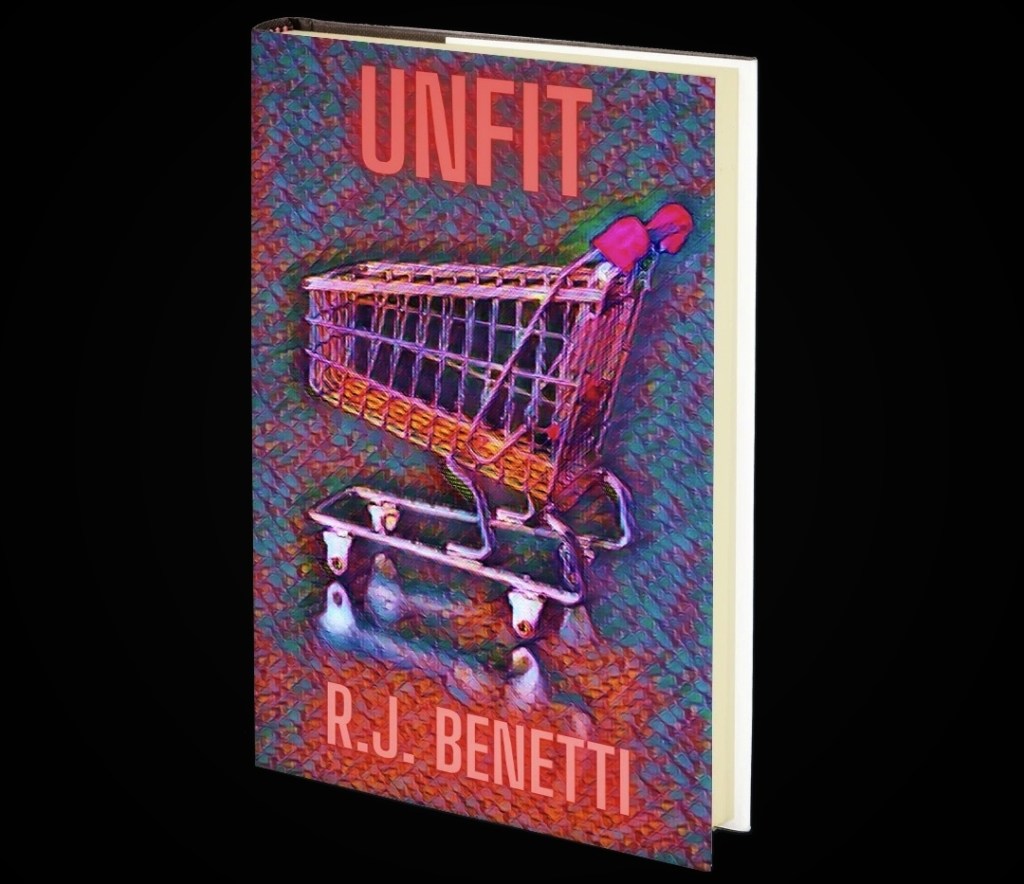
Unfit is a fascinating mix of dystopian science fiction, bizarro, and splatterpunk that blends smoothly into a narrative that is equal parts disturbing, heartbreaking, and sardonically hilarious. Clarissa has a crying baby in her cart. We’ve all seen it before, many of us having experienced it from Clarissa’s perspective. It’s frustrating. It’s embarrassing. Other shoppers judge her as she desperately struggles to get the baby to be quiet…but nothing calms the infant. There’s only one way to silence the crying and screeching, and this is where everything takes a particularly dark turn, followed by a few more turns. R. J. Benetti has essentially written an episode of Black Mirror that hasn’t been optioned yet, and it’s almost a shame this isn’t a more visual medium, except that I’m not sure anyone would want to see this played out on screen. If you’re looking for social commentary and bleak prognostication, this is the story for you.
This title was released as a Godless exclusive title that you can obtain for yourself by going to http://www.godless.com or by downloading the Godless app to your mobile device. The link is below:
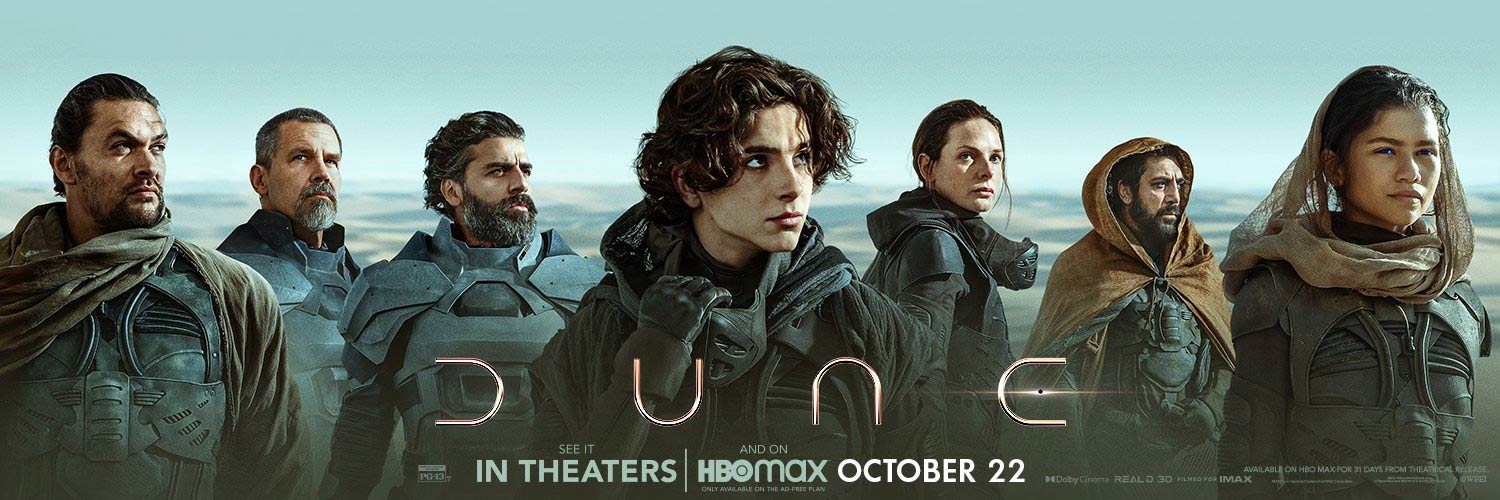
It’s worth mentioning right away that I have always been a fan of David Lynch’s admittedly flawed adaptation of Dune from 1984. I saw that movie on cable television sometime in the mid-1980s, and though I didn’t understand a lot of what was going on, I found myself captivated by everything happening on screen. I couldn’t have been more than eight or nine years old at the time, so I clearly hadn’t read the novel yet. It was, in fact, the impact of that barely remembered movie that influenced me to read the novel later in life. Since then, I have read and re-read the original six novels as well as almost all of the supplemental books written by Frank Herbert’s son, Brian, and Kevin J. Anderson. Dune is something I can’t seem to get enough of, and it all started with a young boy seeing the confusing experience unfold on an old box television. I’m also somewhat fond of the 2000 miniseries John Harrison directed for the Sci-Fi Channel, though substantially less so than the version provided by Lynch. I’ve seen multiple versions of the 1984 release of Dune, owning it on VHS and later on DVD and Blu-ray, with collector’s editions that included multiple cuts of the film. There are a lot of things to love about the 1984 adaptation of Dune, from the dark tones to the dialogue ripped directly from the novel, and the overall aesthetic from set design to costumes and makeup. There are also a lot of things to dislike about it, most notably the significant deviations from the source material and the condensed narrative that ignores some of the most important components and sidelines numerous characters to the background. For most of my life, I expected Lynch’s vision, as corrupted as it was by studio interference, to be the best possible version of Dune I’d ever see on the screen. I was wrong. As soon as I heard Denis Villeneuve was going to direct a two-part adaptation of Dune, I knew something I’d wanted to witness most of my life was finally coming to be. After seeing Arrival, Villeneuve’s adaptation of the Ted Chiang short, “Story of Your Life,” and the spectacular sequel to Ridley Scott’s masterpiece, Blade Runner, I knew there was no other director who could bring Dune to life with any chance of successfully capturing everything important. His previous movies like Sicario and Prisoners were good, and they showcased an impressive directorial talent, but it was Arrival and Blade Runner 2049 that blew me away and made him one of my favorite directors. Having seen his vision for Dune, or at least the first part of the narrative terminating as Paul and Jessica meet up with the Fremen, I felt like a childhood dream had finally come true. Everything about this movie was more than I could have hoped for. Though it lacked the directly adapted dialogue Lynch brought over from the novel, it more truly captured every beat of the story in a way Lynch’s vision didn’t even attempt to approach. Timothée Chalamet’s performance as Paul Atreides is nuanced and captures the fear Paul experiences in response to the changes he feels in himself as well as the visions of a future he’s horrified to witness. More age-appropriate to the role than Kyle MacLachlan was, he captures the youth and aborted innocence of the young Atreides. Similarly, Rebecca Ferguson captures the role of Lady Jessica Atreides spectacularly well, portraying a woman torn between two worlds and two vastly different sets of loyalties. The rest of the cast is no less fantastic in their designated roles. Each individual proved themselves to be capable of thoroughly projecting their characters with such quality that I never once felt like I’d have preferred the original cast. I look forward to experiencing more of the performances from Zendaya (Chani), Josh Brolin (Gurney Halleck), Stellan Skarsgard (Baron Harkonnen), Dave Bautista (Rabban Harkonnen), and Javier Bardem (Stilgar) when the second half of the epic story hits the screen in 2023. The cinematography was jaw-dropping at times, and the sets and landscapes were captured with vivid detail that made the experience of watching the movie an immersive one. The score provided by Hans Zimmer was the most surprising aspect of the movie, incorporating hints of the score TOTO provided for the 1984 adaptation of Dune. At no point going into this had I anticipated that there would be such a respectful nod to what had been a stellar score, one that I still consider one of the best I’ve had the pleasure of hearing. I will spend the next two years eagerly anticipating the release of the second half of Dune, and I will also spend that time daydreaming that Villeneuve gets the green light to direct an adaptation of Dune Messiah.
I don’t know when–or even if–I’ll have a chance to play Aliens: Fireteam, but listening to the audiobook for Weston Ochse’s Aliens: Infiltrator certainly sets the stage for a fascinating and original action/horror gaming experience. If I never get around to playing the game, it won’t be for lack of interest, and it certainly won’t be due to this book disappointing me. The protagonist, Dr. Hoenikker, serves as a cipher of sorts, the lens through which we experience the introduction to the Weyland-Yutani scientific facility. While there’s ample character development across the board, Hoenikker being the newest member of the scientific team provides us with a great opportunity to experience everything through a fresh set of eyes. With his military experience, Ochse does a fantastic job bringing the supporting cast of characters to life, particularly the former Colonial Marines on staff at Pala Station. With Murphy’s Law in full effect, Dr. Hoenikker joins the crew of Pala Station just as an infiltrator begins a campaign of corporate espionage. As with the real world, this relatively small trouble of spying and theft escalates in a cascade effect that explodes into an utter nightmare by the conclusion. Laboratory experiments go horribly wrong, communication breaks down, and everything falls apart. Experimenting with what we’ve come to think of as the black goo from the Alien prequel films from Ridley Scott, we encounter some interesting and dangerous creatures produced from the local fauna, potentially more deadly than the Xenomorphs we’ve all come to know and love. This being an Alien novel, of course, there are Xenomorphs in the mix, and we get further exposure to how the black goo can modify the outcome of the genesis taking place. Bronson Pinchot’s narration is sufficiently skilled that the characters almost always sound distinctly separate and discernable as individual actors in the narrative playing out. I especially enjoyed the performance for Rawlings, who I couldn’t help but picture as an African American Matthew McConaughey. The only instances where Pinchot’s narration failed was concerning female characters, but I’ve heard worse over time.
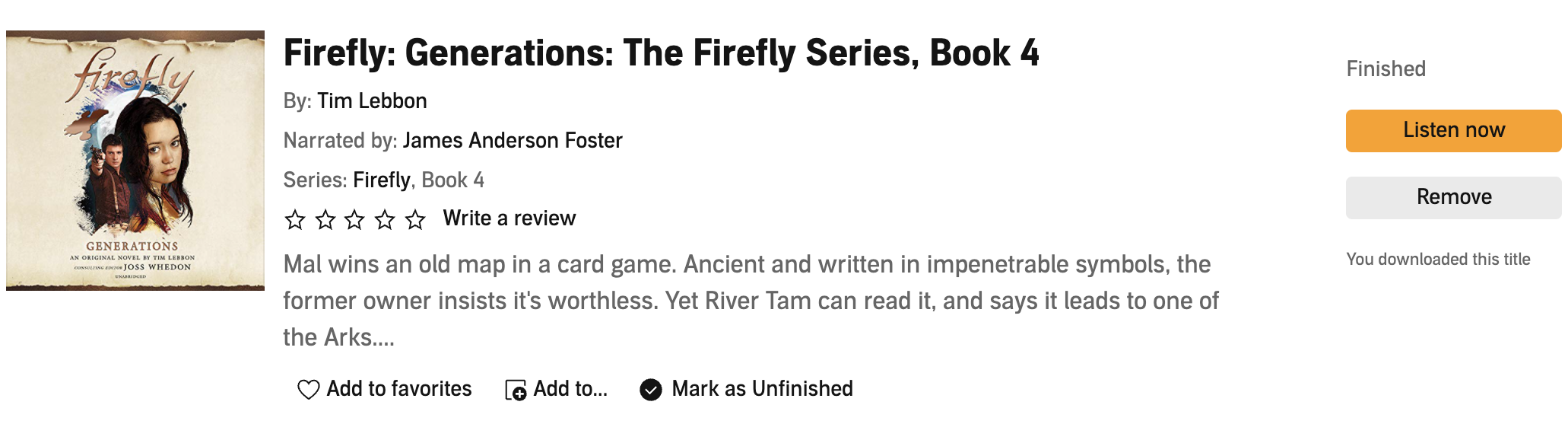
Firefly: Generations begins with the story of a map. This star map changes hands many times, through treachery or happenstance, but this is no mere map, and those who take it into their possession seem to somehow recognize that fact without being fully conscious of it. The truth of the map only reveals itself when it finds its way into the hands of River Tam, where hidden machinery embedded in the material activates. From there, we find ourselves following most of Serenity’s crew into the outer reaches of the verse, where deadly secrets await them amidst an awe-inspiring relic of the history before mankind reached their new homes on the planets and moons the Firefly crew is familiar with. This novel falls somewhere after the prematurely canceled television series, though before Inara and Book had permanently left the crew and retired to the locations where we meet them again in the movie Serenity. Tim Lebbon takes the helm in this fourth Firefly novel, telling us a story that fills in gaps in the mystery that is the life of River Tam, the secret experiments conducted by Alliance scientists, and the centuries-past journey from Earth that was. Generations is a far different tale than those contained in the three previous Firefly novels, focusing on the more science fiction elements of the property rather than on the land-based adventures of the crew. It’s a nice transition, receiving this glimpse into the less western-themed exploits of Serenity and the family that calls her home. Foster’s narration seems only to be improving with each subsequent audiobook release. As he more firmly captures the nuances and patterns of speech for the individual characters, one could almost close their eyes and envision the cast playing their parts.






 Domus Necrophagous